

MAGAZIN
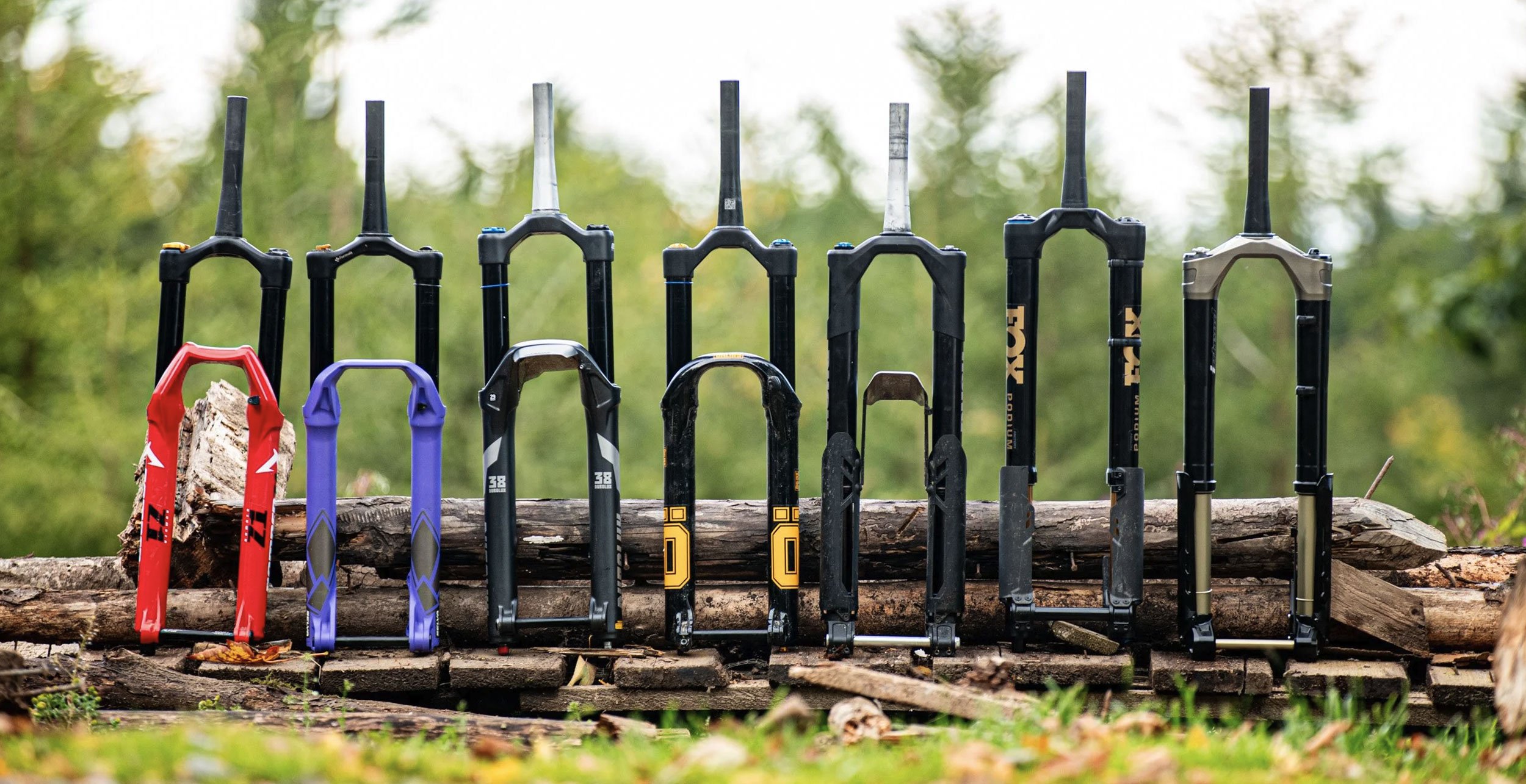
Field Test 170 mm Enduro Forks
Welcome to the test that gives you answers, and welcome to the intro to our 170mm fork test. What makes a good 170mm fork? How did we test? Which forks did we test? What can you expect from the TESTPILOT fork test? Here at TESTPILOT, we've made it our mission to test products for and with you, and to describe them in a way that helps you know if they're right for you—not just whether they meet our personal preferences.
Vergleichstest 170 mm Enduro Federgabeln
Willkommen beim Test, der dir Antworten gibt, und willkommen beim Intro zum Federgabeltest im 170-mm-Segment. Was macht eine gute 170-mm-Federgabel aus? Wie haben wir getestet? Welche Federgabeln haben wir getestet? Was erwartet euch im TESTPILOT-Federgabeltest? Wir von TESTPILOT haben es uns zur Aufgabe gemacht, für und mit euch Produkte zu testen und so zu beschreiben, dass ihr wisst, ob sie zu euch passen. Nicht, ob sie nur unseren persönlichen Vorlieben gerecht werden.
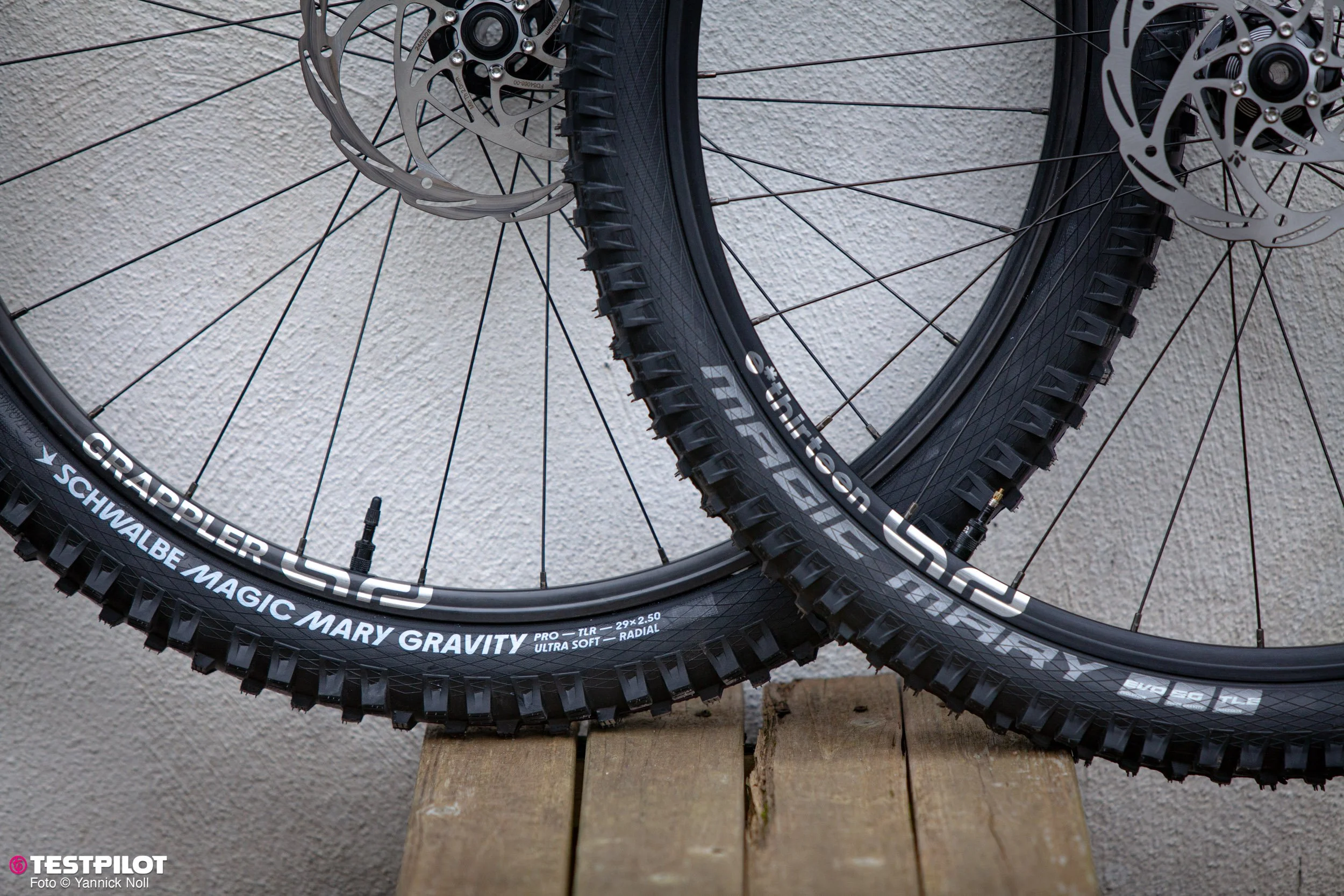
Test: Schwalbe Radial- gegen klassischen Diagonalreifen. Vor- und Nachteile. Der Karkassen-Kampf.
Während Reifen sich in den letzten Jahren kaum weiterentwickelten und die Profis im Worldcup immer noch Plattfüße produzierten, stieß Schwalbe 2024 eine neue Türe auf. Manche würden vielleicht sogar sagen: Einreißen – denn die Stimmen in der Szene waren teilweise recht euphorisch. Ist der Radialreifen besser als der normale, altbekannte Diagonalreifen? Gibt es einen klaren Gewinner? Zeit, dem Thema auf die Karkasse zu fühlen. In diesem Test erfährst du alle Vor- und Nachteile eines Radialreifens und ob diese neue Technologie für dich und dein Bike passt.
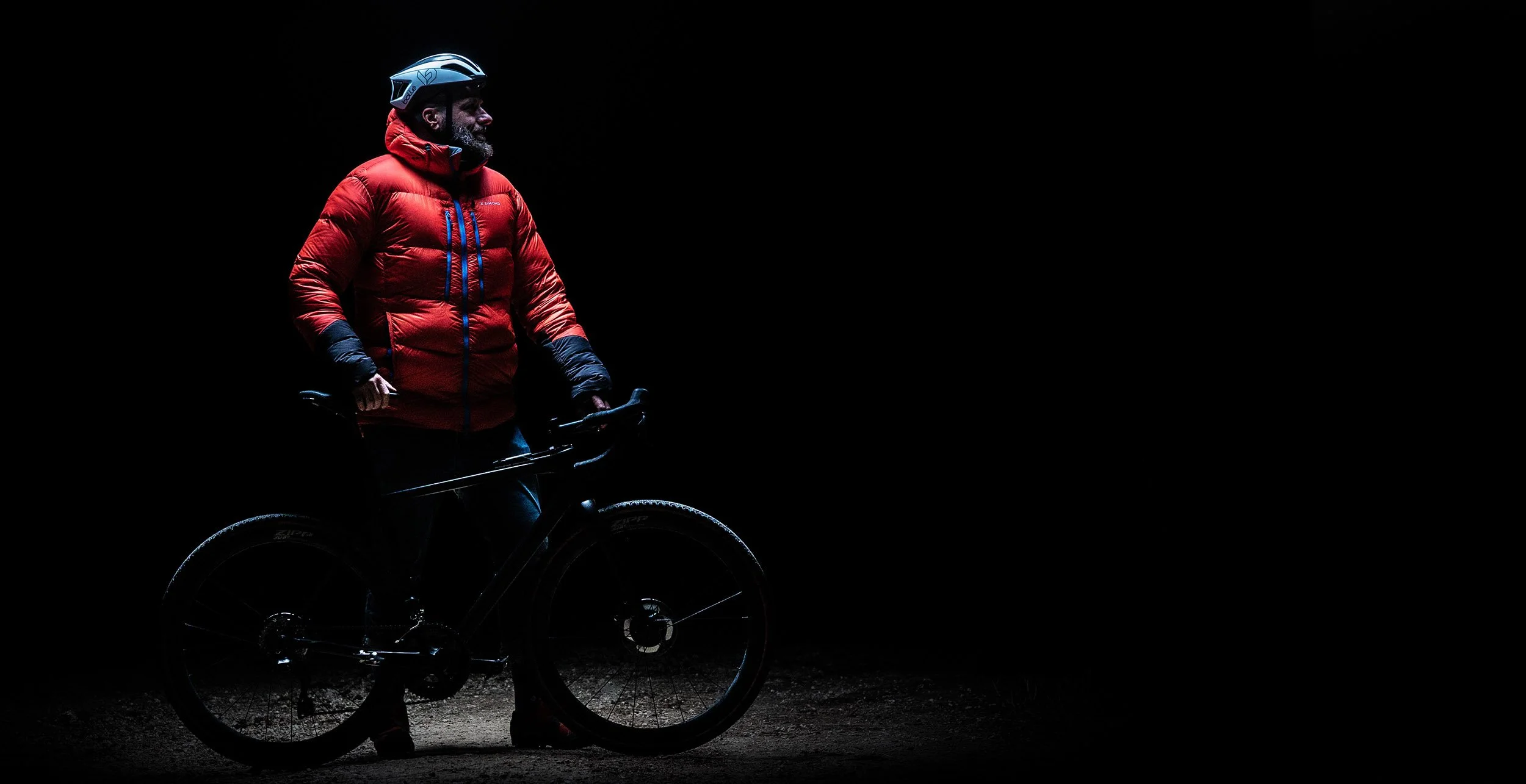
Push222 Speed Gravel – Lass die Finger von dem Zeug!
Es gibt Tage, an denen plant man keine ernsthafte Ausfahrt. Man hat normale Jeans an, die warme Winterjacke, es ist ja immerhin gerade Januar, und den Baumwollhoodie, der bei der leichtesten Ertüchtigung für Hitzestau sorgt. Dann passiert etwas und man findet sich auf einem dieser besonderen Rides, von denen man seinen Kumpels erzählt, weil er so episch war. Ungeplant. Unvorbereitet. Unglaublich gut. – Eine Set-up-Fahrt.
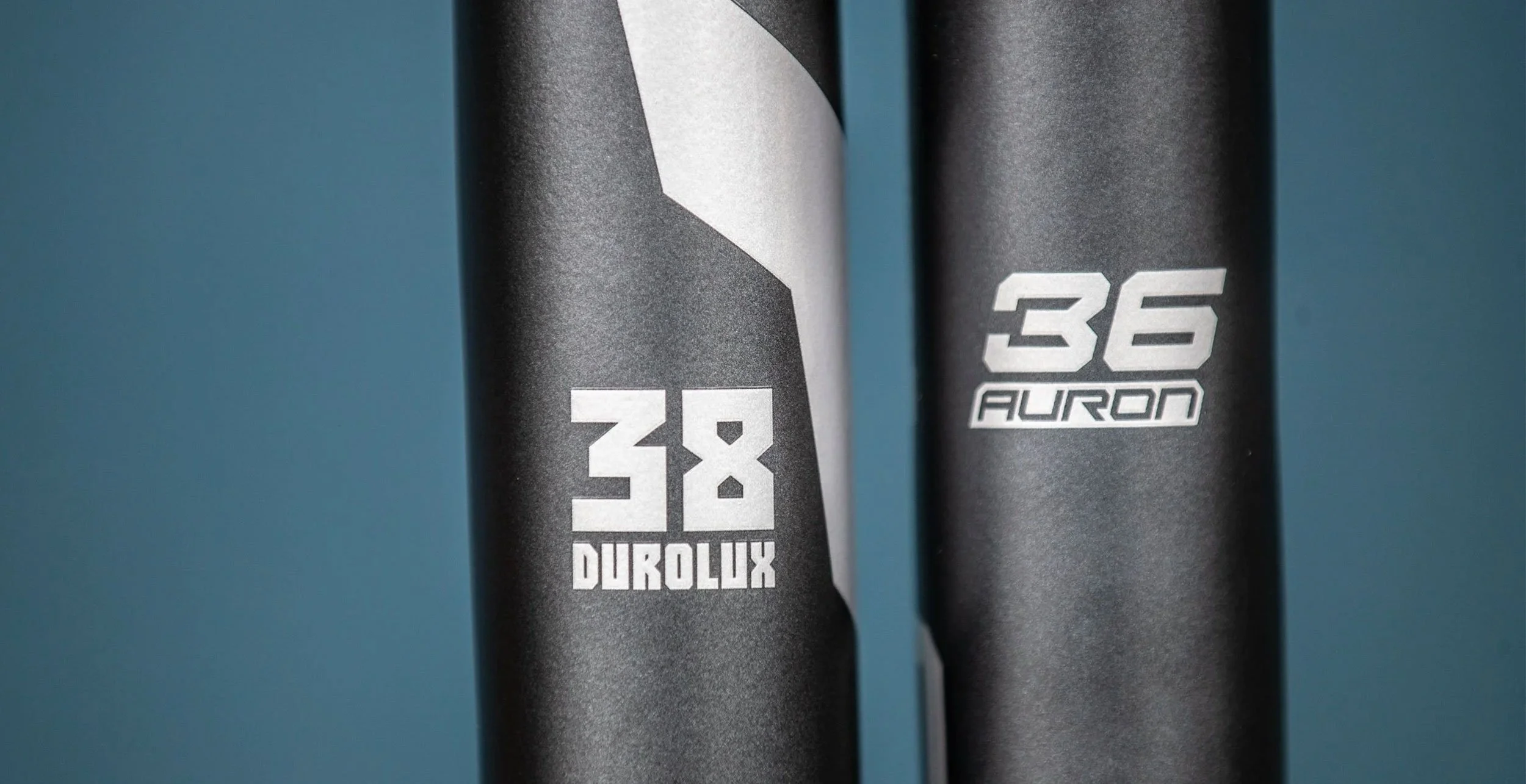
What’s different between 36 and 38 mm stanchions?
When do I need 36 mm and when do I need 38 mm suspension fork stanchions? Is a stiffer suspension fork better? Or is flex actually a good thing? Flex is not a simple topic. In our field test, we explain the advantages and disadvantages of 36 mm and 38 mm stanchions, stiffness, and flex in mountain bike suspension forks. SR Suntour provided us with two almost identical suspension forks, the AURON36 and DUROLUX38 X – the only difference between them is the stanchion diameter.
Was ist der Unterschied zwischen 36er und 38er Standrohren?
Wann benötige ich 36er und wann 38er Federgabel-Standrohre? Ist eine steifere Federgabel besser? Oder ist Flex doch etwas Gutes? Flex ist kein simples Thema. Im Praxistest erklären wir Vor- und Nachteile der 36er und 38er Standrohre, Steifigkeit und Flex von Mountainbike-Federgabeln. SR Suntour stellte uns mit der AURON36 und DUROLUX38 X zwei fast identische Federgabeln zur Verfügung – sie unterscheiden sich wirklich nur im Standrohr-Durchmesser.
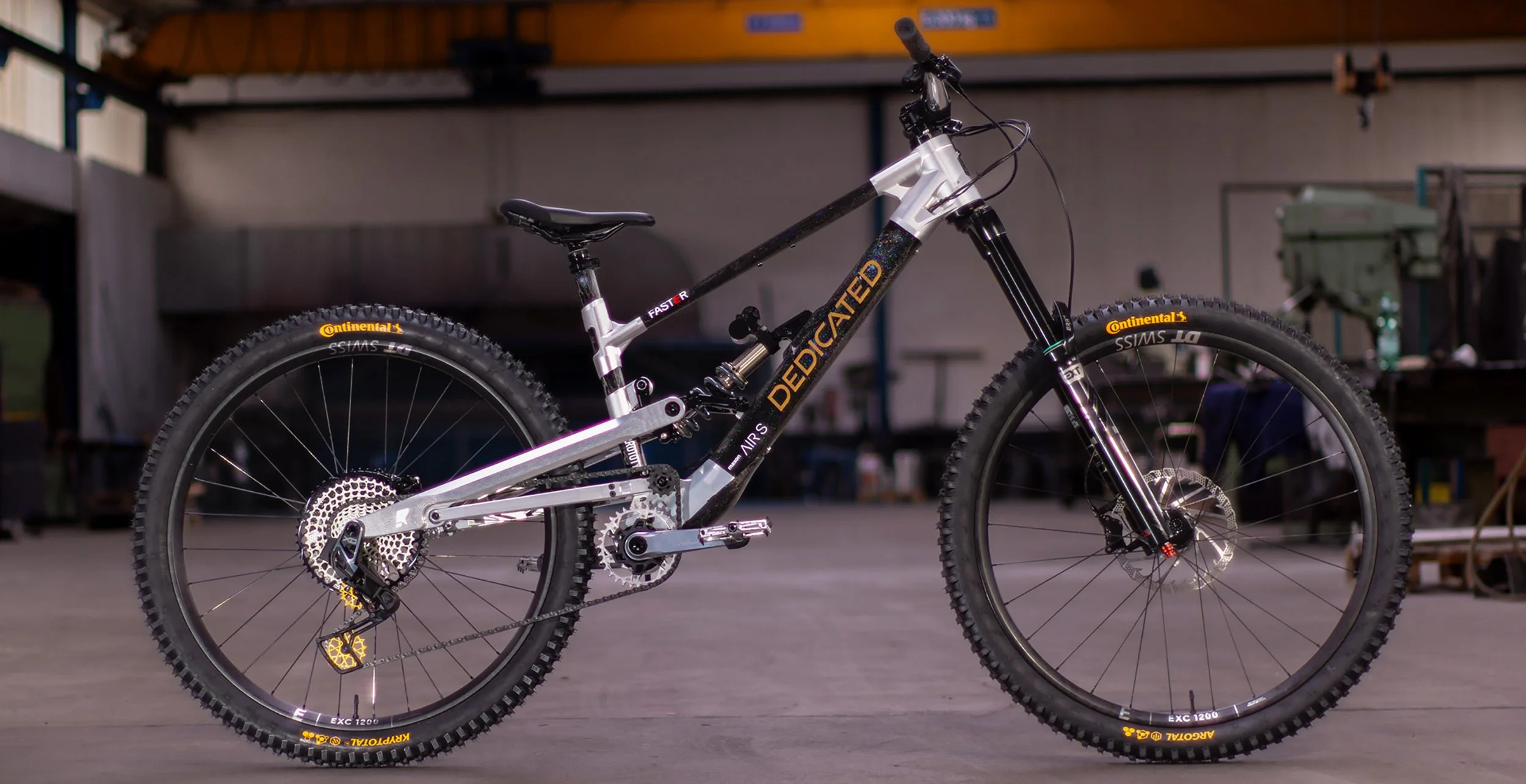
DEDICATED FASTER E-MTB – Carbon, Alu-Muffen, E-Power, 190 mm
Auf dem Bikefestival Freiburg trafen wir zum ersten Mal Sven Brück und Matthias Reichmann mit ihrem SENDuro Prototypen aus Carbon und Alu. Was damals als Kooperation von MEBCarbon (Sven) und Reichmann Engineering (Matthias) startete, nimmt weiter Form an und hört mittlerweile auf den Namen DEDICATED Bikes. Sven ist Gründer der Marke und zuständig für die Entwicklung von Struktur und Design. Matthias entwickelt die Kinematik. Ganz neu präsentierte das Team kürzlich den ersten E-Bike Prototypen. Was es damit auf sich hat und wann das Bike in Serie gehen soll, erfährst du in diesem Artikel.
Podcast: Keith Scott: Banshee Bikes. Engineering Over Hype.
If you follow the mountain bike world, you know the story. Every year there's a new standard, a new "game-changing" innovation, and a marketing blitz telling us what we need to buy to be faster. But what if you're a brand that just... doesn't play that game? What's it like to build bikes on a completely different set of rules?
In this episode, we're sitting down with Keith Scott, the co-owner and chief engineer of Banshee Bikes. Keith is a fascinating voice in the industry—a self-described engineer first, who's built his company on the principle of "physics, not gimmicks."
We’re going to dig into why he thinks the pursuit of ultimate stiffness might be wrong, why he's skeptical of lab tests versus real-world mud and rocks, and how his small, non-mainstream-brand survives—and thrives—by deliberately ignoring the hype cycle. It's a candid look at the business of bikes from the inside, the value of being different, and what it really takes to build a machine that's just pure fun to ride.
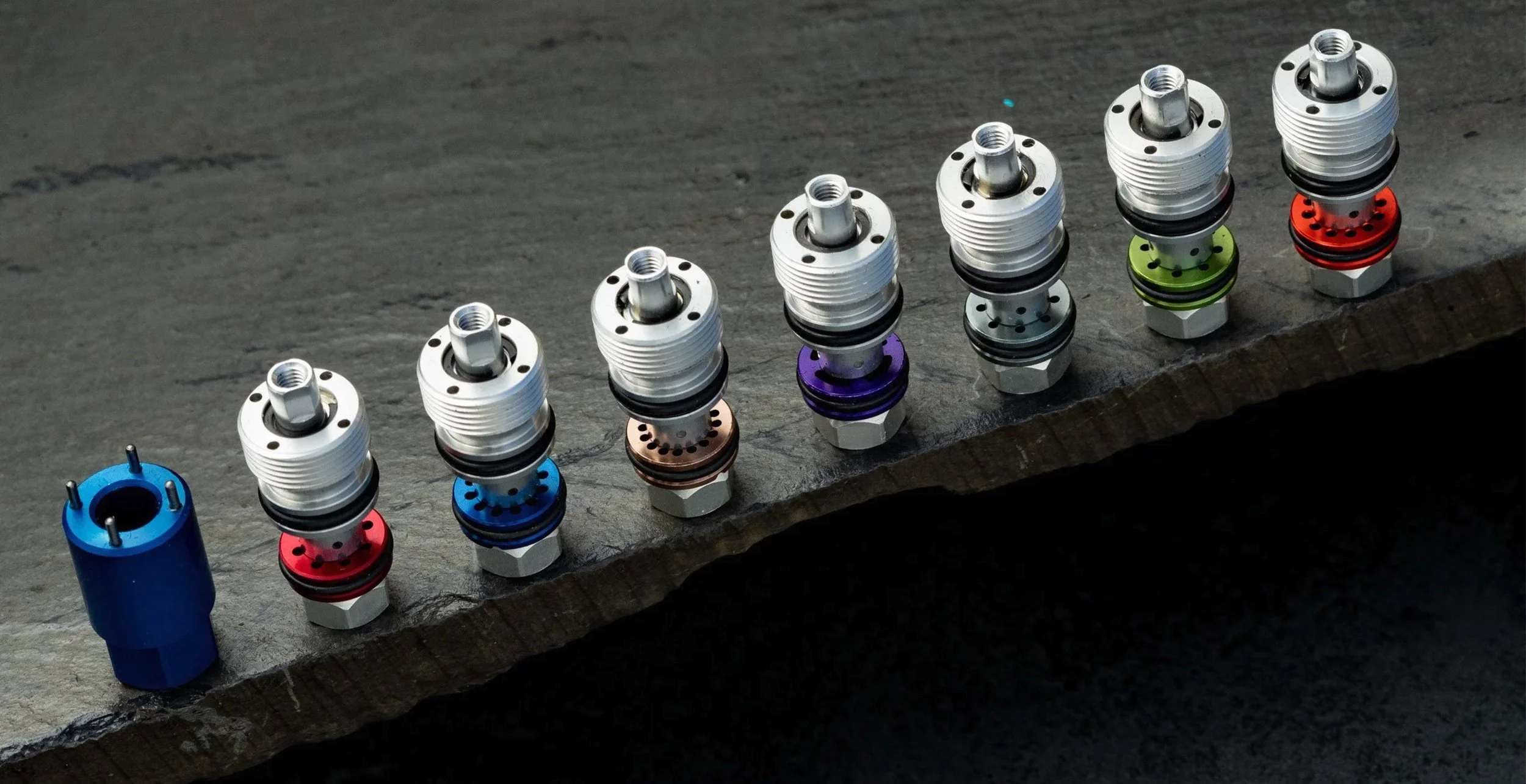
Formula Compression Tuning System – Suspension-Voodoo at your home
A suspension setup perfectly matching your riding style? Imagine one that is even adaptable to different trails and different bikes. Normally, that can require tinkering, shim-stack knowledge, or sending your suspension to a tuning service. For many riders, that’s either intimidating or simply too costly. Exactly here Formula steps in, making suspension tuning accessible to everyone. The Compression Tuning System (CTS) has actually been around since 2017.
Different valves with completely distinct damping characteristics that you can swap from the outside—without taking the suspension apart. Available for both forks and shocks. How the system works and who it’s best suited for, you’ll find out in this article.
Formula Compression Tuning System – Fahrwerk-Voodoo leicht gemacht
Ein Fahrwerk, das genau zu deinem Fahrstil passt? Am besten noch anpassbar auf verschiedene Strecken und Bikes? Das ist in der Regel mit viel Bastelaufwand und Shim-Stack Know-how verbunden. Etwas, was viele abschreckt. Formula setzt genau hier an und macht Fahwerk-Tuning für jeden zugänglich! Bereits seit 2017 gibt es das sogenannte Compression Tuning System. Verschiedene Ventile mit komplett unterschiedlichen Kennlinien zum Wechseln von außen – ohne das Fahrwerk zerlegen zu müssen. Erhältlich für Federgabel und Dämpfer. Wie das genau funktioniert und für wen das System geeignet ist, erfahrt ihr hier im Artikel.
Podcast: Joe McEwan – Starling Cycles. 10 years. new ways and staying true.
While the podcast will give you an insight to Starling Cycles the company itself is about to change – but not like you might think it will. There won’t be carbon frames anytime soon. Joe and his team will still provide you with the frames made out of Reynolds 853 the steel lover is a fan of. But they will get help.
Shortening lead times to serve customers quicker, providing demo rides and teaming up with bikeshops to have the bikes on the floor will mark a huge step forward for the brand. While starting literally in the shed behind the house Joe now teamed up with Fort Frames in the Czech Republic to be able to fulfill demand. A couple of years back Starling started to source the rear triangles of their core models out of ORA in Taiwan.
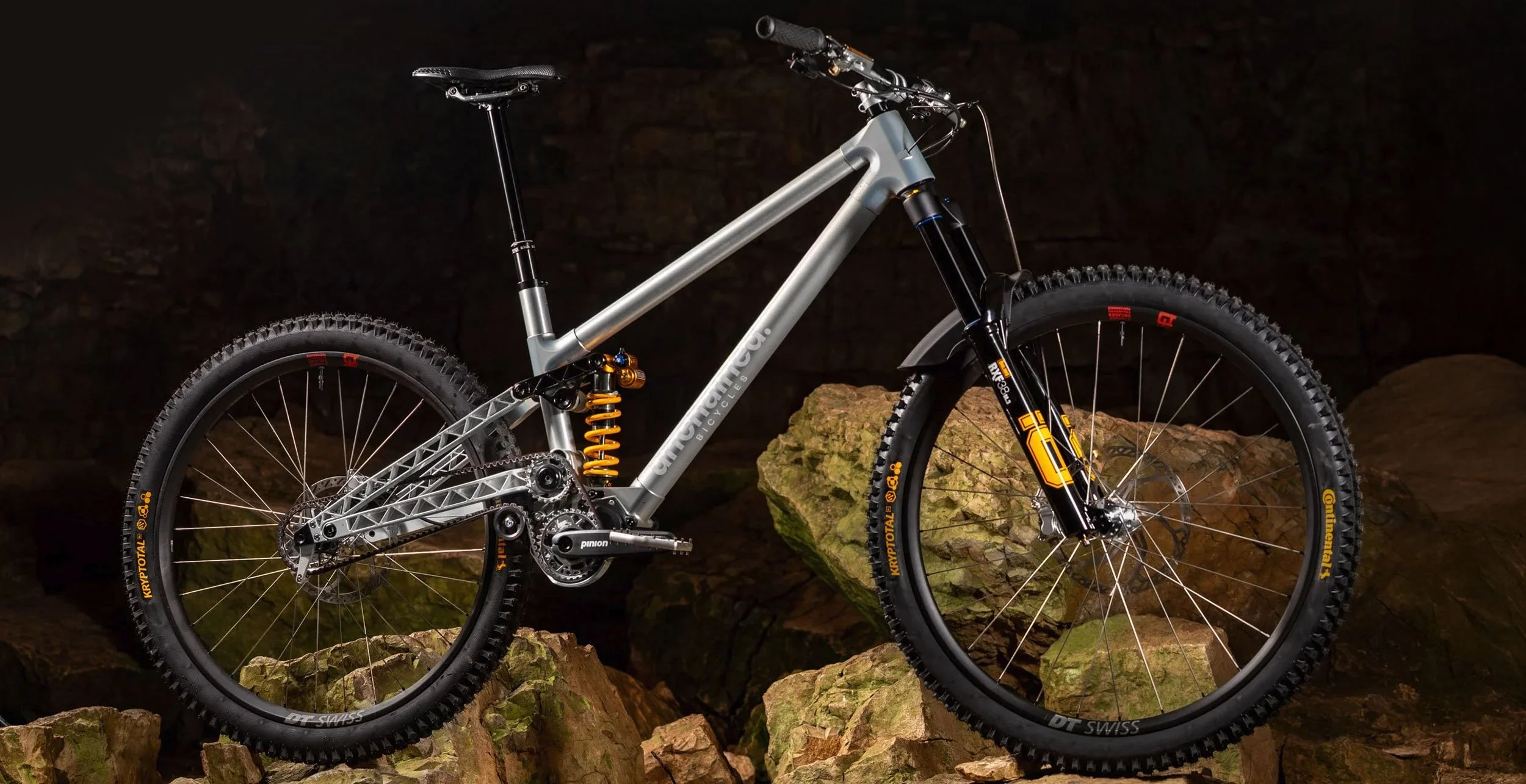
Unchained Bicycles – Enduro. The Future. Made in Switzerland.
Bonding lugs and tubes is making a comeback and is now considered an established manufacturing method. Numerous manufacturers use it both for prototyping and for production frames. The technique offers several advantages over welding but is more expensive.
Unchained 1.0 is not yet a production model and continues to be refined. Axel and Laurent are committed to uncompromising development and their own hands-on riding impressions, since they are already riding the frame themselves. With 7075-T6 tubes at a wall thickness of 2 mm, the frame shrugs off even the worst abuse. This wall thickness is unusual for production bikes, which means there is still significant potential for weight savings in a future production model. They designed the lugs to their own specifications and had them custom-made. Currently, the entire frame is “Made in Switzerland.”
Unchained Bikes – Enduro. Konsequent. Neu.
Das Verkleben von Muffen und Rohren ist wieder im Kommen und gilt inzwischen als etablierte Fertigungsmethode. Zahlreiche Hersteller nutzen sie sowohl im Prototyping als auch für Serienrahmen. Die Technik bietet mehrere Vorteile gegenüber dem Schweißen, ist jedoch kostenintensiver.
Unchained 1.0 ist noch kein Serienmodell und wird weiter optimiert. Axel und Laurent setzen auf kompromisslose Entwicklung und eigens erfahrende Eindrücke, denn sie fahren den Rahmen bereits. Mit 7075-T6-Rohren bei 2 mm Wandstärke steckt der Rahmen problemlos den schlimmsten Missbrauch weg. Diese Wandstärke ist unüblich für Serienbikes, was bedeutet, dass für eine Serienproduktion noch viel Potenzial in Bezug auf Gewichtseinsparung besteht. Die Muffen haben sie auf ihre Bedürfnisse hin gezeichnet und ließen sie in Einzelanfertigung herstellen. Aktuell ist der Rahmen komplett “Made in Switzerland”.
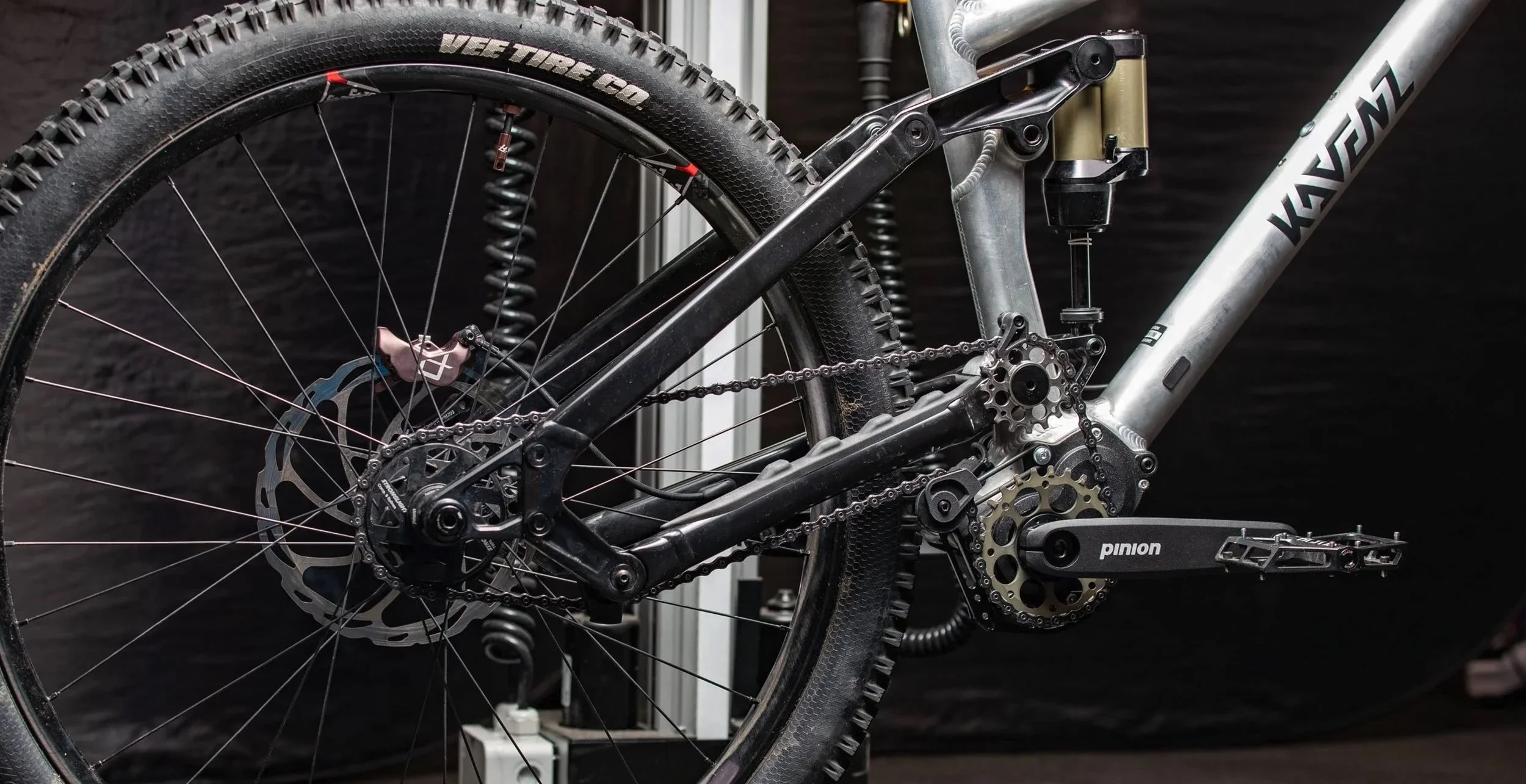
Test Kavenz VHP16 G2 – planted. confidence. Gearbox.
No more bent derailleurs? Less unsprung mass for better suspension performance? There are smaller companies that already have a large fan base and are on the verge of an international breakthrough. The people behind these brands love pushing innovation and constantly striving to optimize – the Kavenz VHP16 is already in its seventh evolution stage. Particularly exciting here is the option to do away with the derailleur. A Virtual High Pivot rear end with a gearbox and chain instead of a belt. Sounds like absolute traction and the perfect solution for a hassle-free bike? We tested it.
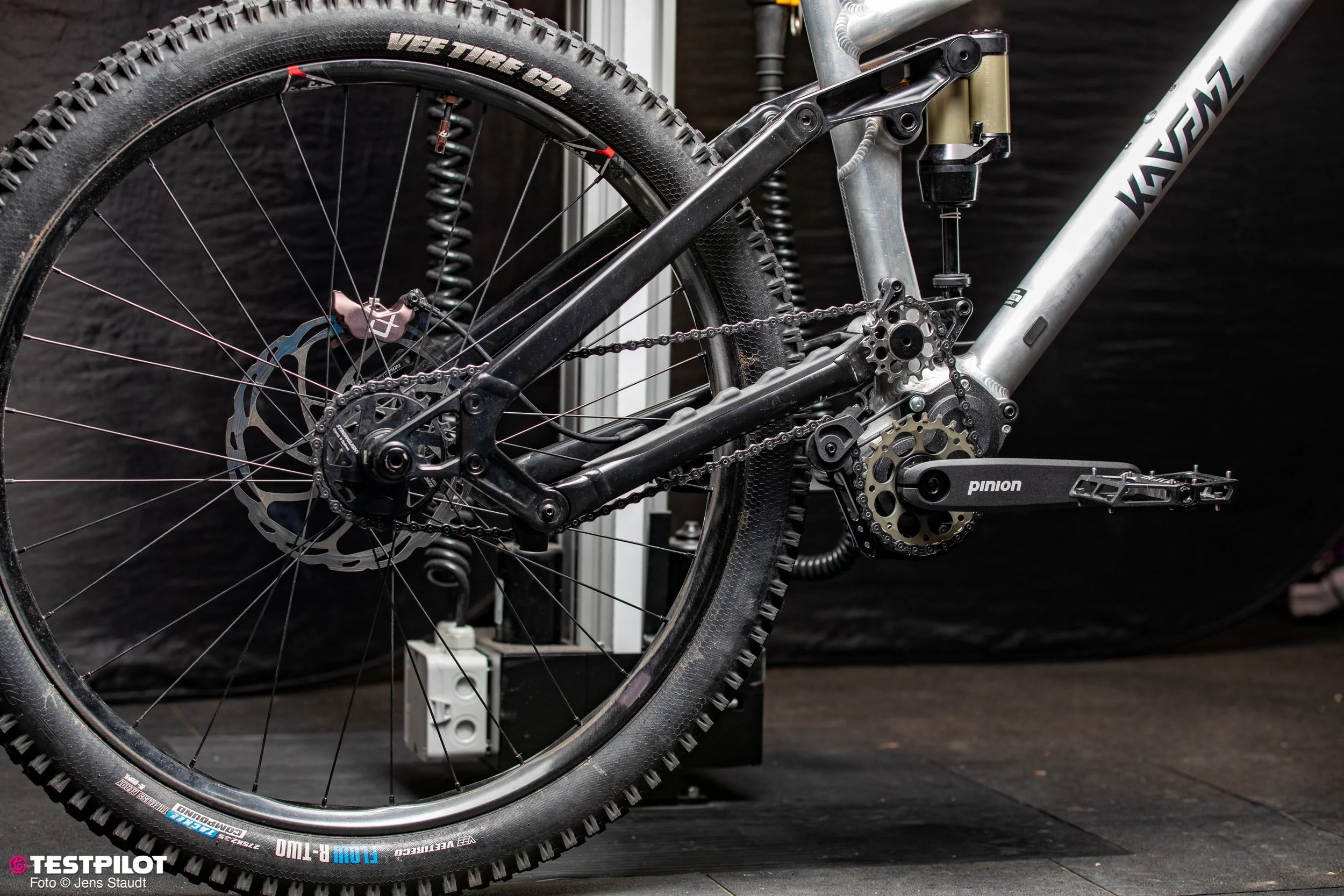
Test Kavenz VHP16 G2 – Satt, Satter, Gearbox?
Nie mehr verbogene Schaltwerke? Eine geringere ungefederte Masse für bessere Fahrwerks-Performance? Es gibt kleinere Firmen, die bereits eine große Fangemeinde haben und am internationalen Durchbruch kratzen. Die Menschen hinter diesen Marken pushen gerne Innovation und versuchen ständig zu optimieren – so gibt es das Kavenz VHP16 bereits in der siebten Evolutionsstufe. Besonders spannend ist hier die Option, das Schaltwerk loszuwerden. Ein Virtual High Pivot-Hinterbau mit Gearbox und Kette, anstatt Riemen. Klingt nach absoluter Traktion und der perfekten Lösung für ein unkompliziertes Bike? Wir haben es getestet.
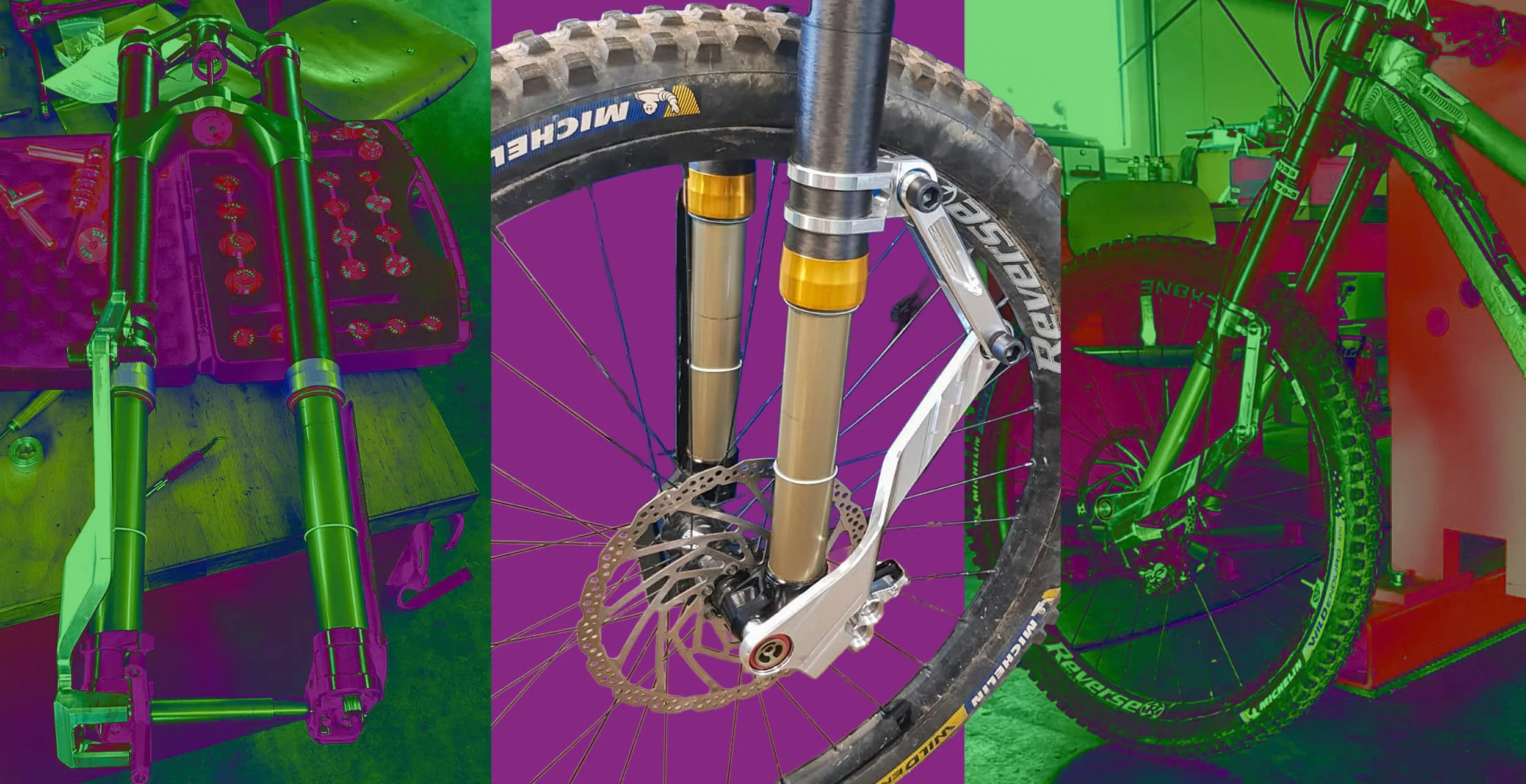
Anti-Brake-Dive – unknown or unnecessary?
When a two-wheeled vehicle experiences significant deceleration, the axle load shifts forward, typically causing the front suspension to compress (commonly referred to as "brake dive," "diving," or "nosediving"). This results in a change to the head tube geometry—altering the trail, rake, and wheelbase.
This phenomenon is known as "brake dive." It can lead to unwanted instability, as the suspension effectively becomes stiffer, the front end becomes more heavily loaded, and the steering and braking behavior can change unpredictably.
In the 1980s, motorcycle manufacturers like Yamaha, Kawasaki, Suzuki, and Honda introduced anti-dive systems, often in the form of additional mechanical linkages or hydraulic controls. While these classic systems have largely disappeared today, their principles have found a place in modern geometric and electronically controlled solutions. The automotive sector also employs solutions that positively influence handling characteristics and better control unwanted vehicle movement.
Anti-Brake-Dive – übersehen oder unnötig?
Um dem Moment, das durch die dynamische Radlastverschiebung beim Bremsen auftritt, entgegenzuwirken, scheint es zweckmäßig die Kraft des Bremssattels zu verwenden und hiermit ein gegenläufiges Moment zu erzeugen, welches als Kraft an den Standrohren der Federgabel eingeleitet wird. Hierdurch taucht die Gabel weniger ein, nämlich fast gar nicht.
Ein Anti-Dive von über 100 % wäre allerdings gefährlich, weil die Gabel dann beim Bremsen anfangen würde, auszufedern. Daher sind wir knapp unter 100 % geblieben. Dadurch kann die Gabel beim Bremsen immer noch aktiv bleiben und einfedern.

Podcast: Denkanstöße mit Friso Lorscheider, zum Thema Nachhaltigkeit
In Zeiten von Klimadebatte und Konsumkritik drängt sich eine Frage immer mehr auf: Wie nachhaltig ist unser Hobby eigentlich?
Im Gespräch mit Jens Staudt stellt Friso Lorscheider gleich zu Beginn eine klare These auf: „Die Fahrräder, über die wir hier reden, sind Sportgeräte. Und spätestens da geht es nur noch um die Befriedigung eines Bedürfnisses – dem nach Lust und Spaß.“ Das Bike an sich sei nachhaltig, sein Einsatzgebiet als Hochleistungs-Sportgerät hingegen oft nicht.
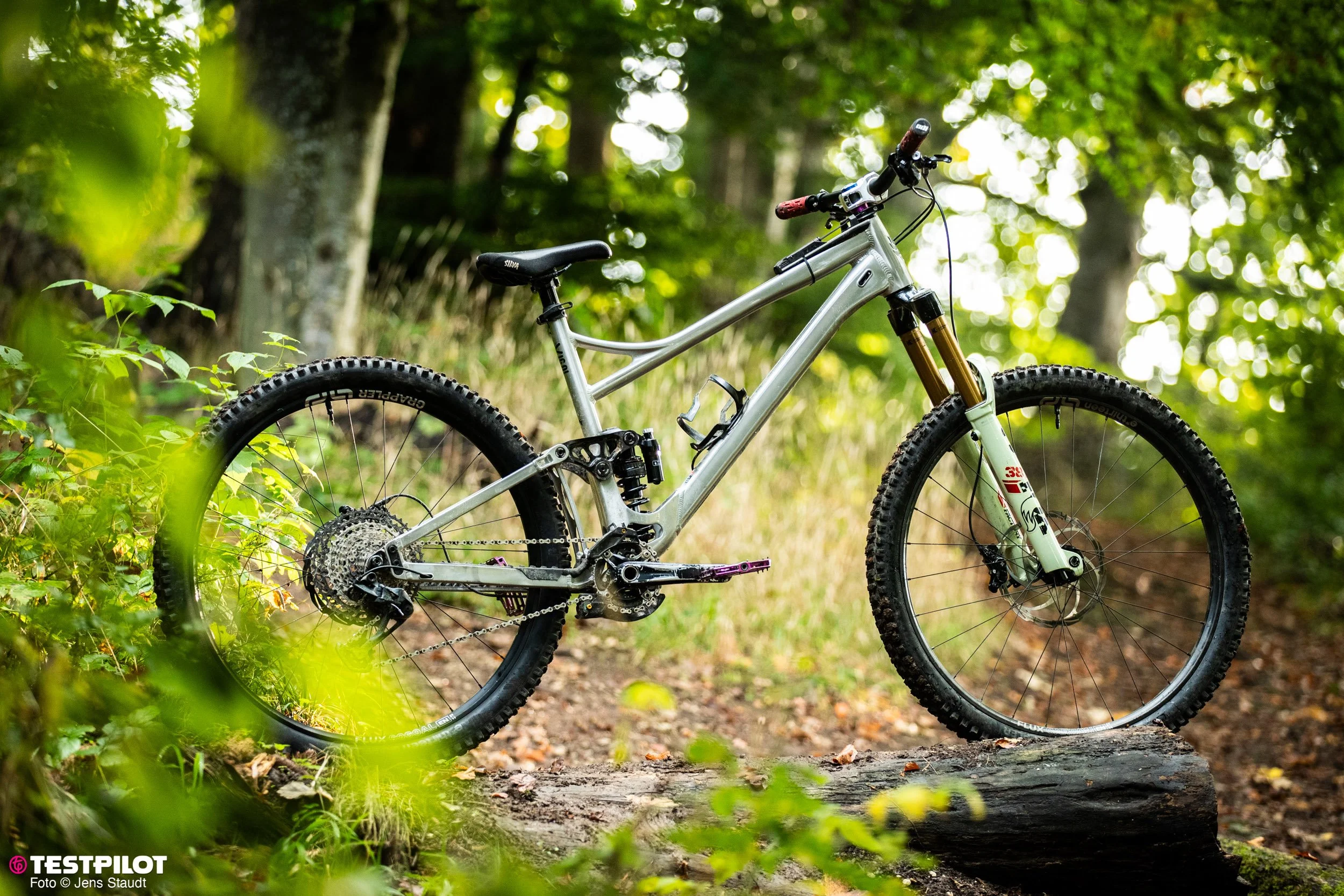
Review Banshee Titan – OH my word!
Some brands shout, others whisper—and that's precisely where their strength lies.
No aggressive social media campaigns, no ad banners tracking you across every platform. Instead, hidden almost in plain sight, there’s a bike that doesn’t look mainstream—and doesn’t ride like it either.
Banshee is one of those brands. And what they’ve got in their lineup isn’t just more budget-friendly than much of the competition—it's also a real breath of fresh air in the sea of carbon spaceships.
The name? Titan. A tool. For those bold enough to use it. Enjoy a bike test that breaks free from category thinking.
Test Banshee Titan – Meine Fresse
Manche Marken schreien laut, andere flüstern – und genau da liegt ihre Stärke. Keine aggressiven Social-Media-Kampagnen, keine Werbebanner, die dich via Tracking über alle Plattformen verfolgen. Stattdessen liegt fast im Verborgenen ein Bike, das nicht nach Mainstream aussieht und sich auch nicht so fährt. Banshee ist so eine Marke. Und was sie im Portfolio haben, ist nicht nur budgetfreundlicher als vieles von der Konkurrenz, sondern auch ein echter Lichtblick im Einheitsbrei der Carbon-Raumschiffe.