

A suspension setup perfectly matching your riding style? Imagine one that is even adaptable to different trails and different bikes. Normally, that can require tinkering, shim-stack knowledge, or sending your suspension to a tuning service. For many riders, that’s either intimidating or simply too costly. Exactly here Formula steps in, making suspension tuning accessible to everyone. The Compression Tuning System (CTS) has actually been around since 2017.
Different valves with completely distinct damping characteristics that you can swap from the outside—without taking the suspension apart. Available for both forks and shocks. How the system works and who it’s best suited for, you’ll find out in this article.
You can find more reviews here.
Formula – a rush through history
1987, Prato, Tuscany, Italy—the birth of Formula. The founders wanted to bring their expertise from motocross and enduro racing into a new and non-mainstream sport: mountain biking. In 1993 they designed the very first disc brake for mountain bikes. That same year, under the brand AIM, they produced their first shock for motorcycles. After gaining a huge amount of experience in motorsports, they launched their “mountain bike suspension” project in 2012—this time under the Formula name. And in 2017, they introduced a new modular system for tuning suspension characteristics on their 33, 35, and Selva fork models: the Compression Tuning System, or simply CTS.
We’re taking a closer look at the idea behind Formula’s CTS, what it actually does for you on the trail, and why it’s so beneficial. Dive into a tuning process normally reserved for suspension experts—one you can now easily do yourself.
Compression Tuning System
Until 2017, adjusting the damping curve of your suspension was something only the true suspension wizards could pull off—and that included Formula. Up to that point, you could only tweak the compression damping externally with a simple compression dial. The core damping curve itself, however, stayed fixed, just like with most other manufacturers. The Compression Tuning System (CTS) changed that by making the damping curve modular.
With CTS, riders who prefer to stay far away from suspension voodoo suddenly gained the ability to fine-tune the damping characteristics of their fork themselves. And the best part: you don’t have to take anything apart or know a thing about shim stacks. In just a few minutes, you can transform your suspension from sensitive and plush to firm and race-ready. Linear, progressive, or digressive? Anything’s possible!
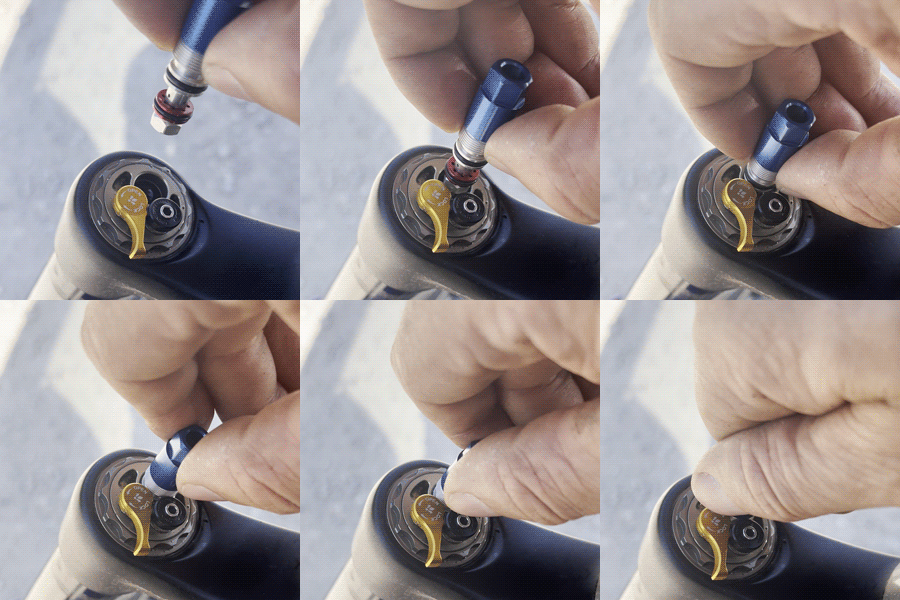
This whole system works through different CTS valves, which can be swapped from the outside of the fork or shock using a simple, included special tool. No suspension service needed. No tuning expertise required. Absolutely anyone can do it. And the opportunity to learn how different valves affect your suspension is huge—something every rider should take advantage of.
A nice bonus: Formula already includes a second CTS valve with their forks, along with plenty of extras like tools, lubricants, and a fender. The Nebbia air shock even ships with all three available valves right out of the box. So there’s really nothing standing in the way of diving into the world of suspension tuning.
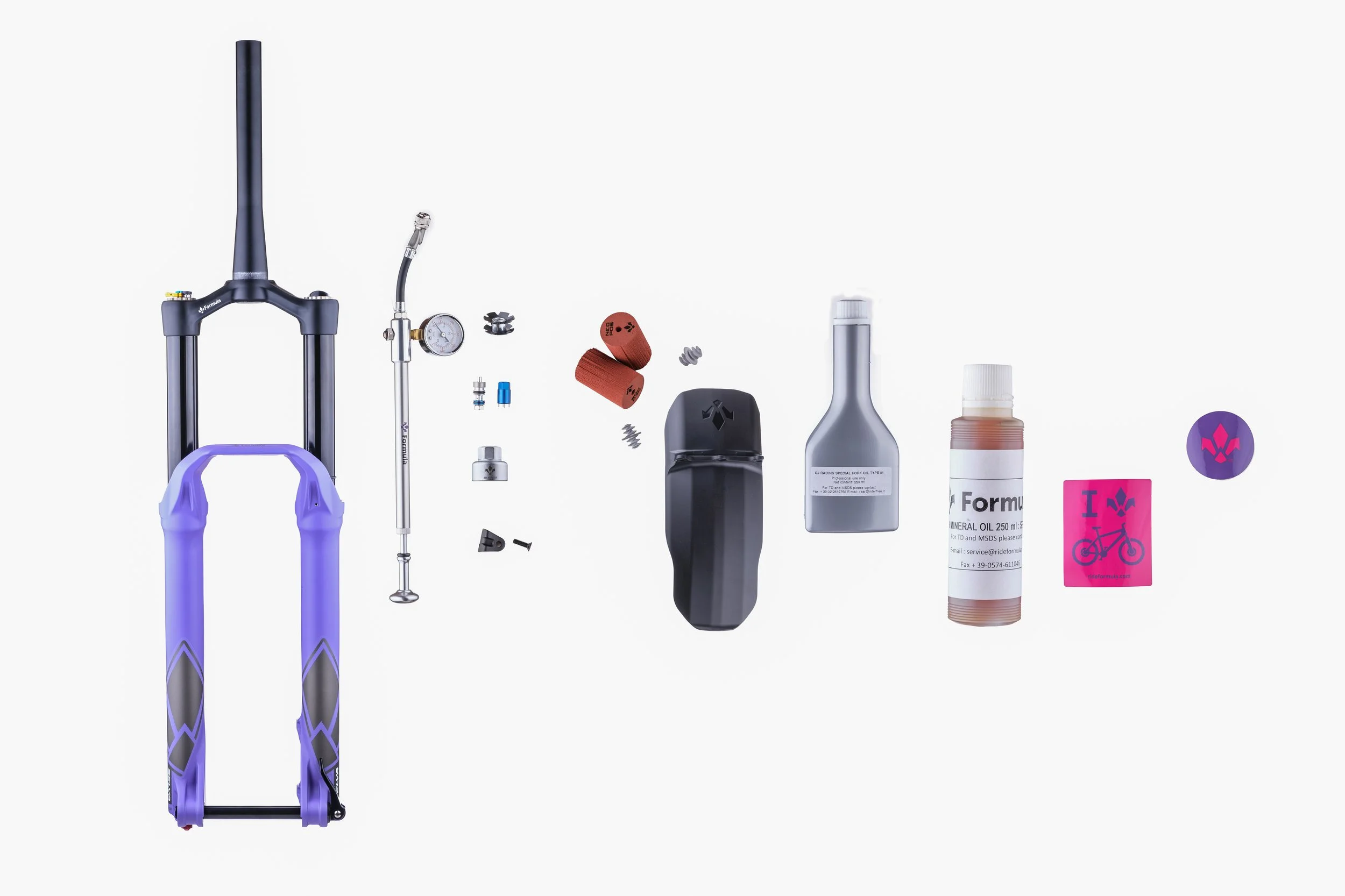
A delivery package that really stands out. Many other manufacturers charge extra for the fender and the tools.
How CTS works?
The CTS valves control the compression damping oil flow inside Formula’s damper cartridges and shock units. Each valve features its own piston design with different ports and small shims. The combination of these two elements determines how the oil flows at various shaft speeds.
Basic knowledge about shaft speeds
A suspension damper reacts differently depending on how fast the damper piston moves and how quickly the oil has to flow through the channels inside the cartridge. Within a damper cartridge, there are multiple oil paths with different-sized ports and valves. These determine how freely or how restrictively the oil can move. Some of these paths can be adjusted externally using dials (low-speed or high-speed compression), while others are controlled by shims—thin metal discs that cover ports and flex open as oil pressure increases.
The faster your fork compresses, the higher the shaft speed and the quicker the oil needs to be displaced. As a result, oil pressure rises, putting more load on the shims or valves and causing them to flex. The more the oil flow is restricted, the higher the damping force becomes—compression slows down, and the kinetic energy of the movement is converted into heat.
When the Formula fork or a shock compresses, oil is forced through the CTS in a specific direction. On its way, it has to pass through the ports and shims. Depending on how fast (or slow) the suspension compresses, the damper shaft moves accordingly. At the same time, the shaft displaces oil with its own volume, which puts even more fluid into motion.
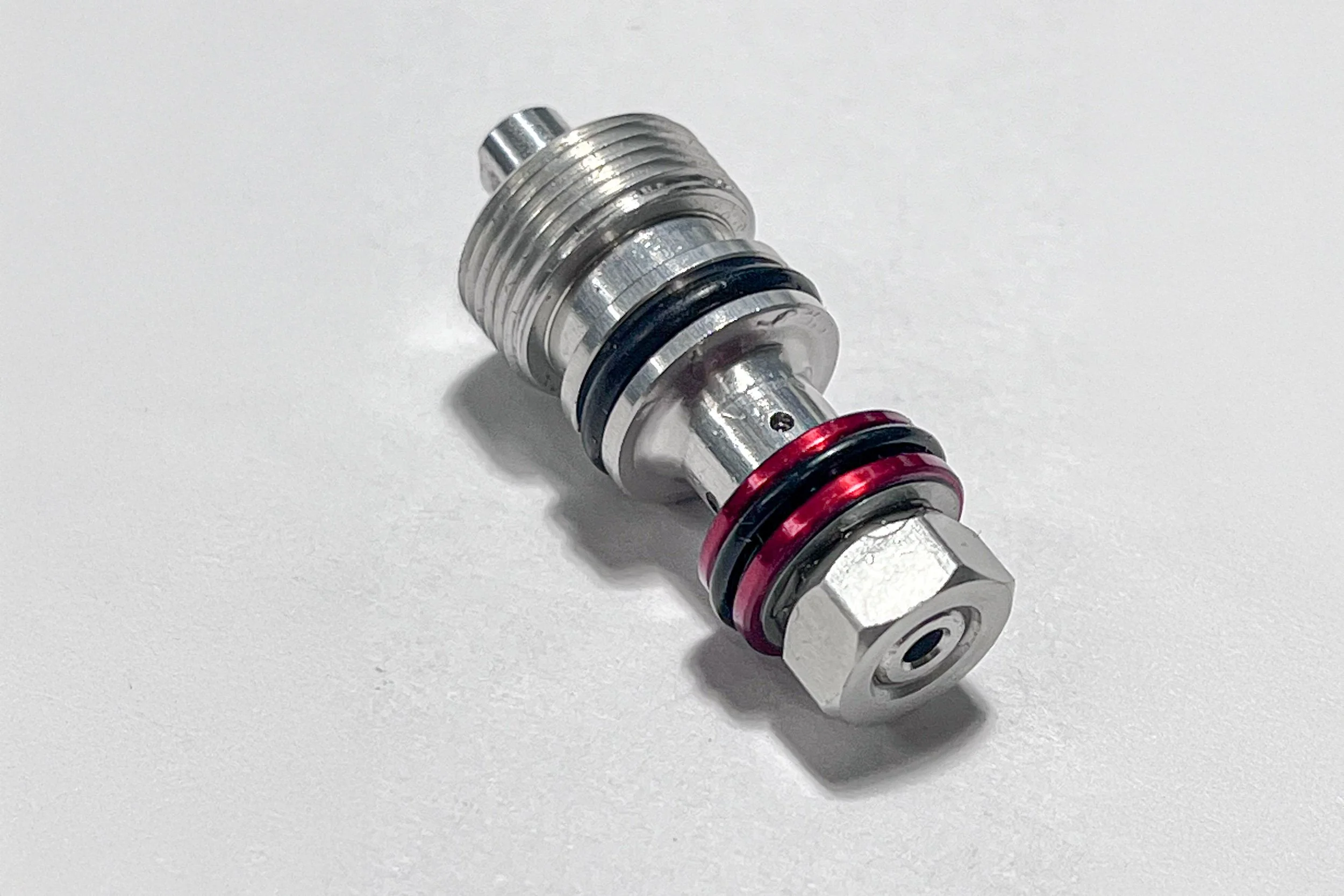
Here at the bottom, you can see the opening of the valve where the oil enters. Above it sit the shims and the component with the different ports.
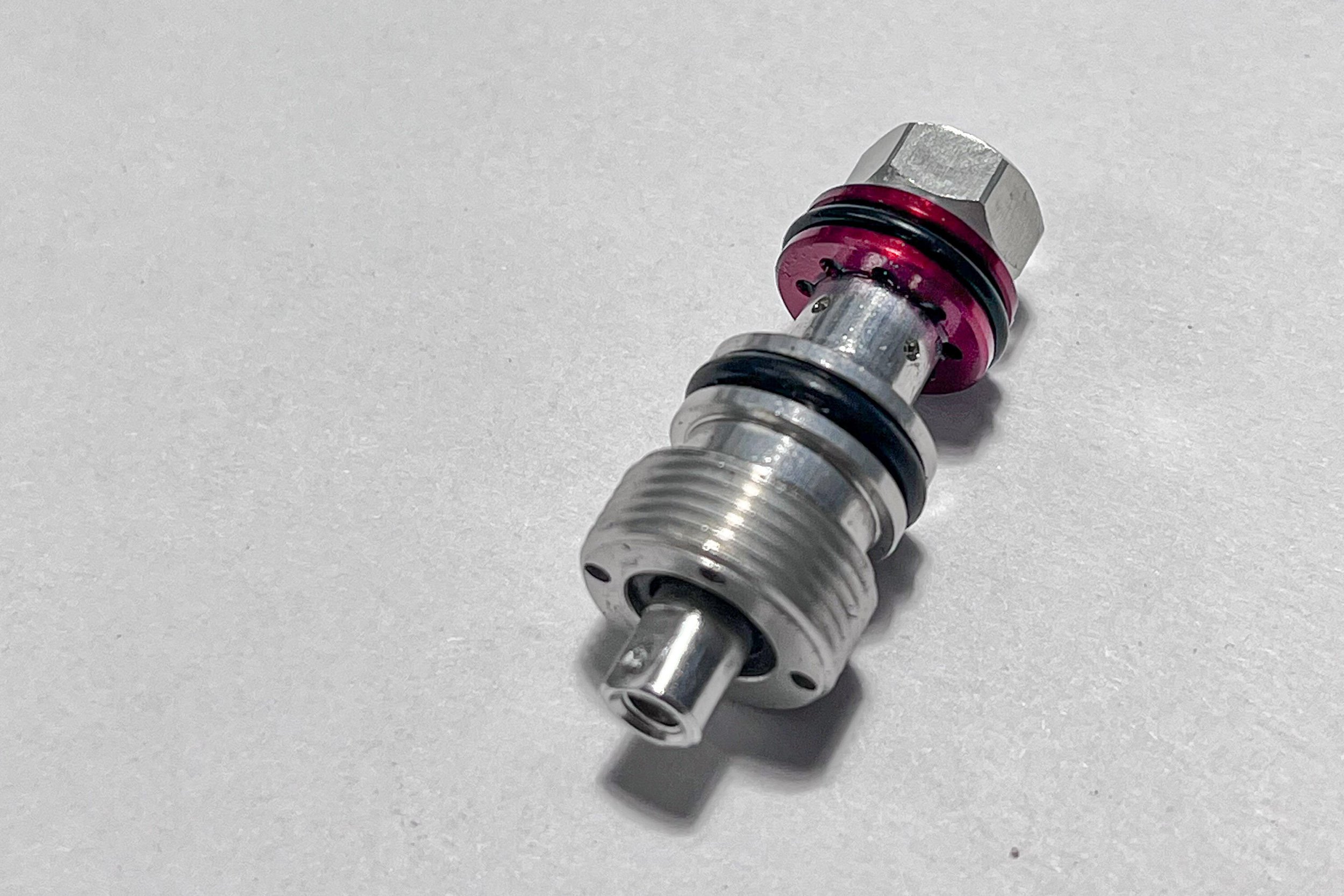
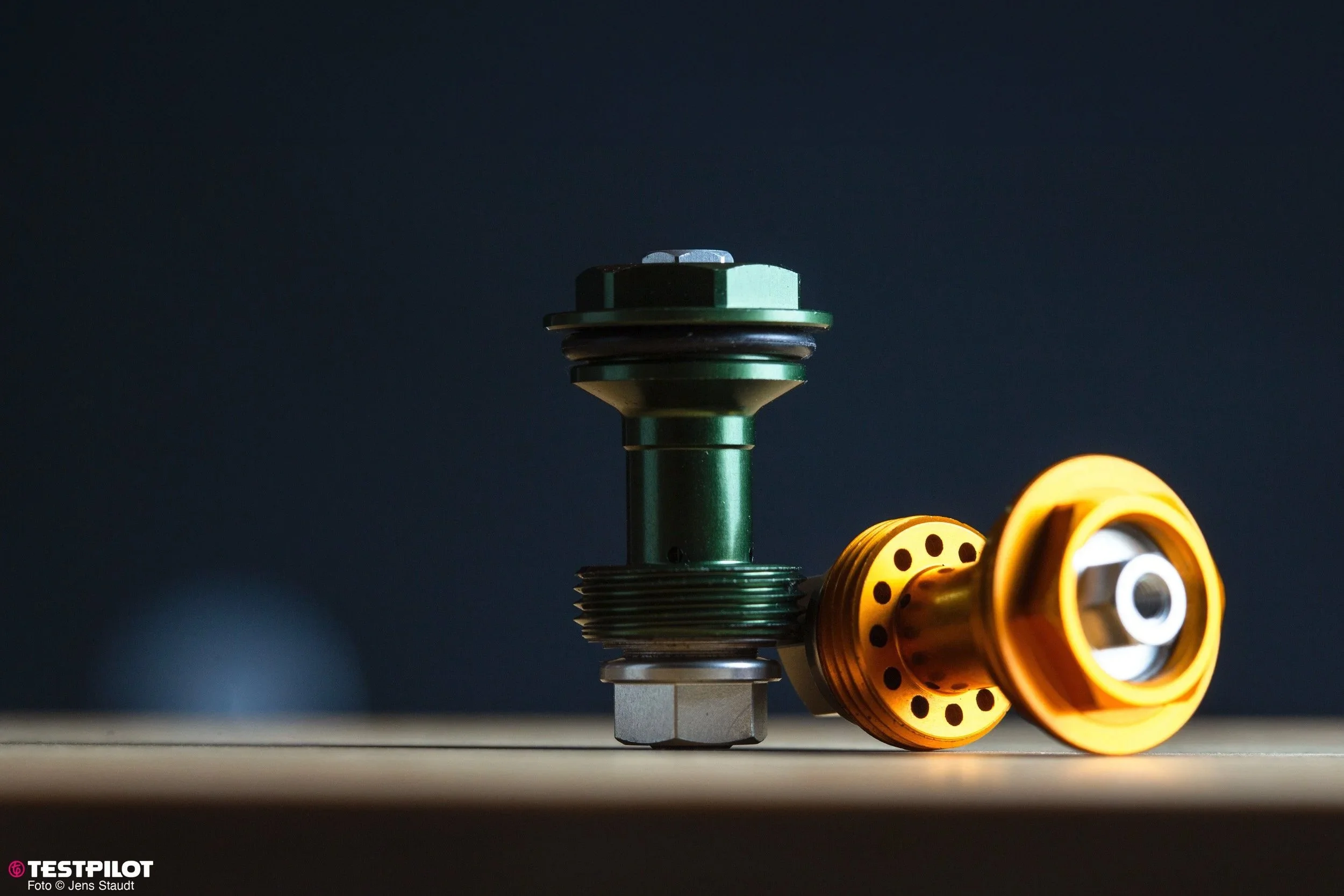
The same valve from the other side. Here you can see the ports in the anodized component. What is shown at the bottom here ends up on top when installed — that’s where the external compression adjuster is threaded in.
The faster the shaft moves, the higher the oil pressure and the greater the force acting on the ports and shims. Looking at the different CTS valving curves (shown in the next section), you get an idea of how each CTS valve behaves at different shaft speeds. Depending on the force applied, the ports and shims open faster, slower, or not at all, providing more or less damping. These adjustments allow the damping curve to be customized to your preference.
Instead of having to disassemble the suspension to change the damping curve with shims or oil viscosity, the CTS system simply swaps out a single assembly (the CTS cartridge) as a whole.
The blue compression knob lets you fine-tune the damping curve even further. Turning this knob clockwise moves a needle that restricts the oil flow, reducing the amount of oil passing through the valve and increasing damping.
For the forks, there’s also the option to install volume spacers—something Formula is currently working on for the Nebbia shock. Their approach with spacers is a bit different from the competition, but more on that later.
Which CTS are available?
The CTS valves are available for most current Formula forks and all shocks. An exception is the Nero downhill fork, which doesn’t use the CTS system.
You can distinguish the individual valves by their anodized colors. For fork CTS units, you can only tell which valve is installed once it’s removed. For shock CTS units, the color is visible even when installed.
What’s the same for both: you can see the different holes at the bottom of the valve. This lets suspension nerds speculate which CTS unit allows the oil to flow faster or slower during compression. Fewer and smaller holes generally mean more resistance, and vice versa. Formula provides a chart in the next section showing the characteristics of each CTS unit.
Here’s an overview of 7 out of 8 CTS valves for the fork. The different holes in the anodized part are clearly visible, giving a rough idea of which valve provides more resistance and which one less.
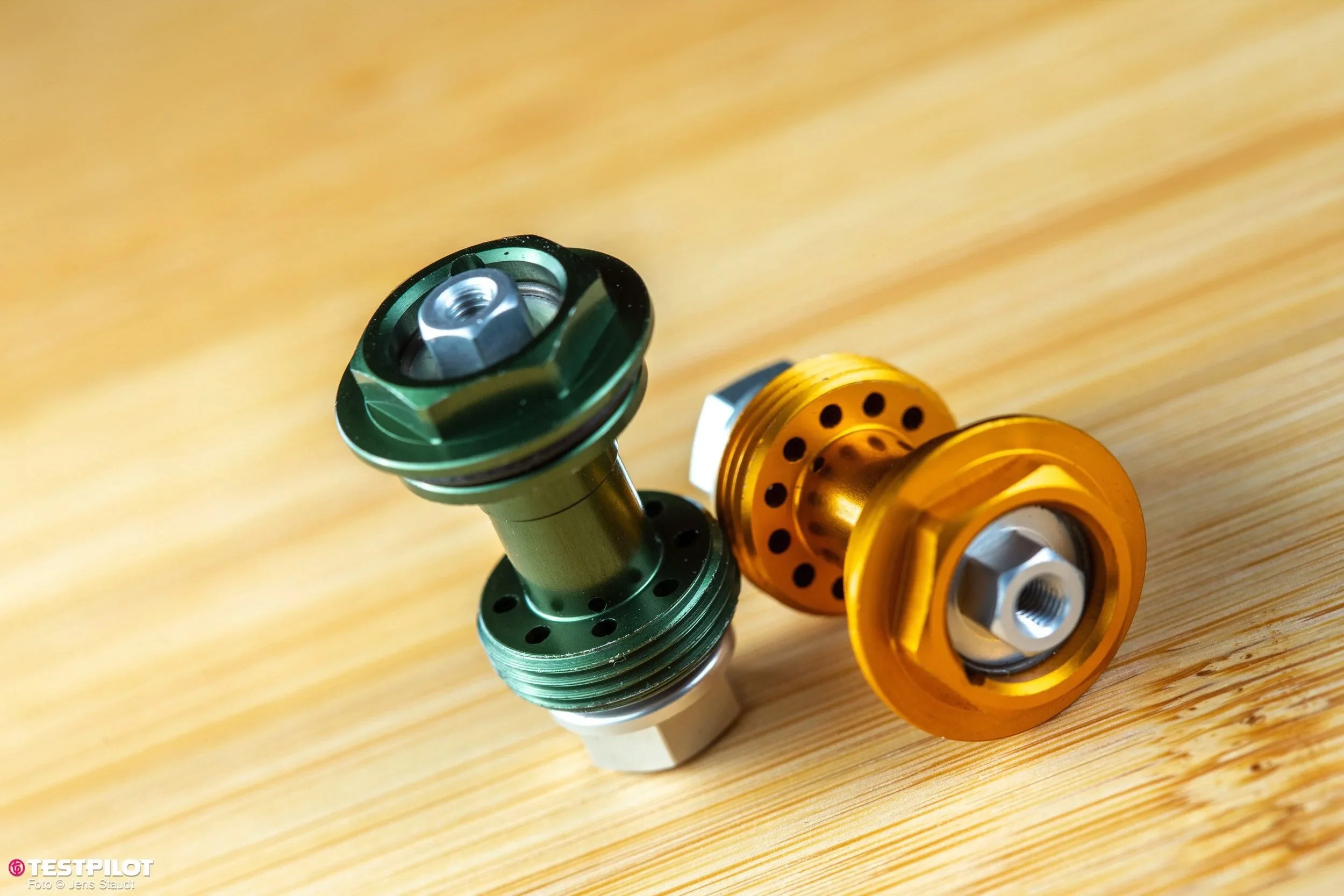
Here are 2 out of 3 CTS valves for the shock. Again, the number of holes varies clearly between them. Unlike the fork CTS, the entire upper part is anodized, making it visible from the outside on the shock.
Here’s an overview of the CTS options and their characteristics:
Formula Mountainbike suspension forks:
Selva V
Belva
Selva S
Selva R
Selva C
For these forks, there are currently a total of eight CTS valves available. The golden valve comes as the standard from the factory. For our Selva and Belva models, the blue valve was included as well. For those who want to dive deeper, six additional CTS valves can be purchased individually or as a complete set—the prices can be found in the next section, “Costs.”
The eight valves are divided into two categories:

They are divided into the Support Series and the Traction Series, each categorized into different levels. The specific characteristics of each valve are explained in the next section:
Traction Series
The damping curve starts softer and ramps up as it progresses. These valves are designed for riders who prefer a sensitive initial feel with plenty of grip:
Bronze – Maximum Comfort: Sensitive initial stroke, yet provides support on high-speed impacts.
Blue – Comfort & Support: Comfortable at low shaft speeds, with increasing progression during high-speed hits.
Red – High Speeds: A race-oriented setup offering strong resistance at fast shaft speeds while maintaining comfort on low-speed movements.
Support Series
As the name suggests, these valves provide more initial support, keeping you higher in the travel right from the start. The damping curve remains relatively consistent throughout the stroke. These CTS are ideal for steep trails or bike park tracks where extra support is needed:
Purple – High Flow: Maximum oil flow for fast compressions without sacrificing overall support.
Gold – The Cornerstone: Standard valve with a fine initial feel and a gentle, consistent progression at mid- and high-speed hits.
Orange – More Progressivity: Very sensitive in the first 2 cm of travel, with increased support at low and mid shaft speeds and rising progression toward the end of the stroke.
Green – Race with Support: Designed for racers who need sensitivity in the first 2 cm but plenty of support on medium and fast hits. Great for riders who put a lot of weight on the front.
Titanium – E-Bike Racing Specific: Based on the Green valve, specially tuned for aggressive e-bike riders and higher system weight.

For illustration: here are the different damping curves of the eight CTS valves for the fork.
Formula shocks compatible with CTS
Nebbia
Mod DH
Mod
For the shocks, there are three included CTS valves:
Gold (light), Orange (medium), Green (firm).
Shock CTS is a bit more complex than for forks because the frame’s kinematics also come into play. What works well on Bike A might not feel right or perform the same on Bike B.
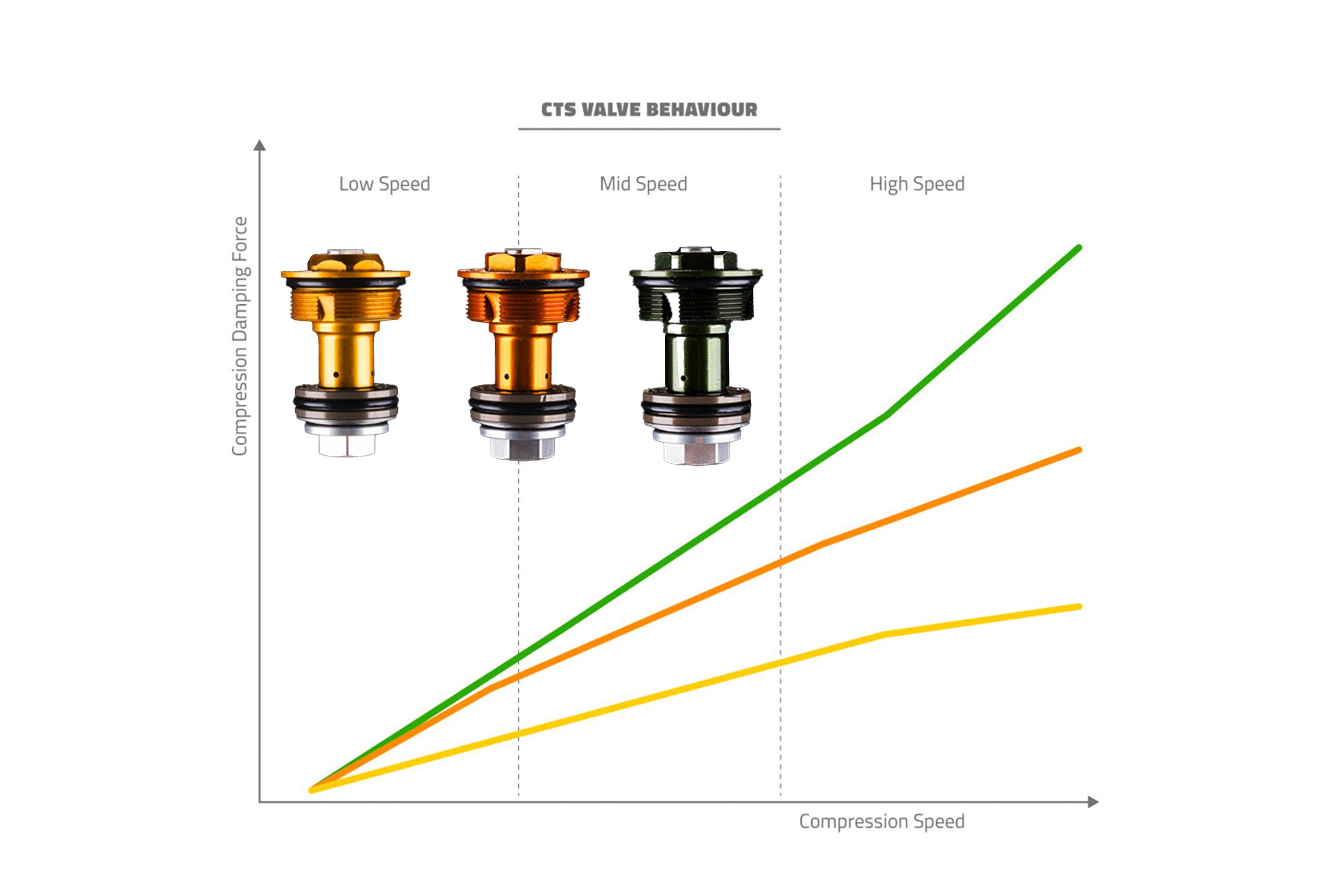
For the shock, there are only three valves: light, medium, and firm. When choosing a CTS, the rear suspension kinematics play a major role in how it performs.
On a very progressive bike, for example, the green CTS might be too much if high progression and strong damping add up. Since the shock comes with all three CTS valves, you can test them to find the best setup for your frame. You can also still use the compression knob to fine-tune. Formula is currently working on the Neopos volume spacers for the Nebbia air shock, which will be available in the future.
Where other frame-shock combinations require careful tuning to get it right, the Nebbia lets you carry the CTS over to your next bike without needing a tuner—provided the mounting dimensions fit. Formula is being very user-friendly here, including three spacers for adjusting the travel: 2.5 mm, 5 mm, and 7.5 mm.
What are the cost for Formula CTS?
| CTS | Euro | Dollar |
|---|---|---|
| GOLD | € 59,40 | $ 63,59 |
| ORANGE | € 59,40 | $ 63,59 |
| GREEN | € 59,40 | $ 63,59 |
| SILVER | € 59,40 | $ 63,59 |
| BLUE | € 59,40 | $ 63,59 |
| RED | € 59,40 | $ 63,59 |
| ELECTRIC BLUE | € 59,40 | $ 63,59 |
| VIOLET | € 59,40 | $ 63,59 |
| CTS Komplettpaket* | € 227,70 | $ 243,78 |
| CTS Tool | € 55,50 | $ 59,42 |
*The CTS complete package includes the following CTS valves: Bronze, Blue, Red, Purple, Orange, Green, Titanium.
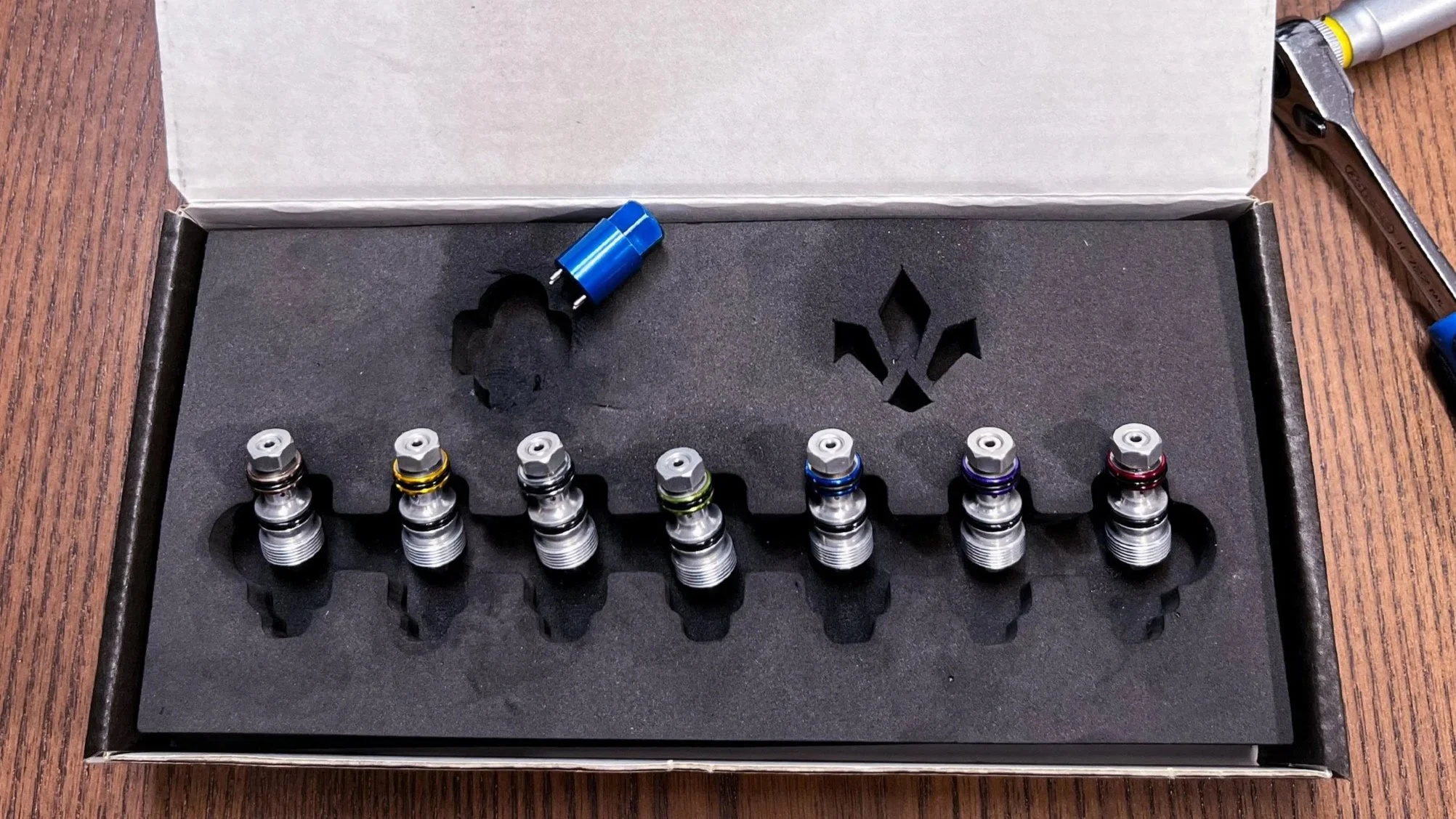
The CTS complete package comes in a handy storage box, including the remaining seven CTS valves and the installation tool.
How to change a CTS in Formula Suspension?
Changing a CTS valve only takes a few tools and a few minutes. This allows you to quickly test the different damping characteristics on the trail or in the bike park and find the best setup for you. Of course, make sure your hands are clean and avoid placing the valves directly on the forest floor or in the dirt.
If you have the CTS complete package, you can put the removed valve straight back into the box, keeping everything organized. For the shock, the process takes a little bit more time but is still easy to manage.
Some oil may escape or remain on the CTS during the swap. Using a paper towel helps prevent your suspension from getting oily after the change. There should always be a little oil in the CTS chamber—check this before installing the new valve, and if needed, add some Formula suspension oil to the chamber.

On the upper right side of the fork, the CTS valve is hidden beneath the compression adjuster. You can easily remove the adjuster with an Allen key and then take out the CTS valve using the supplied special tool.
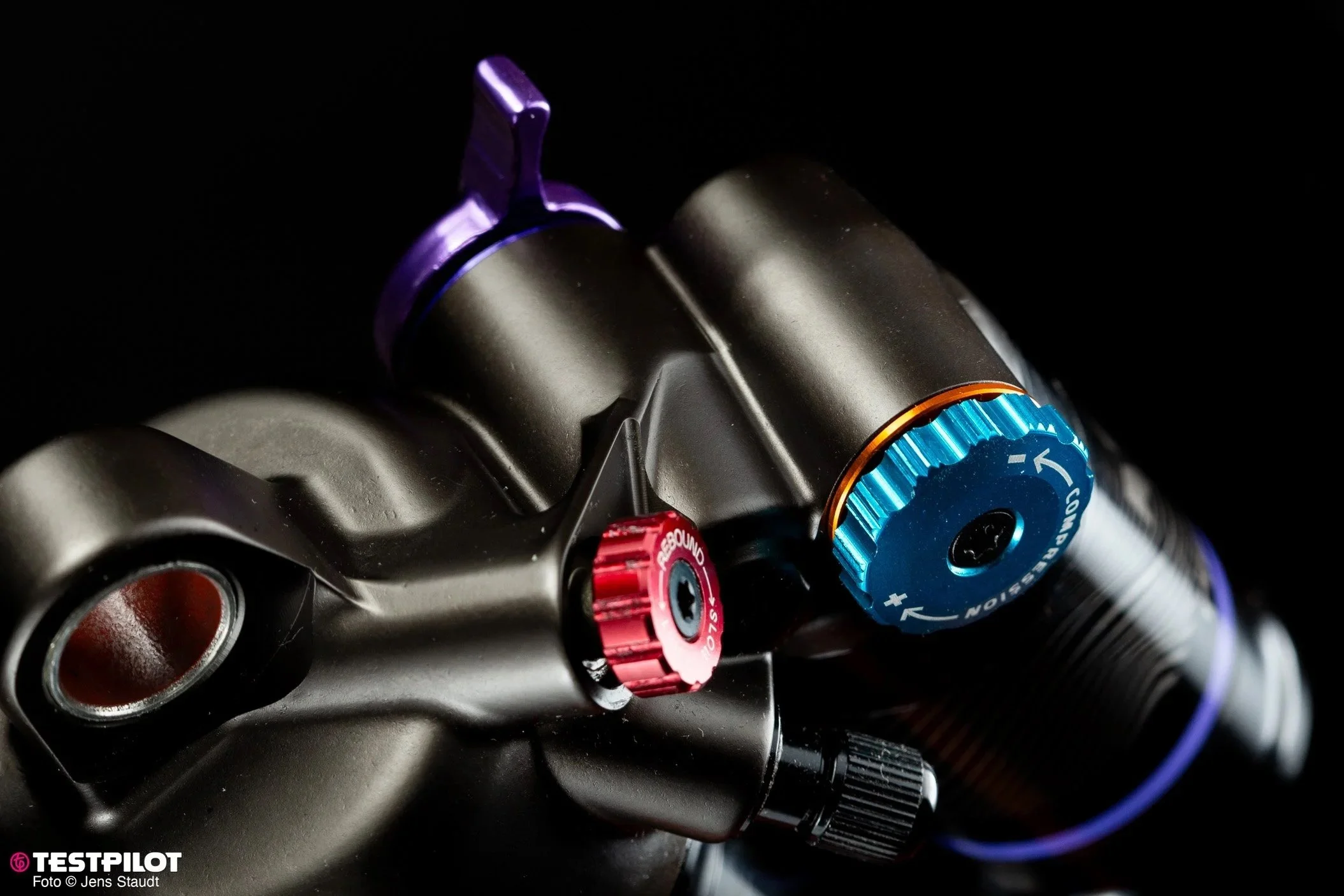
On the shocks, the CTS valve is also located under the compression knob. You remove the knob using a T10 Torx. For the shock CTS valve, no special tool is needed—just a 13 mm socket.
Changing CTS on a Belva or Selva
For the fork, you’ll need the following tools:
Formula CTS tool
10 mm wrench
1.5 mm Allen key
Shock pump
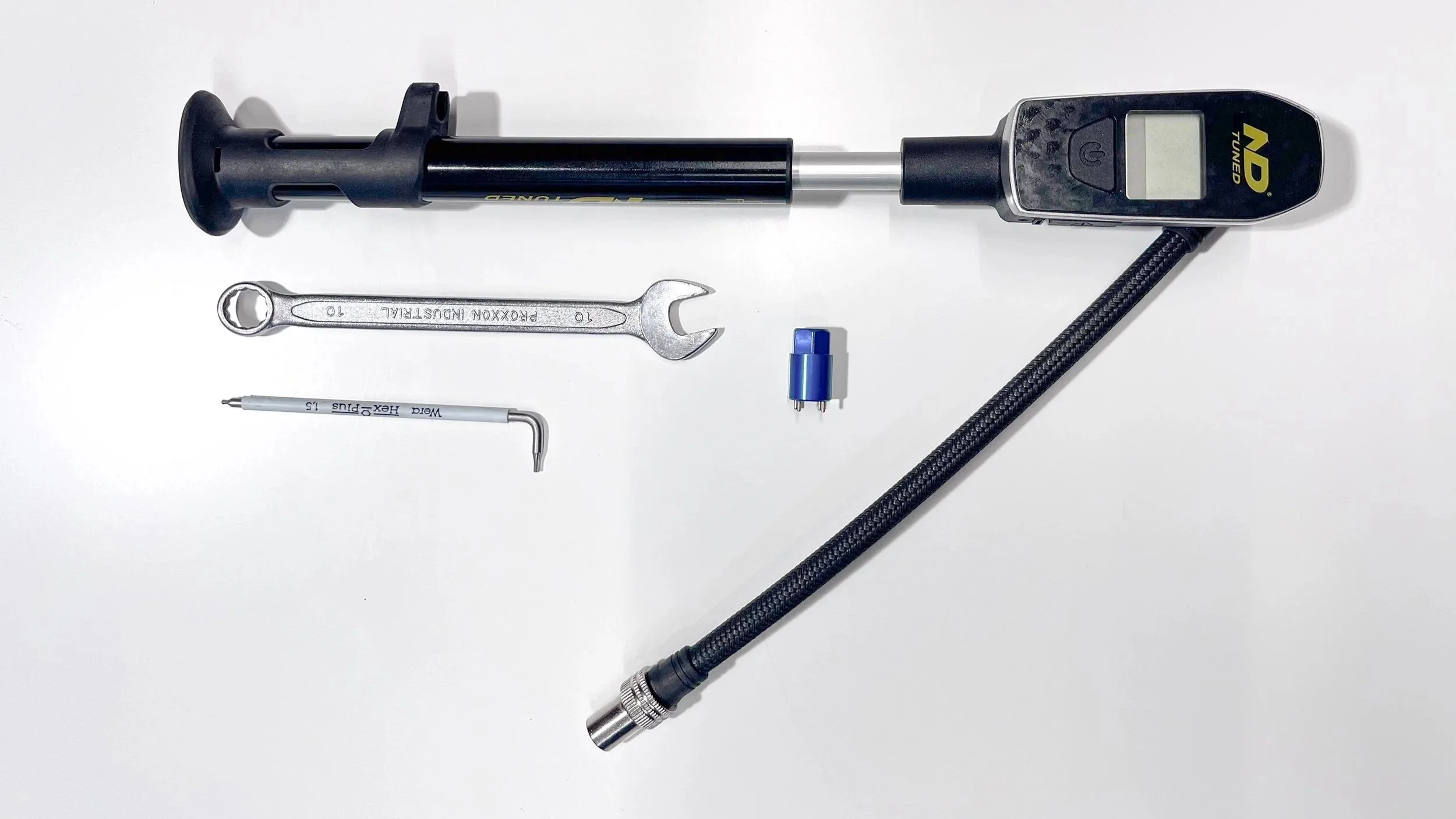
Here’s how to change the CTS cartridge on the fork:
Record your fork settings and air pressure.
Pump the air chamber to 100 psi. This keeps the fork high in its travel and prevents oil from leaking during the CTS swap. For a 2Air system, fully release the air from the lower negative chamber.
Set the lockout lever to the closed position.
Remove the compression knob using a 1.5 mm Allen key on the side screw.
Take off the O-ring.
Attach the CTS tool and unscrew the old CTS with a 10 mm wrench. Pull it out carefully—some oil may leak, but minor loss won’t affect damping performance.
Install the new CTS and screw it in with the CTS tool using a 10 mm wrench at about 3 Nm torque.
Reinstall the O-ring and compression knob, tightening the screw to 0.9 Nm.
Set the lockout lever back to the open position.
Restore the original air pressure.
Installing CTS at a Formula shock
Here are the tools you’ll need to change the CTS on the shock:
T10 Torx key
13 mm socket with ratchet
Shock pump
Syringe
Formula suspension oil (might not included)
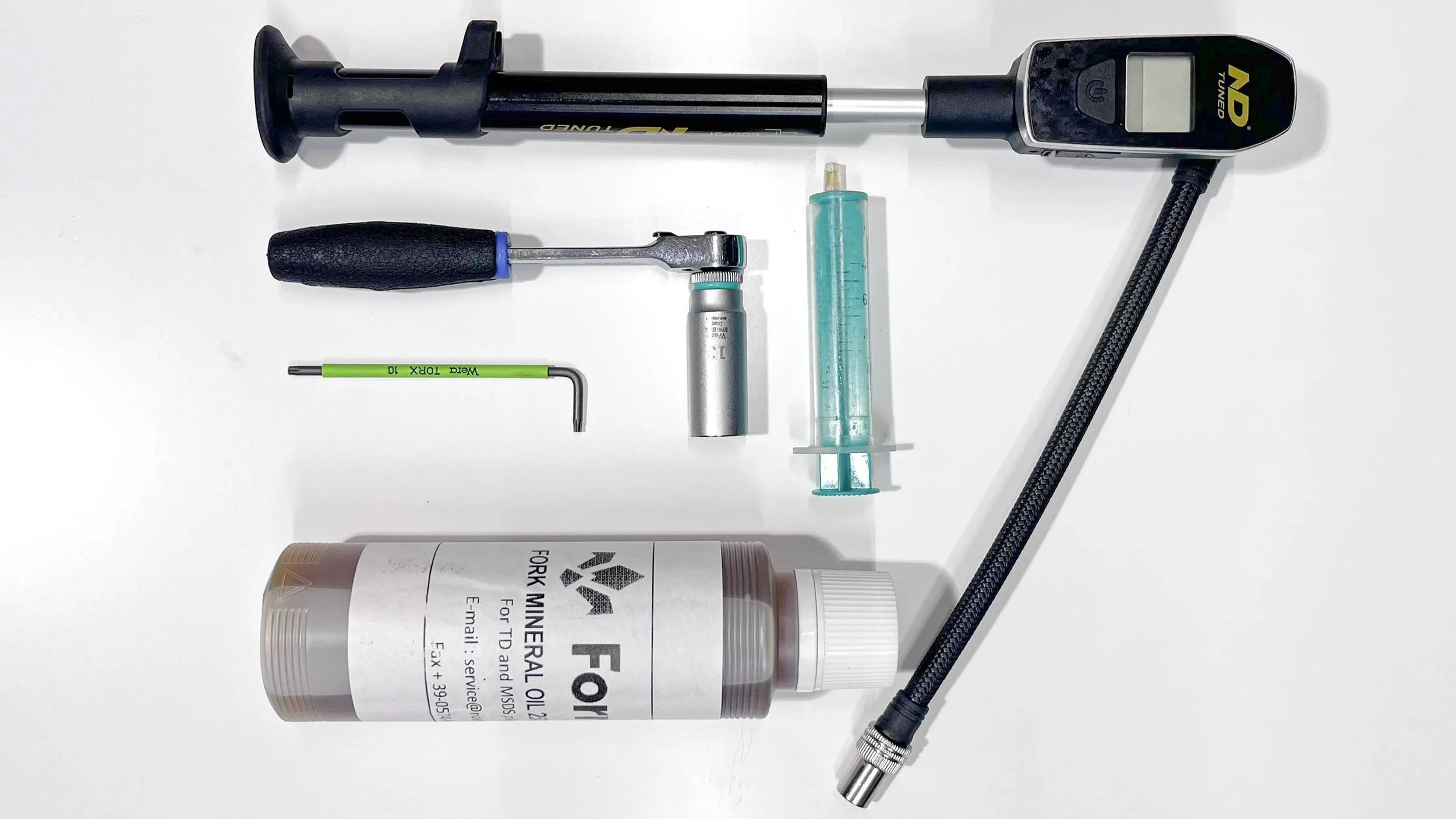
Here’s how to change the CTS valve on the shock:
Note your current shock settings.
Remove the shock from the bike.
Set the lock-out lever to the closed position.
Turn the compression knob fully counterclockwise.
Release air from the reservoir.
Position the shock so the compression knob faces upward.
Unscrew the compression knob with a T10 Torx and remove it.
Use a 13 mm socket to loosen and remove the CTS.
Add 2 cc of Formula suspension oil into the shock using a syringe.
Insert the new CTS and tighten it with the 13 mm socket to 7 Nm. Tip: use a paper towel to catch any excess oil.
Reinstall the compression knob and screw it back on.
Turn the knob fully counterclockwise to the open position.
Set the lock-out lever to open.
Re-pressurize the reservoir: Nebbia = 100 psi / MOD = 95 psi.
Clean the shock and reinstall it on the bike.
In the field
With the gold valve installed from the factory, you get a neutrally tuned suspension that works reliably and for a broad spectrum of riders might not need to be adjusted. Depending on the rear suspension kinematics, it’s highly recommended to experiment with the different CTS valves on the shock.
Now, let’s take a look at the standard functions of the suspension components. Each fork and shock comes with external adjusters for compression and rebound. On the enduro models, there’s also a lock-out lever.
The compression knob and lock-out lever with adjustable threshold sit on the top of the fork…

…and the rebound adjuster is located on the bottom.
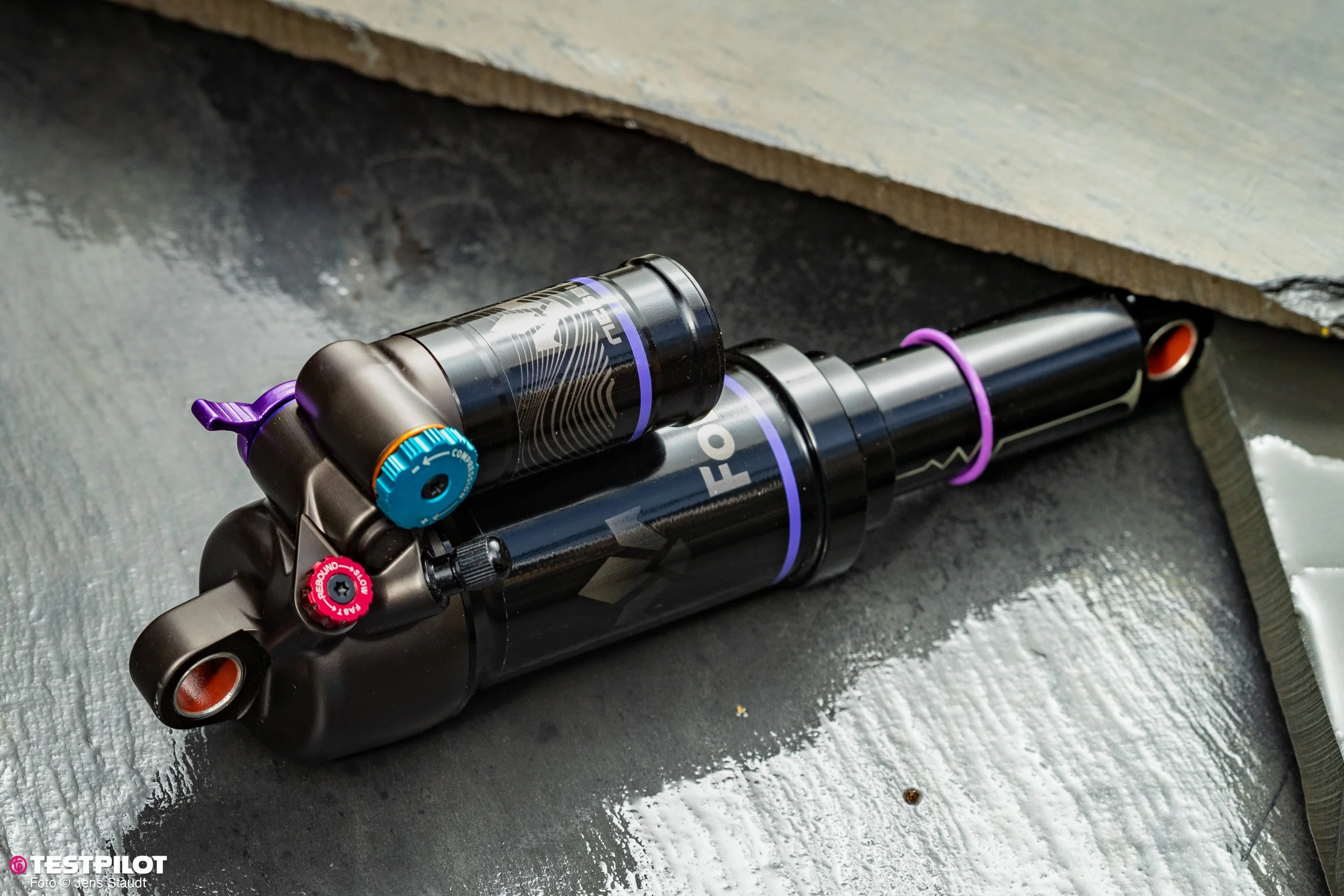
Formula Nebbia: Rebound and compression adjusters on one side, lock-out lever on the other.
With volume spacers, you can also fine-tune the air spring progression on your fork to match your preferences. But these aren’t your typical rigid plastic spacers. Formula uses what they call Neopos. Instead of a solid spacer, Neopos are made from a compressible, sponge-like material.
This allows the air spring’s progression to feel smoother and less abrupt toward the end of the travel. The Neopos can compress at different rates depending on the speed of the fork’s movement, and it expands again independently during rebound.
Currently, the Neopos are only available for forks, and they come included with the fork. Formula’s engineers are working on adapting them for the Nebbia air shock.

The Neopos volume spacers for the fork. Unlike most competing products, these spacers are compressible, resulting in a smoother and more consistent progression of the air spring.
The blue/purple chips included with the Nebbia aren’t volume spacers—they let you adjust the stroke, making it possible to fit the shock in different frames. There’s a 2.5 mm, 5 mm, and 7.5 mm spacer. A neat feature that makes the shock even more versatile across various frames.
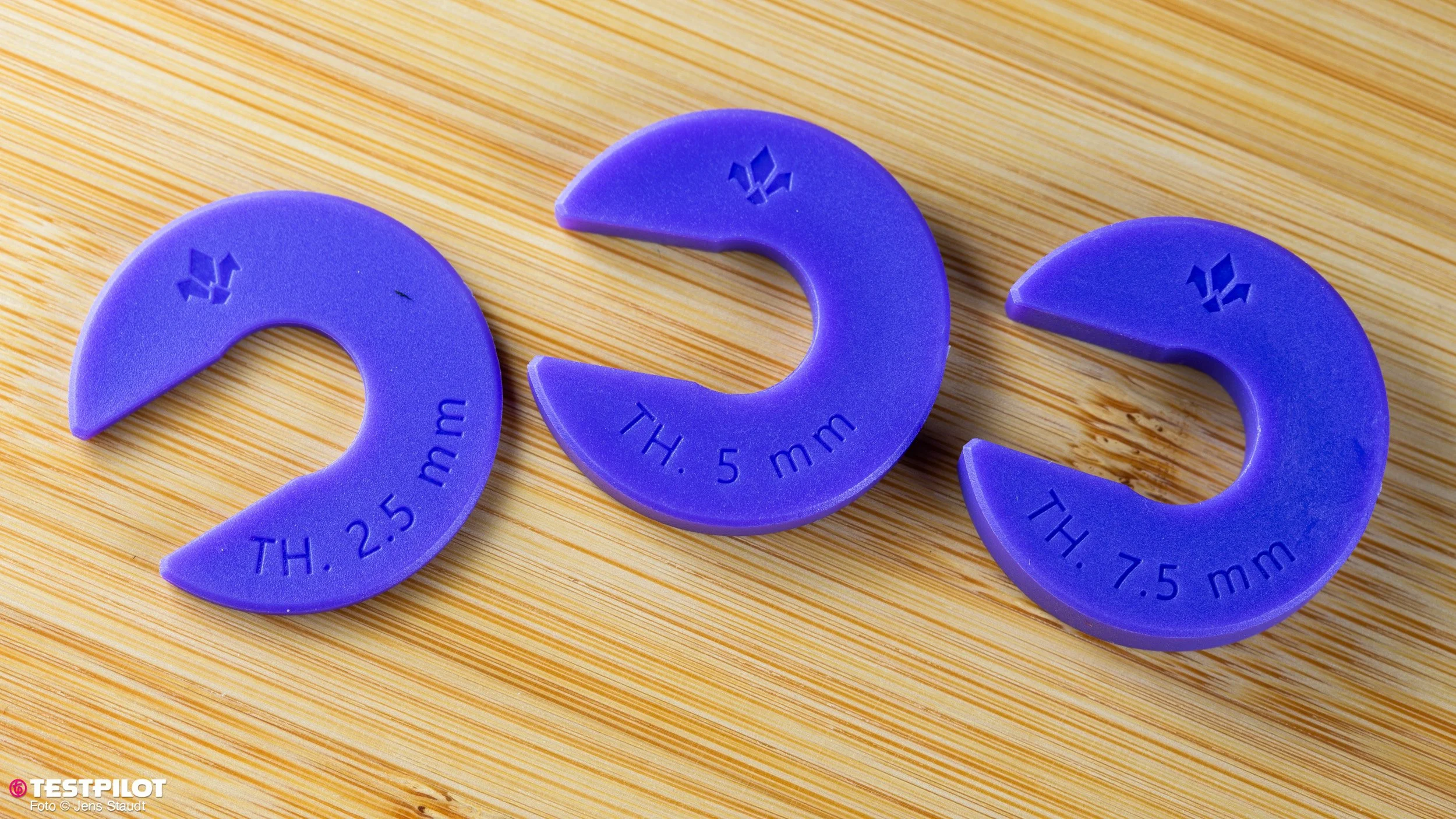
These aren’t volume spacers, but stroke-reducing spacers—allowing the shock to be used in different frame sizes.
If you want to dive even deeper, you can start with the CTS units included from the factory: the blue CTS for the fork, and the orange and green valves for the shock. Hungry for more and aiming to get the absolute maximum performance out of your fork? With the additional seven CTS valves, you can fine-tune it even more specifically for your riding style or the trails you tackle.
Important basics when you test CTS
For each suspension component, you should plan to spend a day or two testing. I did this with my Salsa Cassidy at Bikepark Lac Blanc, trying almost every CTS valve. Pick a trail that’s varied and that you can ride repeatedly. Swap a CTS valve roughly every 1–2 runs so you can get a clear, direct comparison.
After each run, take notes on what felt better or worse. Always start with the same air pressure. You’ll quickly notice differences in the damping characteristics. Depending on the CTS curve, you can then tweak air pressure and, if needed, the Neopos. Both Jens and I preferred working with these two parameters rather than adding a lot of compression—too much compression made the fork feel harsher and reduced its sensitivity.

The Salsa Cassidy with Belva double crown and Nebbia shock. Yes, you read that right: an enduro bike with a double crown. Huck, yeah!

On the new Selva V, I preferred a different CTS setting than on the Belva.
Fork
Just to recap, the extra blue CTS valve that comes with the fork has this characteristic: “Comfortable at low shaft speeds with increasing progressivity on high-speed hits.”
At the same air pressure and slow compression speeds, the gold CTS isn’t as sensitive as the blue one. However, the blue valve provides more support on high-speed impacts. On the Belva, I really liked that. But you can’t just transfer that feeling to every fork. The latest Selva V (read the review) comes with an updated air chamber featuring a smoother, lower-friction design—here, the red CTS with a bit more support felt better for us.

During our testing period, we agreed that it’s perfectly fine to try running the fork at slightly lower air pressure than Formula recommends. If this setup doesn’t provide enough progressivity at the end of the travel, you can simply install a Neopos spacer. The result is a fork that stays sensitive, actively uses the full travel, and still offers solid support on hard, fast hits. The damping kicks in effectively for high-speed impacts to prevent bottoming out.
A CTS valve from the Support Series is recommended for riders who prioritize efficiency while climbing, tackle steep trails, push hard on the front, or ride an e-bike with higher system weight. It provides more support and a smoother, more consistent damping curve across all shaft speeds.
Of course, you can also run different CTS valves depending on the trail or terrain.
For your mellow local trails, you might choose a softer setup, and in the bike park, switch to a firmer option for more support at high speeds. Or you could go the other way: more support for your home trails to stay efficient, and a more sensitive setting for the bike park so your hands don’t get beaten up over every braking bump. With the Compression Tuning System, the choice is entirely yours.
Shock
With the shock, as mentioned earlier, the rear suspension’s kinematics are key. If the rear’s leverage curve is already quite progressive, the green valve might be too aggressive. It’s better suited for a more linear rear setup when you want extra support and anti-bottom-out protection.

For example, the Salsa Cassidy should not run coil shocks because it relies on the progressive nature of an air shock. With the stock gold CTS, mid-speed impacts felt too soft—the ring would get pushed quickly to the end of the travel—while at slow shaft speeds it was a bit too insensitive.
Here, using the green CTS combined with a slightly lower air pressure (about 10 psi less) achieved the desired ride feel. The reduced pressure provided more sensitivity at low speeds, while the damping curve ramped up more progressively at medium and high speeds. With the same travel usage, the bike felt noticeably more responsive and composed, offering firm support on faster hits and landings without bottoming out.
Who benefits of a system allowing Compression Tuning?
Experimental tinkerers & tech enthusiasts:
Do you enjoy optimizing your bike and understanding what’s happening inside your suspension? Do you like testing different setups on varied trails and conditions to see what works best for you? The CTS system makes suspension tuning accessible and understandable. You can see the damping curves on paper and feel, in a 1:1 comparison, how they translate to the trail. Of course, tuning your suspension manually with a shim stack is still a more advanced step, but CTS gives a clear insight into what’s possible.Ambitious riders & racers:
Chasing those crucial seconds? Just like the pros, you can use CTS valves to fine-tune your suspension for specific tracks or weather conditions. More support or more sensitivity? No problem with this system. And the best part: you can do it right before a start or between training runs. It only takes a few minutes—no need to disassemble or service your suspension.Multi-bike riders:
Want to use your fork or shock on both a regular bike and an e-bike? Thanks to the different CTS options, you can adjust the fork to accommodate the higher system weight of an e-bike. For the shock, the three CTS valves ensure you’re not limited to a specific rear suspension kinematic. With the shock travel spacers (2.5 mm, 5 mm, and 7.5 mm), the shock can fit a wide variety of frames.
Conclusion
Formula’s Compression Tuning System (CTS) is far more than just a clever gimmick—it’s a real tool for riders who want easy, straightforward access to suspension tuning. Whether you’re a weekend warrior or a full-on racer, the full range of CTS options offers a damping curve to suit everyone.
Riders who take the time to explore the system and test the different CTS valves against each other will benefit from a suspension setup tailored specifically to their preferences. Linear, progressive, or degressive? Plush and comfortable, or firm with more support? All of it can be achieved in just a few minutes—and adjusted further depending on your ride style, trail, or bike. The fun and learning experience along the way is significant, too!
With the ability to adjust the damping curve and the Nebbia shock travel spacers, Formula offers a truly versatile shock that can be installed in a wide range of frames.



You want more reviews?




Autor – Yannick Noll

Height: 178 cm
Weight: 75 kg
Riding style: As a former racer, it should be fast and flowing. Bigger jumps and steep ramps are also a must. The bike is tuned a bit firmer and quicker so that it responds promptly to rider input.
Motivation: It should be fun. A bike shouldn’t be boring, just flattening everything. The character can be a bit livelier – both in its setup and in the riding style. The product should be durable and function reliably even on longer bike trips.