

Review: Marzocchi Z1 Coil GRIP
Reading time: 8 Minuten
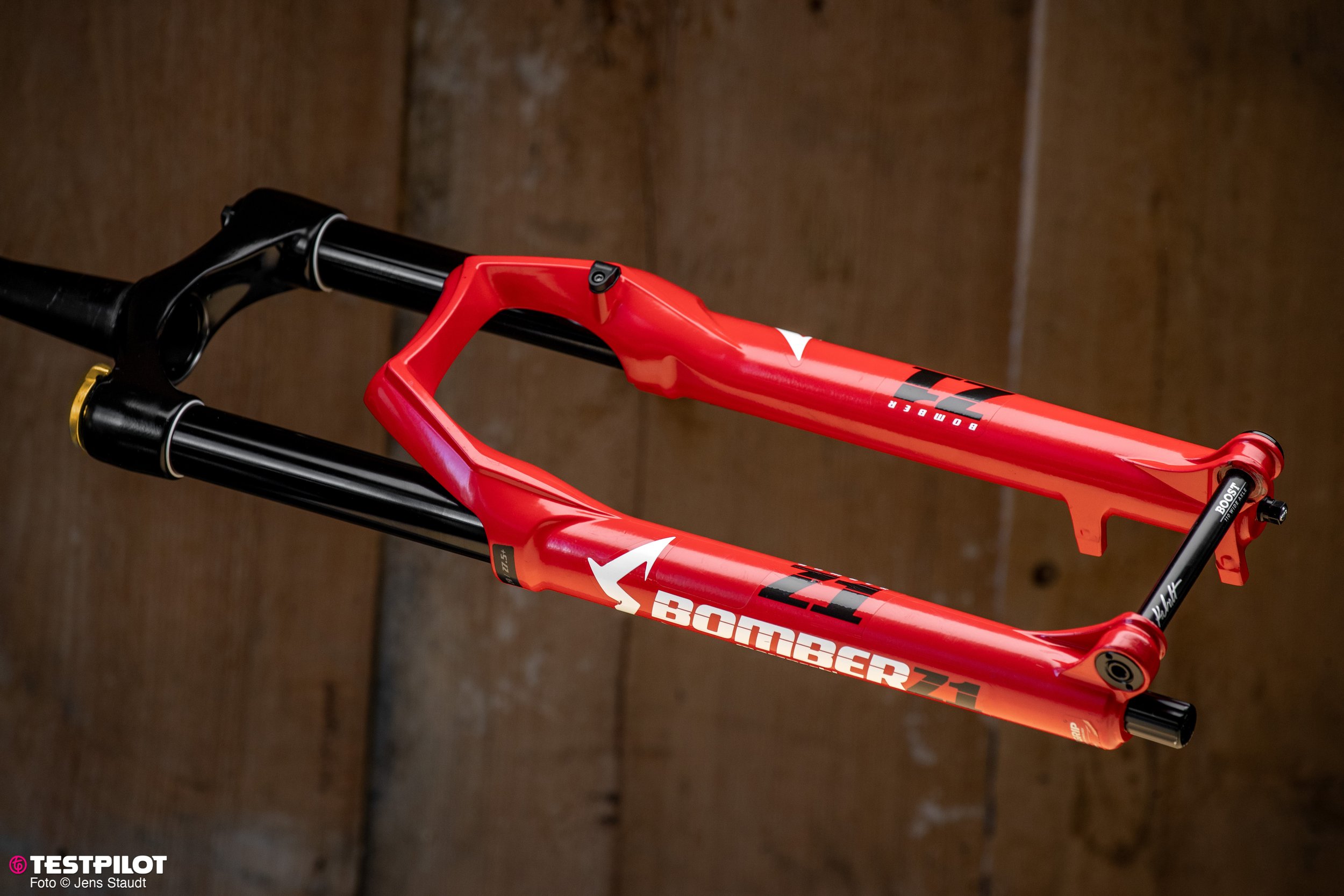
Marzocchi—a name steeped in tradition within the bike industry. But also a story of ups and downs, with shifts in between countries for production and various owners. Under the red banner with its iconic M-bridge design, the brand swung back to its core values: straightforward setup and solid performance. The Z1 is offered in both air and coil versions. 30 years after the first Z1, we're sending its great-grandchild, the GRIP coil version, out on the trails. Can it hold its own against the competition with its simple setup and limited adjustability?
Technical info – Marzocchi Z1 Coil GRIP 2022
| Application | AM / Enduro / Trail |
| ⌀ | 36 mm |
| Travel | 29″: 150, 160, 170 mm / 27,5″: 160, 170, 180 mm |
| Settings | Preload, LSR, C |
| Suspension | Coil spring |
| Damping | GRIP |
| Wheel sizes | 29″ / 27,5″ |
| Max. Tire Width | 2,6″ |
| Axle dimension | 15 x 110 mm Boost |
| Brake rotor | PM 180–203 mm |
| Offset | 44 mm |
| Axle-to-Crown | ca. 580 mm |
| Steerer tube | 1,5–1 1/8″ |
| Casting | Aluminium |
| Wipers | Standard |
| Fender | optional |
| Color | Shiny Black / Gloss Red |
| Weight | 2.549 g |
| Warranty | 2 years |
| Price (RRP) | ca. 999 € |
| Website | marzocchi.com |
Tech bits Marzocchi Z1 Coil
Marzocchi Z1 Coil – Chassis
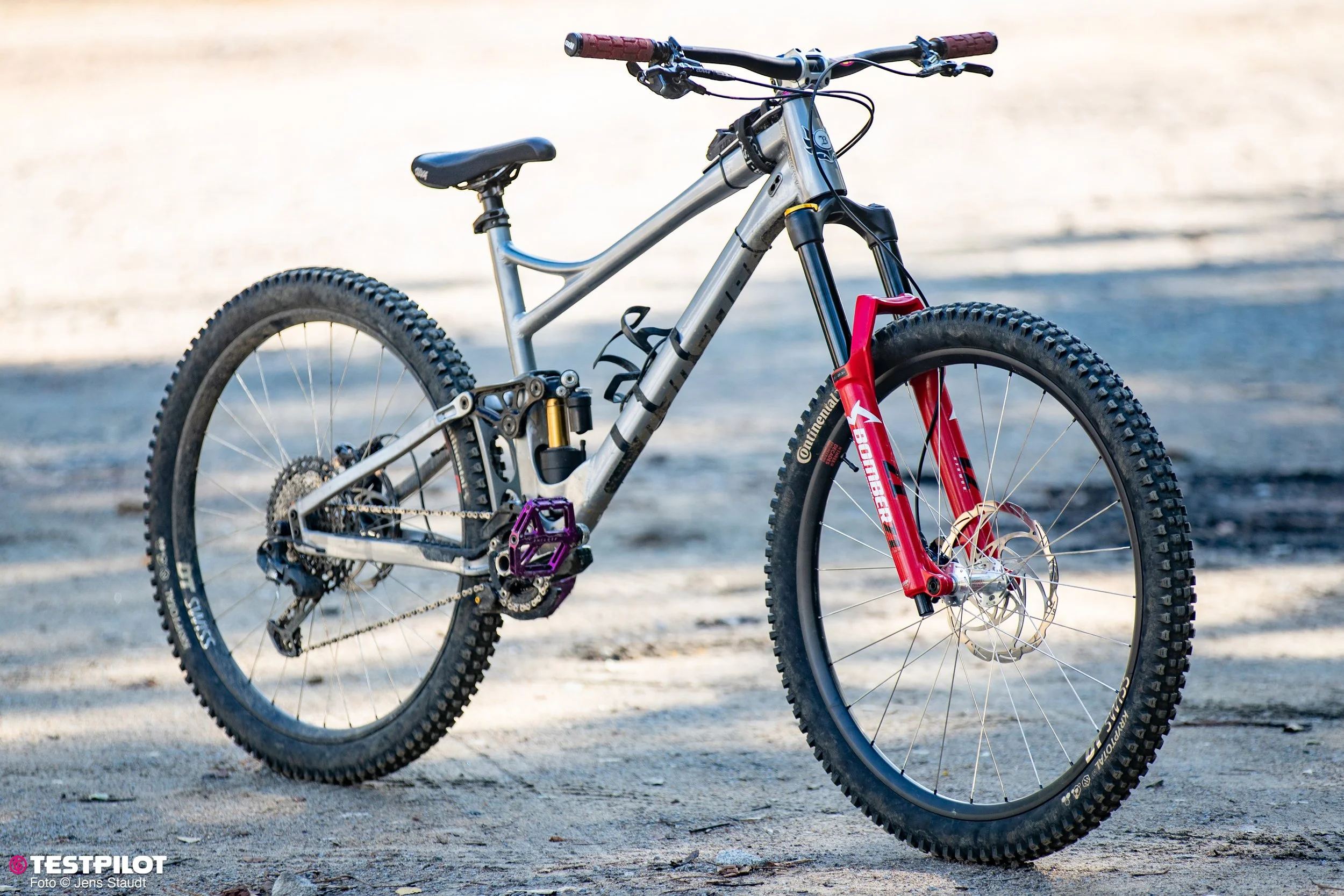
Since Marzocchi has married into the Fox family, they share certain characteristics. Comparable to the Fox 36, you'll find the same stanchion diameter, though less polished and without the Kashima finish. However, with its black anodized coating paired with the red lower legs, the fork still looks valuable.
In the air version, the fork comes in just under the 2.3 kg mark. With the stiffest steel spring, it adds a good 200 g, bringing the total to 2,549 g—an upper-midrange weight in our testing field.
The brake line is mounted classically on the left side of the casting using a bolt-on clamp.
The fork is available for the most common wheel sizes and travel options:
Wheelsizes: 27,5" and 29"
Travel: 150 mm (nur 29"), 160 mm, 170 mm and 180 mm (only 27,5")
Offset: For 27,5" there is only 37 mm, while you can get 29" with either 44 mm or 51 mm.
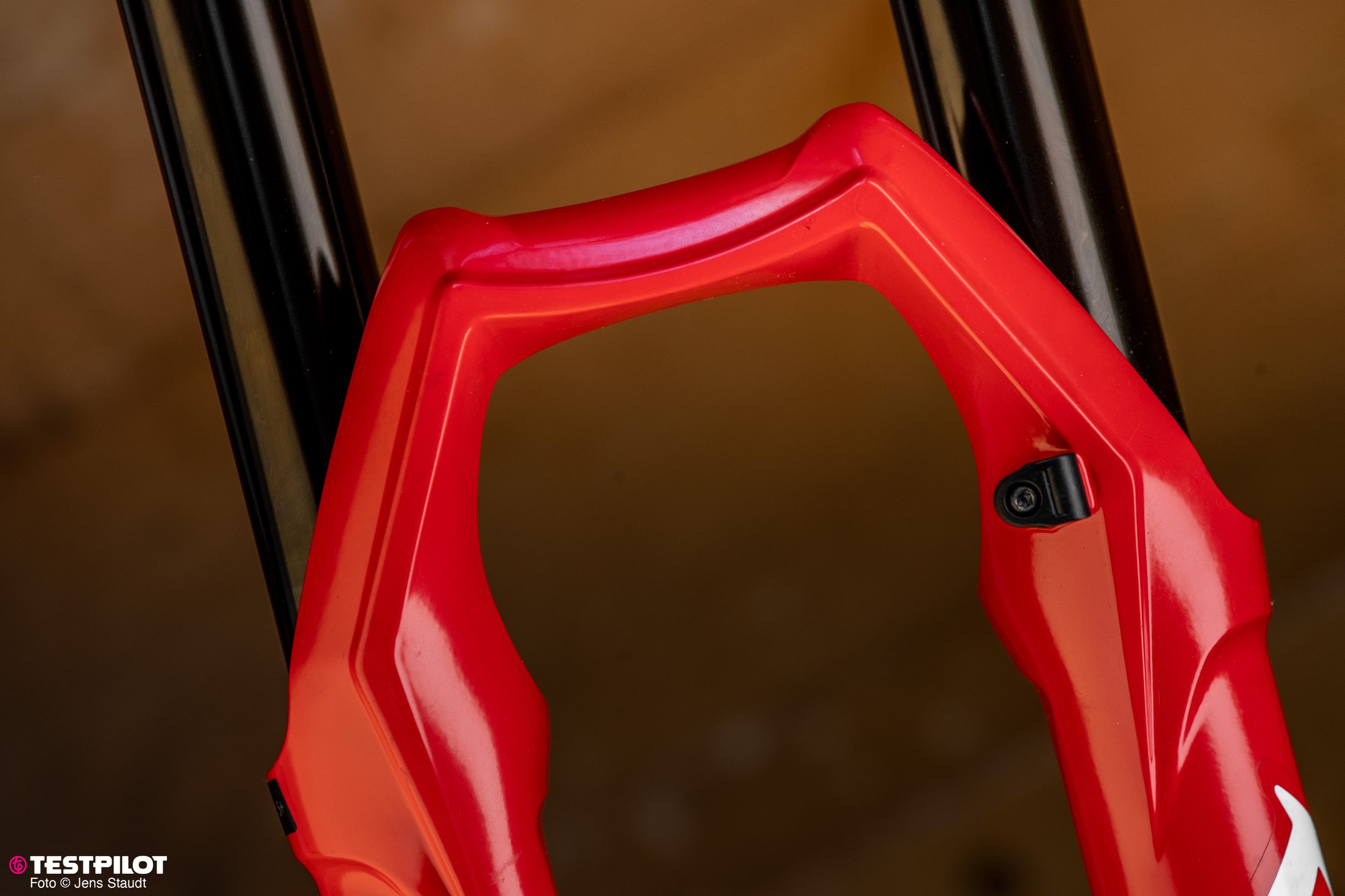
Marzocchi-M blaring red and black 36er-stanchions.
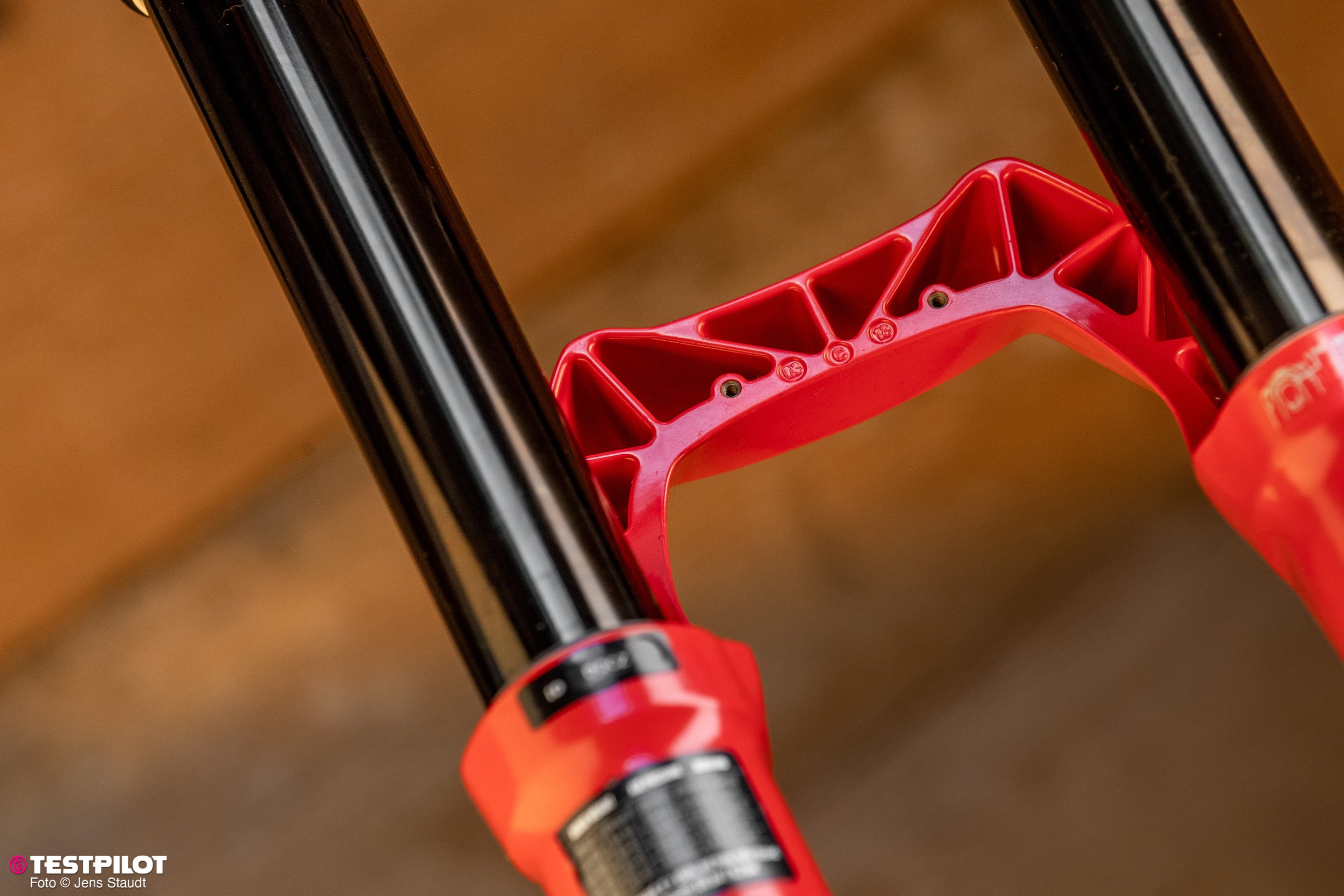
Cutouts the iconic crown light from the inside.

Marzocchi Z1 Coil – A spring discussion
In a world where air springs seem to have taken over everywhere, a literal steel spring almost stands out as something special. Marzocchi uses a hardened silicon-chromium steel spring in the Z1. As the name "Coil" suggests, it is known for a particularly sensitive and buttery smooth ride. To prevent annoying rattling noises on the trail, the spring is encased in a plastic sleeve at the top and is additionally guided internally by a plastic cylinder. This keeps it from backing around inside the stanchion.
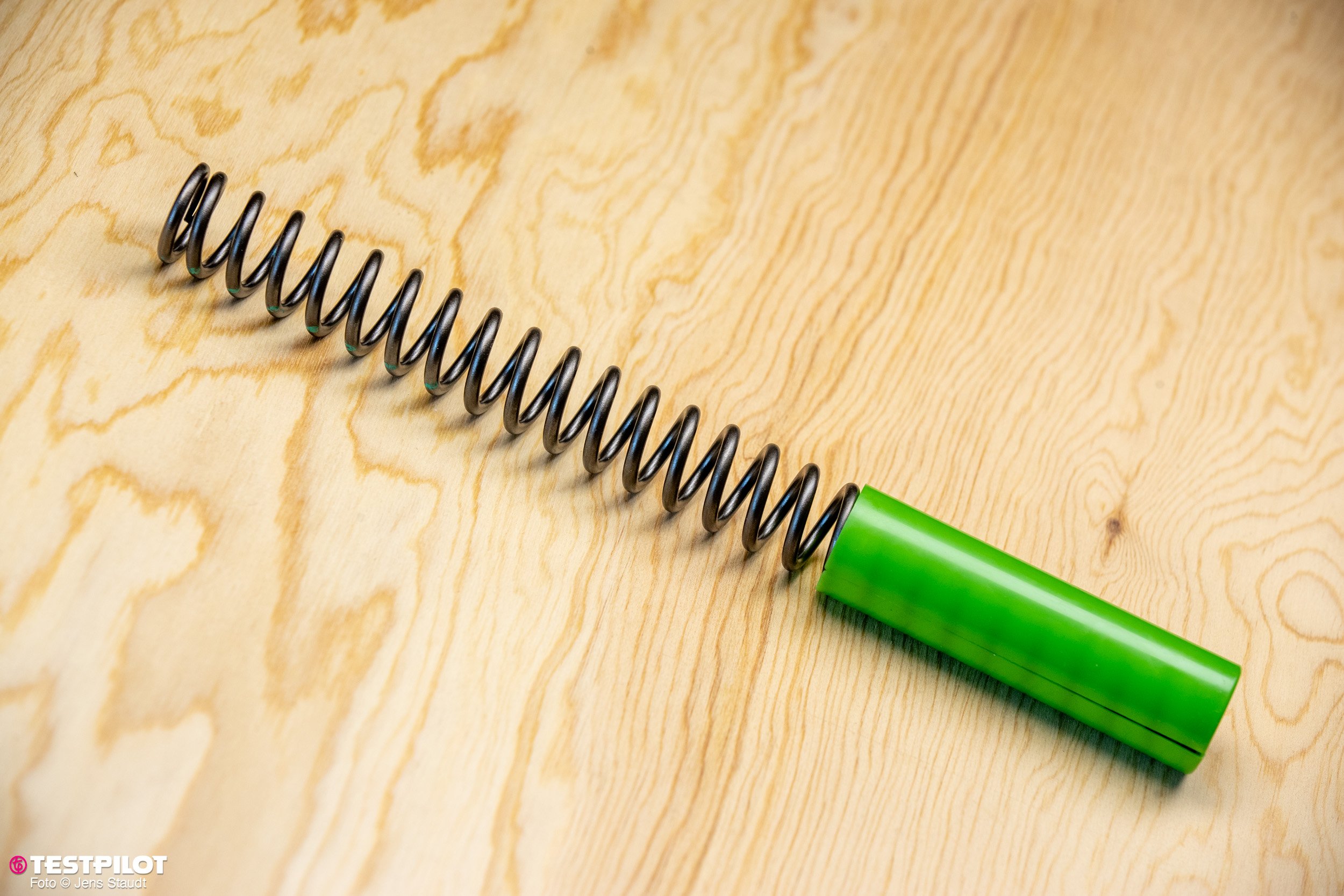
The Z1 uses a hardened silicon-chromium steel spring. At the top end, there is a plastic sleeve designed to prevent rattling noises.
Available spring rates
The fork comes standard with the medium spring (blue). However, different spring rates are available separately for almost all weight categories. The conversion kit for owners of an air-sprung Z1 weighs between 298 and 377 grams, depending on the rate. Using the external preload adjuster (top cap) gives a little bit of wiggle room to stiffen things up.
| Spring | Rate | Riderweight |
|---|---|---|
| Purple | Soft (soft) | 54–68 kg (120–150 lbs) |
| Blue (Stock) | Medium (mid) | 68–82 kg (150–180 lbs) |
| Green | Firm (hard) | 82–95 kg (180–210 lbs) |
| Yellow | Extra Firm (extra hard) | 95–113 kg (210–250 lbs) |
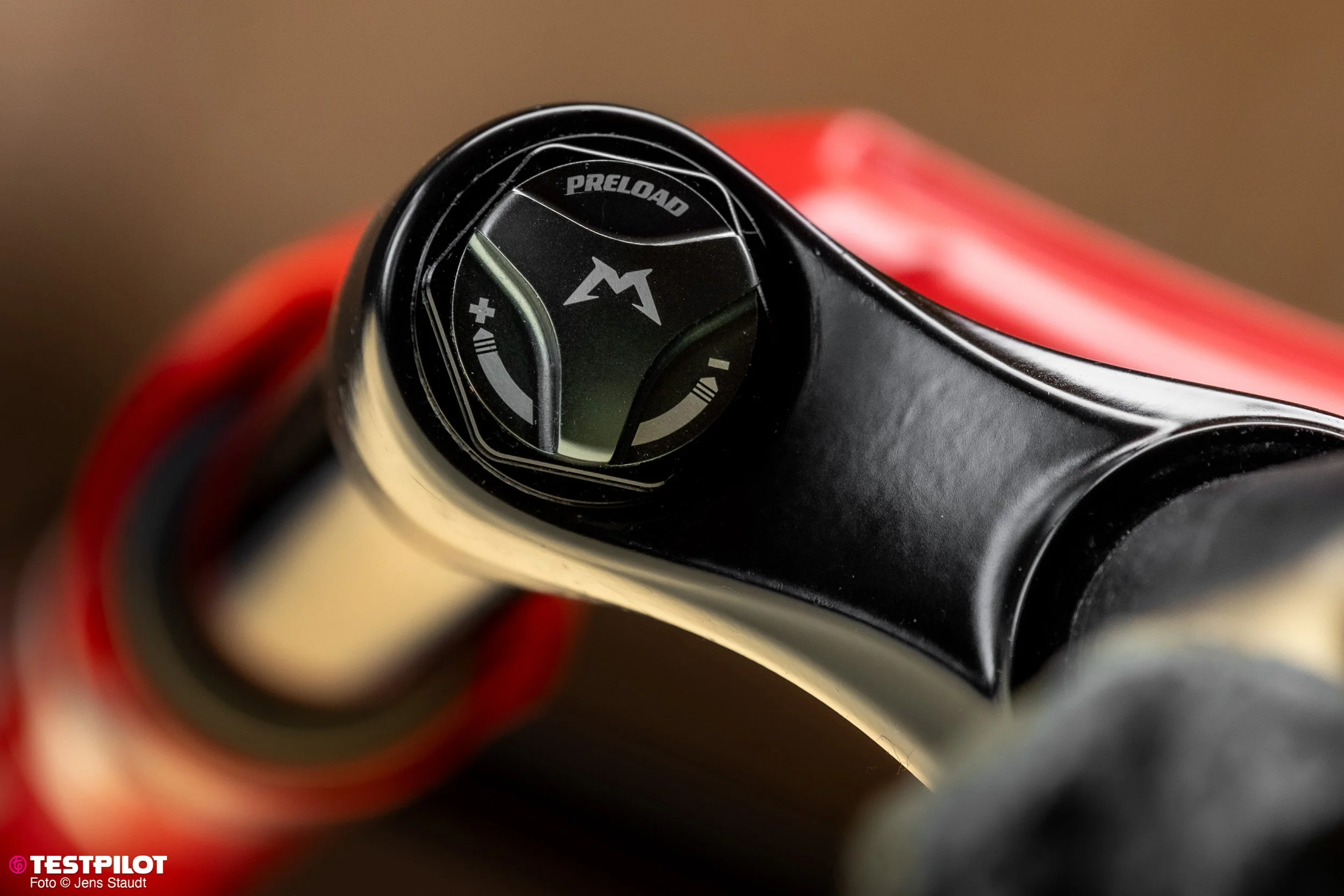
Preload can be adjusted on the top left knob.
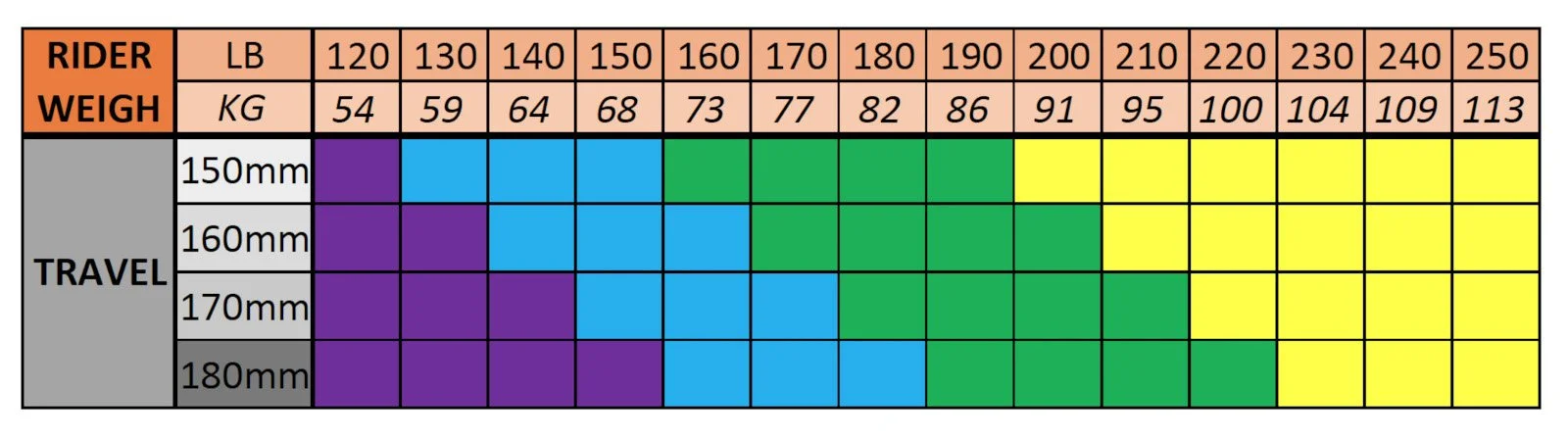
A table for a better visual overview of the spring rates and the recommendations.
Air Assist System – A little extra on top of coil
A common concern with pure steel spring forks is the linear spring curve, which can lead to bottoming out on hard hits. Marzocchi has integrated a clever solution for this called the Air Assist System. This system purposefully utilizes the air trapped inside the lower legs.
Marzocchi has calculated the air volume so that this air chamber provides the appropriate progression at the end of the travel, thereby managing bottom-out resistance. However, it is not adjustable.
Marzocchi Z1 Coil – Damping
Supporting one another is important within a family—especially with Italian roots. The Marzocchi Z1 inherits the GRIP damper from its parent company, Fox. A cartridge system originally conceived as a cost-effective solution, it quickly became celebrated for its solid performance and durability.
Developed by engineer Damon Gilbert and inspired by 1990s motocross technology, a self-contained cartridge ensures continuous damping. Oil and air cannot mix. However, the cartridge is allowed to draw oil from the lubrication bath because this means the main seal head doesn't have to be hermetically sealed, which also results in less friction.
When oil is drawn into the cartridge body, it is simply "spits back out" at the top through a compensation port via the movement of the spring-preloaded floating piston. This not only keeps the oil fresher inside the cartridge, but the cartridge also possesses something akin to self-healing properties, activated during hard compressions.
From our experience, we can confirm that this architecture is quite durable and delivers consistent performance.
Adjustability
The GRIP damper offers the rider two main adjustments, which are adjusted via the red and gold dials.
The Marzocchi Z1 does not have separate low-speed and high-speed compression adjustments. Everything is intentionally kept simple, offering precisely the adjusters that should suffice for the majority of users: compression and rebound. This makes setup straightforward and quick to get sorted.
Compression (gold dial, left fork leg, top): Detent-free and simple, ranging from fully open to lockout. Marzocchi recommends keeping this adjustment fully open.
Rebound (red dial, right fork leg, bottom): As described, Marzocchi sticks with the GRIP cartridge's adjustability for low-speed rebound. Depending on the spring rate, there are recommendations for the initial setup. Later on, you can, of course, adjust it slower or faster according to personal preference.
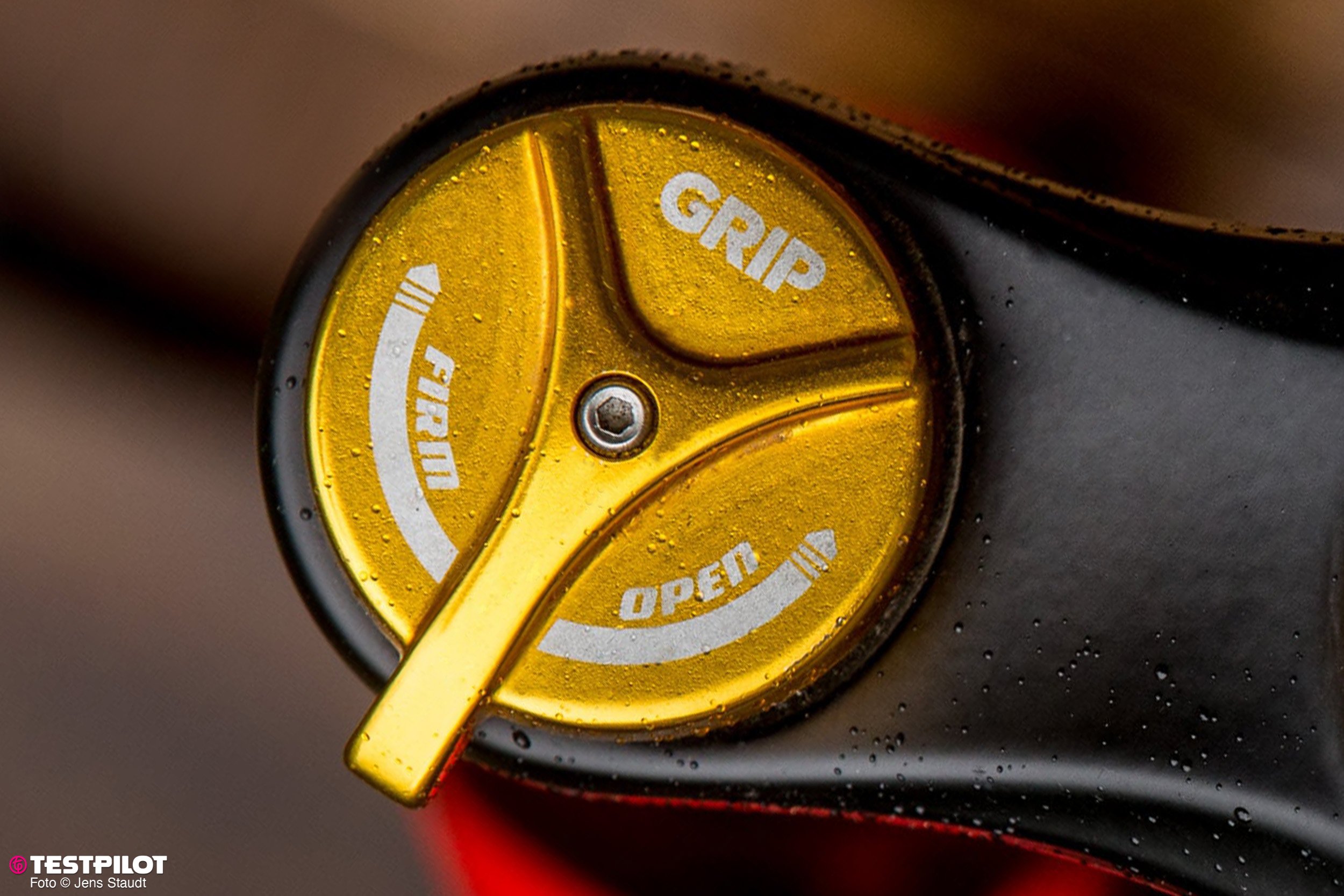
Stepless compression adjustment – Marzocchi recommends running it as open as possible.
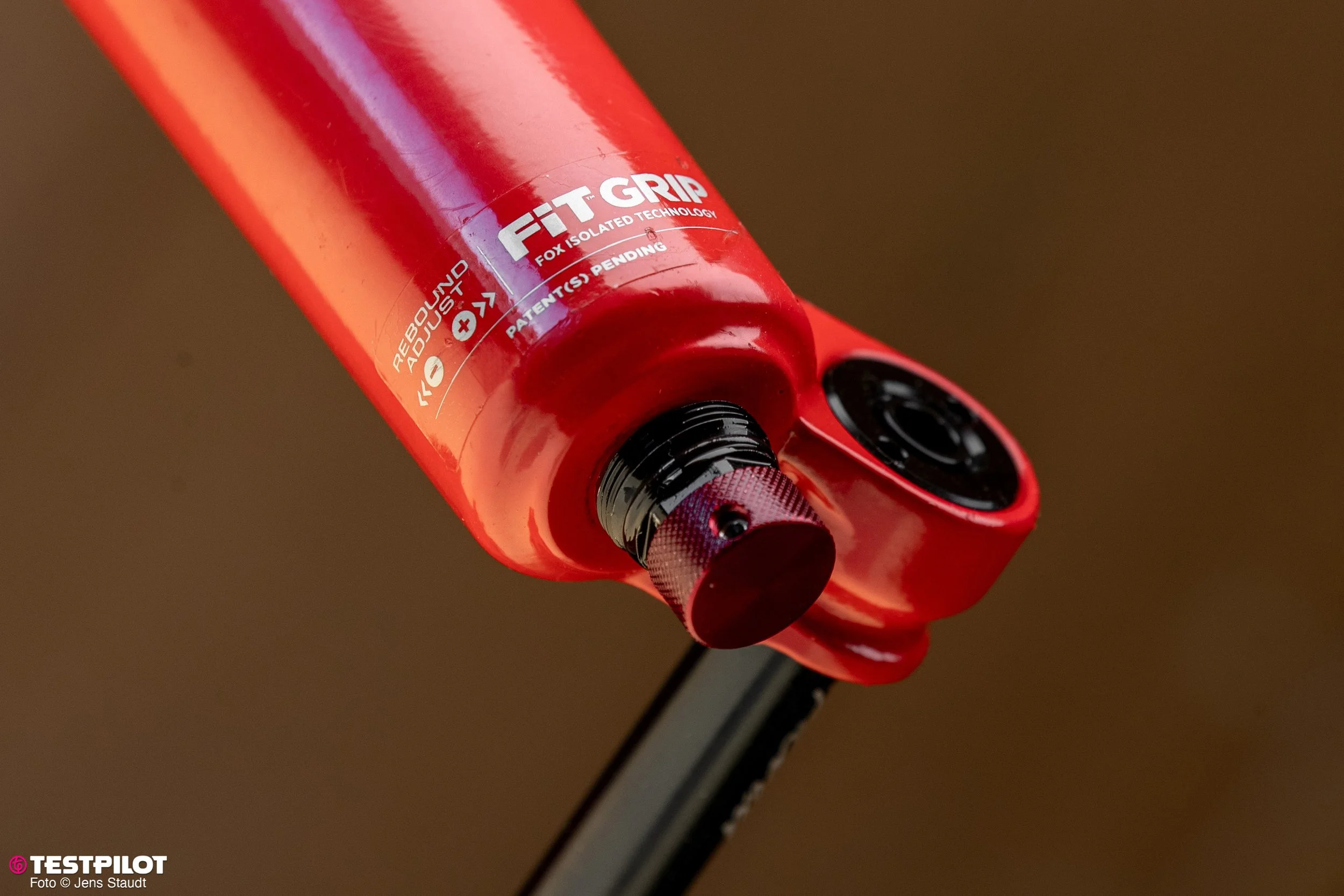
Typical Fox GRIP cartridge: a red low-speed rebound knob.
Setup of the Marzocchi Z1 Coil
No air. No problem. Before heading out on the trail, you should have the appropriate spring installed. A sticker on the back of the fork provides additional recommendations on how to set the rebound accordingly.
A narrow range of three to four clicks serves as a starting point here. Even though this is always a matter of personal preference, it's honestly pretty challenging to go wrong.
The golden compression adjuster turns steplessly all the way to the lockout. The target audience for this fork will probably rarely need this feature—but it's there.
We set it in the middle, and are ready for the trail.
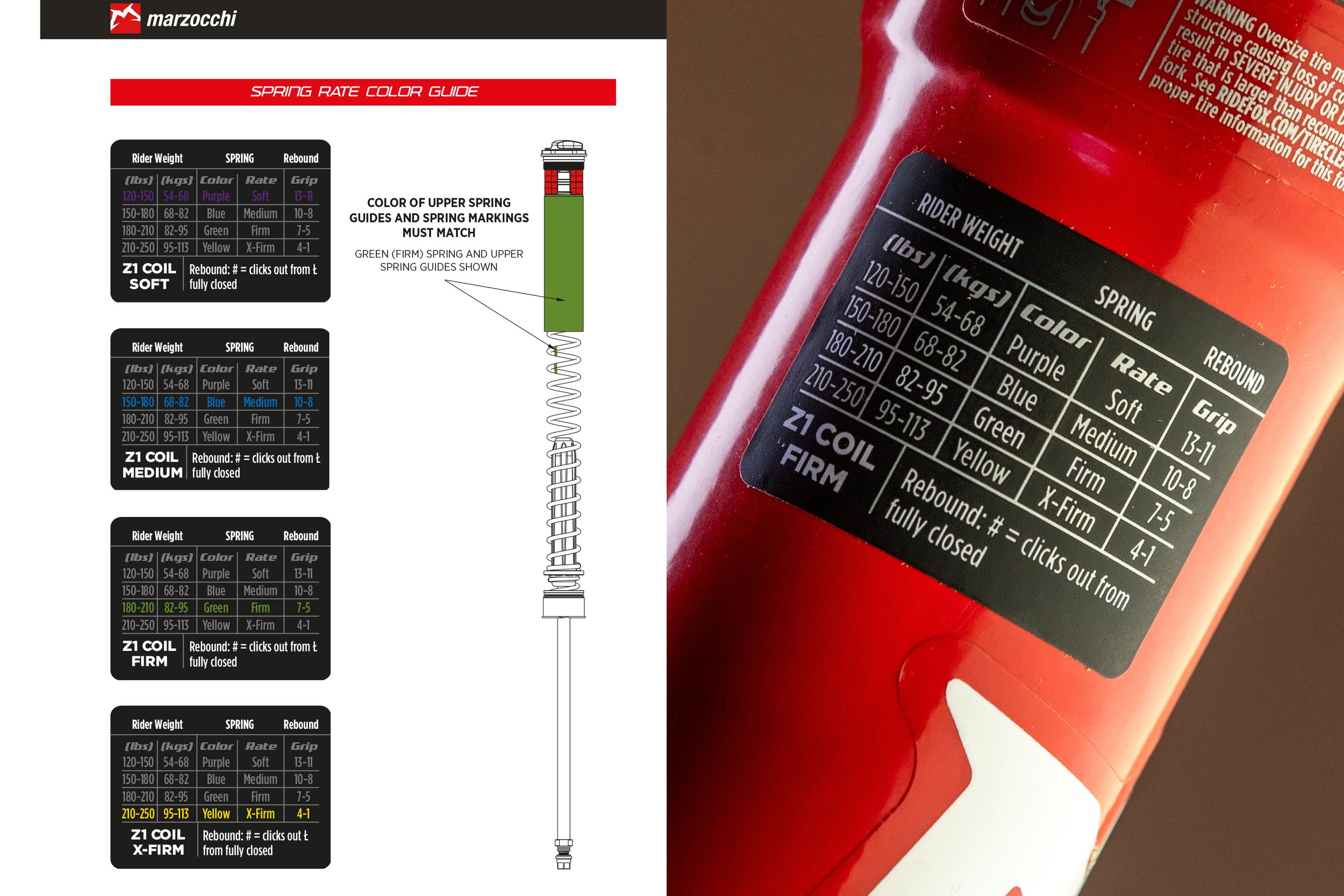
The required spring rate is indicated on the back of the casting. The color of the spring can be identified by the plastic sleeve surrounding it.
Spring change. travel. Volume spacer?
Changing the spring
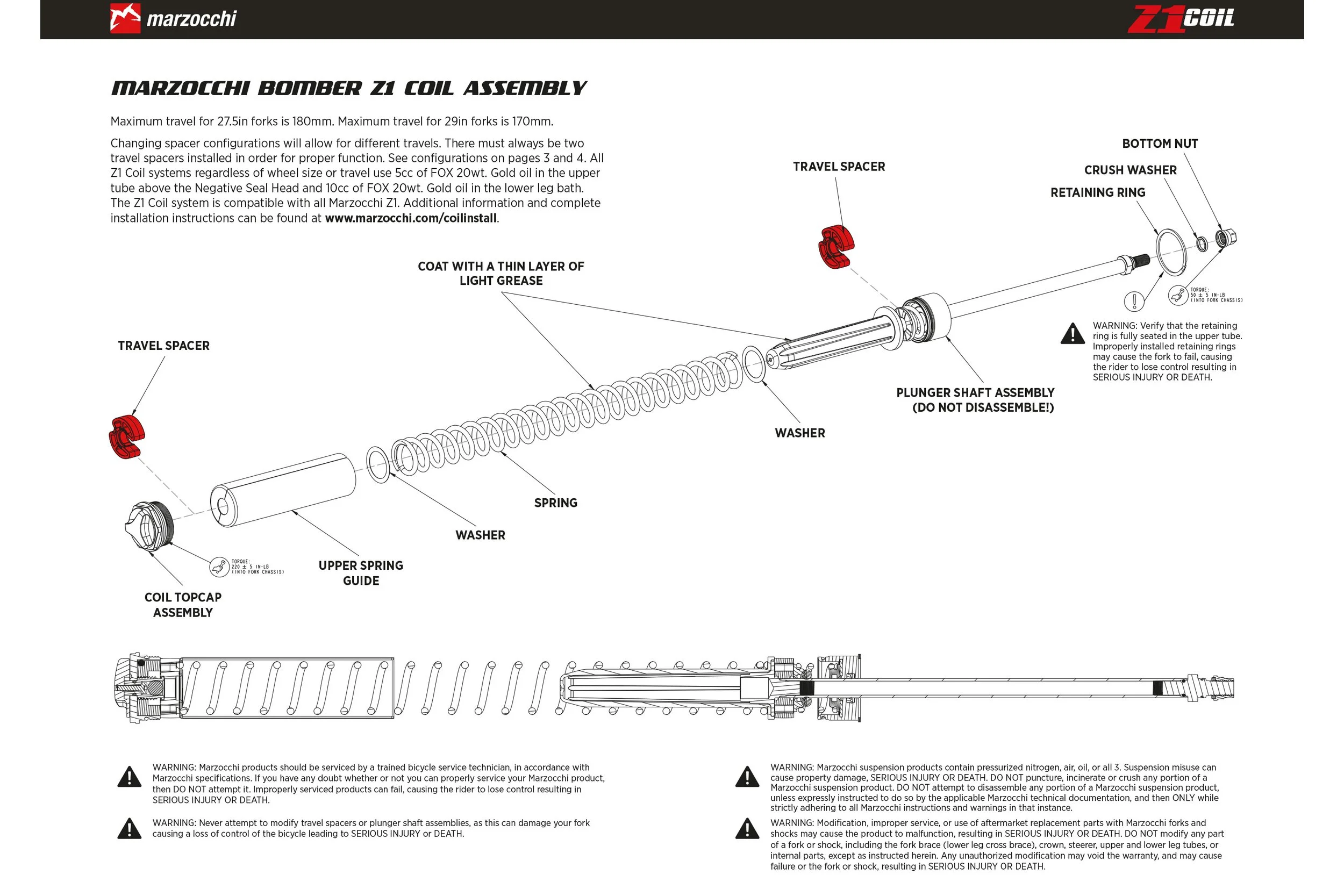
If you prefer a firmer or softer feel, or if you simply want a different ride feel than what comes with the standard spring, you can gain access via the top cap on the left side of the Z1. Beneath it sits the spring, enclosed in a color-coded plastic sleeve designed to minimize rattling. Here's what the exploded view and the instructions from the manufacturer look like:
Travel
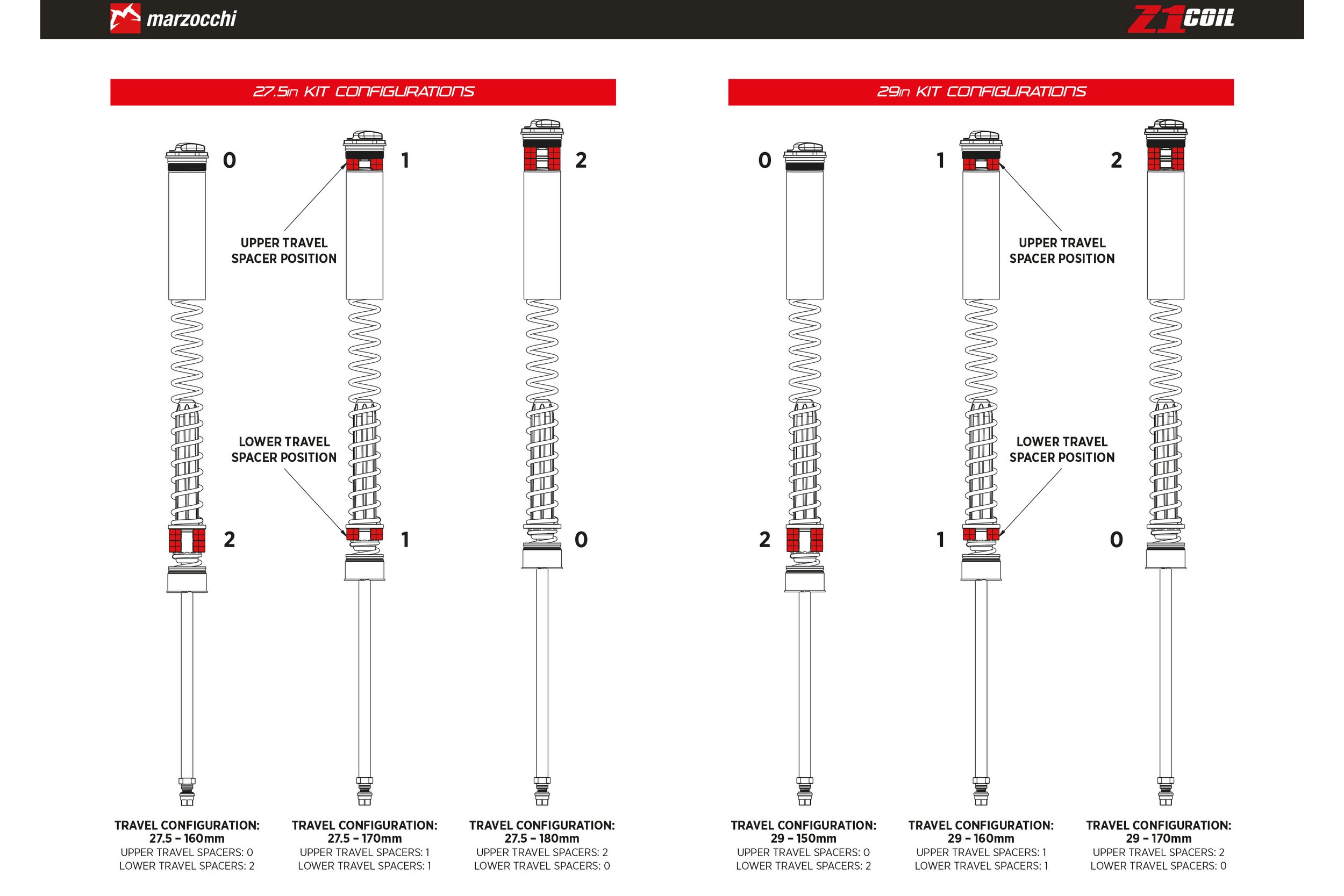
For those who looked very closely, you may have noticed the travel spacers. These allow you to easily adjust your fork internally to three different travel lengths—though the travel options vary between the two wheel sizes.
27,5 inch: 160, 170 and 180 mm
29 inch: 150, 160 and 170 mm
And here is how the spacers need to be arranged to achieve the corresponding travel length:
Volume spacers
Coil forks naturally don’t have this kind of feature. Instead, it features the aforementioned Air Assist system, which purposefully utilizes the air trapped inside the lower legs to provide bottom-out resistance at the end of the travel.
If you want to fine-tune within a given spring rate, you can only do so to a limited extent via the preload adjuster.
Marzocchi Z1 Coil thru axle and how to install the wheel
The proven 15 x 110 Boost thru-axle system is used. For those who prefer not to use tools, there is a version with a quick-release. For a cleaner look (and slightly less weight), the Kabolt version is available, which requires a 6 mm hex key.
There is no sliding sleeve for possible variations in hub width, as found on the Fox 36 and 38.
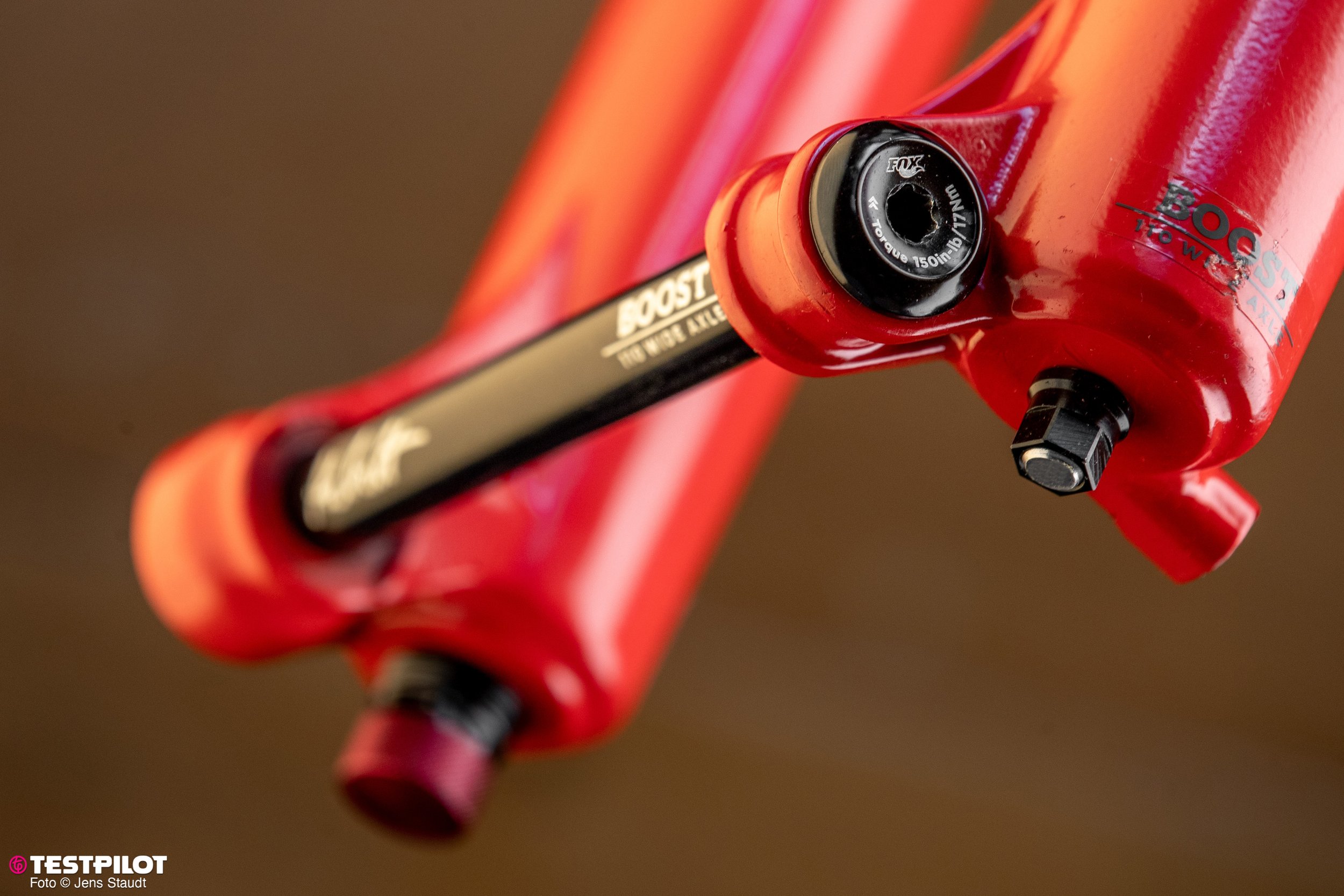
Insert the Boost thru-axle from the left side and tighten to 17 Nm – done.
On the Trail
From the very start on a trail, Marzocchi's Z1 Coil with GRIP damper gives you that familiar, warm feeling in your gut. Because the philosophy here is simple: just ride, don't overthink it. As long as you're not stuck precisely between two spring rates, the setup is essentially done once you've set your sag. No shock pump in the backpack, no fiddling with complex setup charts—just head out and enjoy the trail, no second-guessing required.
With that weight off your mind, you can simply enjoy the ride. The classic coil feeling sets in. The Z1 sits confidently in its travel. There's no negative air spring to help it respond to small bumps—and it doesn't need one. It's already supple and active right from the start. And of course, that endlessly discussed "mid-stroke hole" (that mythical creature) simply doesn't exist here, as is typical with coils.
At the same time, there's always plenty of support, whether you're pumping through rollers, loading up the suspension, or getting light to skip over root and rock gardens.

If you prefer to ride with maximum support, reach for the golden "volume knob"—the GRIP compression adjuster. Since it's stepless, you might feel a bit unsure at first about where you are in the adjustment range, but you quickly get used to it.
If the O-ring indicating travel used is sitting (too) high, or if you feel like you're being pulled forward when coming in hot on those hard hits? Just turn up the volume—uh, the damping—a bit. After a couple of rides, you'll know where your personal sweet spot is, and you'll find yourself occasionally dialing the GRIP cartridge a click firmer or softer. Just as needed for the particular trail.
The Z1 responds noticeably to adjustment changes, delivering correspondingly higher damping forces. This uses less of the available travel and results in a higher front end in sections with repeated, high-speed impacts. In terms of damping quality, you're sitting at a solid, good level.

If you're at the lower end of a spring rate, you'll probably rarely touch the compression adjuster anyway. Just leave it open as recommended by Marzocchi, and you'll be fine. The rebound adjustment also performs solidly, and you never really miss a separate high- and low-speed adjustment.
When things get properly rough and the drops are big, you don't need to worry about frequent, harsh bottom-outs. The air volume inside the casting, utilized by Marzocchi's Air Assist system, provides just the right amount of progression. This means you're not dealing with a completely linear fork but rather a well-balanced overall package.
However, if you get crazy with drop height or consciously—or unconsciously—land with too much force, you can definitely get a solid knock through the handlebars. Riders who are hard on gear and regularly hit the end stop might wish for a slightly thicker bottom-out bumper—but fortunately, there's always your trusted tuner for that.
Technical Report
This one we can keep short: The fork just works.
How does the perfect rider profile for the Marzocchi Z1 Coil GRIP look like?
As long as it moves, it's good. If this philosophy resonates with you and you're not interested in diving into the technical rabbit hole and just want to ride, the Z1 might just be your personal holy grail. Despite its simple damper cartridge and limited adjustability, this fork has very few weaknesses.
Yes—other cartridges and high-end offerings have the edge in extreme situations and under sustained, heavy hits. They're less fatiguing and offer a bit more control. But that comes with a higher price tag, shorter service intervals, and more time spent on setup.
Conclusion
What more could you want? In a world where everything is getting more complicated and increasingly complex, sometimes you simply need less. No shock pump, no repeated setup runs, and no confusion over too many adjustment options. Once you have the right spring installed and have found your rebound and compression settings, you might never have to touch it again.
The Marzocchi Z1 GRIP, in its Coil variant, is a workhorse without surprises—and that's meant in the most positive way possible.
| What is worth mentioning? | Things to consider. |
|---|---|
|
|
What’s next?
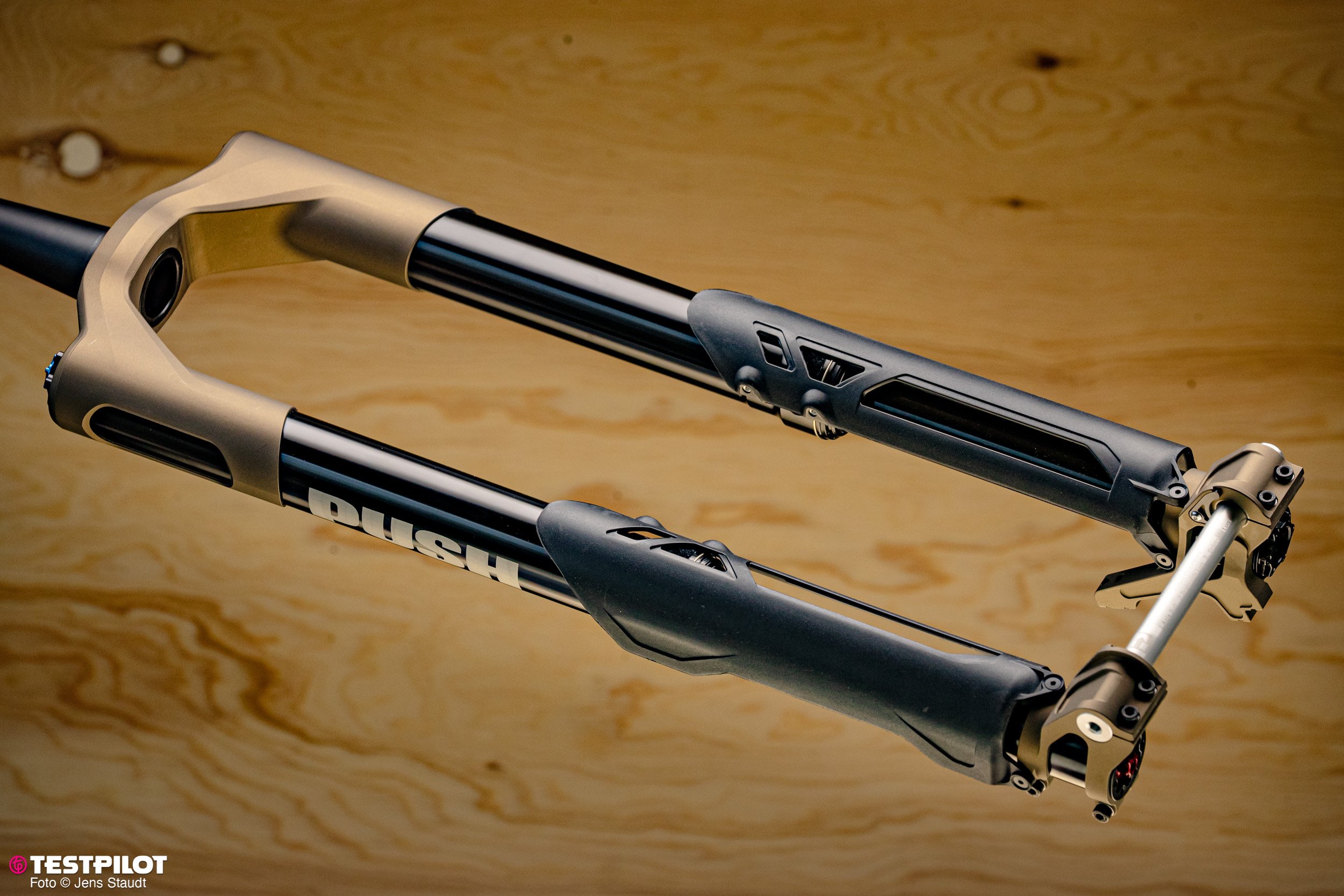
In our next review, we'll be covering the Push Nine One V2—the second upside-down fork in our test lineup. You rarely see it on the trail, and we have to ask: why is that? Just like the Marzocchi Z1 in this test, it's a coil fork. An intriguing combination that delivered quite a few surprises.
You want more reviews?

Author – Jens Staudt

Height: 191 cm
Weight: 103 kg
Riding style: With his racing background, the lines are planned, even if there is anything bigger in his way. If possible, sections will be jumped over. You should use the entire width of a trail. Others would say - uncompromising.
Motivation: A product should function carefree and for as long as possible. If you have to screw less, you can ride more. He likes to tinker and see how the bike can be optimized.