

Field Test 170 mm Enduro Forks
Reading time: 15 minutes
🇩🇪 Deutsche Version lesen
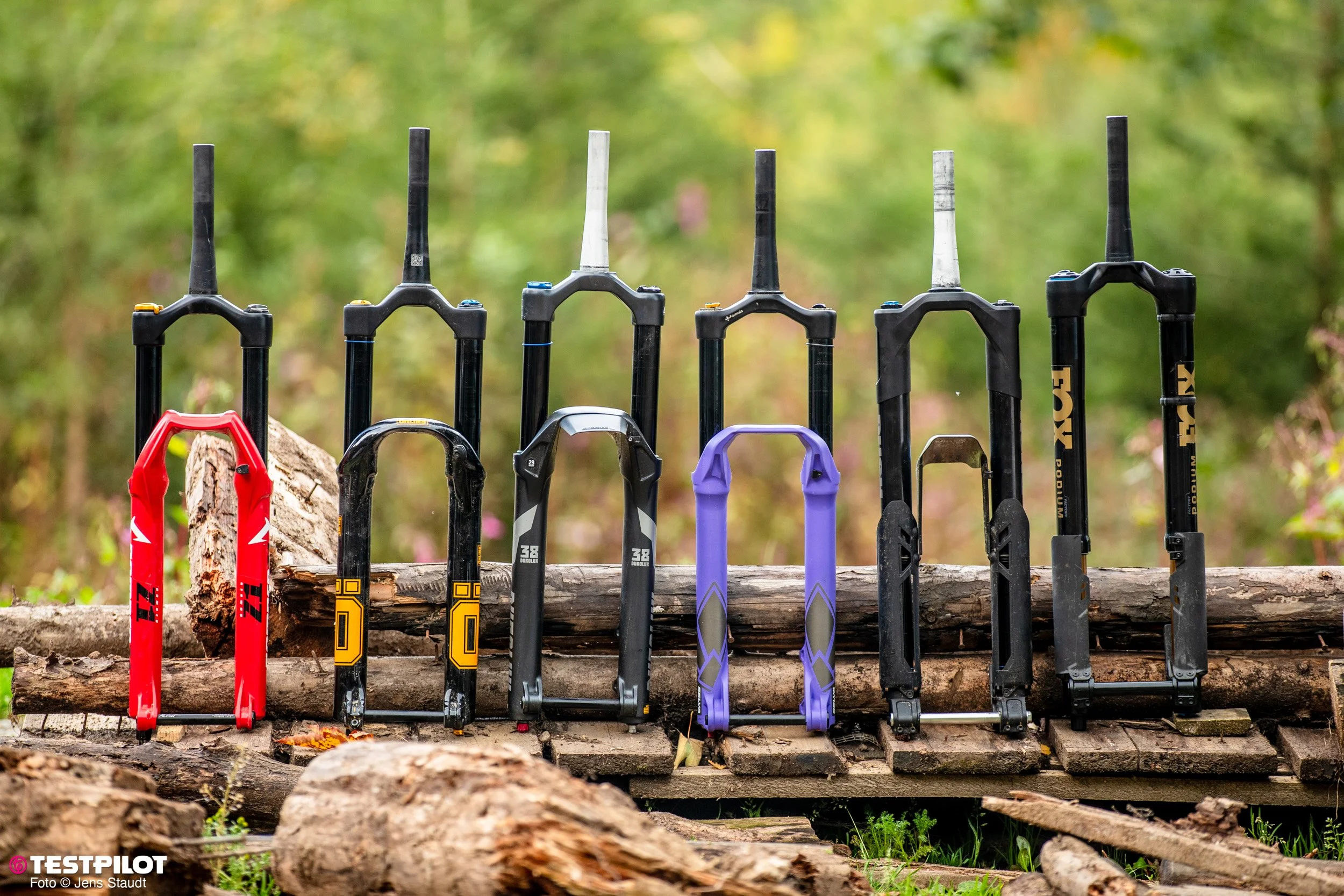
Besides your frame, there is probably no bigger talking point while having an after-ride beer than your suspension. The fork is one of the most prominent parts on your bike. It is crucial for your safety, comfort, and your bike's performance on the trail. The market offers a wide range of options. Besides simple ones with few adjustments, there are high-end variants designed to meet any preference for damping characteristics. Provided you know how to find that golden setup.
Here at TESTPILOT, we've made it our mission to test products for and with you and to describe them in a way that lets you know if they're a match for you. Not just whether they suit our personal preferences. Welcome to the test that will give you answers, and welcome to the intro for our 170mm-travel suspension fork test.
Key Facts
Specification for the Test
- 1. 170 mm travel
- 2. 29er
- 3. Testriders with a broad range of weights
- 4. Benchmarking all forks
- 5. Expand impresssions on a broad variety of trails
What to expect in the 170-mm-fieldtest?
Every suspension manufacturer has its own philosophy on what makes a good suspension fork. On top of that, the definitions of what actually constitutes trail, Enduro, Freeride, or Downhill also vary widely. This makes the range diverse and varied, but it isn't always simple for riders and buyers.
The question every one should ask: “Which fork will match my intended use and riding style?”
We all do it all the time: pushing on the fork of your buddy's bike. Sometimes the suspension feels better, worse, too stiff, or too soft. That, of course, depends on the individual setup—or its current service condition. We'll explain in detailed individual reviews how each tested fork performs, how you can tune it, and where its strengths and weaknesses lie. Plus, at the end, there's a deep dive where we compare the forks head-to-head.
What defines a top notch 170-mm-Fork?
170mm is a very popular amount of travel for modern enduro and e-bikes. With that much squish up front, it allows for a pretty aggressive riding style. While some of you love having that travel for exactly that—charging hard and letting the suspension do its thing—there are also riders who have a different motto: "Having travel is better than needing travel." Not everyone is a racer or Strava addict.
Both described user groups represent the opposite ends of the spectrum, and they have different demands for what a suspension fork must deliver. We've tested across the entire application range and will explain where a product works best or if it caters to very specific preferences.
An example? Some SUVs promise off-road capability but are overwhelmed when things get serious. 170mm on a mountain bike, or also on an e-bike, certainly suggests you can send it on just about any trail or feature with it. Thick stanchions, beefy crowns, and long tubes. All of this means most contenders in this category aren't exactly the lightest representatives and can tip the scales up to 1 kg more than their smaller siblings in the lineup.
That quickly amounts to a factor of 1.5, and that's not insignificant when it comes to the weight of mountain bike components... or is it? So, if you're looking to build the lightest bike possible, you sometimes have to ask yourself whether, fundamentally, less could also be more. (article 36 vs. 38 stanchions in German)
Regarding the adjustment range, our test field spans a broad spectrum. We deliberately wanted to show that even a coil spring or a simple damper cartridge with fewer knobs and dials can have its perfect user group among riders.
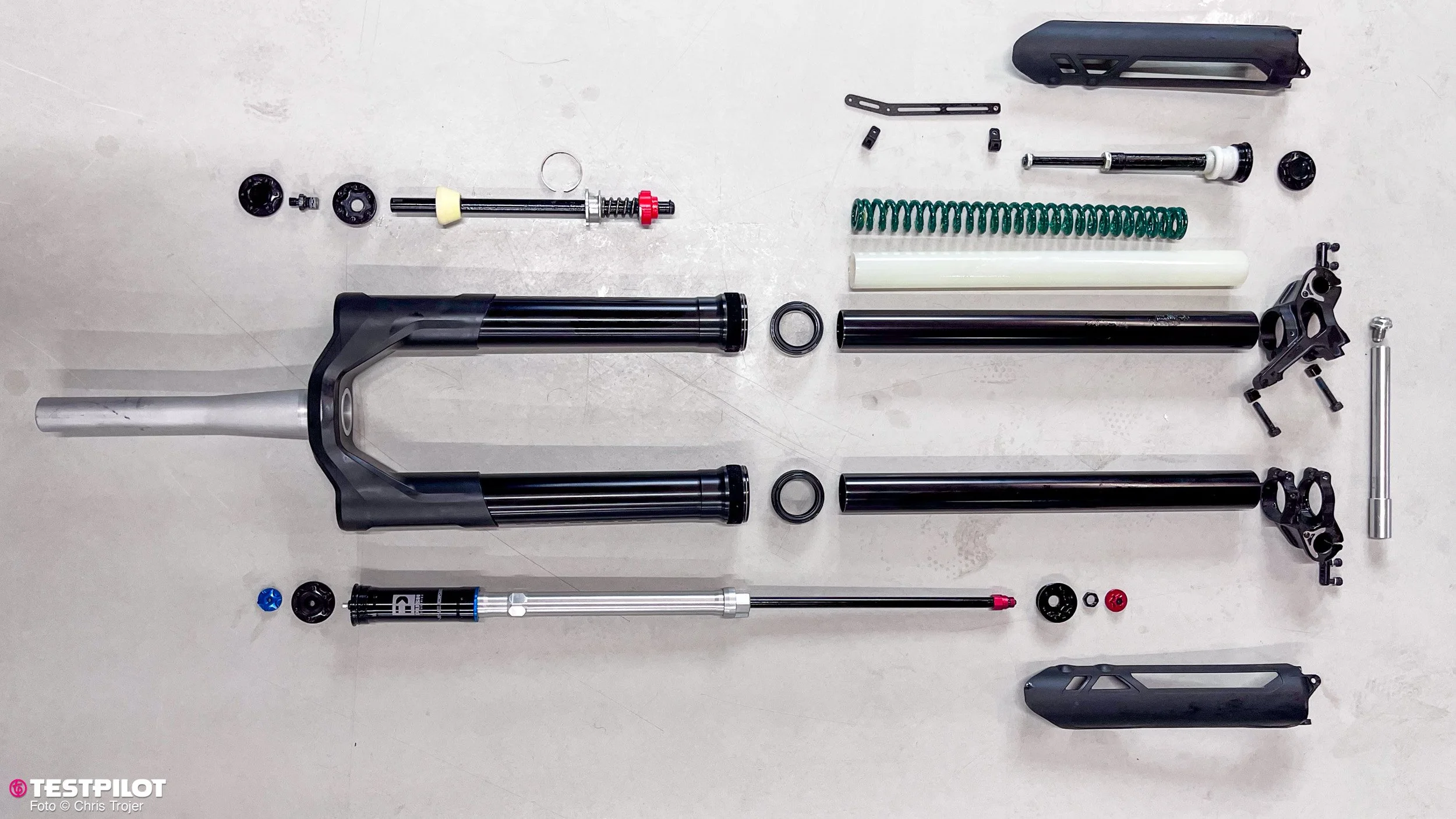
What about the insides? We didn't just look at the forks from the outside. High-quality manufacturing impacts the price, but it can also extend performance and longevity.
How did we test?
Comparing suspension is probably the nerdiest test day there is, and you should keep a few things in mind. Trail and weather conditions have the biggest influence on whether you're hitting all your lines and making it safely down the track or struggling down the mountain with just one foot on a pedal.
Comparability comes from a direct back-to-back system: on the same day, on the same trail, on the same bike. That is, we rode the identical loop until every tester had found his personal, ideal setup for each fork. On a bike whose handling he knows best. Every fork was dialed in perfectly and then compared head-to-head with another model on the next run, then swapped out and compared again… and again… and again…
A big shout out goes to the team of MTB ZONE Geisskopf for supporting this project!
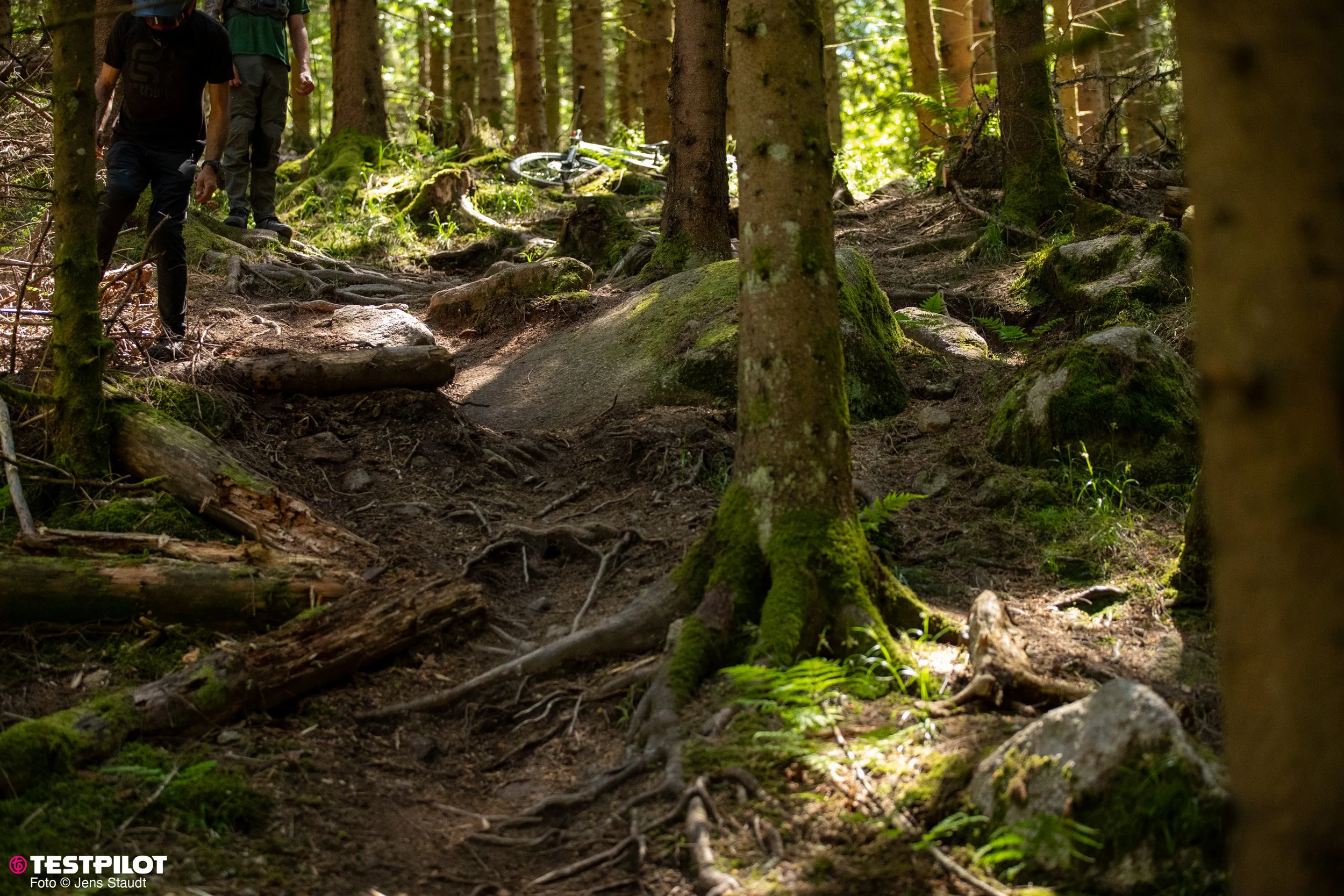

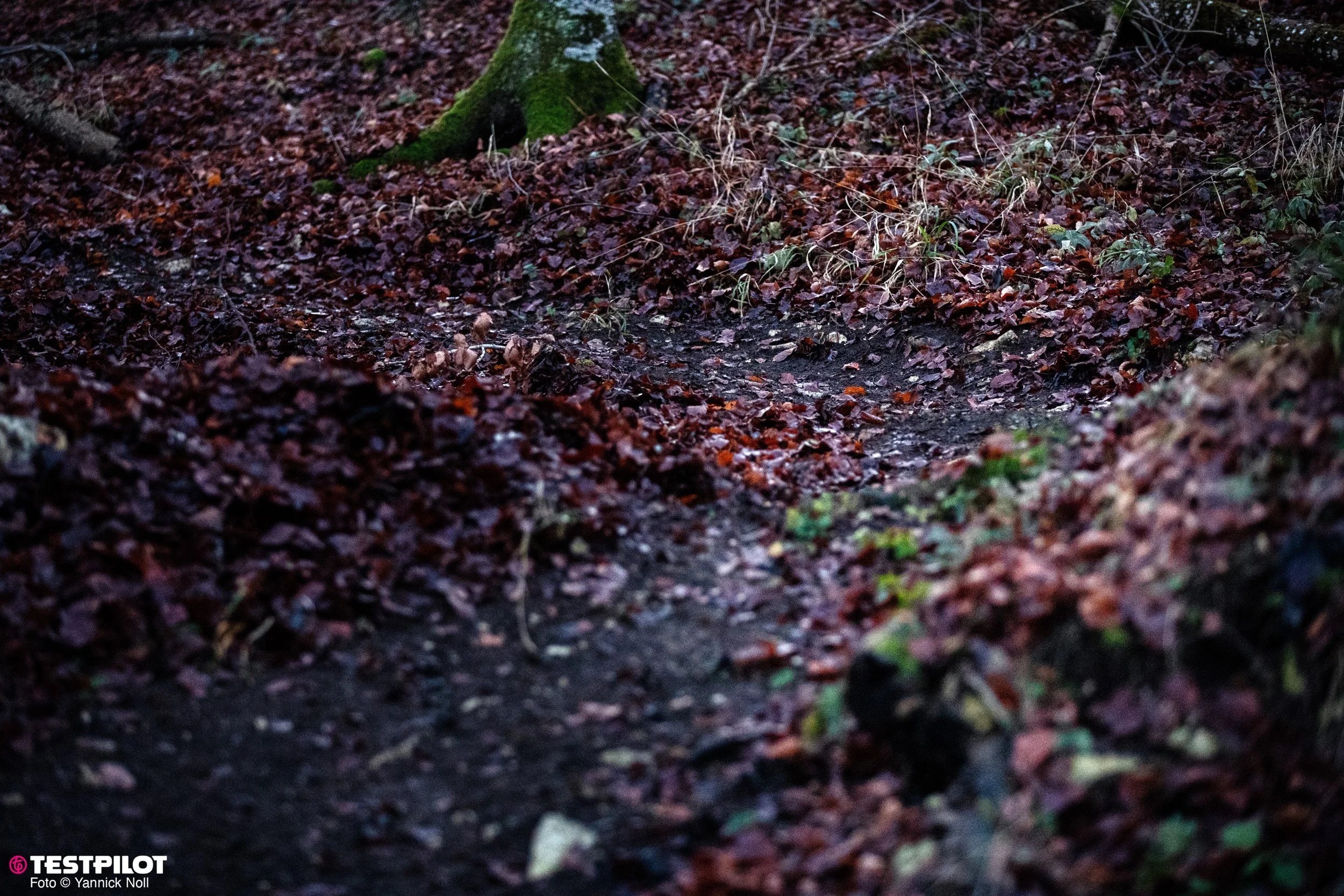
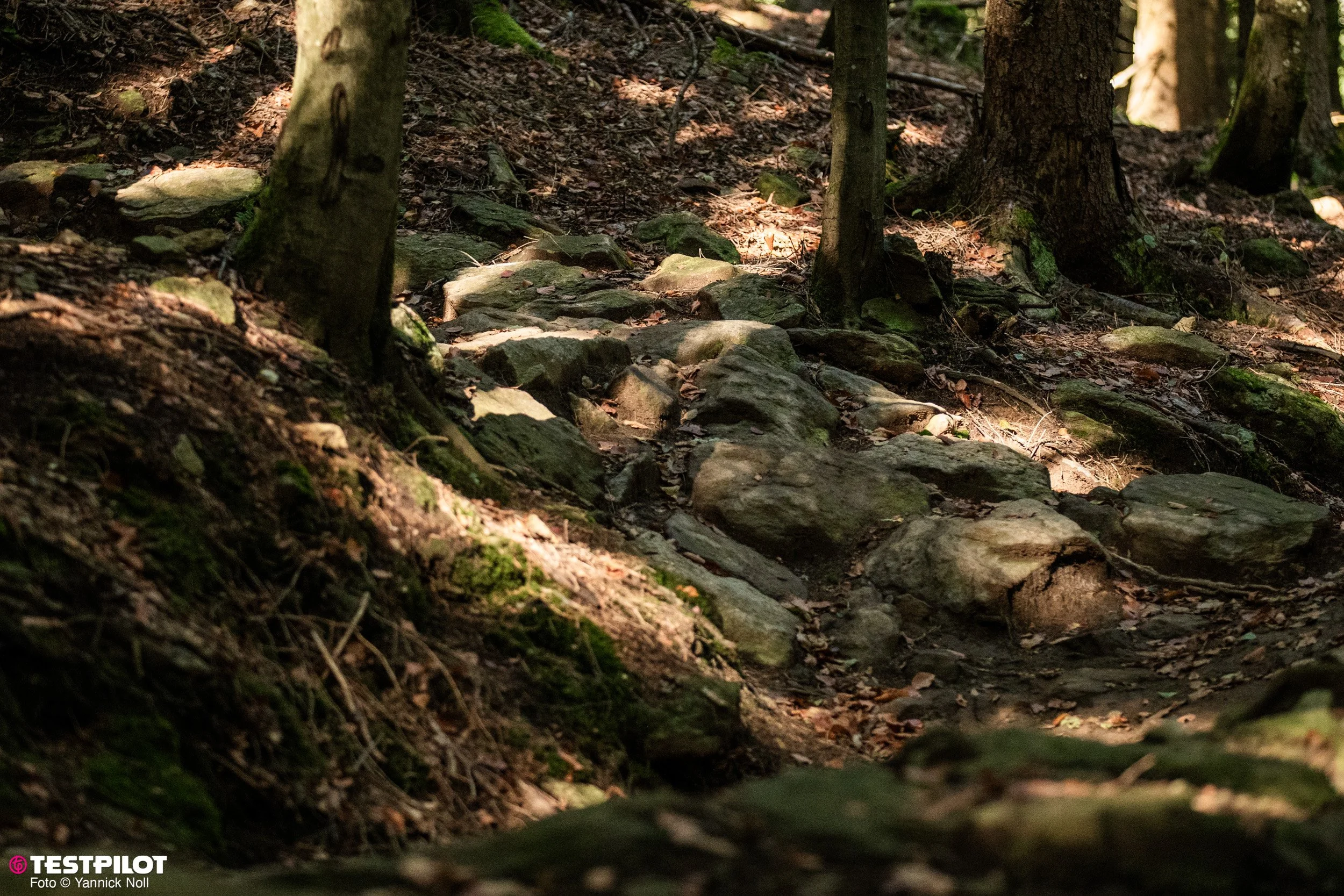
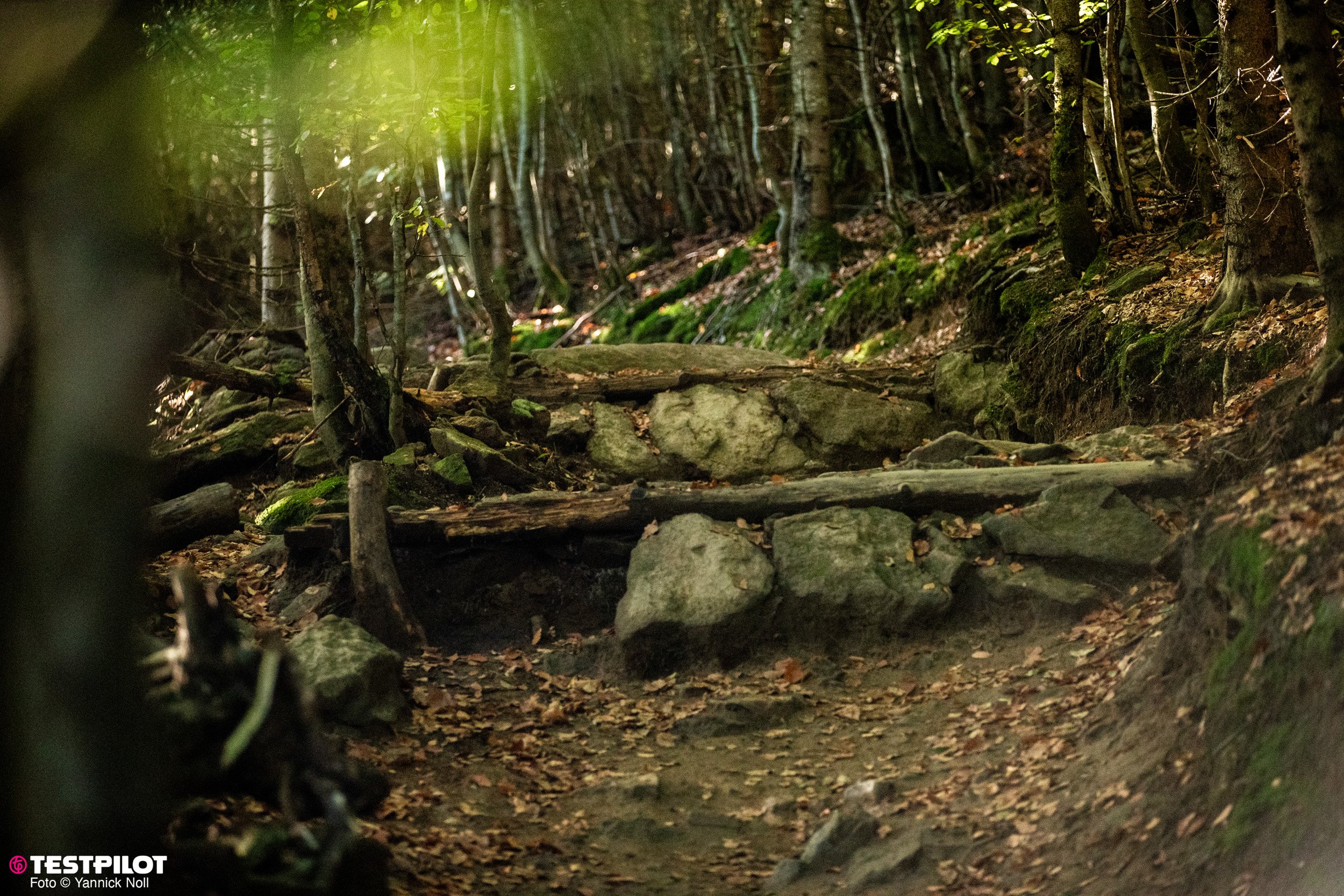
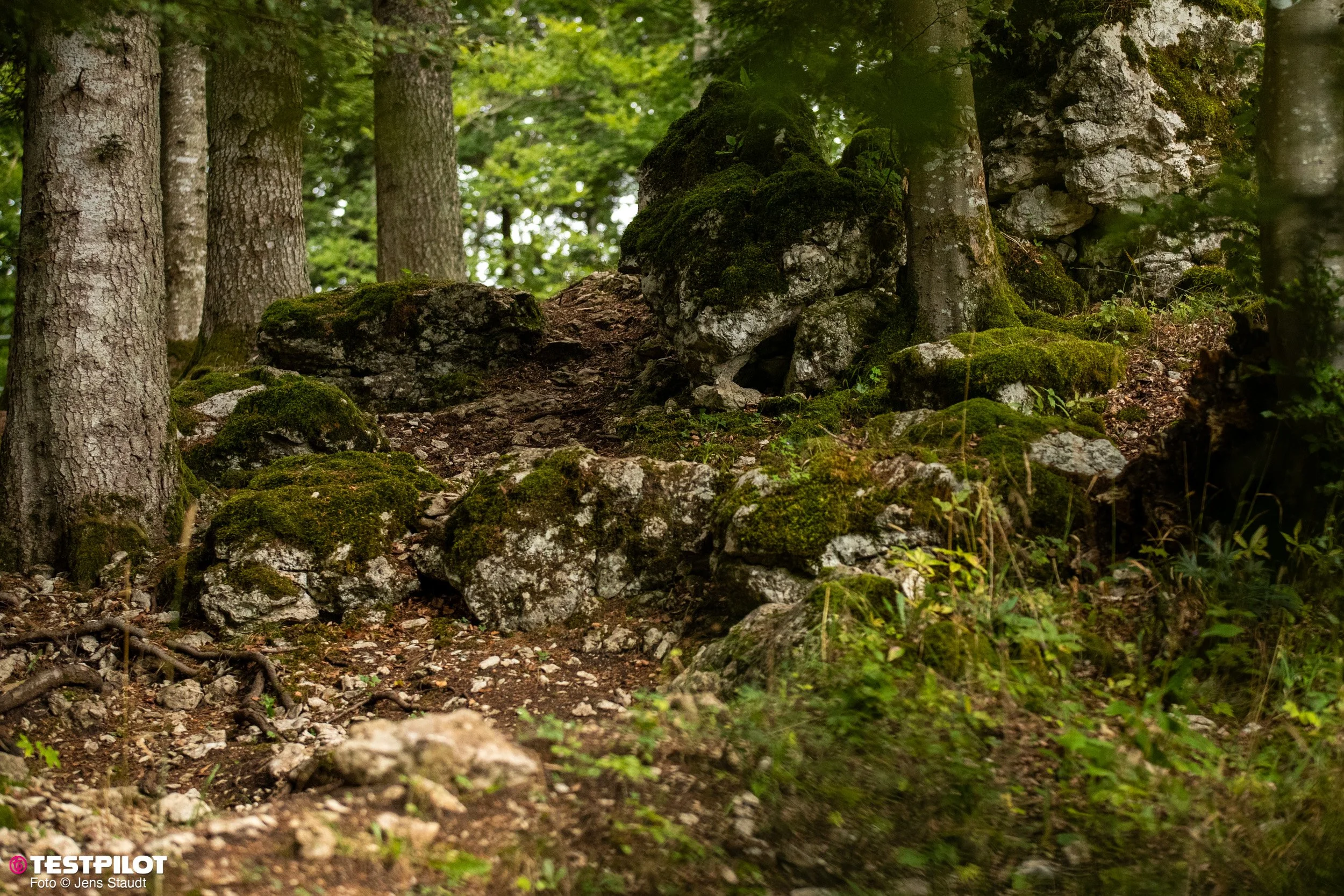
This kind of benchmarking reveals strengths and weaknesses under real-world conditions. It shows where you can hold your line with one fork without any issues, while suddenly you're fighting for grip and security with the next one. Where one landing was buttery smooth, you suddenly need different settings or volume spacers with the comparison product. Differences, strengths, weaknesses, and manufacturer-specific philosophies in damping behavior all come to light.
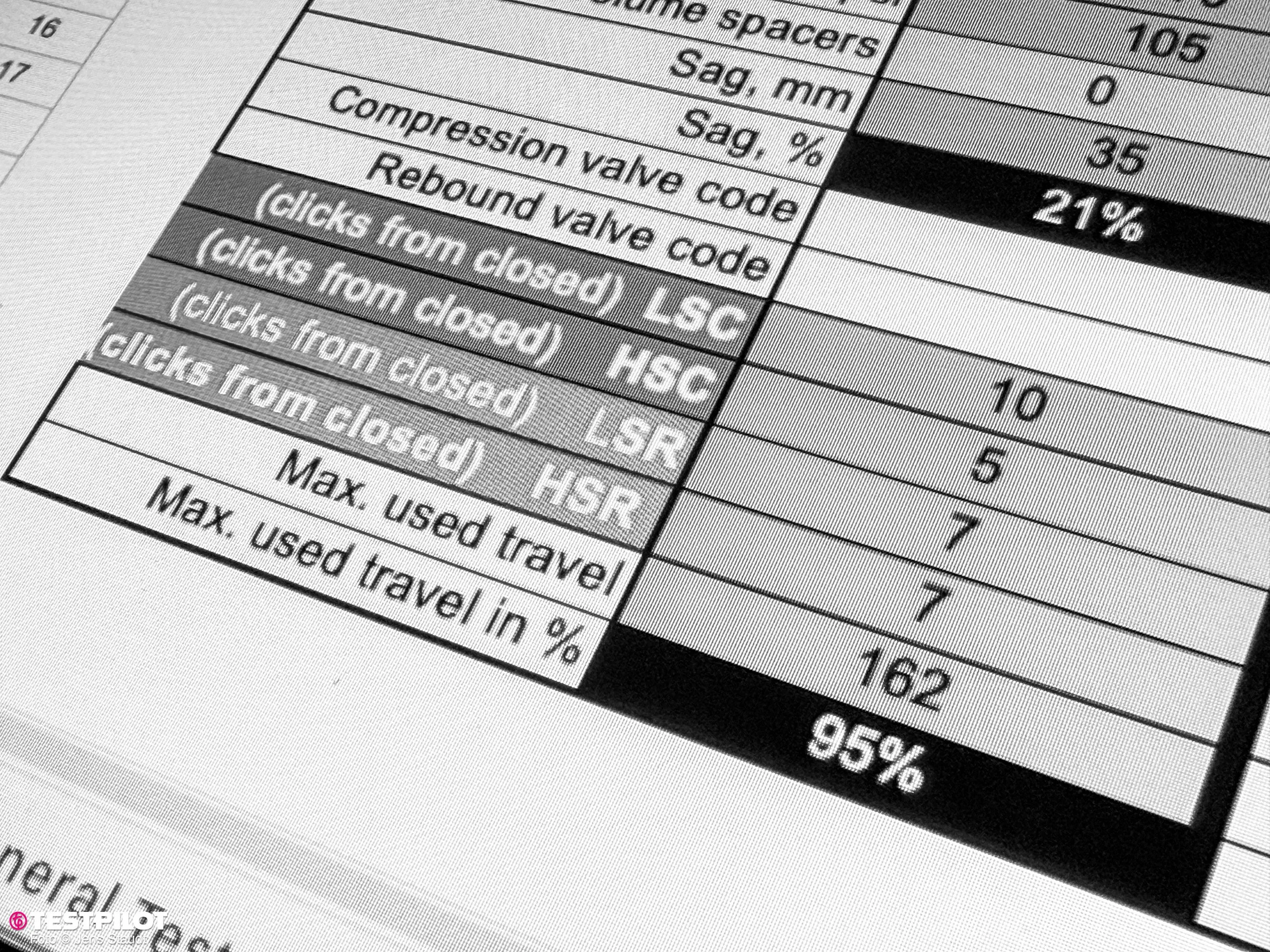
Benchmarking alone, of course, isn't enough. All forks were additionally tested on other trails and in varying conditions over several months. Their adjustment range and the possibilities of their settings were further explored and pushed to their limits.
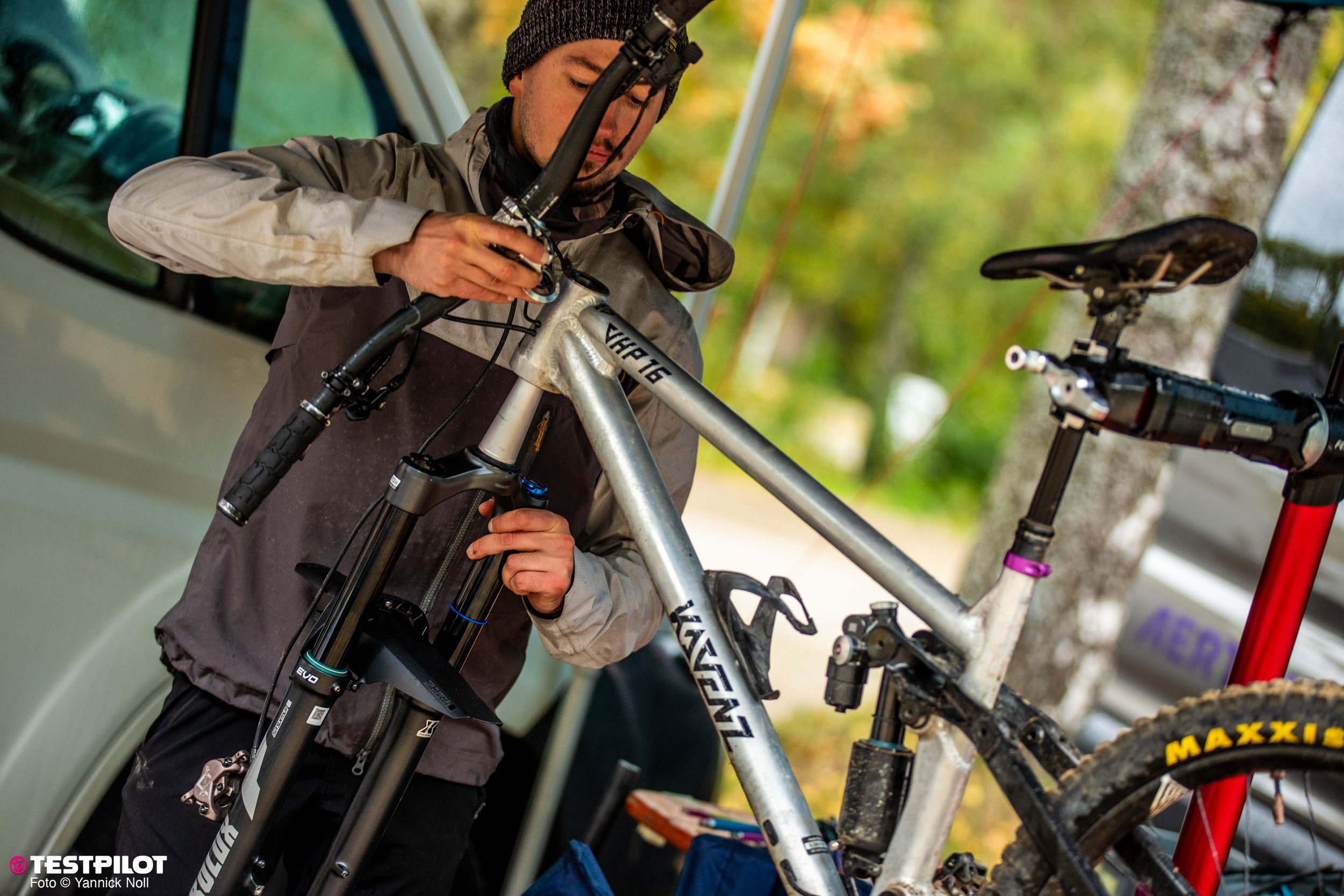

Which forks did we test?
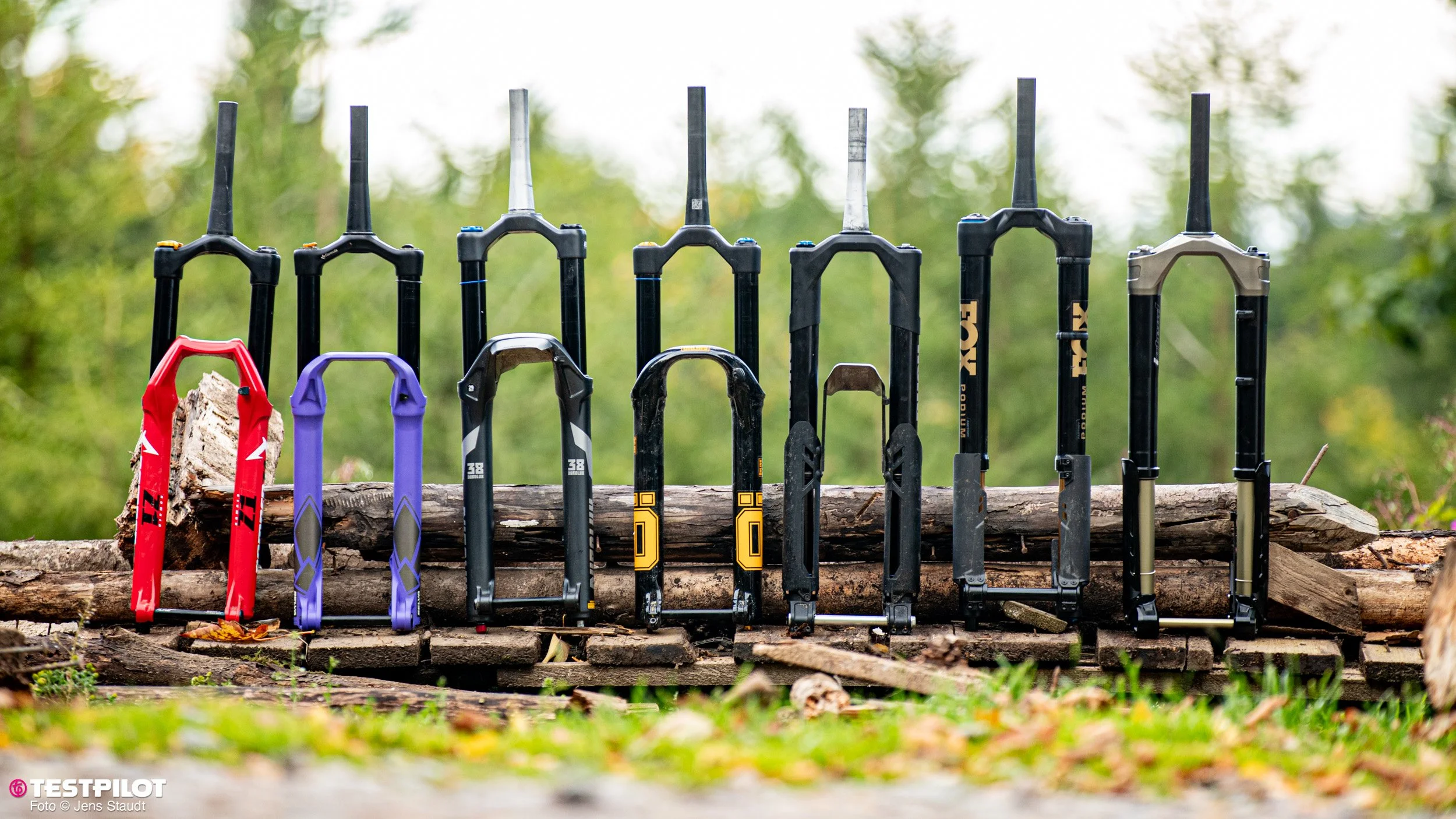
Not every fork we tested over the last year will make it into the comparison test. This is for various reasons, such as pending updates and manufacturers' wishes not to participate in comparative tests. We have respected these requests.
| Formula Selva V | Fox Podium Factory | Marzocchi Z1 Coil | Öhlins RXF38 m.3 Air | PUSH Industries Nine.One V2 | SR Suntour DUROLUX38 X EVO | |
|---|---|---|---|---|---|---|
| Application | Trail / Enduro | Enduro / aggressive AM / eMTB | AM / Enduro / Trail | Trail / Enduro / eMTB | Trail / Enduro / eMTB | E-Enduro |
| ⌀ | 35 mm | (47 mm upper) 36 mm | 36 mm | 38 mm | 36 mm Stanchions / 44 mm Uppers | 38 mm |
| Travel | 160 / 170 / 180 mm | 150 / 160 / 170 mm | 160 mm | 160 / 170 / 180 mm | 140–170 mm | 160 / 170 / 180 mm |
| Settings | CTS, LSC, LSR, Lockout | HSC, LSC, HSR, LSR | Preload, LSR, C | LSC, HSC, LSR | HSC & LSC, LSR, Sub Chamber, HBO | Air Pressure, LSC, LSR |
| Spring System | Dual-Chamber-V-Air | FLOAT EVOL GlideCore Air | Steel Coil | Three-Chamber Air Spring | Coil Spring with Sub Chamber | AIR EQ |
| Damping | CTS + Internal Floating | GRIP X2 | GRIP | TTX18 | NINEONE | RC+ |
| Wheel Sizes | 29″ | 29″ | 29″ / 27.5″ | 29″ / 27.5″ | 29″ / 27.5″ | 29″ |
| Max. Tire Width | 2.6″ | 2.6″ | 2.6″ | 2.6″ | 2.6″ | 2.6″ |
| Axle Dimension | 15 x 110 mm Boost | 20 x 110 mm Boost | 15 x 110 mm Boost | 15 x 110 mm Boost | 15 x 110 mm Boost | 15 x 110 mm Boost |
| Brake Rotor | PM7, max. 220 mm | PM 200 mm (up to 230 mm) | PM 180–203 mm | PM 200 mm (max. 230 mm) | PM 180–203 mm (220–223 mm adapter) | PM 203 mm (max. 220 mm) |
| Offset | 43 mm | 44 mm | 44 mm | 44 mm | 44 mm (29″) / 37 mm (27.5″) | 44 mm |
| Axle-to-Crown | 583 mm at 170 mm | approx. 577–587 mm | approx. 580 mm | approx. 573–593 mm | 551–581 mm (depending on travel) | 580 mm at 160 mm |
| Steerer Tube | 1.5–1 1/8″ | 1.5–1 1/8″ | 1.5–1 1/8″ | 1.5–1 1/8″ | 1.5–1 1/8″ | 1.5–1 1/8″ |
| Casting | Aluminum | Aluminum | Aluminum | Aluminum | Aluminum | Aluminum |
| Wipers | Standard | Fox by SKF | Standard | Öhlins by SKF | Push ULF Seals | SKF |
| Fender | optional | optional | optional | optional | optional | Long/short version |
| Color | Matte Black / Ultraviolet | Kashima / Black | Shiny Black / Gloss Red | Gloss Black | Black / Bronze Variants | Metallic Slate; Gloss Black |
| Weight | 2,070 g | 2,780 g | 2,549 g | 2,313 g | 2,941 g | 2,656 g |
| Warranty | 2 years + 10 years support | 2 years | 2 years | 2 years | 2 years | 2 years |
| Price (MSRP) | approx. €1,307 | approx. €2,400 | approx. €999 | approx. €1,499 | approx. €2,399 | approx. €899 |
| Website | rideformula.com | ridefox.com | marzocchi.com | ohlins.com | pushindustries.com | srsuntour.com |
Formula Selva V
(Editor's note: Here you can read the Formula Selva V review from the 170 mm enduro fork field test)
We had already tested the Formula Selva V. It was also part of this comparison test, and an extended long-term impression will follow within.
Our purple Italian embodies a unique philosophy. In the arms race for stanchion diameter, they've abstained, sticking with 35 mm and merely giving the casting an update. Formula attempts a balancing act in damper setup with a broad base tune and the simple possibility to cater to even the most individual rider preferences. Regardless of rider weight, riding style, or bike, you get the ability to tailor the fork (or shock).
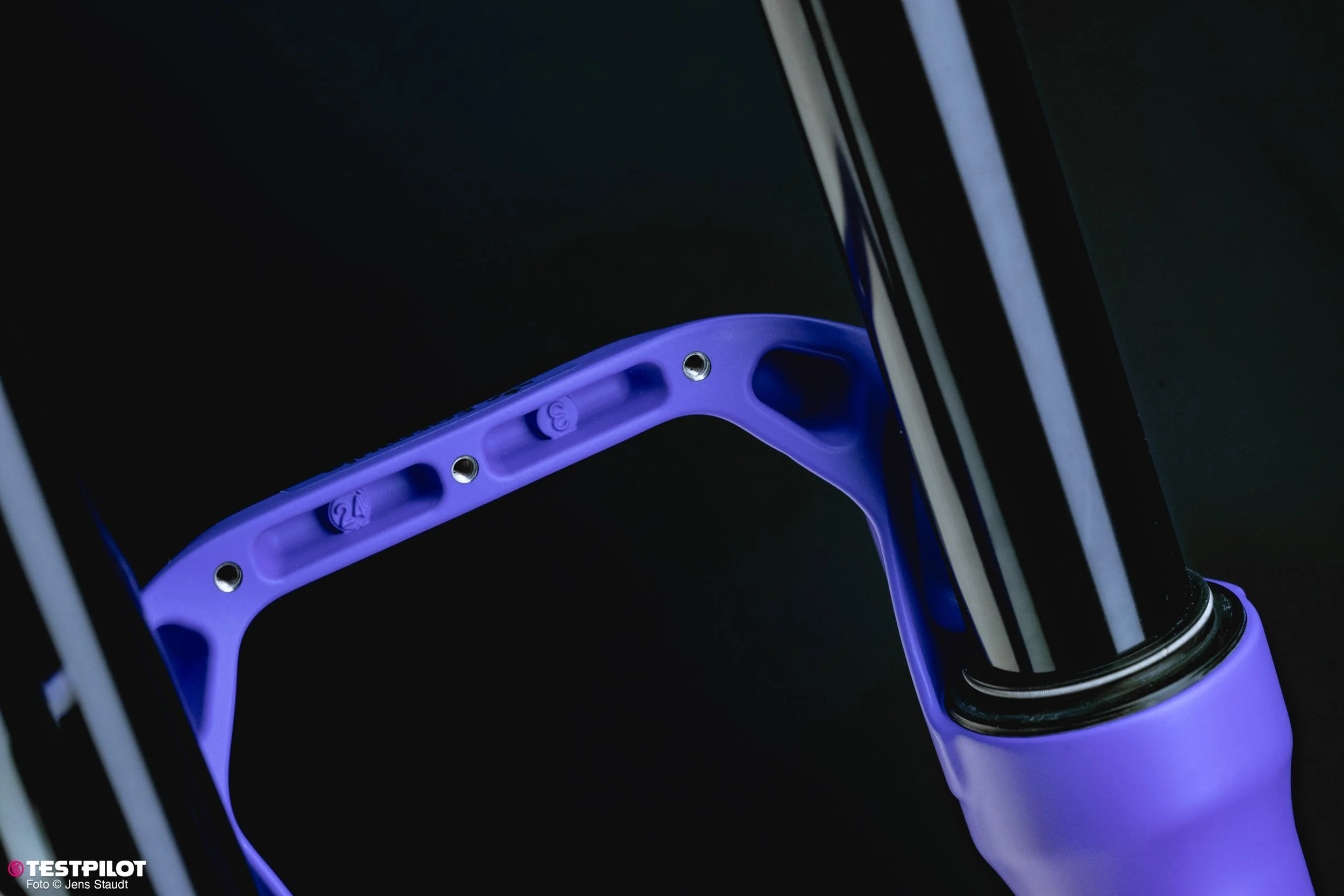
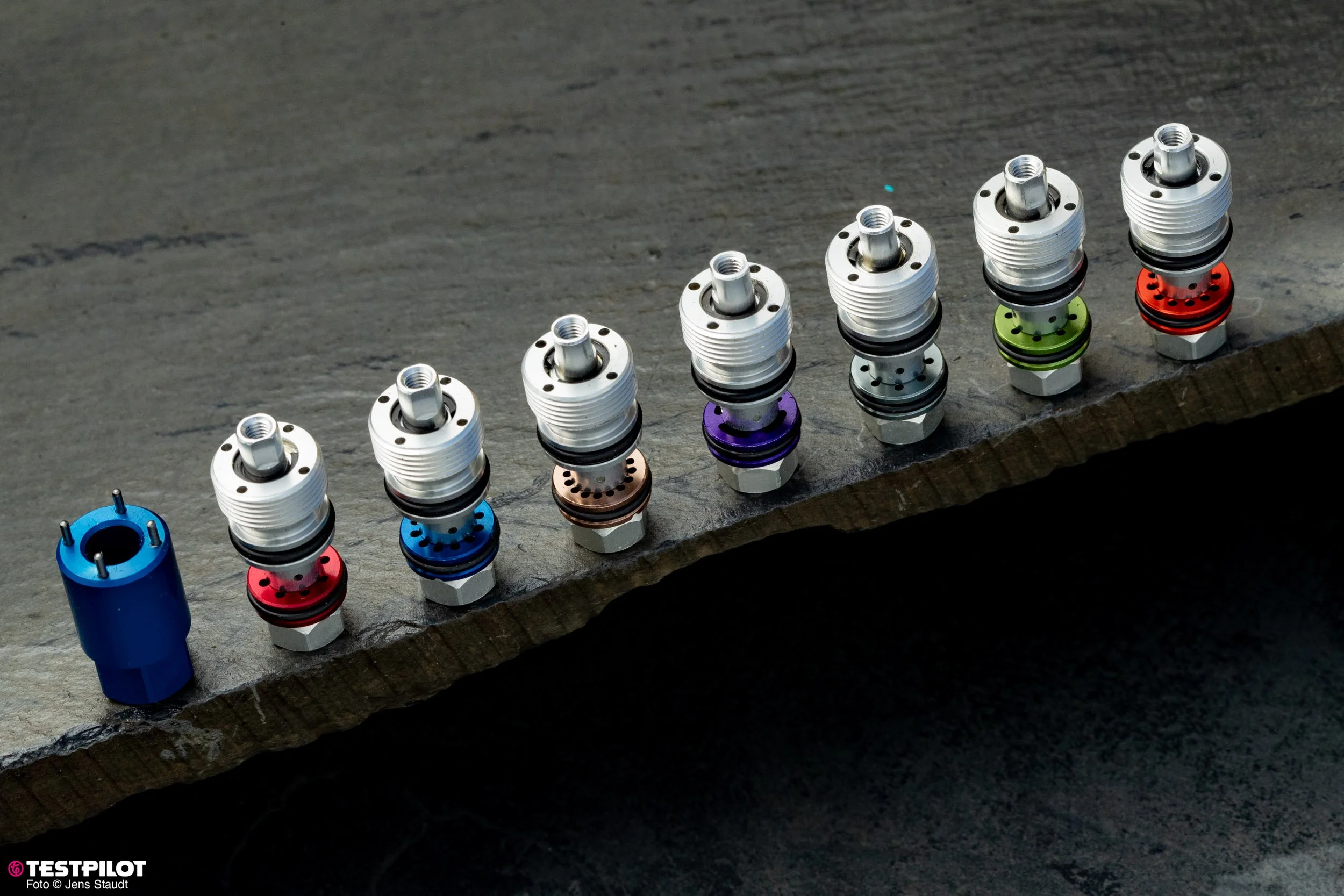
The core of this idea is the CTS. These three letters stand for "Compression Tuning System" and describe a small component you can remove and replace at any time with a Formula tool on the top of the fork. Small but mighty, as it noticeably changes the damping characteristics.
After last year's update to its air spring, the Selva V caught up with and sometimes surpassed many current competitors in performance, even if it hasn't hit the mainstream in the scene yet. Regular volume spacers made of hard plastic are announced, but better performance is said to come from the Neopos. These are foam-like spacers for the air chamber that provide more ramp-up depending on how quickly pressure builds.
On both the air and damper sides, they use so-called IFT (Internal Floating Technology). This is a kind of decoupling of the fork's internals from the naturally flexing outer chassis. The Selva V is a production fork that, through its adjustability, aims for a tuning-level performance and often still stands in the shadow of the big players.




FOX Podium
(Editor's note: Here you can read the FOX Podium review from the 170 mm enduro fork field test)
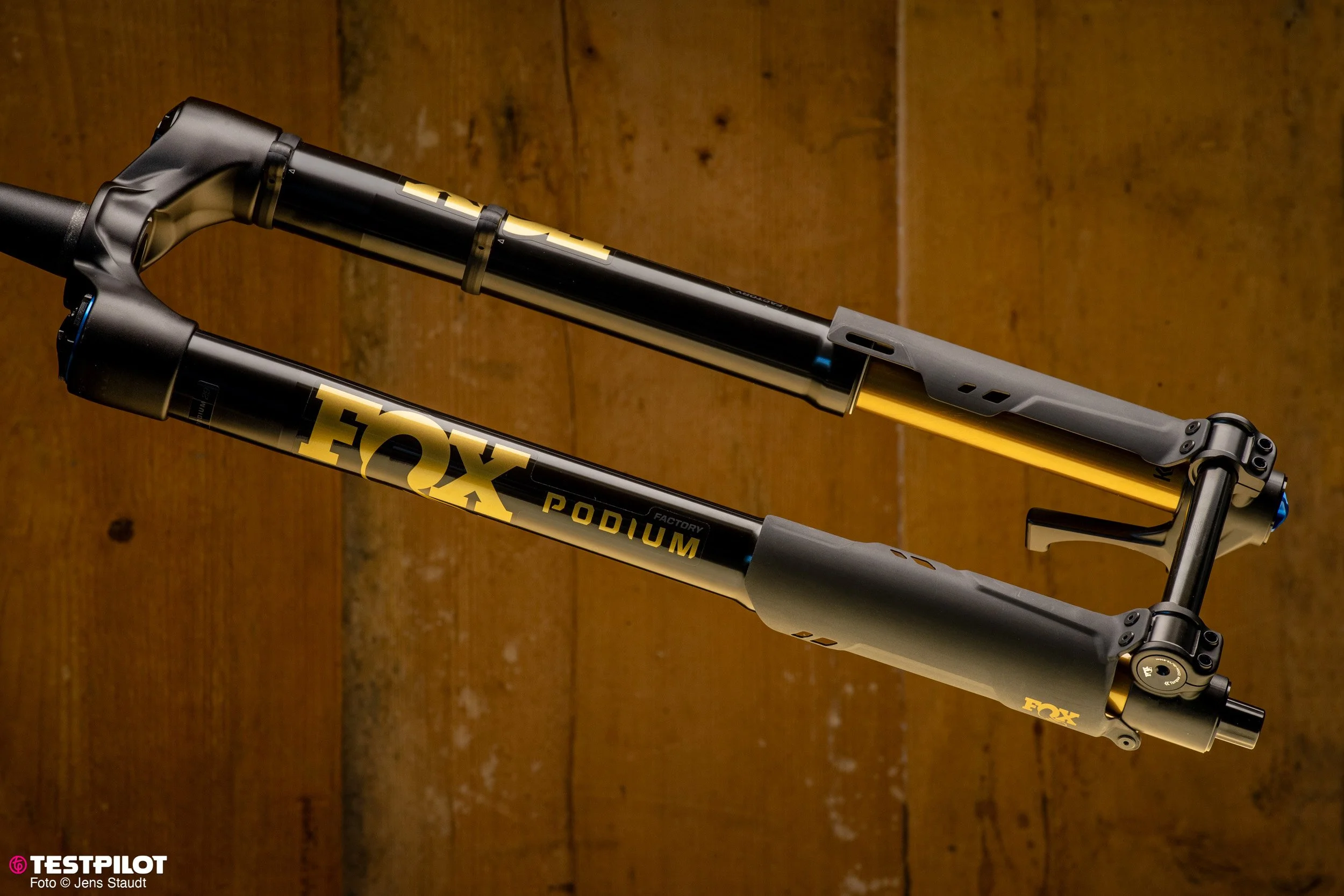
The FOX Podium Factory was a product that had us waiting for a long time until finally hitting the market. One could say the scene documented the first prototype in 26-inch, ridden by Gee Atherton, online in 2011. Shortly after, the official statement from FOX was that a fork of this design would not go into production.
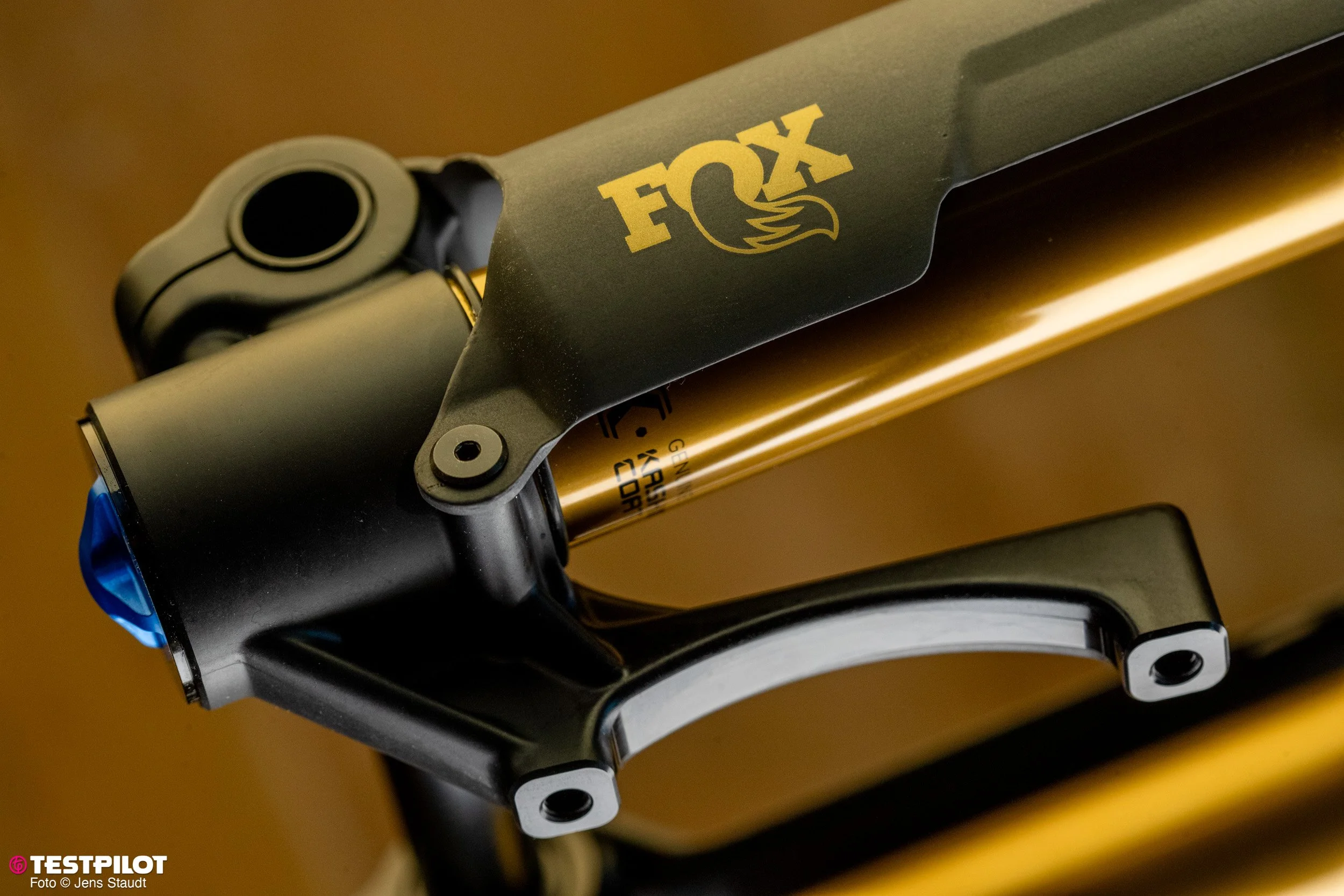
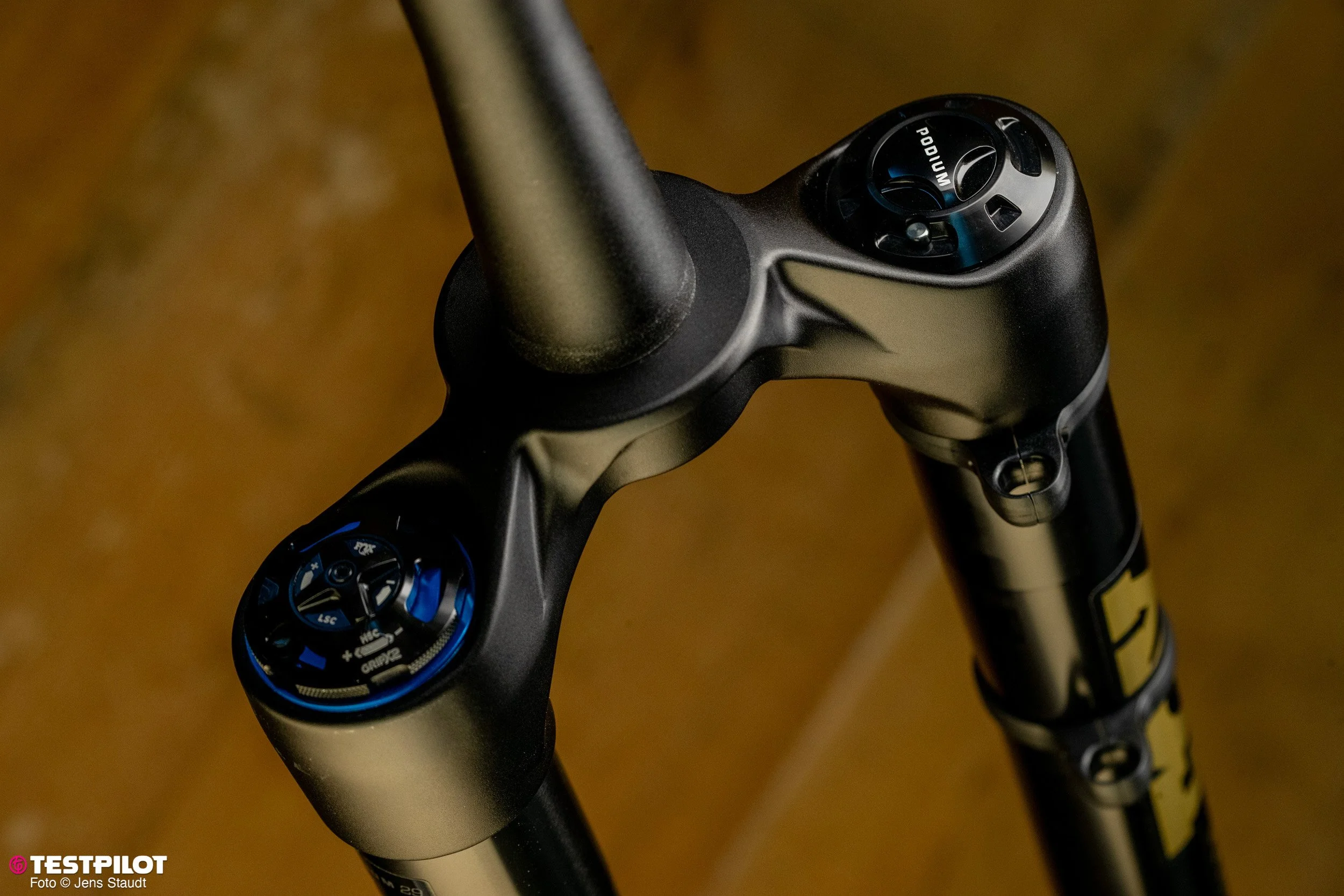
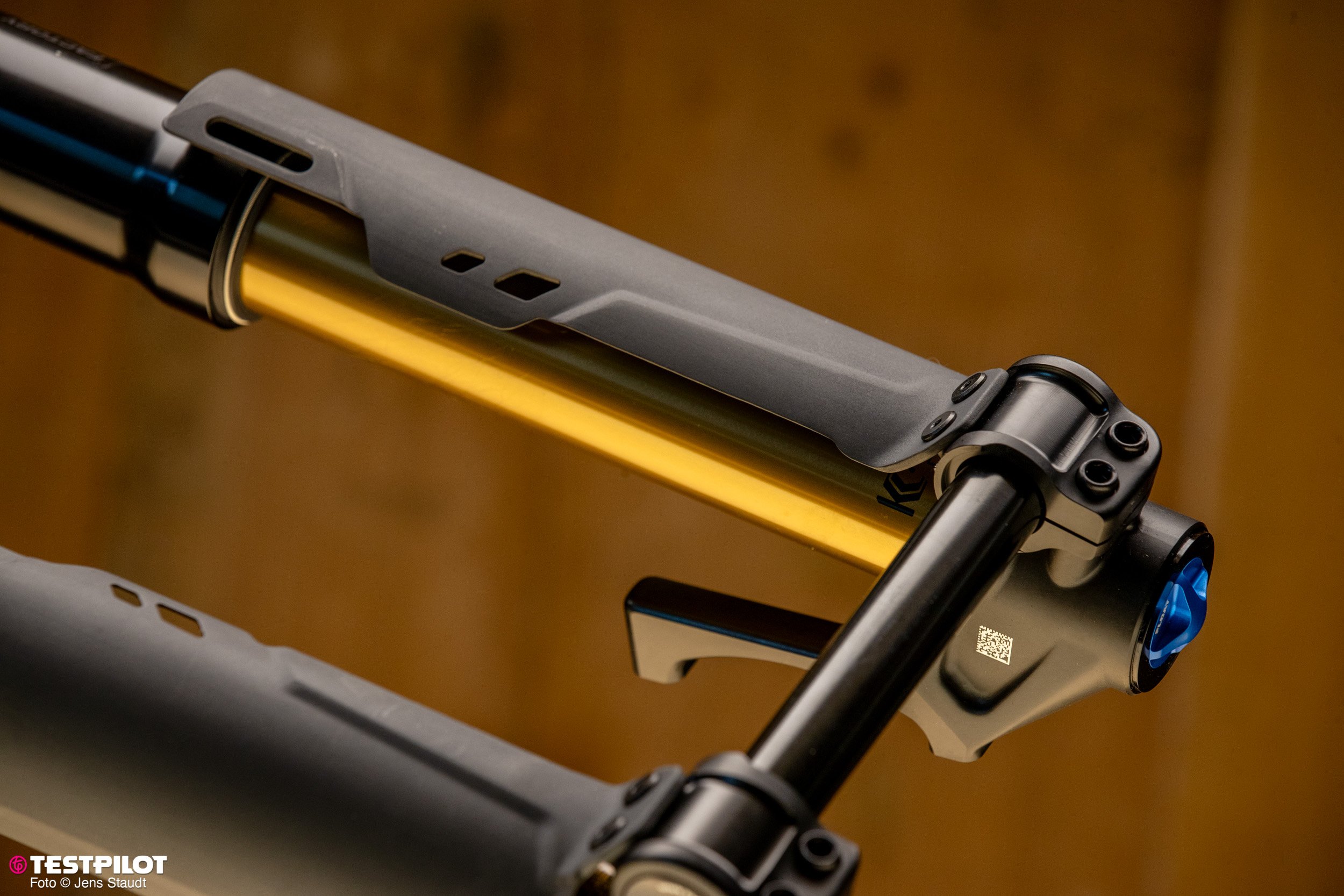
Fourteen years later, it's here. A decidedly radical production fork, upside-down, but in a single crown package. Its inner and outer values condense everything FOX currently has to offer in technology.
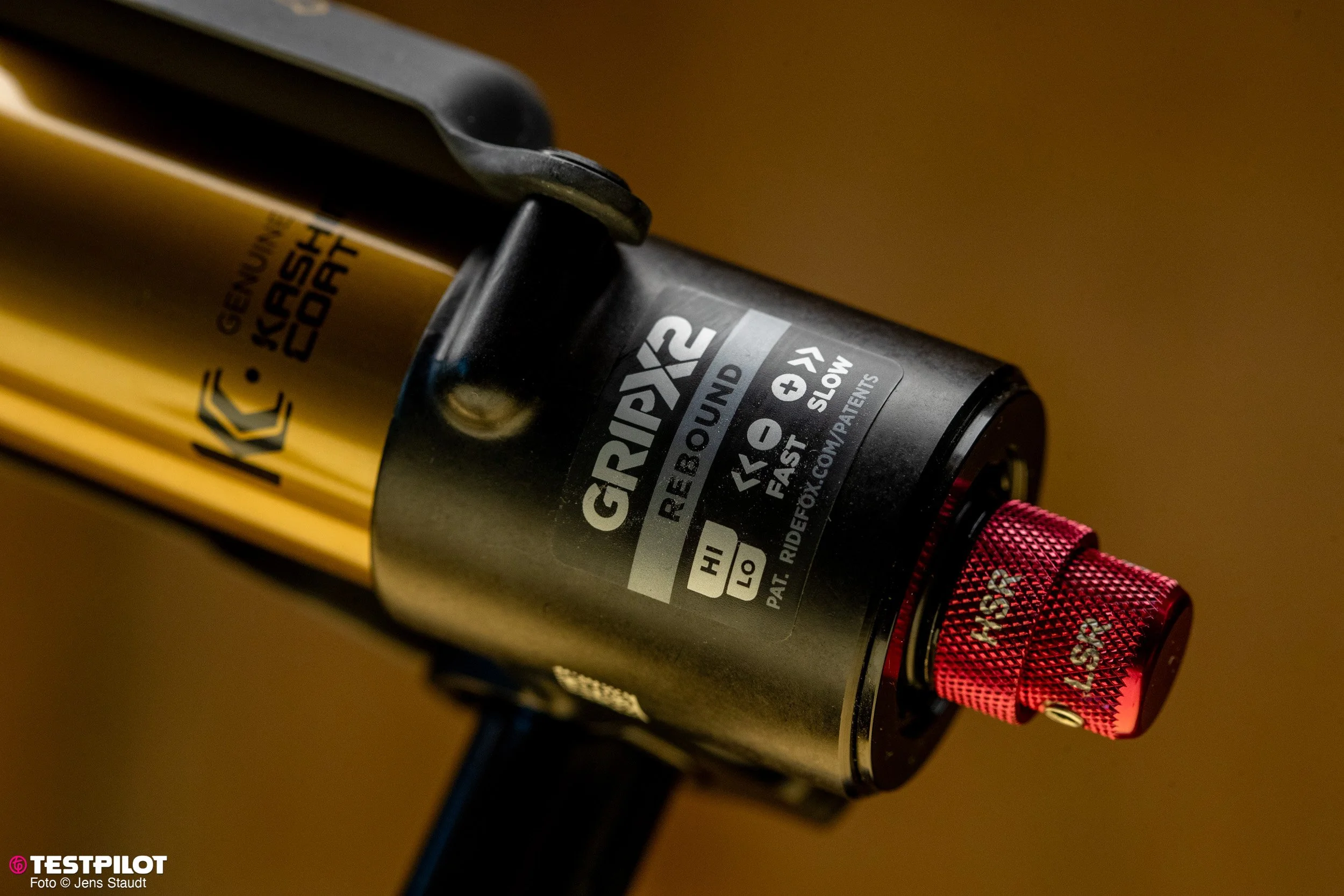
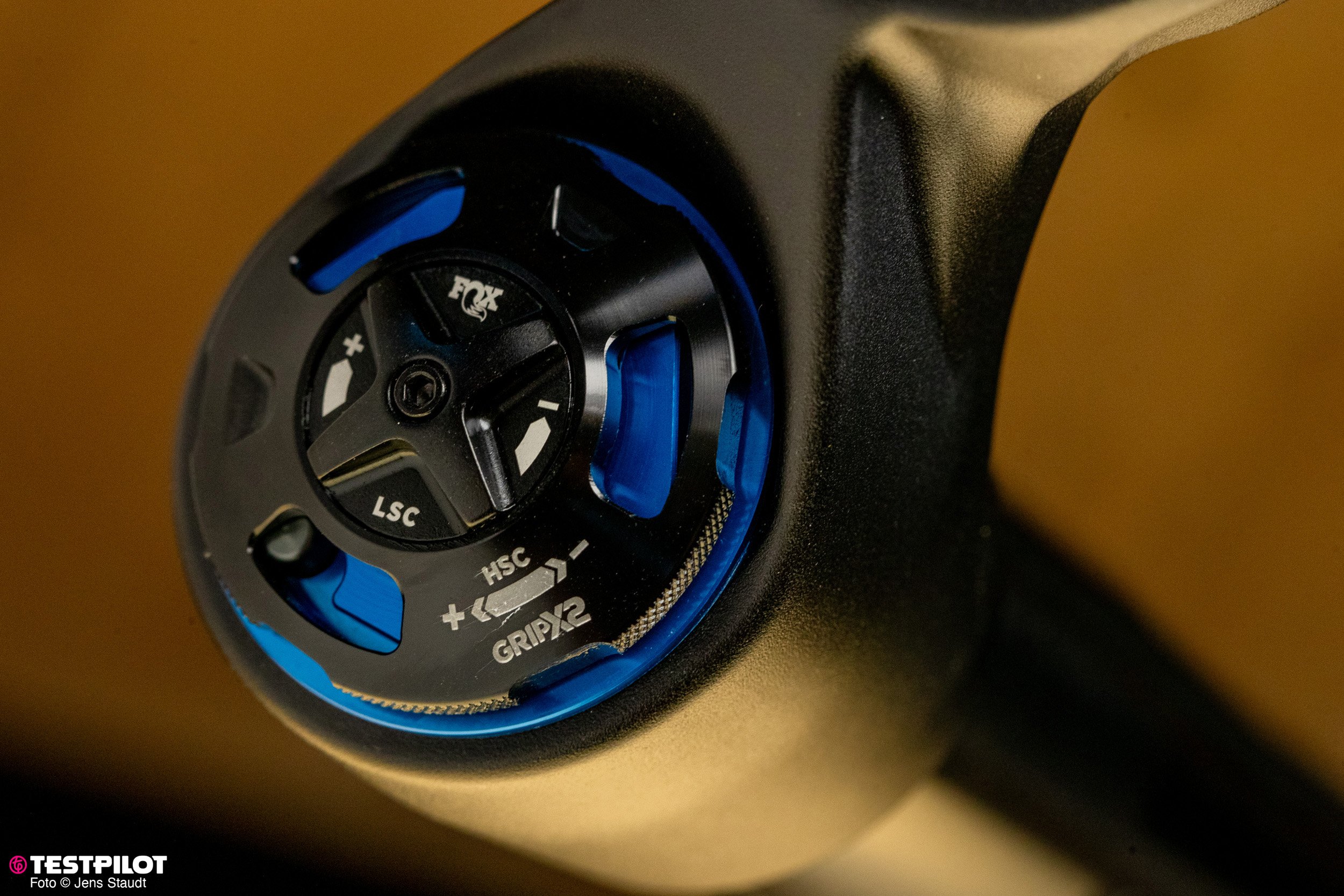
Inside works a sealed GRIP X2 damper cartridge. On the air spring side is the so-called FLOAT EVOL GlideCore air spring, which is supposed to prevent unwanted friction under flex.
Externally, the familiar GRIP X2 damper can be adjusted more independently between high- and low-speed. With 170mm of travel and a weight around 2,780g, FOX positions the Podium not only in looks clearly above the 38.
Looking at the current market offering, this fork is found on bikes with a fairly clearly defined target group. E-bikes or flat-out-full-gas Enduros. The look turns heads on the trail and in the bike park.
Marzocchi Z1 coil
(Editor's note: Here you can read the Marzocchi Z1 Coil review from the 170 mm enduro fork field test)
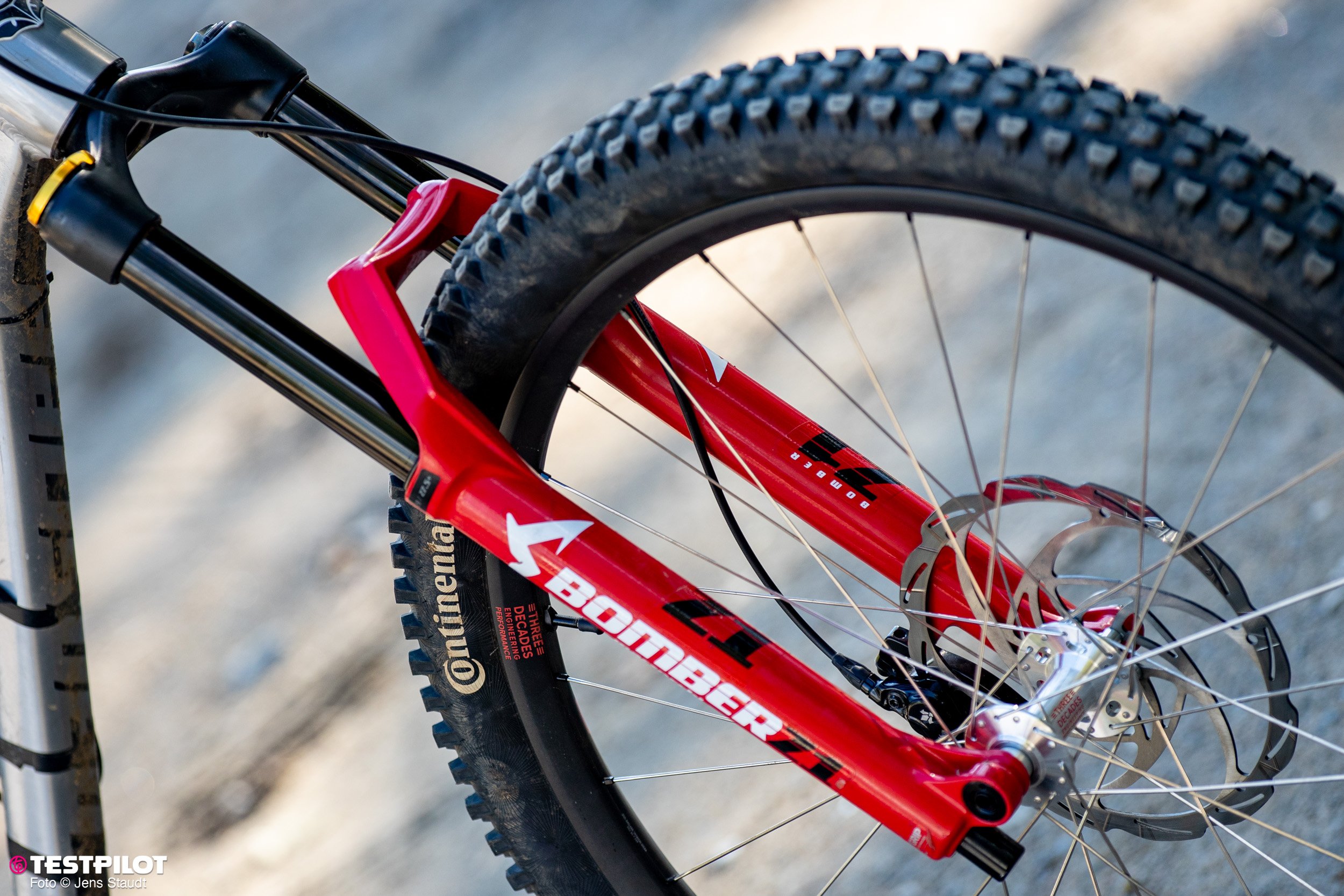
The Marzocchi Z1 Coil stopped sailing under the Italian flag for a very long time, but it seems it has returned to these simpler times. Uncomplicated, robust, simple, and solid performance. In the coil-sprung version we tested, they consciously forgo sophisticated air springs with multiple chambers and numerous seals. Instead, we stay classic. Just four spring rates cover a weight range from 54 to 114 kg.
Unscrew the top cap, put in the right spring, and you're done. This principle is simple and provides coil-typical, linear, extremely sensitive spring behavior and promises longer maintenance intervals.
Functionally, the robust Z1 chassis platform with 36mm stanchions forms the base. Combined with the simple but effective GRIP damper, it delivers a consistent and reliable damping performance, precisely without complicated adjustment options.
Read the review of the Marzocchi Z1 Coil from our field test.
Öhlins RXF38 M.3 Air
(Editor's note: Here you can read the Öhlins RXF38 M.3 Air review from the 170 mm enduro fork field test)
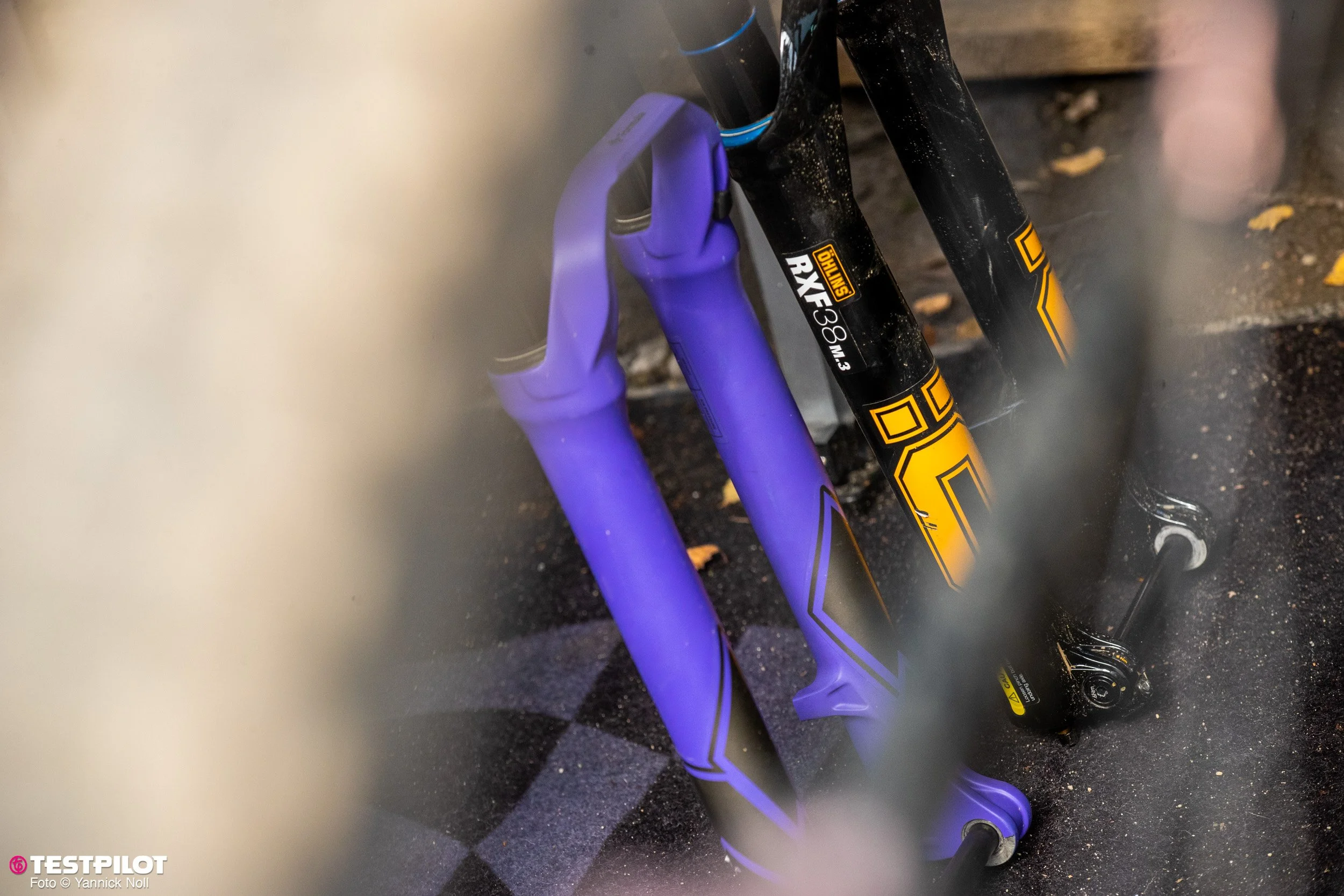
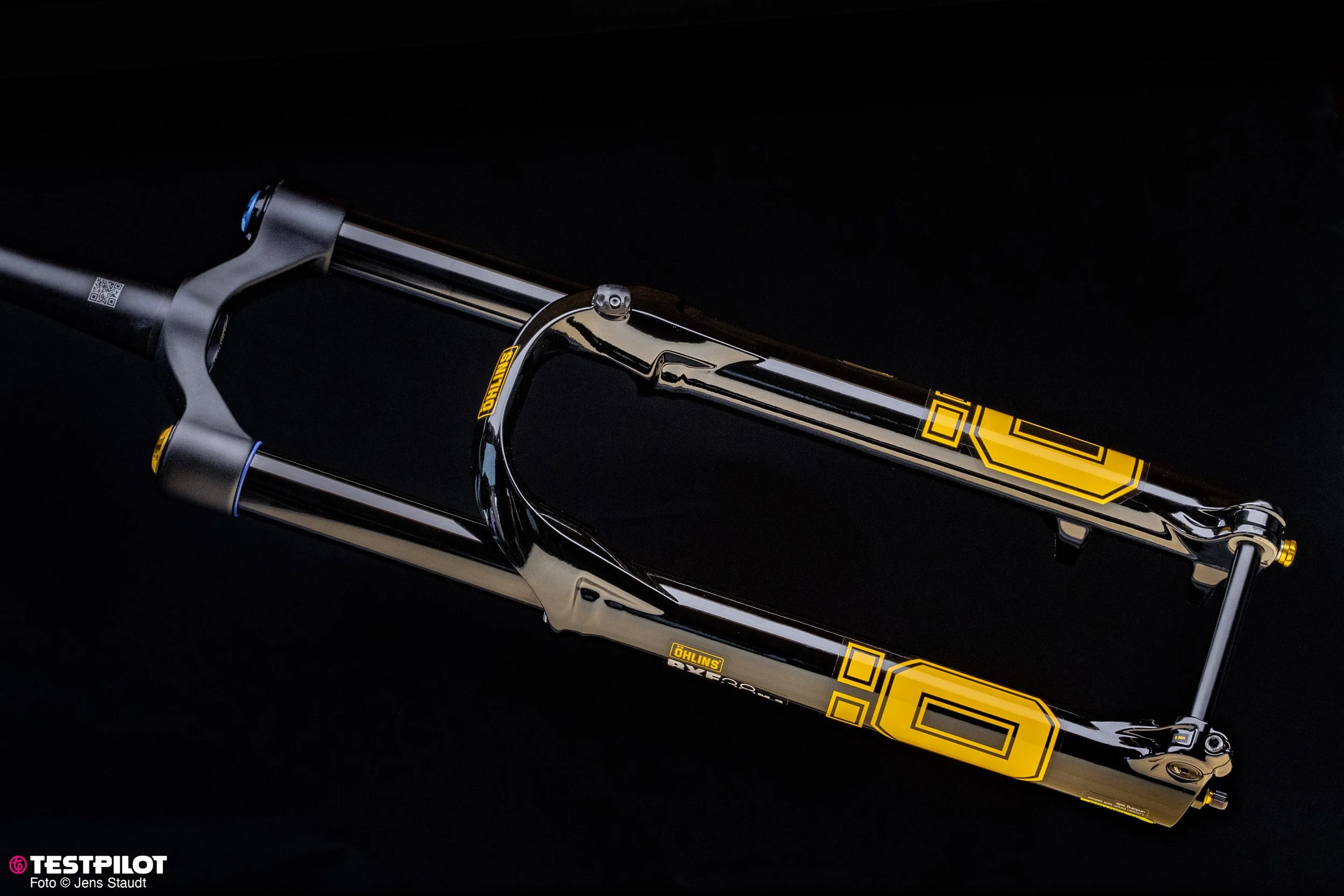
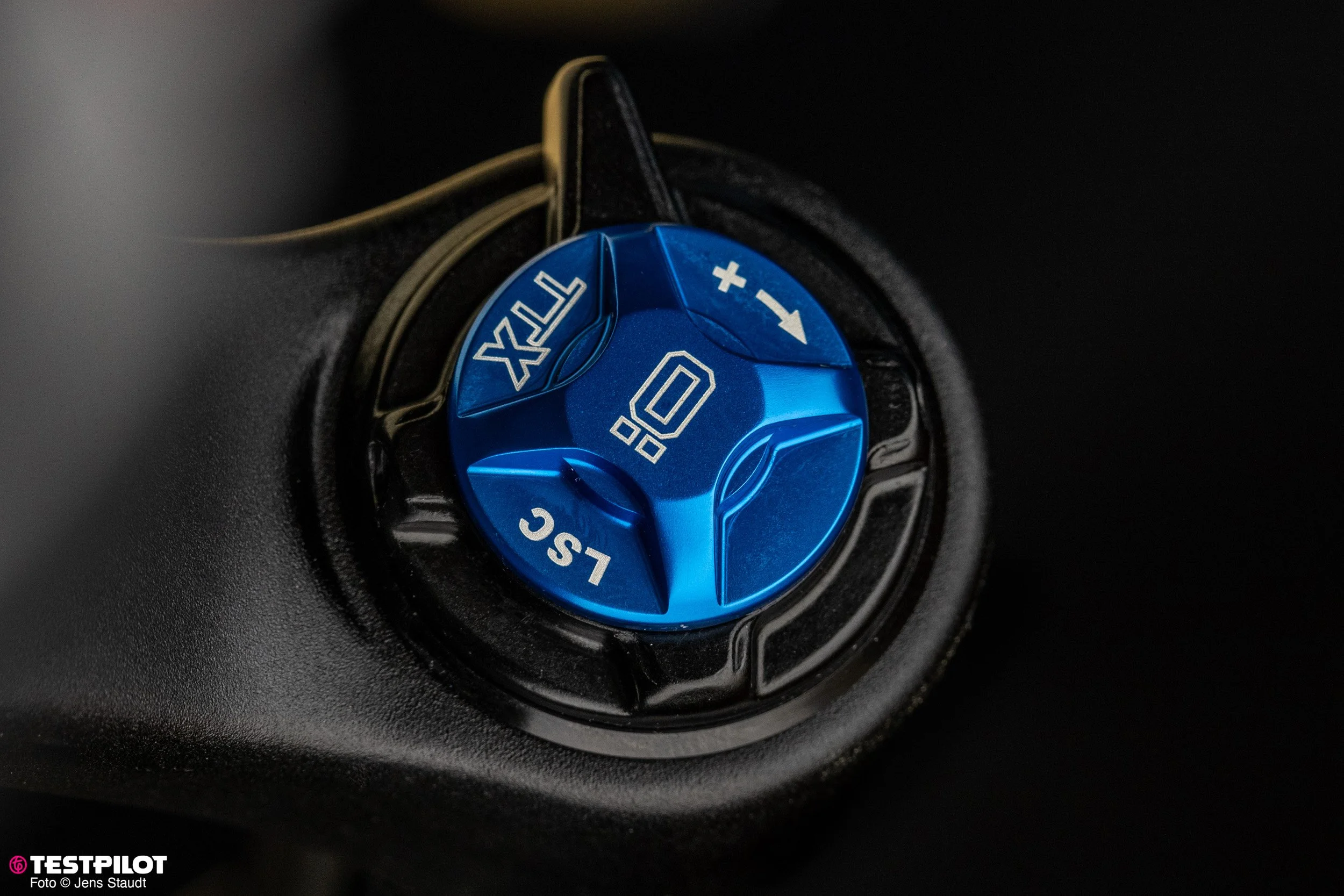
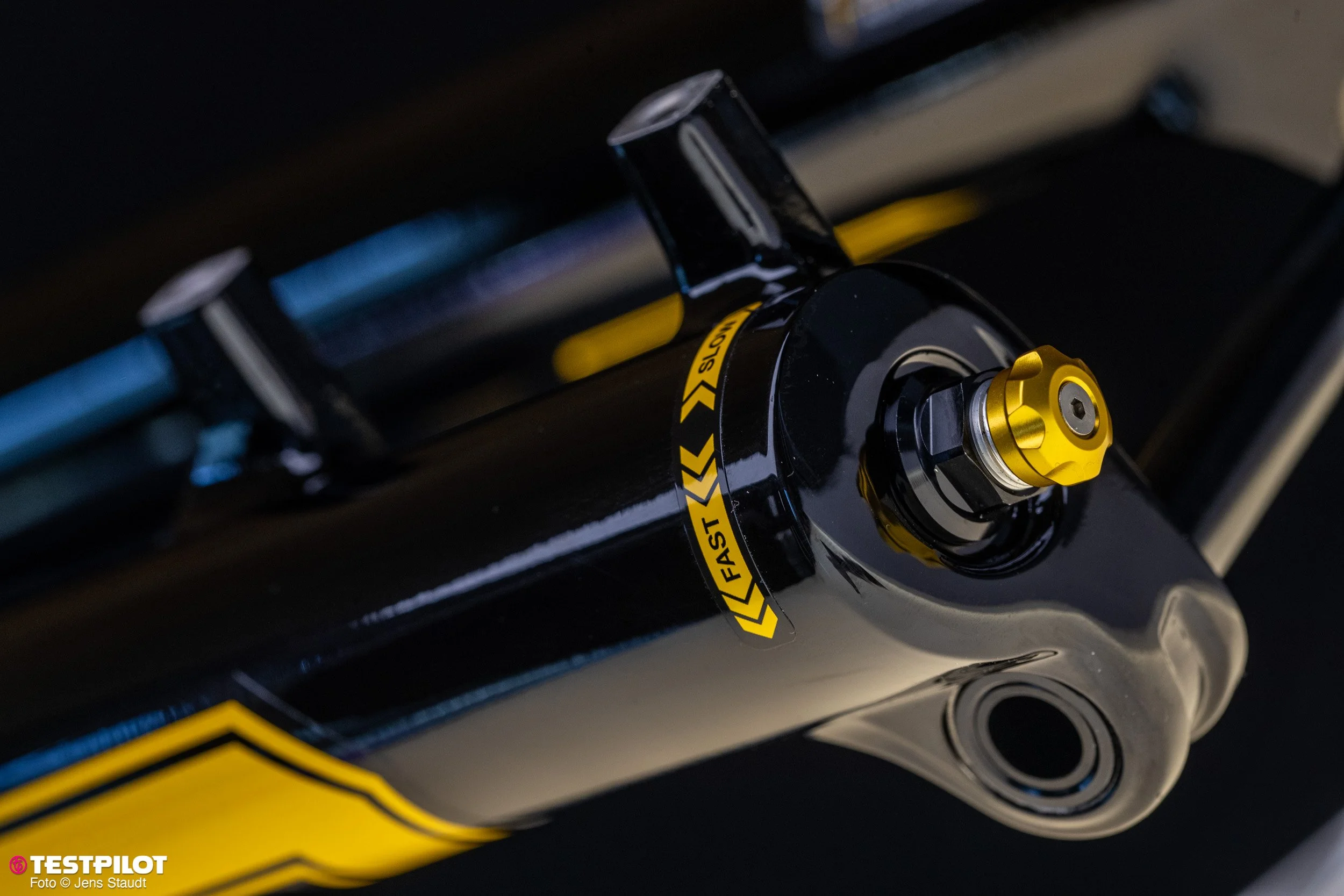
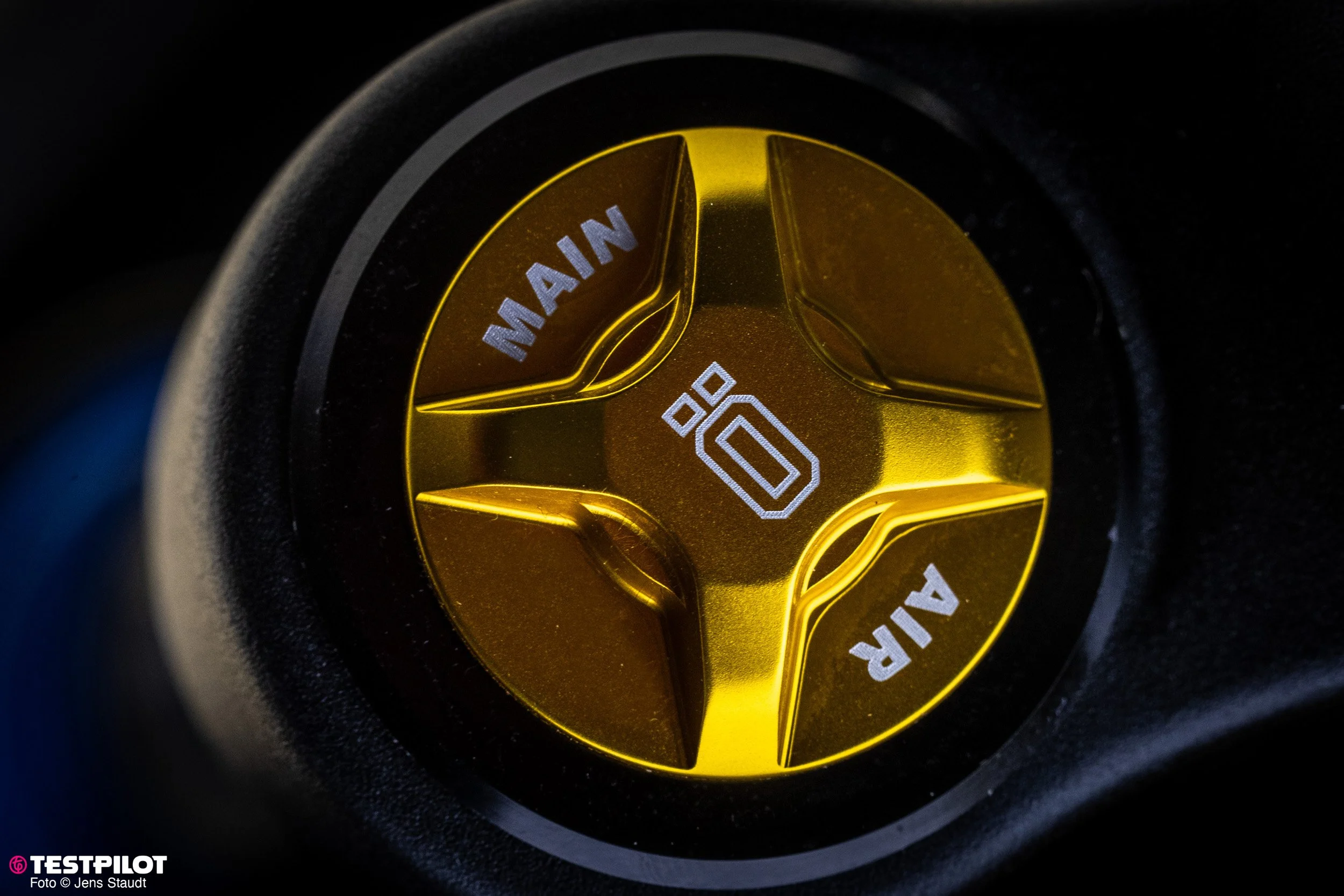
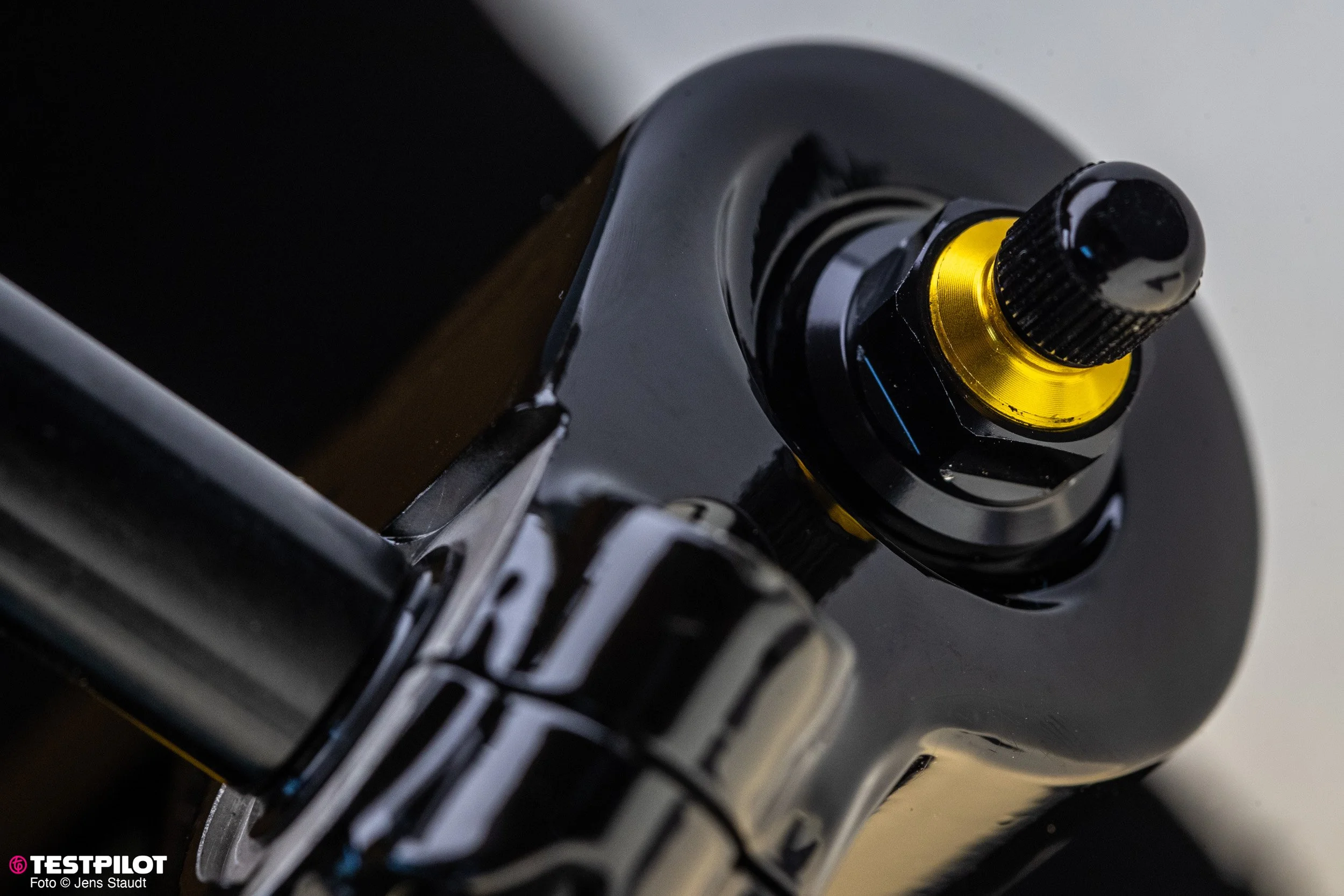
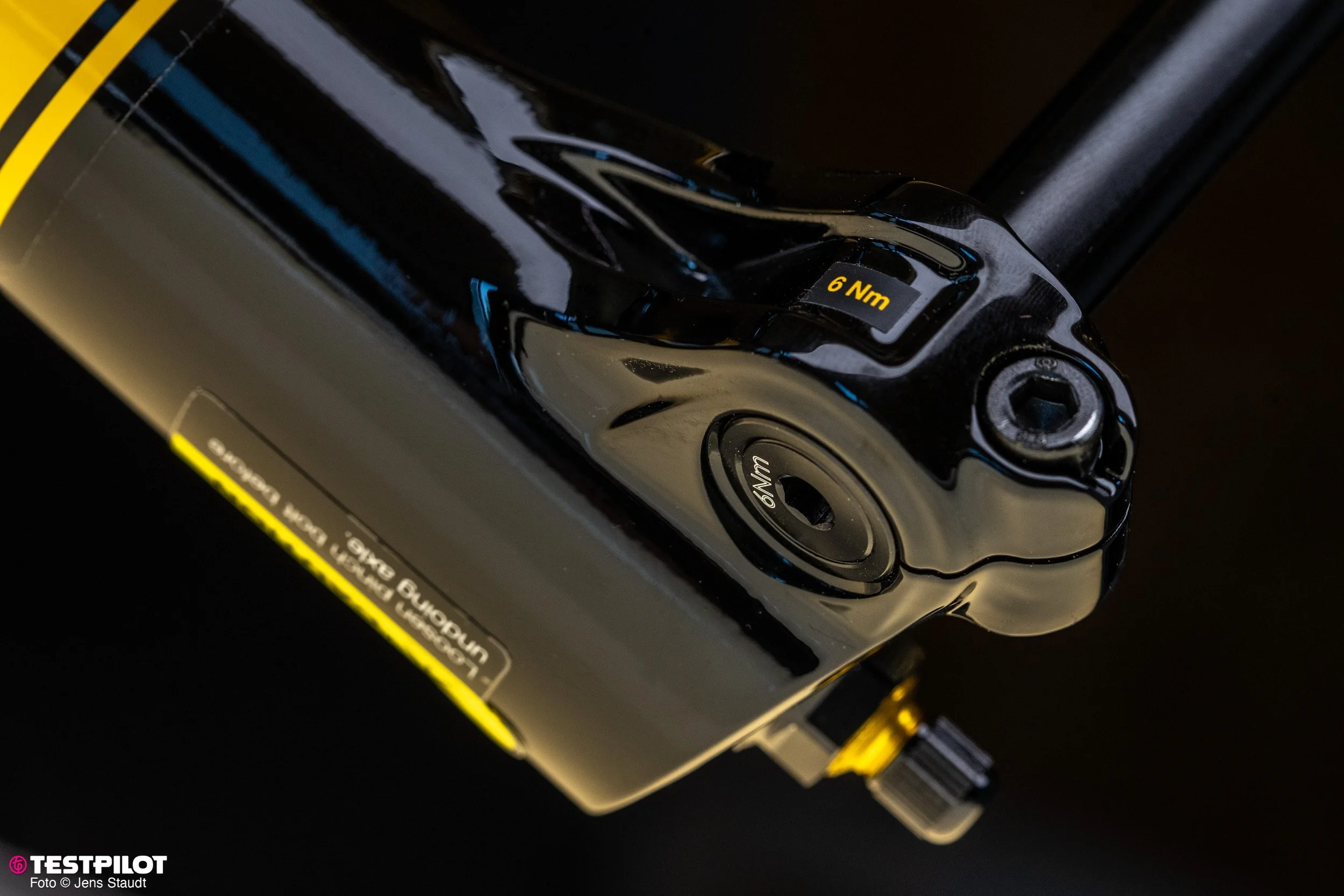
The Öhlins RXF38 m.3 Air is surrounded by a halo of motorsport. Damping technology and experience are meant to be made usable for demanding mountain biking. As a product of the Swedish brand, the focus is not on the highest number of adjustment knobs, but on precisely coordinated and, above all, consistent performance. The heart is the TTX18 damper unit and an air system with three chambers for stepless, individual tuning of the spring curve. For those who want it, it's also available with a coil spring.
Descriptive of the Swedes is their twin-tube architecture. Adjusters for high- and low-speed compression are less finely graduated than competitors', but still cover a fairly broad spectrum.
Push Industries Nine.One V2
(Editor's note: Here you can read the PUSH Industries Nine.One V2 review from the 170 mm enduro fork field test)
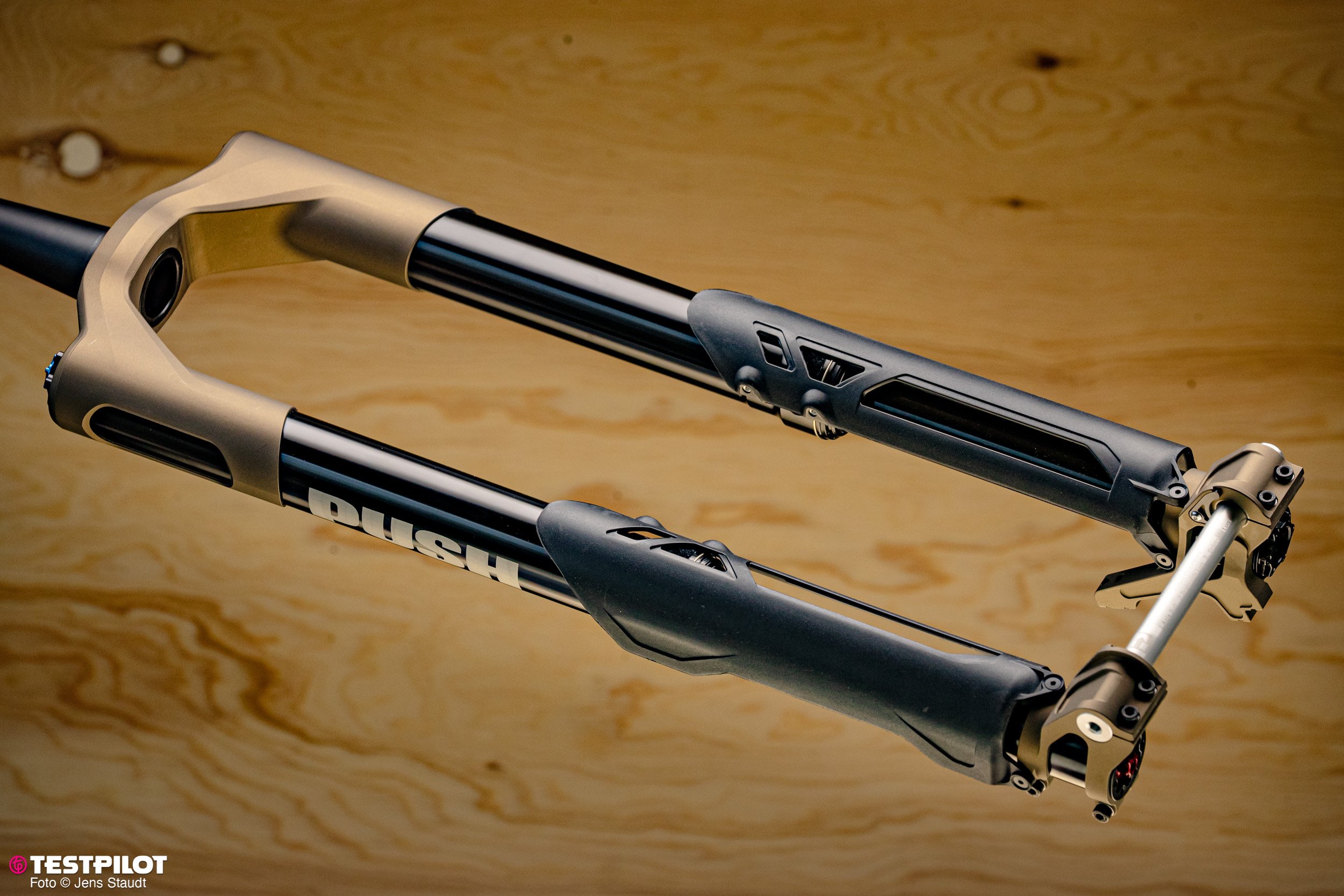
The PUSH Industries Nine.One V2 is not an off-the-shelf fork; it's a statement, and not just visually. Handmade in Colorado, USA, it embodies the philosophy of making damper performance at the highest (custom) level accessible to the demanding privateer. The only thing "off-the-shelf" here is the shipping box.
The fork's tuning is done by PUSH itself or the distributor based on rider weight and riding style information. It's not lightweight, and the focus sticks clearly on performance. If that means more weight, so be it. PUSH founder Darren Murphy makes no secret of this, thereby enriching the overall market offering with something very unique.
The heart of the damping in the Nine.One V2 is a completely independently developed damper cartridge whose architecture is strongly reminiscent of the well-known PUSH rear shocks. It uses the same valve technology for the compression stage, but without the ability to switch between two damping characters, as is possible with the 11.6 or VT/X.
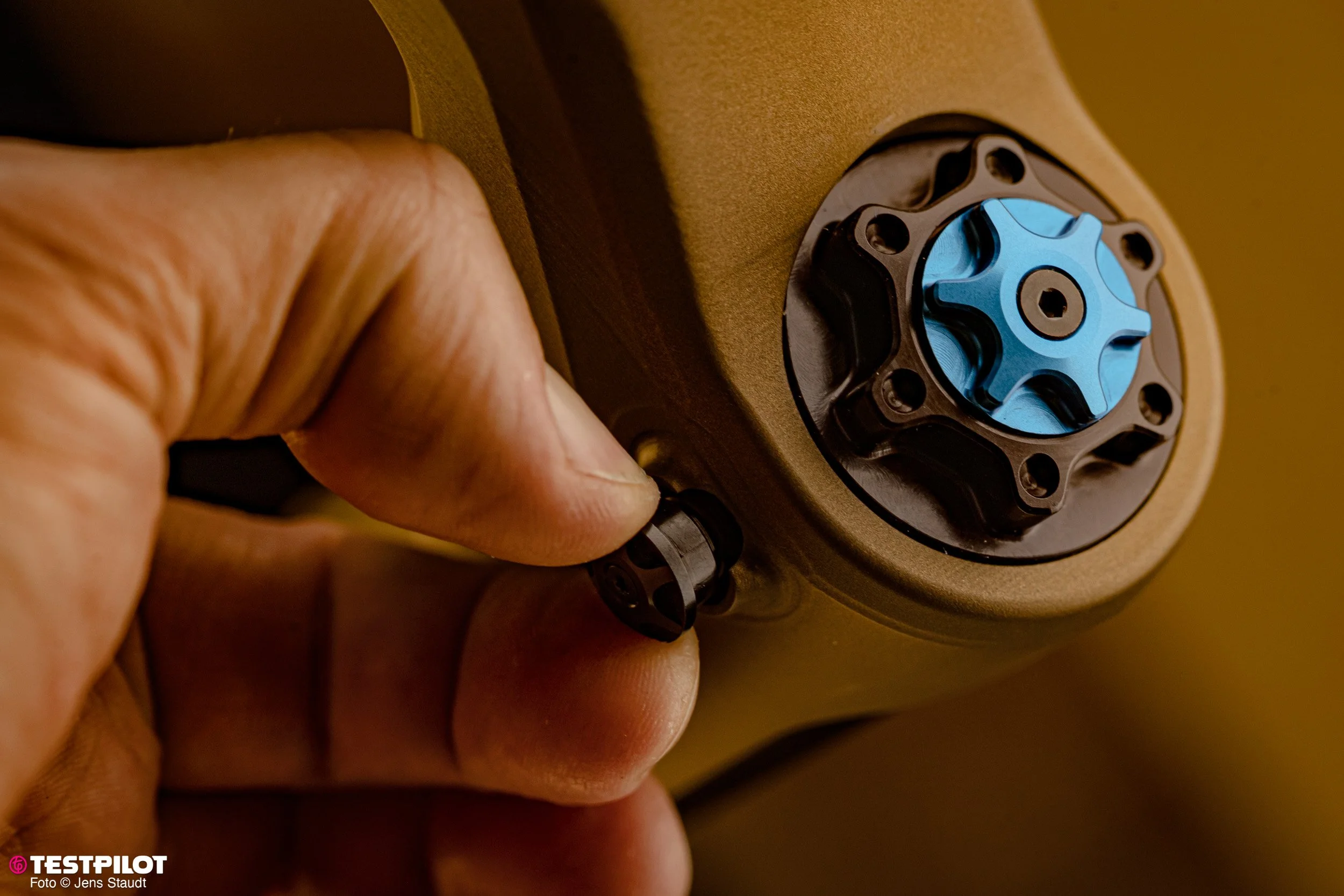
Furthermore, the Nine.One has an adjustment possibility you won't find from any other manufacturer: the Sub Chamber. On the spring side, they rely primarily on a coil spring (in seven rates) and pair it with a simple, externally switchable pneumatic system for more progression. You can activate or deactivate the Sub Chamber by turning a silver adjuster on the top of the fork. Should you ever reach the end of the travel, a hydraulic bottom-out provides a soft ending when things get rowdy.
Read the review of the Push Industries Nine.One V2 from our field test.

SR Suntour Durolux 38 Evo X
(Editor's note: Here you can read the SR Suntour DUROLUX 38 EVO X review from the 170 mm enduro fork field test)
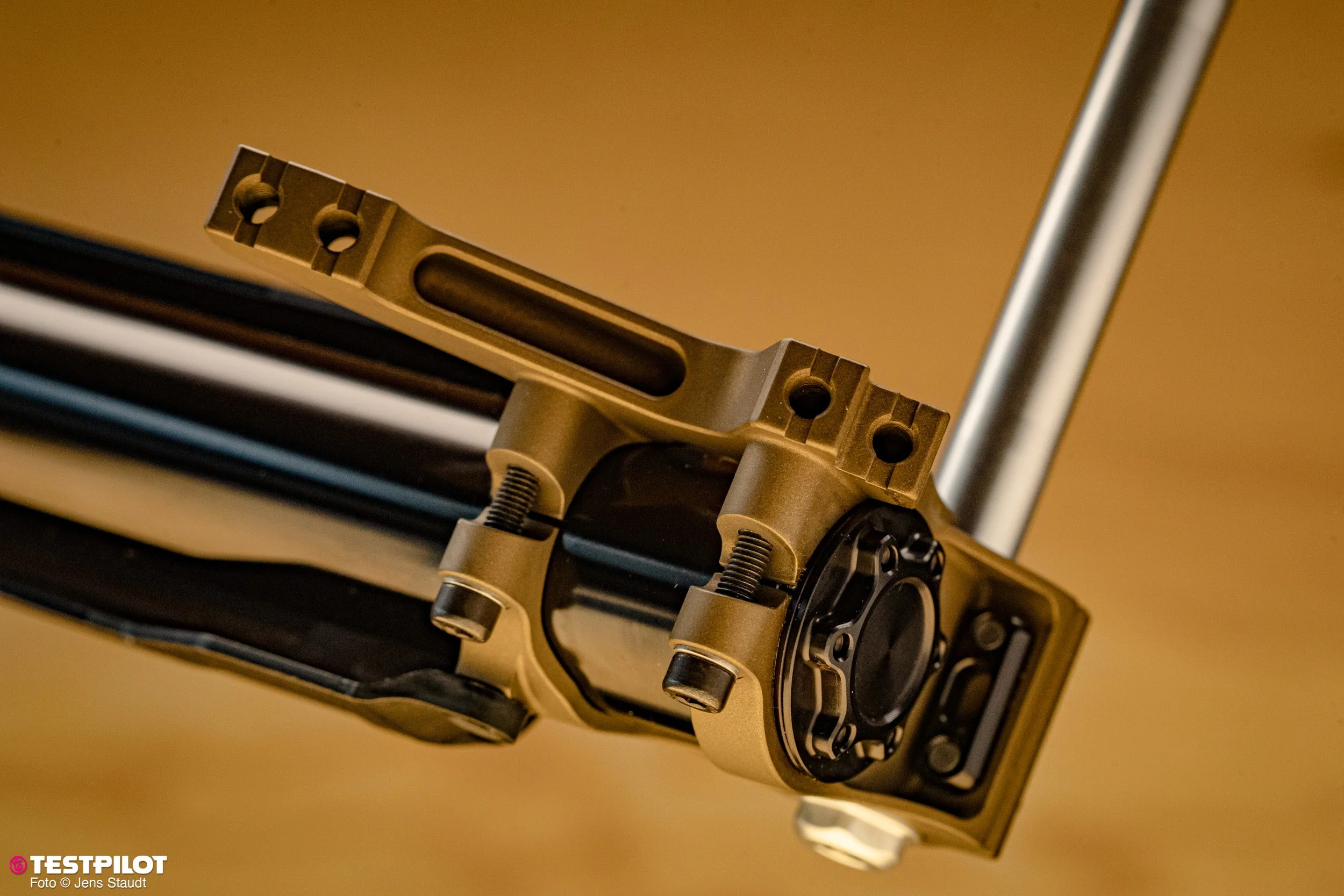
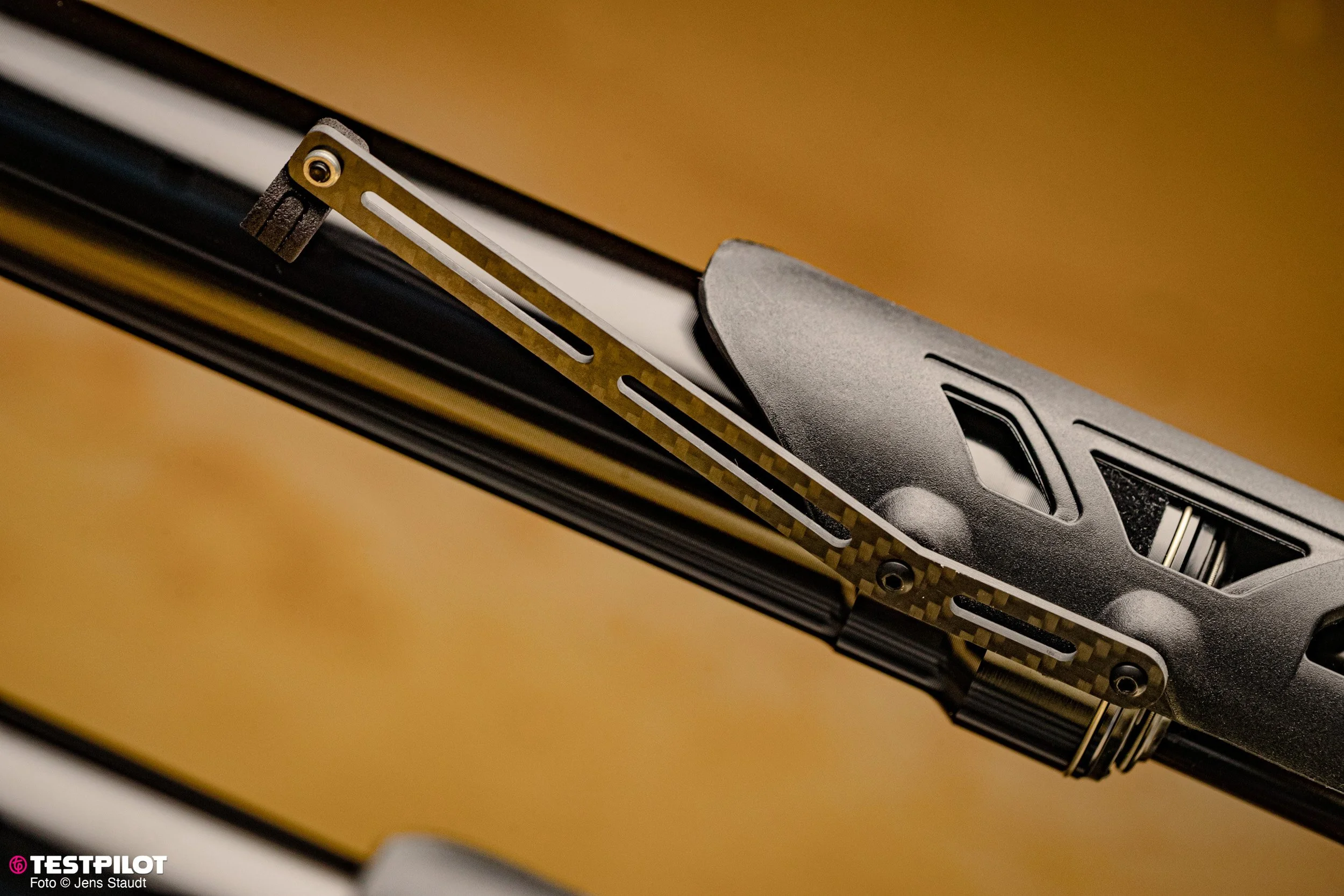
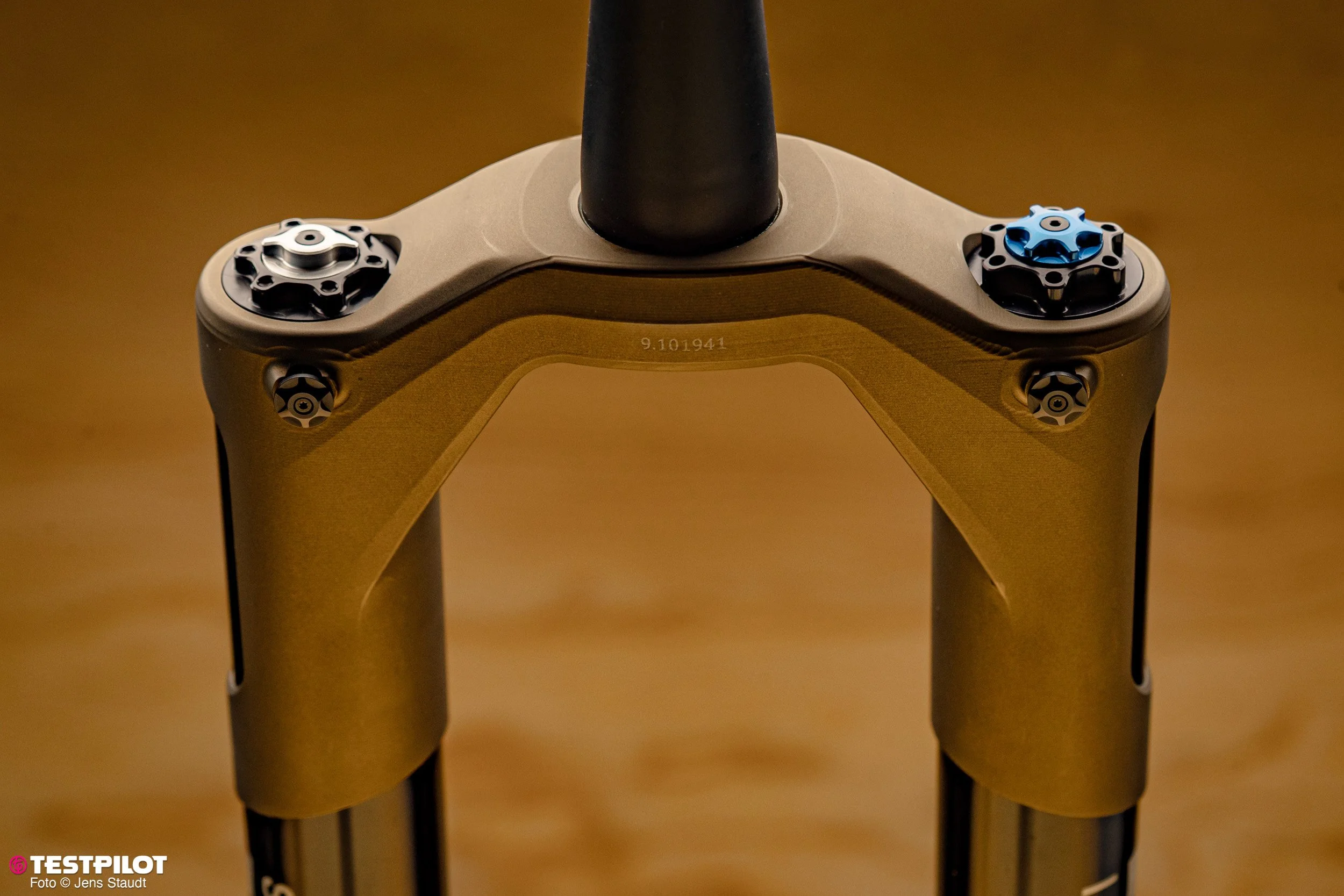
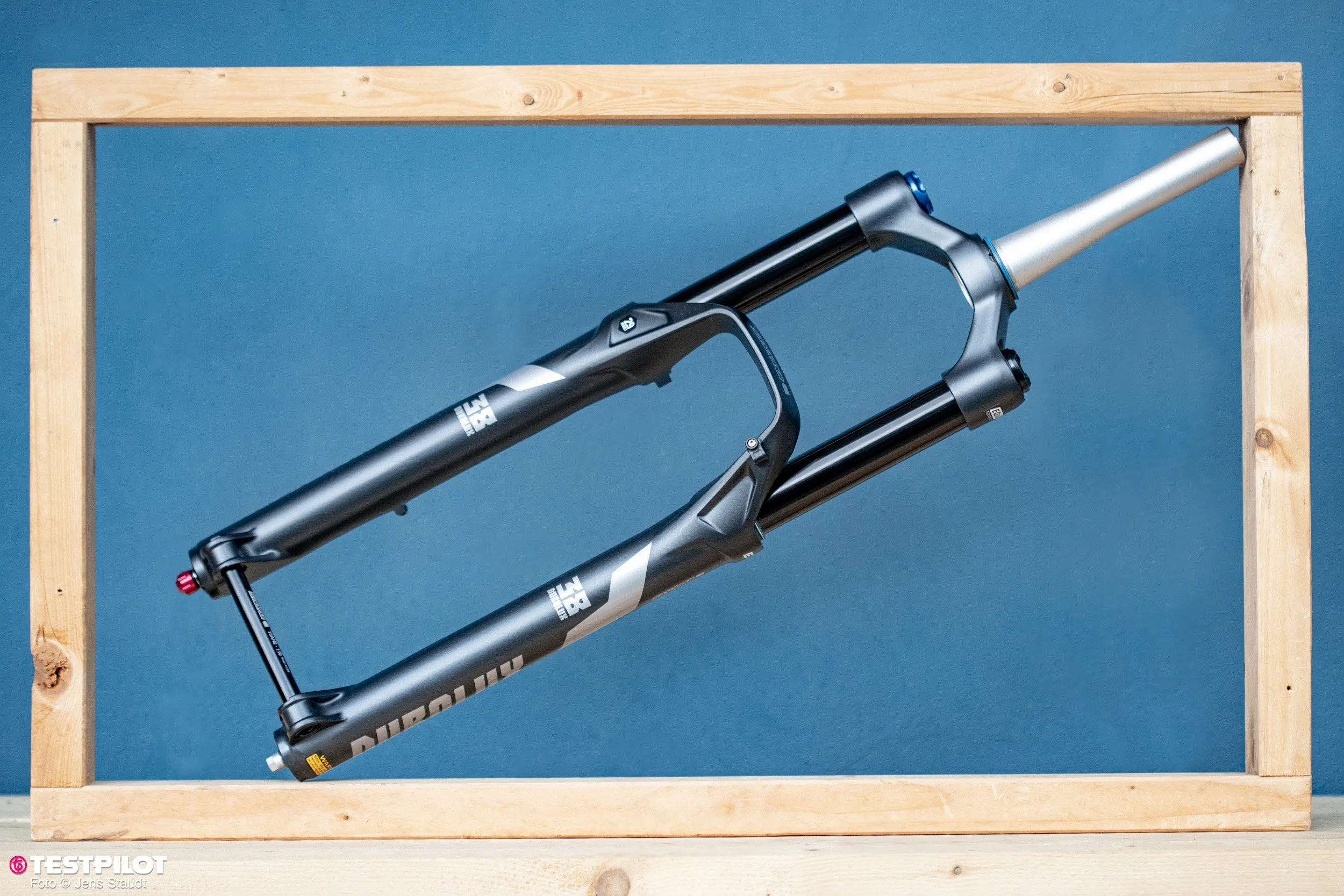
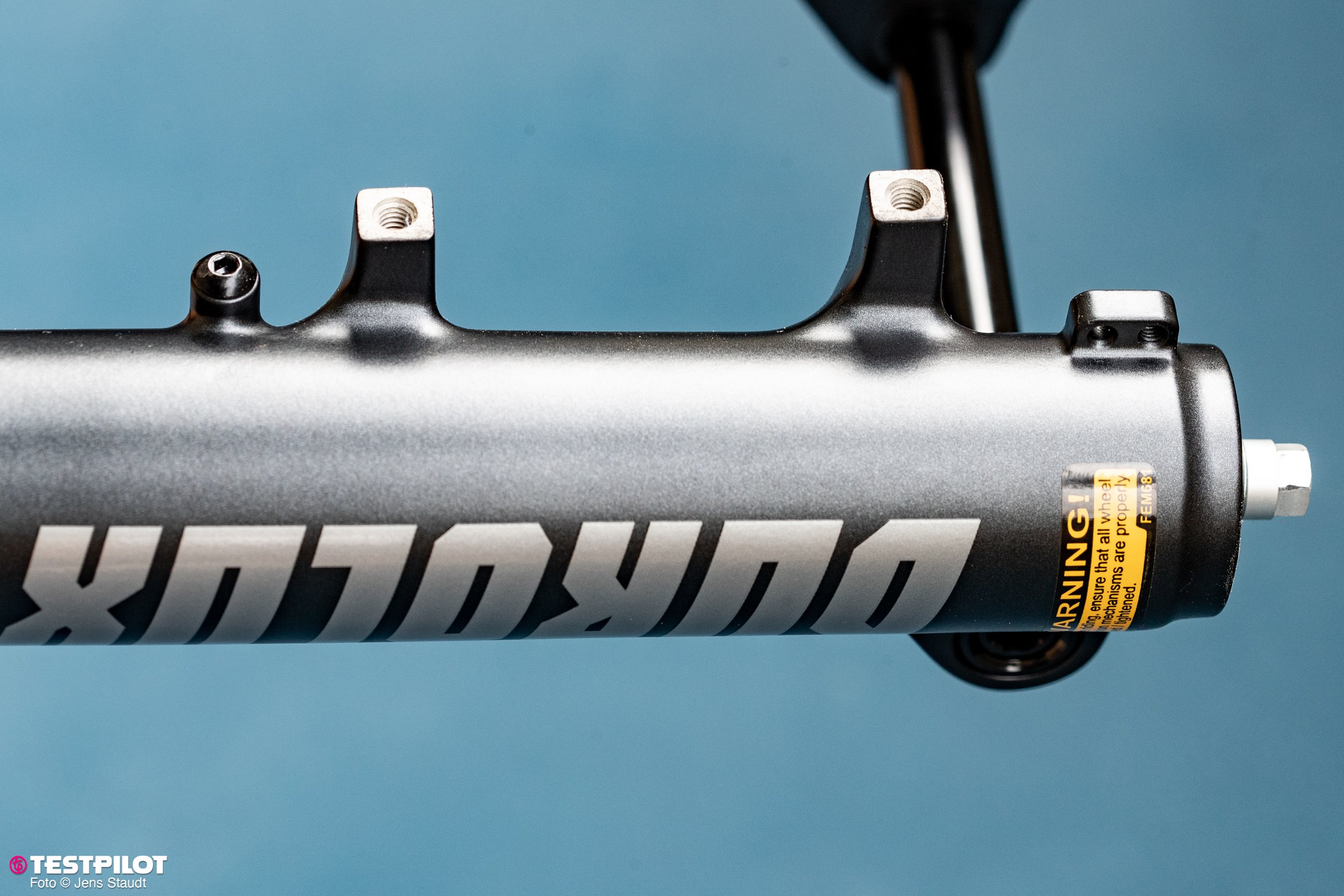
"We want to be like Toyota. Affordable and very durable for a very long time." That's how the SR Suntour Durolux 38 Evo X was described to us when handed over for testing. A philosophy of delivering maximum performance at a radically accessible price. So a Toyota Hilux in the bike sector?
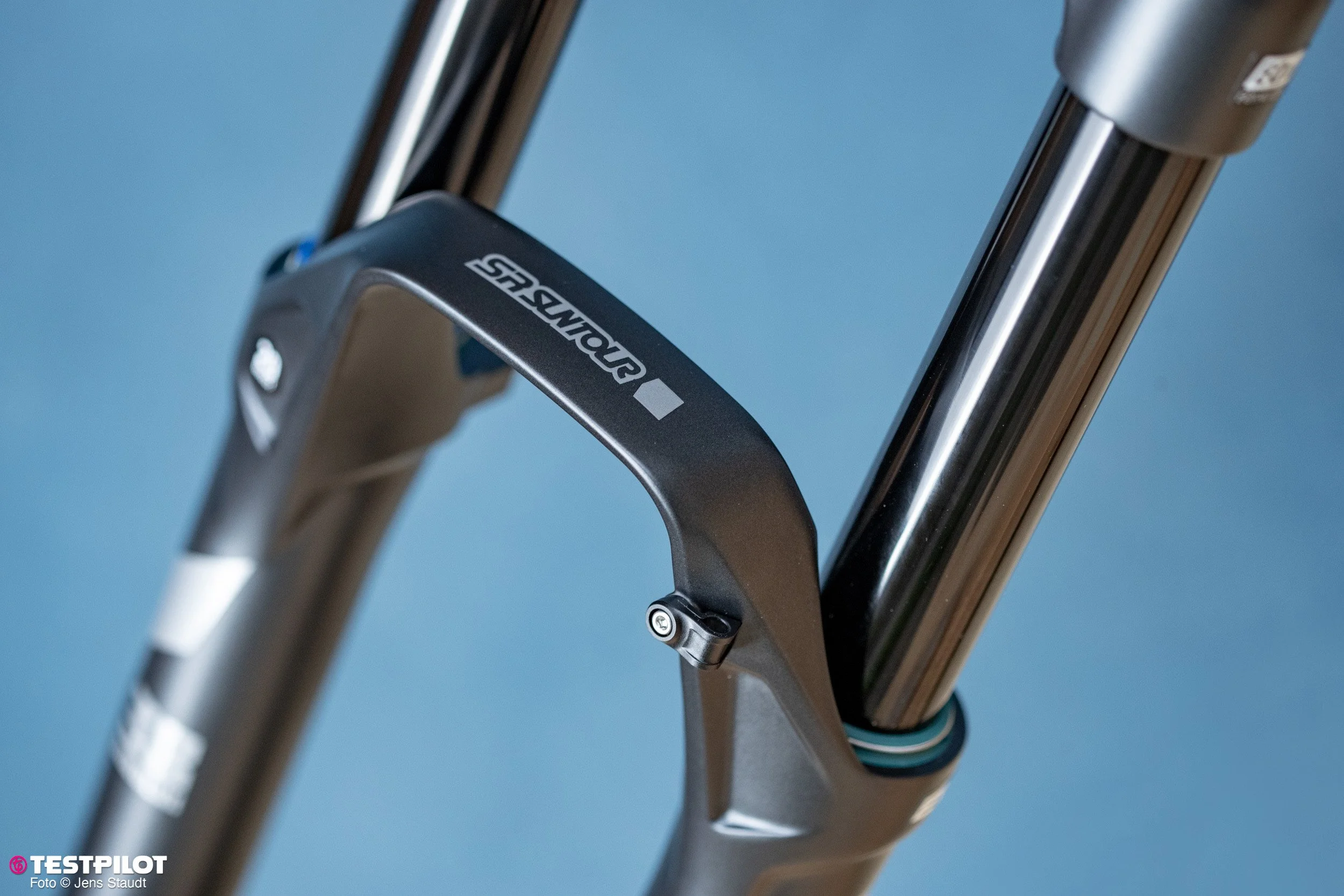
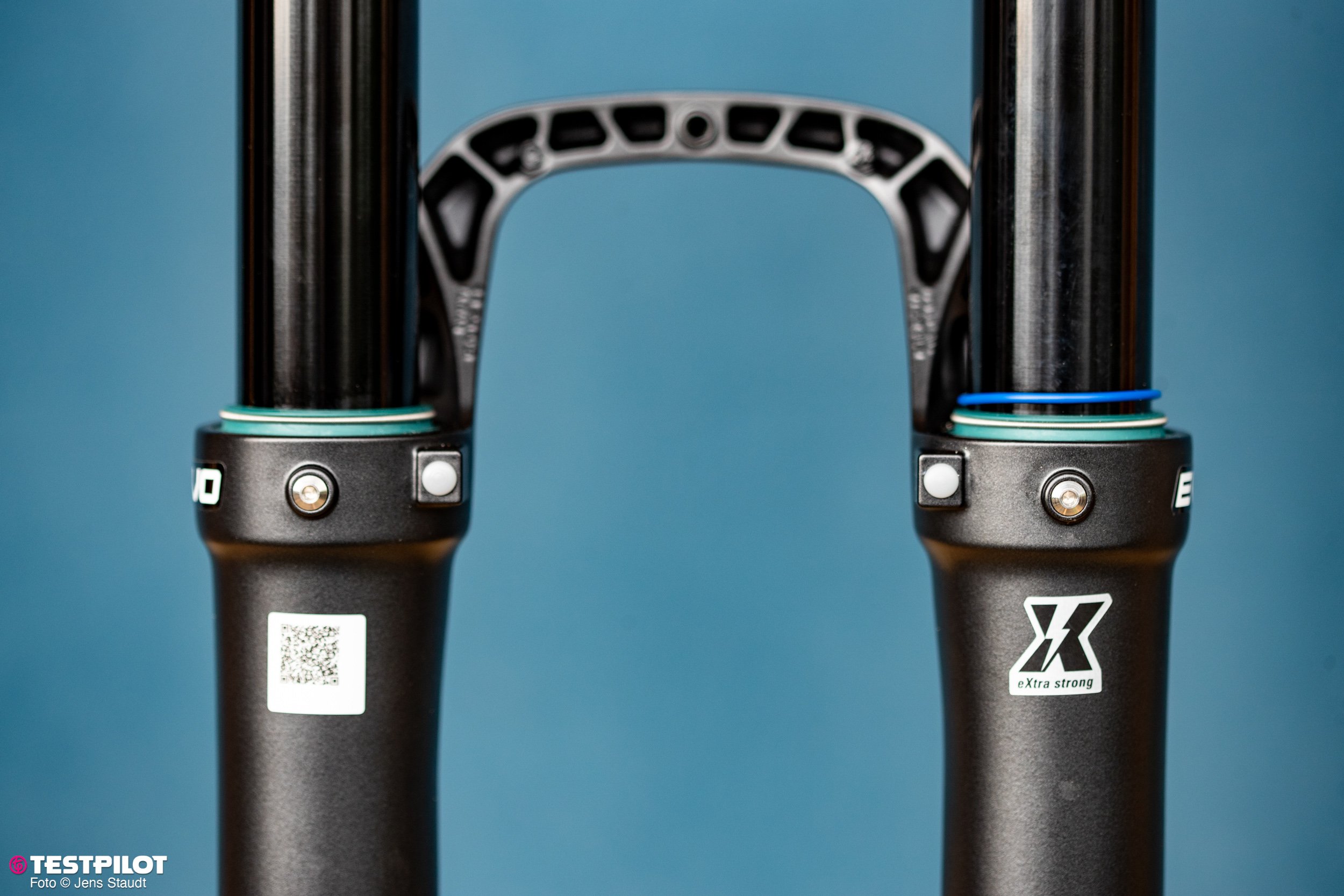
According to SR Suntour, they focus on particularly robust, predictable, and, above all, reliable performance under all conditions. A straightforward, air-sprung construction with a 38mm stanchion diameter ensures high stiffness on the trail. (Read the comparison test Auron/Durolux)
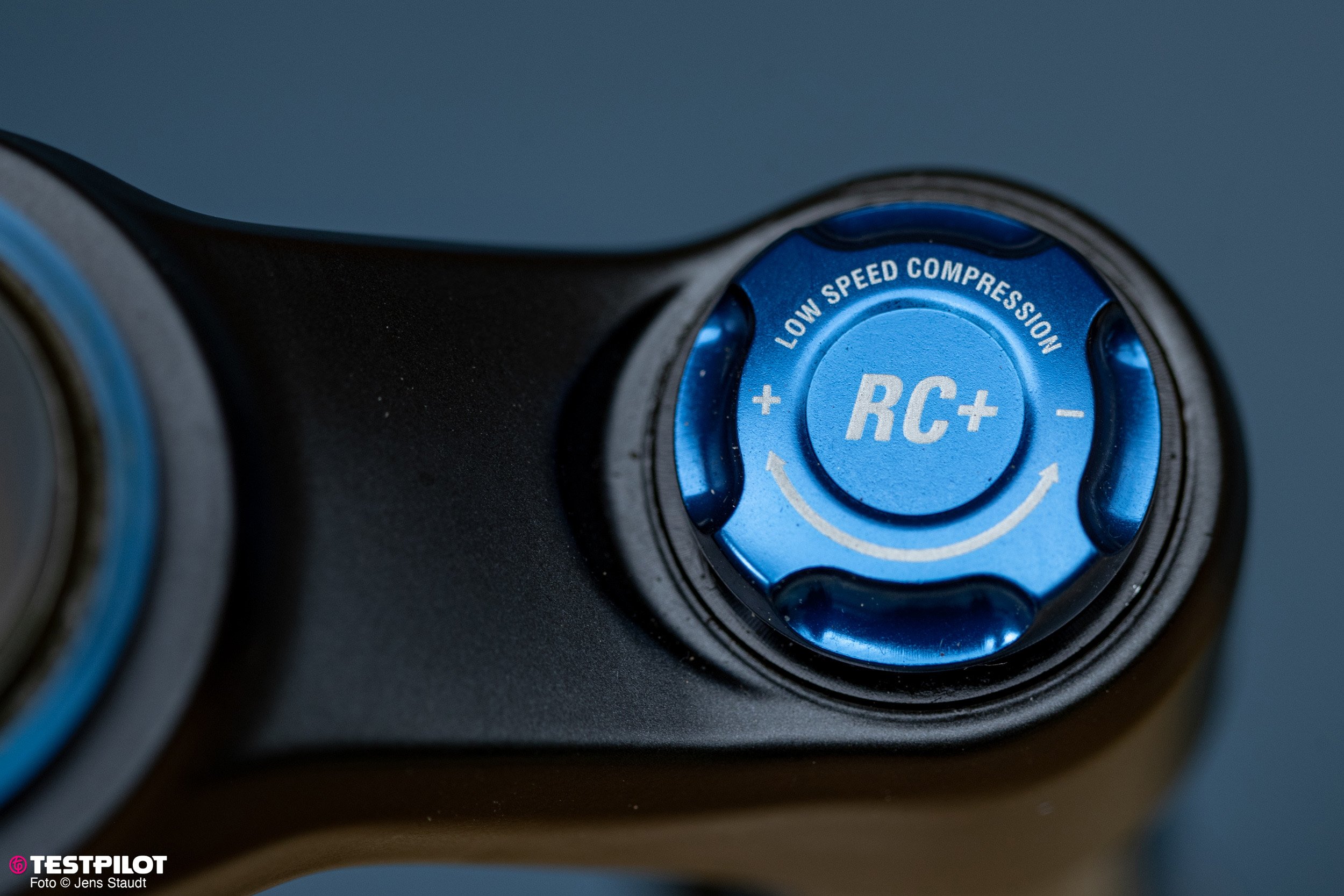
At its core, since model year 2025, the RC+ cartridge works with reduced adjustability for low-speed compression and low-speed rebound. This reduced functionality is not meant to harbor any performance losses.
Read the review of the SR Suntour DUROLUX38 X EVO from our field test.
What’s next?
Now you know the participants of our test field and their specifications. In the upcoming weeks, expect detailed reviews of each individual fork. Our stated goal is to bring you the details on performance and intended use. We will dive deep into the technology and answer all the questions buzzing in your head right now:
Will the radical FOX Podium deliver on its promise and dominate the test field? Can the uncomplicated, but somewhat dated, Marzocchi Z1 Coil still keep up—and which rider type truly benefits from its simple philosophy? Is the tailored performance of the PUSH Nine.One V2 worth the premium, or does the SR Suntour convince as the indestructible Hilux among forks through pure reliability? Does the CTS system give the Formula Selva V a magical adaptability, and how does the Öhlins RXF38 with its motorsport heritage fare in the rough everyday life?
We will provide you with detailed and practical analyses. You'll find out which fork put the biggest grin on our testers' faces, and, above all, you'll get the answer to which model will bring you down the gnarliest trails not only safely but with maximum riding fun.
You want more reviews?

Author – Jens Staudt

Height: 191 cm
Weight: 103 kg
Riding style: With his racing background, the lines are planned, even if there is anything bigger in his way. If possible, sections will be jumped over. You should use the entire width of a trail. Others would say - uncompromising.
Motivation: A product should function carefree and for as long as possible. If you have to screw less, you can ride more. He likes to tinker and see how the bike can be optimized.