

Review: Formula Selva V
Reading time: 10 minutes
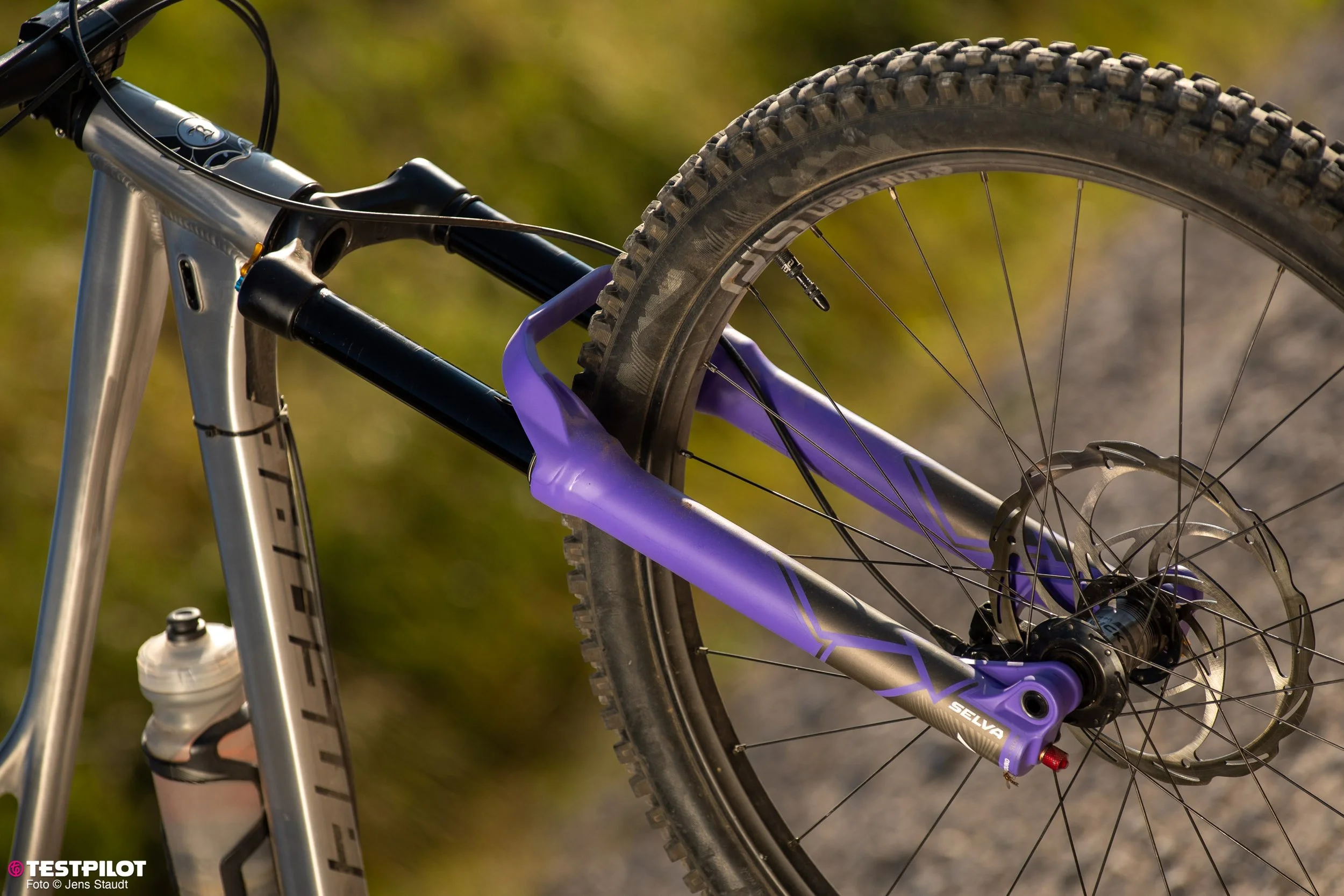
We already featured the Formula Selpa V in an individual test last year. Now it had to prove itself in our big benchmark. For the sake of providing you everything in the same style, we'll revisit the technical details once more within the updated framework of this comparison test. The ride impression and conclusion got updated according to our long-term impressions.
For years, Formula has relied on incremental improvements to the Selva rather than throwing everything overboard and starting from scratch. While this might seem boring, it's good for the customer. There's less risk of being a beta tester. The Selva V received a new casting in its latest update, retains 35mm stanchions, and features like Neopos and the CTS system are already familiar from its predecessors. Independent, against the grain, and still up to date?
Technical info – Formula Selva V
| Application | Trail / Enduro |
| ⌀ | 35 mm |
| Travel | 160 / 170 / 180 mm |
| Settings | CTS, LSC, LSR, Lockout |
| Suspension | Dual-Chamber-V-Air |
| Damping | CTS + Internal Floating |
| Wheel sizes | 29″ |
| Max. Tire Width | 2.6″ |
| Axle dimension | 15 x 110 mm Boost |
| Brake rotor | PM7, max. 220 mm |
| Offset | 43 mm |
| Axle-to-Crown | 583 mm at 170 mm |
| Steerer tube | 1.5–1 1/8″ |
| Casting | Aluminum |
| Wipers | Standard |
| Fender | optional |
| Color | Matte Black / Ultraviolet |
| Weight | 2,070 g |
| Warranty | 2 years + 10 years support |
| Price (RRP) | approx. €1,307 |
| Website | rideformula.com |
Tech bits Formula Selva V
Formula Selva V – Chassis
Are you puzzled? Did Formula save on tooling costs in production by only redesigning the lower casting, rather than pushing all diameters up to 38mm (which seems to have become the industry standard)?
Instead of targeting maximum stiffness as the sole goal, the Selva V's chassis is designed—according to Formula—to focus on steering precision and a balanced ride feel. Compared to the previous generation, a revised structure of the lower legs and a larger bushing spacing provide improved torsional stiffness—and therefore more direct control at the front end, without negatively impacting compliance.
The 35mm aluminum stanchions remain, intended to offer a solid compromise between stability, weight, and comfort. When properly balanced within the overall system, this approach enables calmer handling, reduces fatigue on long descents, and keeps the overall package light and easy to lift for active riders.

The casting was revised. The 35 mm diameter on the stanchions remained. Can the Selva V hold its own against the big competitors?
The geometry was modernized with an 8 mm longer axle-to-crown measurement, now totaling 583 mm (with 170 mm of travel), bringing the Selva V up to current industry standards. A PM7 brake mount is now also standard. The Selva V allows for the installation of brake calipers for rotors up to 220 mm. The axle conforms to the proven 15 x 110 mm Boost standard. The new chassis is rounded out by an integrated fender, which provides a clean look.

The Selva V features a PM7 brake mount and can be used with brake rotors up to 220 mm maximum..

The fender is neatly secured in place with three screws for a clean look.

Formula Selva V – Airspring
The air spring has also received an update: A central valve now simultaneously fills both the positive and negative air chambers. Simply put, when you pump air into the fork, it flows through a central valve and distributes itself automatically into both the positive and negative air chambers.
Instead of a conventional bypass notch—which can stress the seals over the long term and therefore requires stronger, higher-friction seals—the Selva V uses a concentric bypass valve. This design makes the notch unnecessary and further reduces friction. At the same time, the automatic pressure equalization ensures that the axle-to-crown length remains consistent regardless of air pressure.
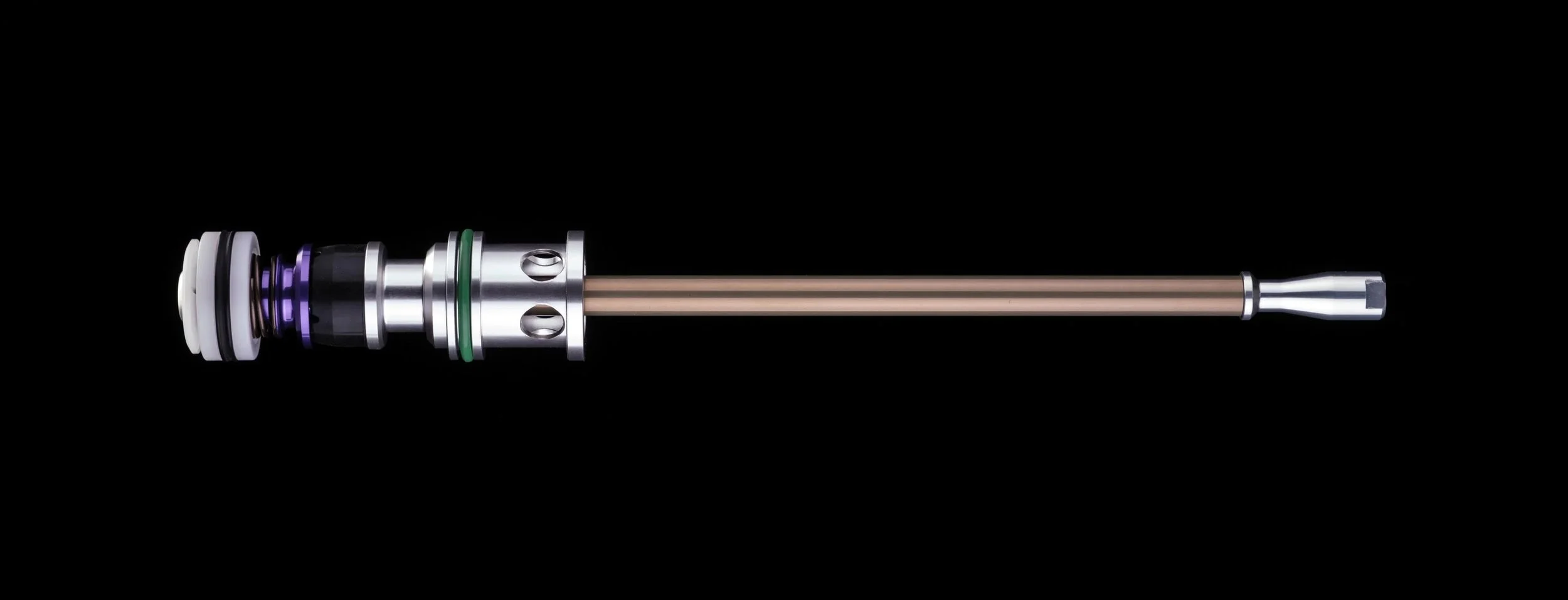
The new air spring assembly of the Selva V.
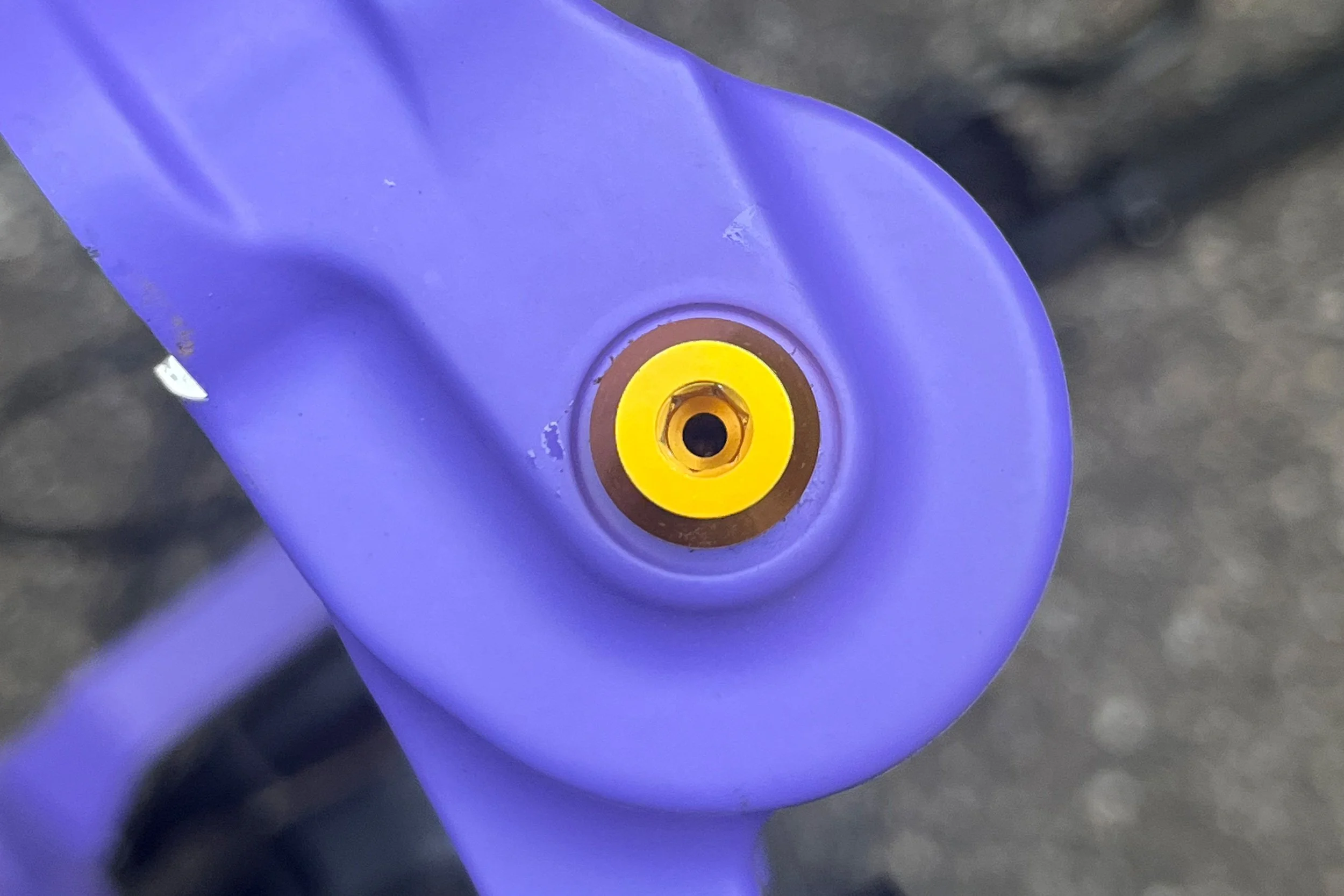
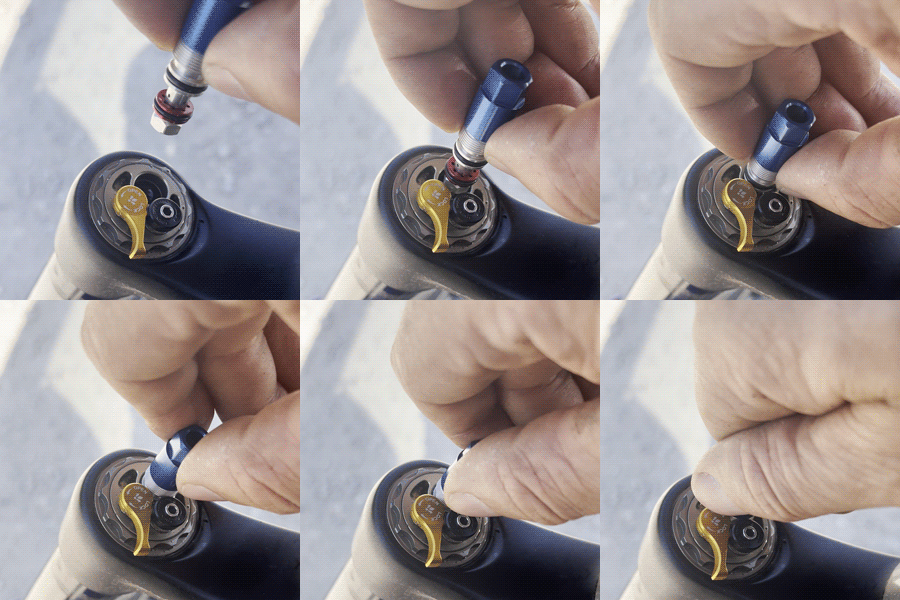
For manual adjustments, there is a reset valve located in the left lower screw of the casting—useful for sudden temperature or altitude changes, or if the travel length behaves unusually. Using a 1.5 mm hex key, the air pressure in both chambers can be equalized to the ambient pressure as needed:
Formula Selva V – Damping
The Selva V continues the damping architecture from its predecessor—a deliberate choice to retain a system already known for its sensitivity and reliability. The bladder design of the cartridge remains unchanged, continuing to deliver consistent performance and effective small-bump sensitivity.
A key feature is the continued use of Internal Floating Technology (IFT), which has been a core technology of the brand for over a decade. Because both the spring and damping systems operate independently within the chassis, IFT reduces friction. Simply put, the damper unit essentially floats in the oil and is mechanically decoupled from the spring, further reducing the fork's overall friction—an effect that is particularly noticeable when the fork is fully extended and during small impacts, all without resorting to larger stanchions or additional weight.
The guidance of the floating piston, however, is new and designed to further reduce friction. The piston is not rigidly guided but flexibly mounted—allowing it to move radially and axially to compensate for the smallest irregularities and material flex, including chassis twist in rough rock gardens. This further reduces friction at the main seal and ensures smoother sensitivity throughout the entire travel.


Left: How the IFT can move to prevent friction when the fork twists
Center: Oil flow path in the concentric balance valve
Right: Comparison of the old and new CBV (Concentric Balance Valve)
Perhaps the most exciting feature for suspension tuners, however, is the Compression Tuning System (CTS). The proven Formula system is once again on board, offering riders the ability to easily adjust the compression characteristics using interchangeable valves and a small Formula tool. This modular system allows for quick setup changes to suit different riding styles or trail conditions—all without the need for professional tuning services or shim adjustments.
From the factory, the fork comes with two CTS valves in the box: the standard gold valve and the blue variant. Six additional CTS valves are available as options. Our test fork came with the complete CTS kit—you can find a detailed review on all the variants here.
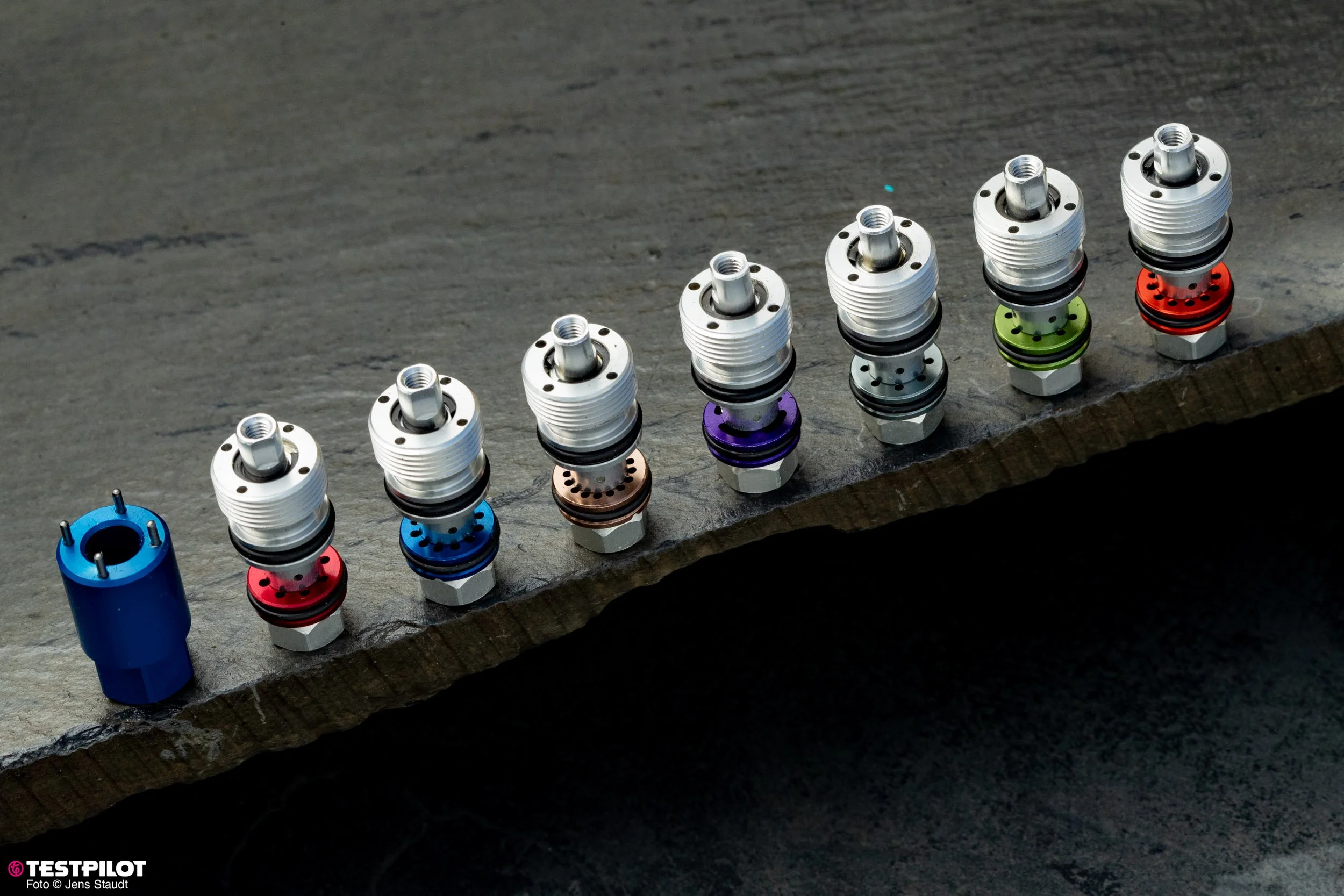
A highlight of the Selva V: the various CTS valves for quickly and externally changing the spring curve.

The different characteristic curves of the CTS valves. Read our separate article on this topic.
Setup the Formula Selva V
Swap a special component to make (major) changes to the damping characteristics? At first glance, this can seem a bit overwhelming—especially if you don't have at least some interest in suspension technology. But here's the thing: The way Formula makes setup adjustable isn't actually all that different from what other manufacturers offer when it comes to tuning ride characteristics. After all, there are still knobs to turn—so let's get started.
As with most suspension manufacturers, there's a sticker on the back of the fork with a recommended starting pressure. The cap on the left fork leg is unscrewed, and you pump it up to the desired pressure using the supplied shock pump. As always, but important to know: these values are just starting points!
Depending on rider weight, riding style, or terrain, it can make sense to experiment with higher or lower pressure. Spoiler: All testers ended up running lower air pressure than Formula recommended (paired with the progressive red CTS).

Recommended air pressure based on rider weight can be found on the back of the casting—however, all testers ended up going lower with their pressure.
On the top right side of the fork, you can adjust both the compression damping and the CTS valve. The CTS valve is located directly under the blue compression adjuster. Unscrew this adjuster, and you can use the special tool to unscrew and replace the CTS. To get a feel for the fork, however, you can simply start with the standard gold valve and begin fine-tuning later—if you wish.
The compression adjuster offers 12 clicks and controls a classic needle valve that influences the compression damping within the CTS. The gold lever provides a lock-out function—how firmly this closes can be adjusted infinitely via the black screw to the left.
At the bottom of the right fork leg is the red rebound adjuster with 19 clicks, used to regulate the return speed.

Compression adjuster with 12 clicks, along with the infinitely adjustable lock-out lever.

The rebound adjuster with 19 clicks.
Volume spacer
The progression of the air spring can still be adjusted using volume spacers—known as Neopos—as seen on previous Formula models. But these aren't your typical volume spacers like those from most other manufacturers. Unlike classic plastic spacers, Neopos uses a compressible, foam-like element. This results in smoother air spring progression that is less abrupt towards the end of the travel. Depending on compression speed, the Neopos can compress at different rates and, upon rebound, expand again independently of the compression speed.
What's new on the Selva V is the mounting method: Instead of just "dropping" them loosely into the air chamber, the Neopos are now screwed onto the underside of the air cap. If you want to add another spacer, it is screwed onto the already mounted Neopos using an included extension. This new mounting system was designed to minimize wear and friction.

The foam-like Neopos for reducing the air chamber volume…

are screwed onto the underside of the air cap on the Selva V.
Formula Selva V thru axle and how to install the wheel
Formula uses a classic 15 x 110 mm Boost thru-axle, which is inserted from the left side into the fork and through the hub. The axle comes with a quick-release lever that can be easily removed, by pulling it out—if it gets in the way. Without the lever, the thru-axle can be loosened and tightened using a 5 mm hex key. There is no compensation for hubs with slight tolerance variations.
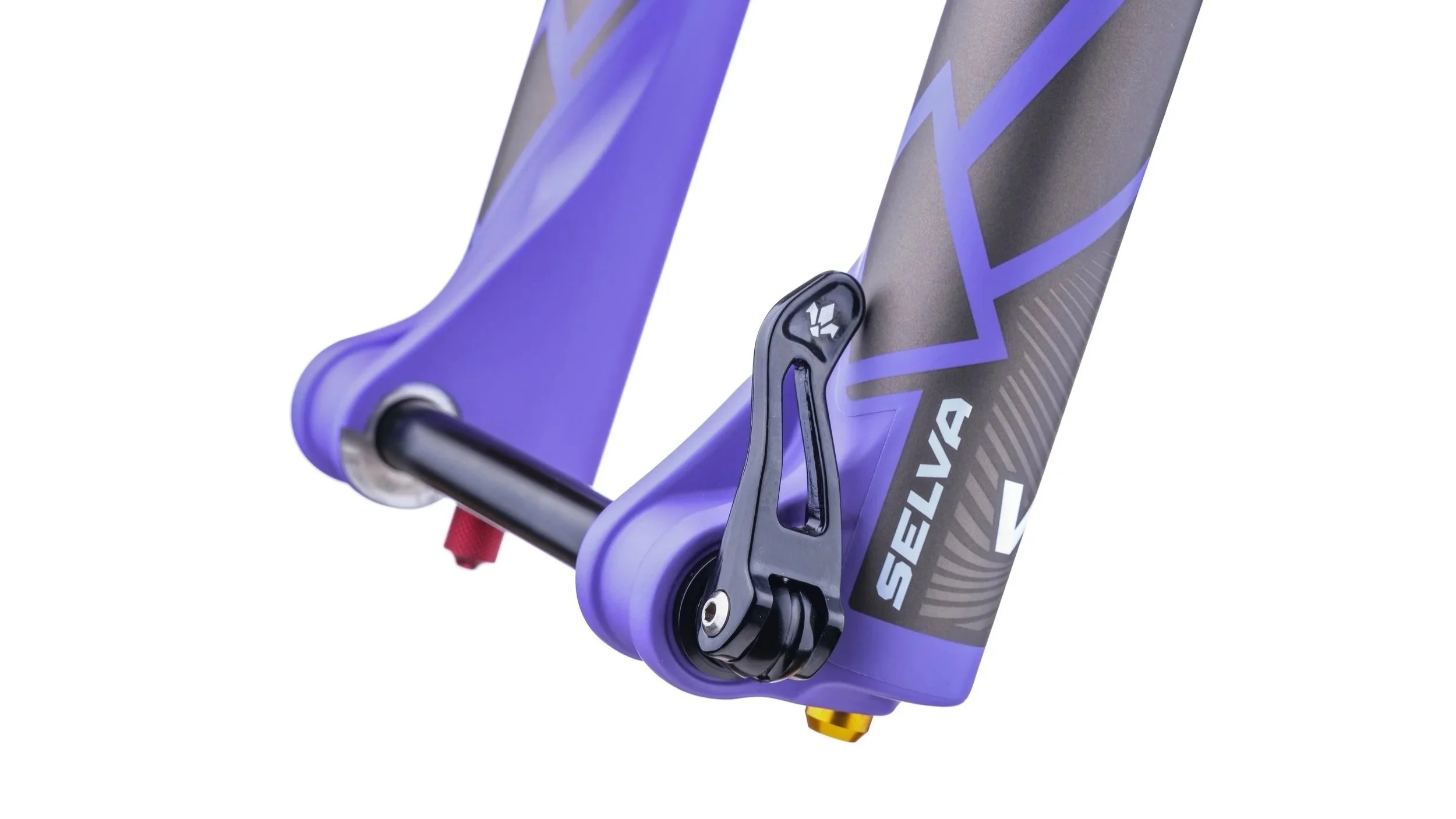
The quick-release lever on the thru-axle can simply be pulled off if you want to remove it.
On the Trail
Quite a bit of technology, right? According to the manufacturer, all these technical features come together to create the most sensitive fork in their lineup to date—with noticeably lower friction throughout the entire travel. Now, let's get to our experience with the Formula Selva V's performance on the trail.
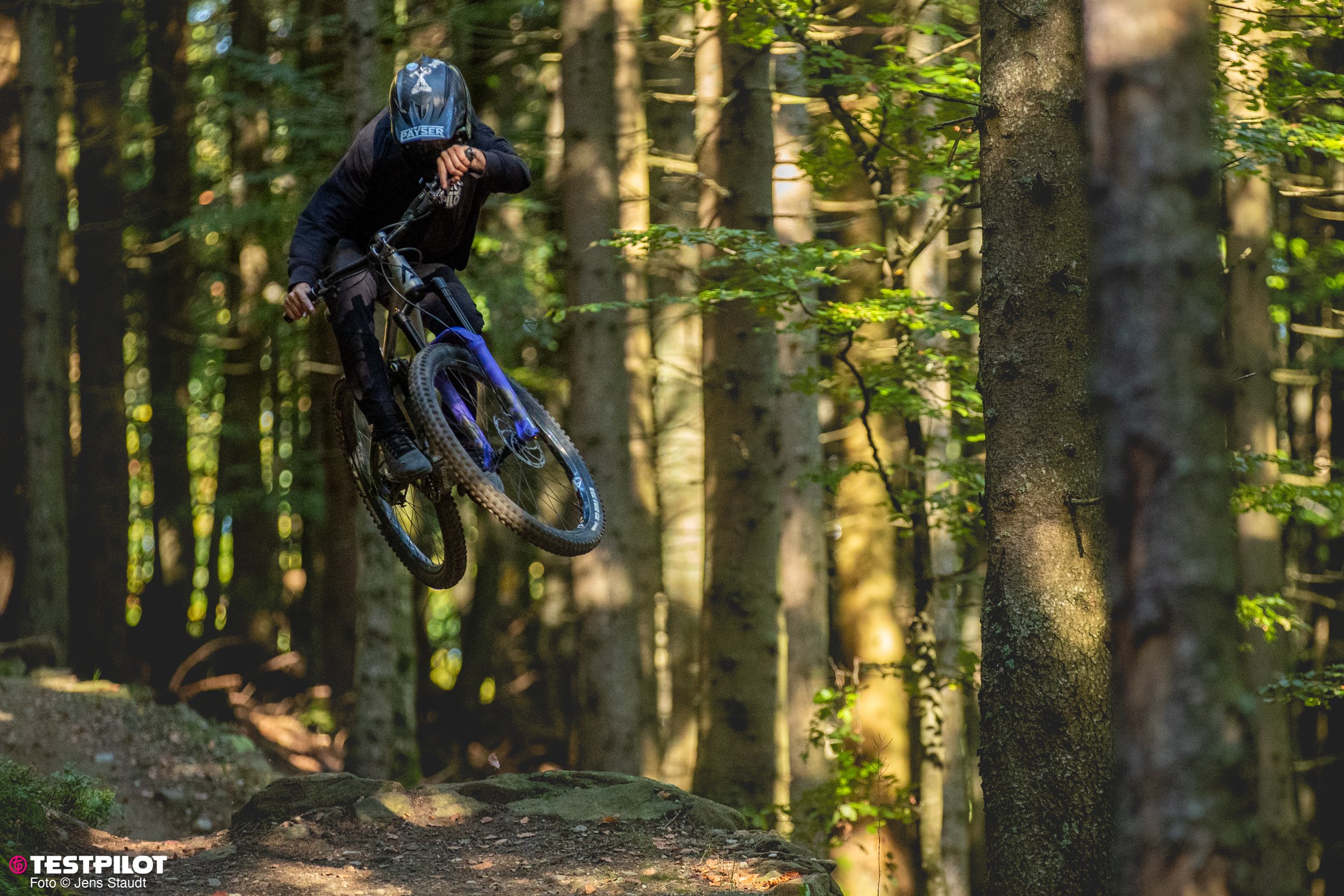
The Formula Selva V reveals itself as a distinct character. While many manufacturers opt for larger stanchion diameters, the Selva V sticks with 35mm. To be honest: On the trail, you rarely find yourself longing for a stiffer front end with this setup. Even heavier testers, charging hard into berms, didn’t complain about any uncontrolled flex. We even paired the fork with a fairly compliant e*thirteen Flux front wheel—and the result was consistently cohesive. Forks with 38mm stanchions or the double-crown Belva certainly offer a more direct feel that aggressive riders will appreciate, yet the Selva V never left us wanting more.
Even under the harsher conditions of bike parks, the interplay of precision, compliance, and grip remained balanced and comfortable.
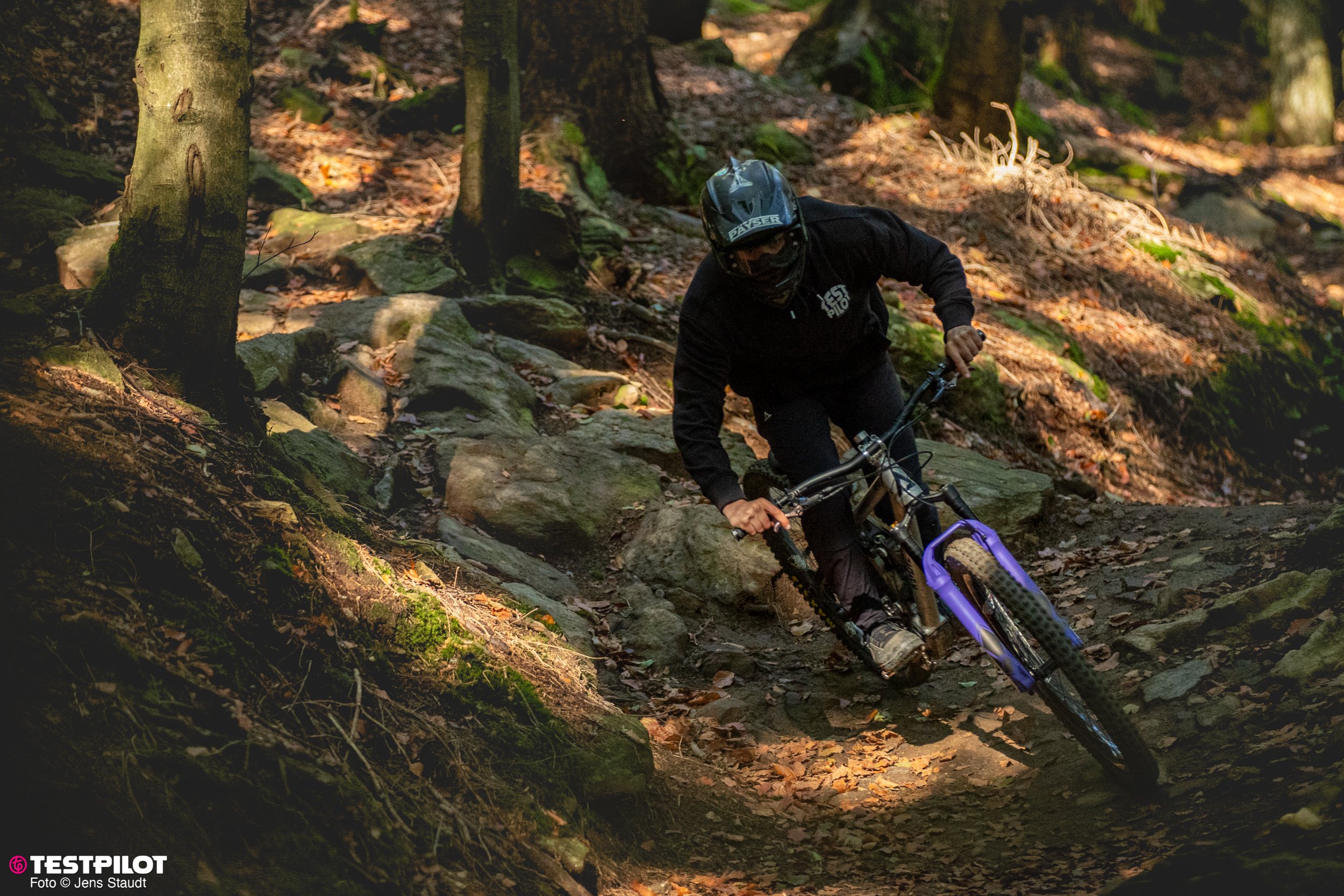
As described in the setup section, two test riders ran lower air pressure than recommended—even in the bike park. Of course, this is a matter of personal preference, but we strongly encourage you to experiment with a wider pressure range. The new air spring is quite progressive and offers good support. Even fast riders can get along well without Neopos (volume spacers) and can rely on a bit more damping without the fork feeling overdamped.
Nevertheless, we would still recommend everyone try a Neopos: the fork feels a bit calmer, yet retains its full travel when it's really needed. Screwing in one spacer and lowering the air pressure by about 5 PSI can make a surprising difference in the bike's composure.
During our long-term CTS test, we explored the full spectrum. Swapping a CTS is not particularly difficult and doesn't require great mechanical skill. However, compared to other forks in this test, it's still unusual to be swapping small components at the end of the trail. But the principle holds: small part, big effect. While the standard setting should cover a broad range of preferences, some CTS options offer VERY specific characteristics. This also demonstrating the broad spectrum of possibilities and how suspension—and the way it feels—is something deeply personal and can/should be explored.
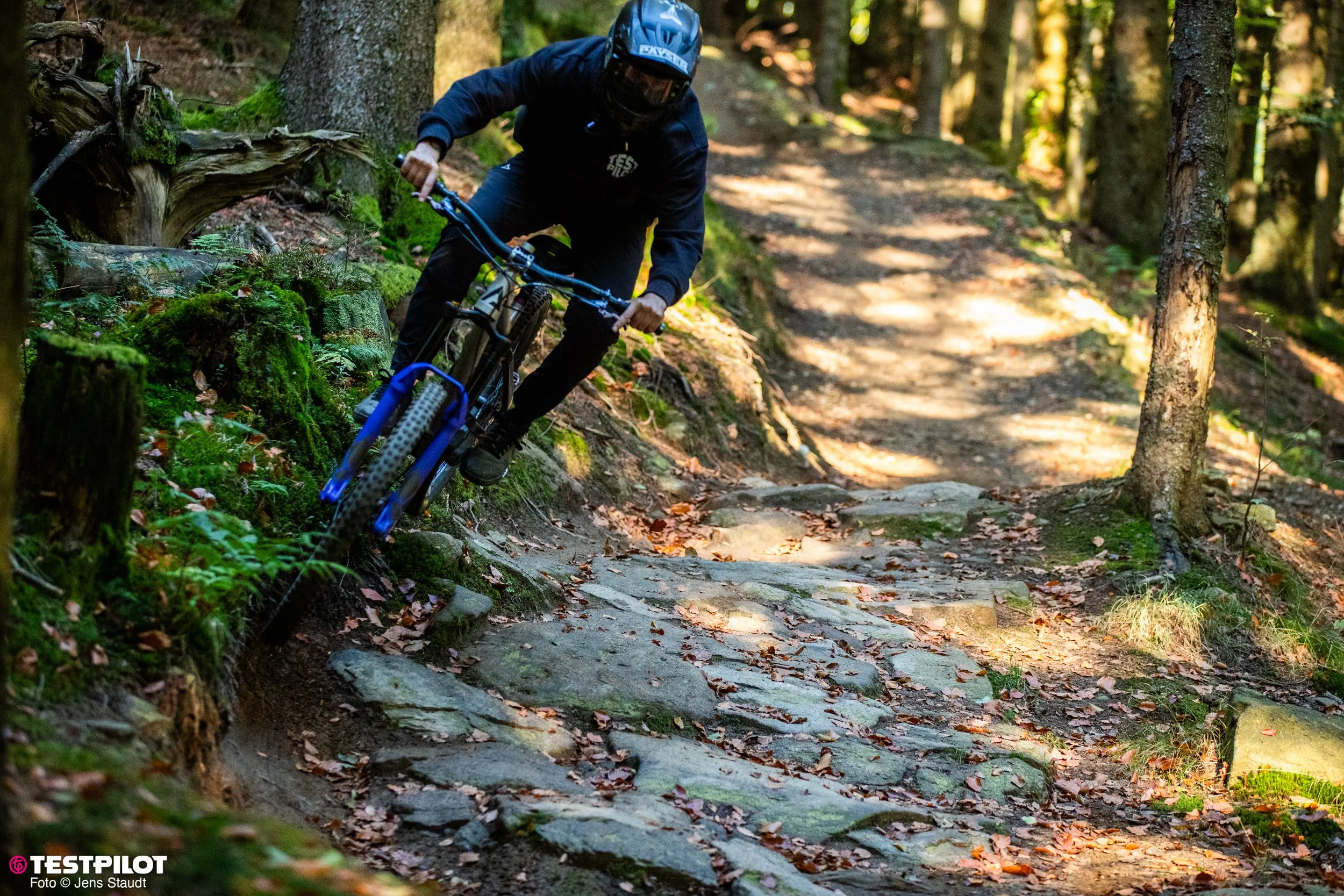
Jens and Yannick both ended up favoring the red CTS. It features relatively light damping at low shaft speeds but maximum damping for high-speed impacts/shaft speeds. This delivers maximum traction, and the fork responds extremely sensitively to impacts. When hard landings and big hits come into the mix, the higher damping force kicks in and prevents bottom-outs.
This doesn't necessarily require relying on increased progression or a stiffer spring rate. The reduced-friction design really made itself known here—while we preferred the blue CTS with slightly less progression on the older Belva, we found the red CTS to be a better match for the new Selva V.
Can you also get lost with a CTS? Yes. In a direct back-to-back comparison with the Titanium CTS, we felt completely uncomfortable. The Titan CTS relies on high damping forces at both low and high shaft speeds. On e-bikes, this might be an option, or for riders who are very well-trained. Otherwise, this setting was very harsh on the hands. Again—explore the options on this fork, and you might find a setting that you never thought would feel so good and match your riding style.
With the help of Neopos, the Selva V's support can be further tuned and adapted to individual needs. The testers rode with lower air pressure than recommended, combined with two Neopos. Even on blunt hucks and big drops, this generated a good amount of ramp-up-safety-cushion.
The fork responds very sensitively and tracks the ground willingly. Especially with the red CTS, you get a lively fork that actively uses its travel while still providing excellent feedback, if you work it from the top. Staying high in travel for a proper balance in your bike.
Technical Report
Even over the 10+ month testing period, Formula showed its reliable side. Everything works, and everything holds up.
How does the perfect rider profile for the Formula Selva V look like?
A certain affinity for tech is helpful, even though the CTS valves are easy to swap. You'll need the Formula tool—which is included—and of course, you should have it along with the alternative CTS valves if you plan to experiment.
That said, most riders, after testing the spectrum, ended up sticking with one preferred color. The Neopos should be inspected for cracks or extreme deformation during routine fork service.
For those who aren't put off by the setup's unique aspects and who value plenty of grip and compliance, the Formula Selva V proves to be a solid partner.

Conclusion
Even in this big comparison test, the Selva V holds its position on performance impressively. As a lean workhorse with 35mm stanchions and a low overall weight, it delivers real value, especially for riders who prioritize agility, comfort, and plenty of grip. It proves that you don't always have to follow the trend toward ever-greater stiffness to build an excellent enduro fork.
It scores points with its well-thought-out concept: the low-friction air spring, the Neopos system, and the CTS system. Its straightforward damping works with noticeable effectiveness and can be tuned across a very broad spectrum via the CTS.
For those who take the time and invest in additional variants of these small components, the combination with Neopos even offers a chance to better understand suspension and extract more performance on the trail.
Ultimately, the Selva V achieves a level of performance that some other manufacturers only reach through internal tuning.
| What is worth mentioning? | Things to consider. |
|---|---|
|
|
What’s next?
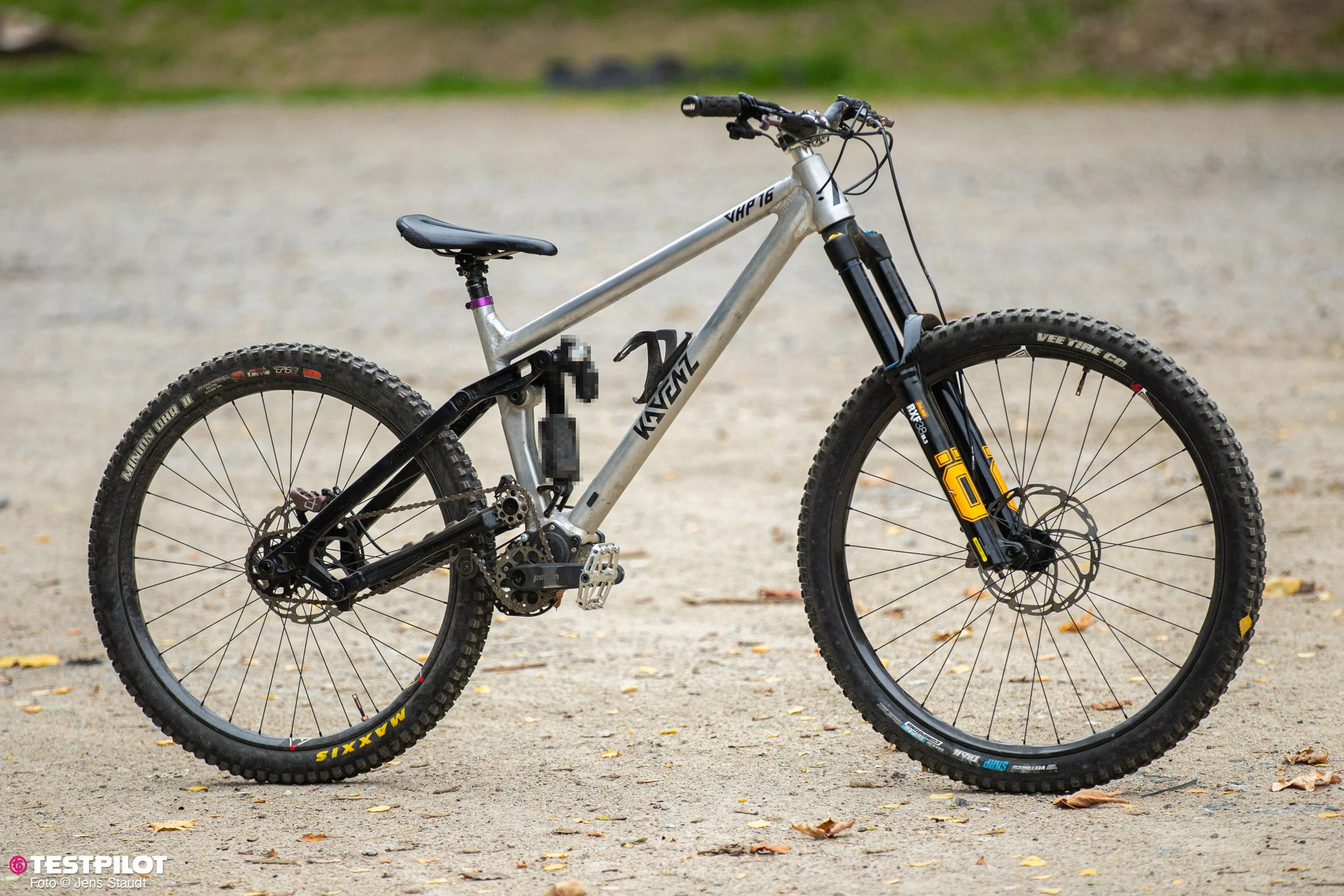
In the next—and for now, final—test of our fork series, we take a look at the Öhlins RXF38 m.3 Air. With its three-chamber air system, this is a fork offering unique tuning possibilities. You'll learn exactly how this works and what else is new compared to the m.2 in this article.
You want more tests?


Author – Jens Staudt

Height: 191 cm
Weight: 103 kg
Riding style: With his racing background, the lines are planned, even if there is anything bigger in his way. If possible, sections will be jumped over. You should use the entire width of a trail. Others would say - uncompromising.
Motivation: A product should function carefree and for as long as possible. If you have to screw less, you can ride more. He likes to tinker and see how the bike can be optimized.