

Review: FOX 38 2027 with optimized GRIP X2 damping and more
Lesezeit: 7–8 Minuten
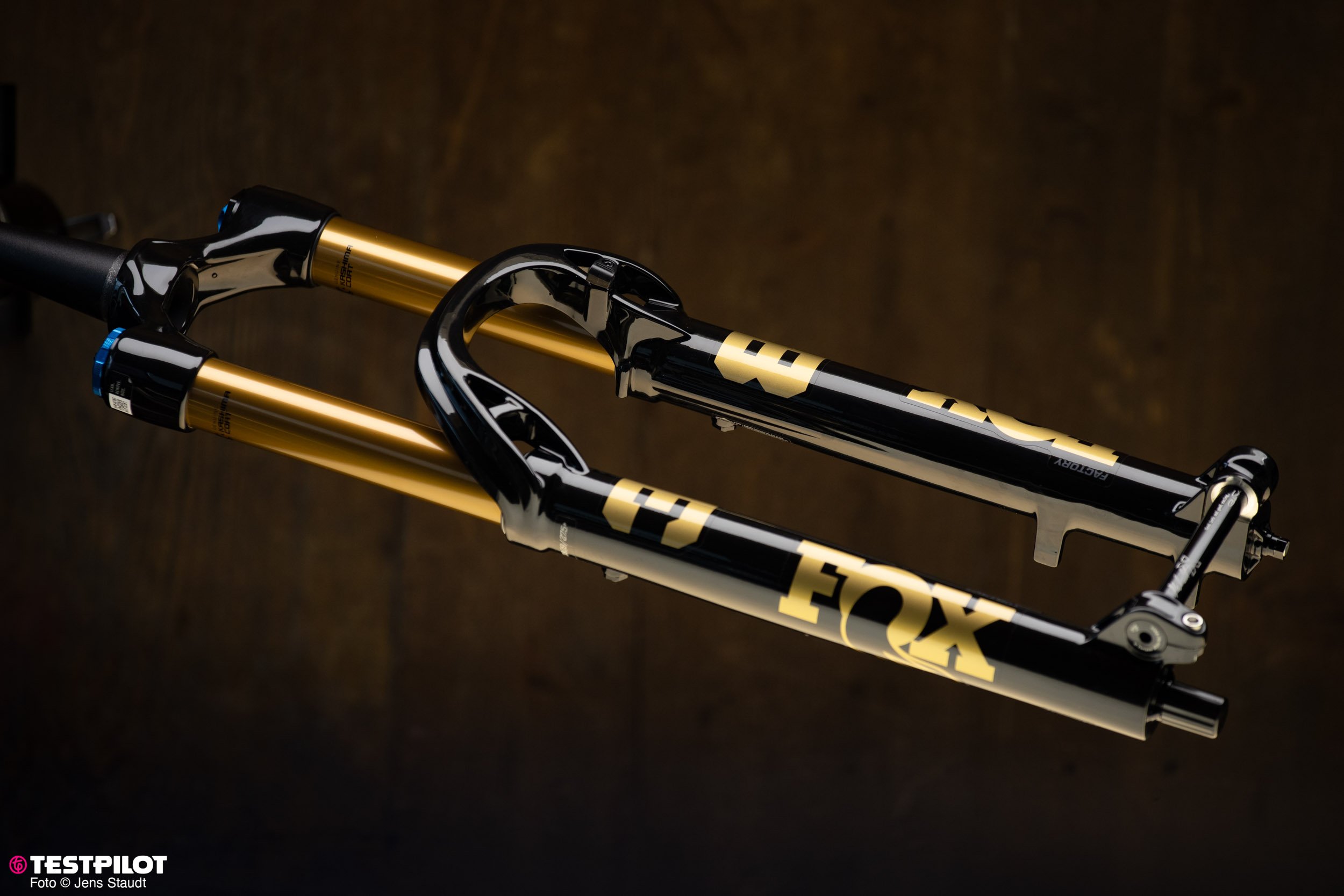
With the new 2027 38, FOX completes the current portfolio update. This started in spring 2025 with the 34 SL. For the enduro platform, 38 mm stanchions remain. Along with that comes a new chassis. A new damper cartridge. A new air spring.
34 SL, 36 SL, 36, 38, Podium, 40. A meticulously coordinated portfolio should be able to cater to every individual riding style and area of use for us riders. How does the new 38 perform on the trail, and where exactly does it fit between the Podium and the 36? We tested it for you.
New Grip X2-Damper
New FLOAT Glidecore Air Spring
New Chassis: Refined Details
The new FOX 38 has been fundamentally overhauled and redesigned for the 2027 model year. Following its introduction in 2020, continuous optimization has taken place, and the new 38 is the result of FOX's learnings as well as the changes in what an enduro-specific fork needs to accomplish.
The fork receives the updated GRIP X2 damper, which is now also used in the 2027 models of the 36, 38, and 40. However, the tuning wasn’t simply adopted 1-to-1; the internal shim tunes were individually adjusted for each fork model. The Podium, which was introduced last June, already features the new GRIP X2 damper and therefore remains unchanged. (Read the Podium review.) This means the entire gravity segment is being upgraded to this new damper unit.
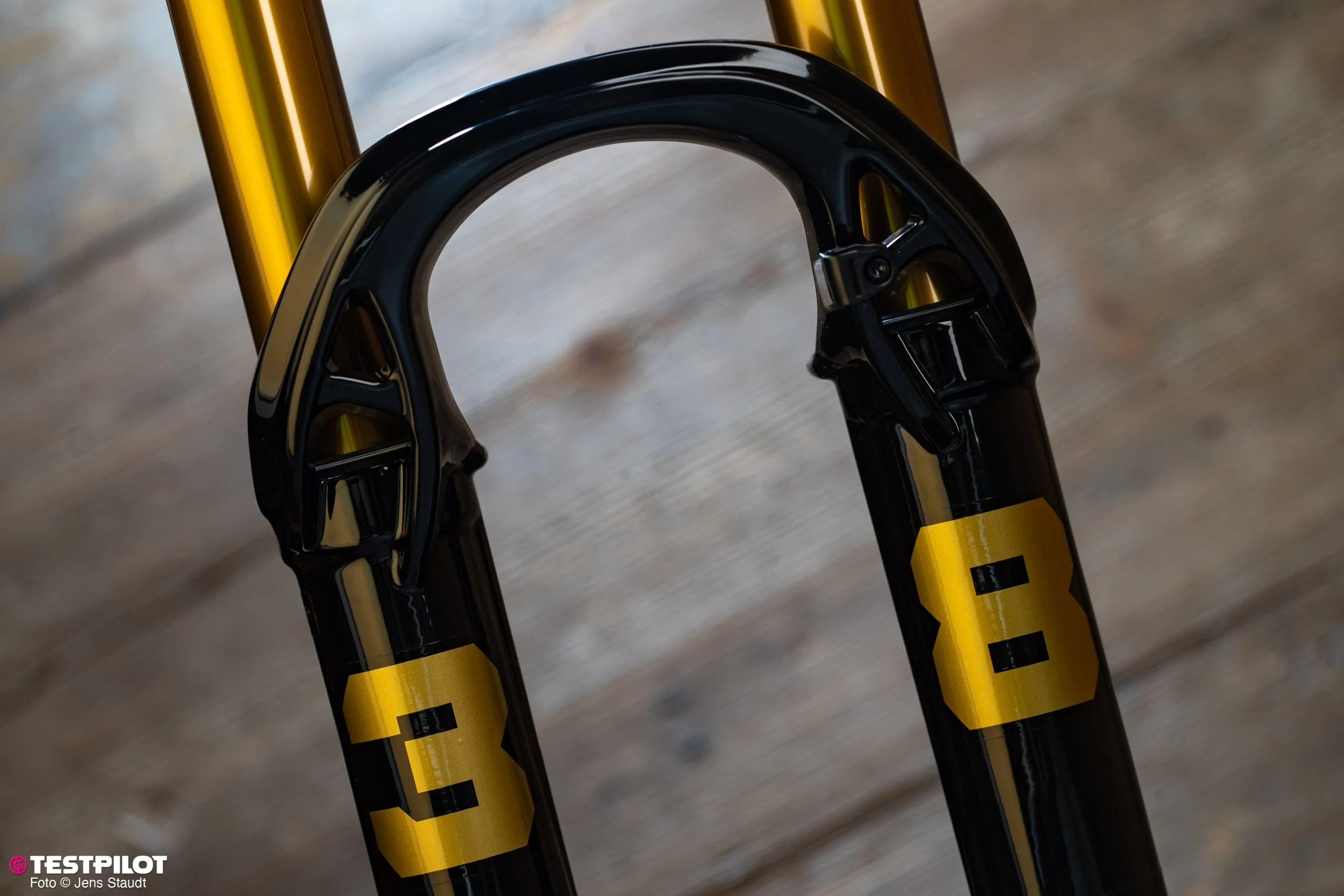
For the 40 and 38, the basic construction approach was adopted from the 36. This includes the casting with cutouts in its arch, as well as adjusted stiffness and compliance values. The Glidecore system also finds its way into the 38 and the 40. The bypass channels are no longer on the outside on the rear—they have been moved inward.
The GRIP X2 damper retains its four adjustment options for high- and low-speed compression and high- and low-speed rebound. Instead of adding new adjustment functions, according to FOX, the update focuses on optimizing the behavior of the damping side. The result is intended to offer more grip and control while simultaneously reducing rider fatigue on longer descents.
Technical info – FOX 38 GRIP X2 2027
| Intended Use | Enduro, aggressive all-mountain |
| Stanchion ⌀ | 38 mm |
| Travel | 160, 170, 180 mm |
| Settings | High-/Low-Speed Compression, High-/Low-Speed Rebound |
| Spring | FLOAT Glidecore air spring with MCU bottom-out bumper |
| Damping | Revised GRIP X2 |
| Wheel Sizes | 29″ and 27.5″ |
| Max. Tire Width | 2.6″ |
| Axle Standard | 15 x 110 mm |
| Brakemount | PM200 (29″), PM180 (27.5″) – max. 230 mm |
| Offset | 44 mm (AM), 37 mm (OE) |
| Axle-to-Crown | 578.6 – 598.6 mm |
| Steerer Tube | 1.5″ tapered |
| Casting | Magnesium |
| Seals | FOX by SKF |
| Fender | GD3 mount (same as 36/36SL) |
| Air Bleeding | Updated bleed buttons |
| Volume Spacers | 5 cc and 10 cc available |
| Color | Shiny Black, Shiny Orange, Matte Black |
| Weight | 2,456 g |
| Warranty | 2 years |
| Price (MSRP) | Factory: €1,499 / Performance Elite: €1,399 |
| Website | www.ridefox.com |
TECH bits FOX 38 GRIP X2 2027
New Grip X2 Damper
FOX has reworked the GRIP X2 damper with the clear goal of improving oil flow and increasing sensitivity without reducing support. The main piston and valve shapes have been adjusted. The rebound shims are no longer circular but are cut on the sides (cut-off shims), allowing for a more direct oil path—the oil no longer has to flow around the outside. Additionally, a larger port was created, which acts as a free bypass and lets more oil pass through the piston. The mid-valve housing beneath it has also undergone a new design.
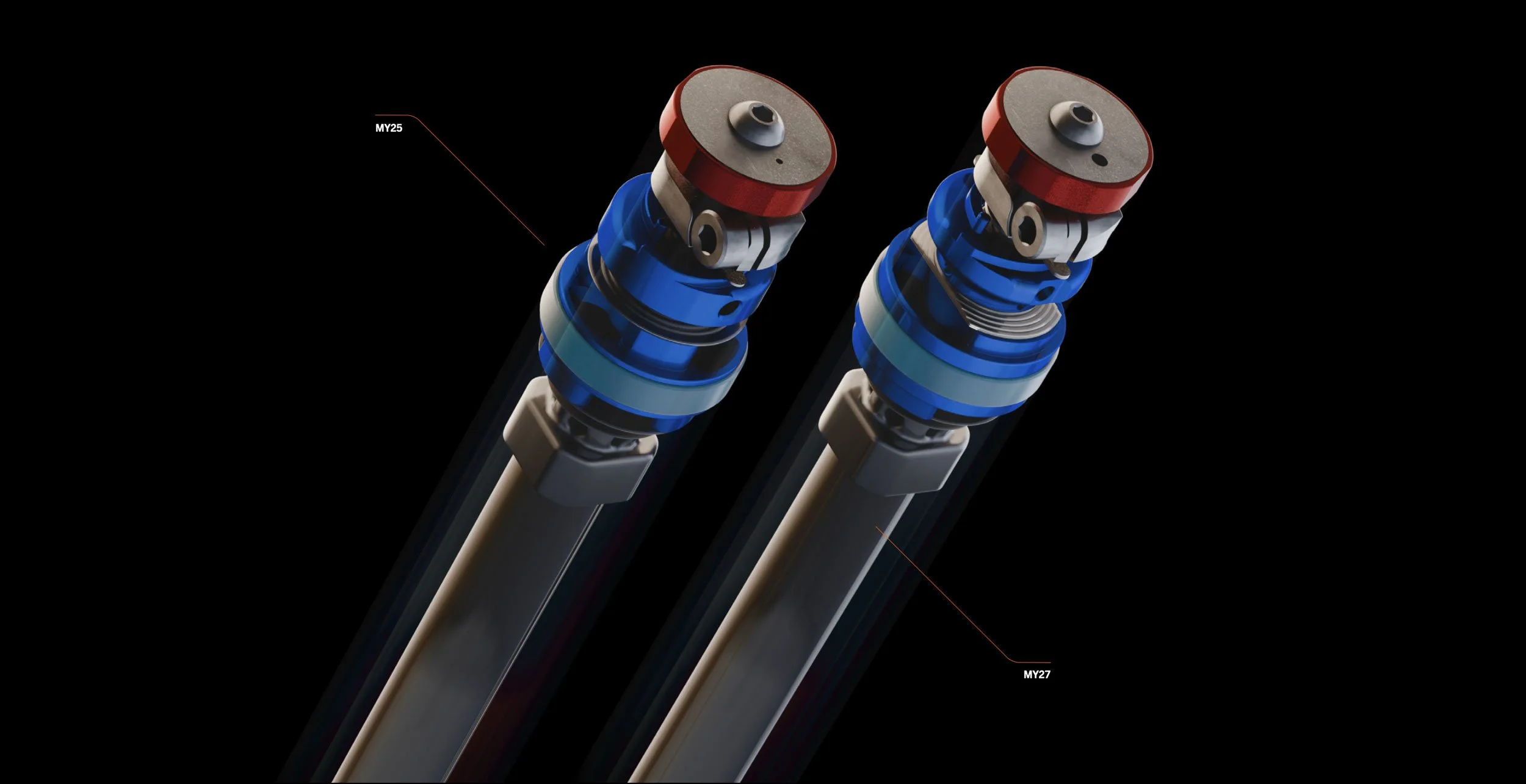
Comparison old vs. new: For MY27, a larger hole (port) can be seen that allows more oil into the piston. The blue valves have a new design, and the shims between them are no longer round but cut on the sides.
These changes shall lead to less obstructed oil flow, especially around the mid-valve and rebound areas. The freer oil flow at low speeds helps the fork move more quickly after direction changes, as valves don’t have to open or close first before oil can flow. The result is a fork that reacts faster—with less delay and less peak force on repeated impacts.
Due to the increased flow, the compression and rebound areas received a somewhat different architecture that better matches the new characteristics.
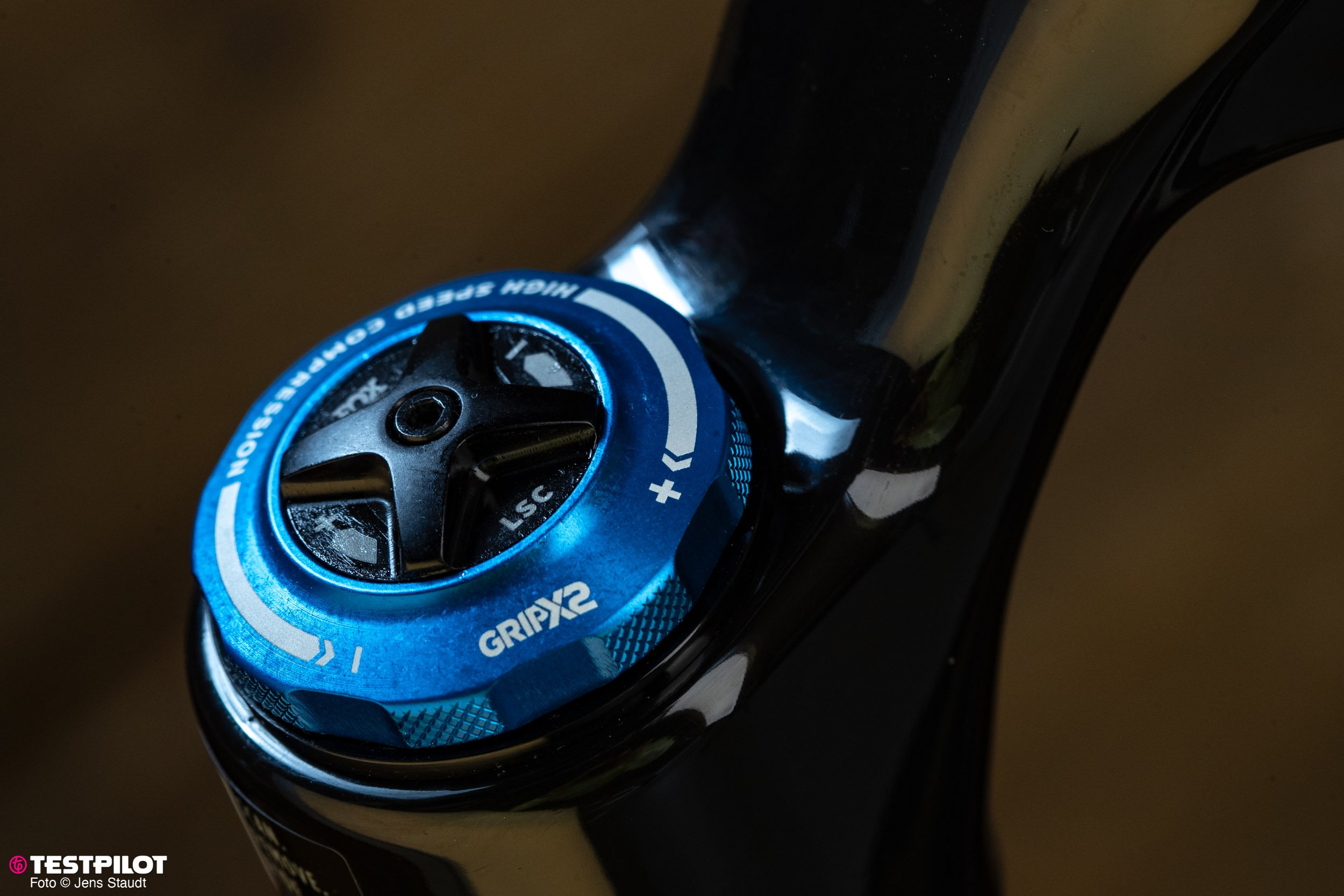
Same old dials on the outside, …
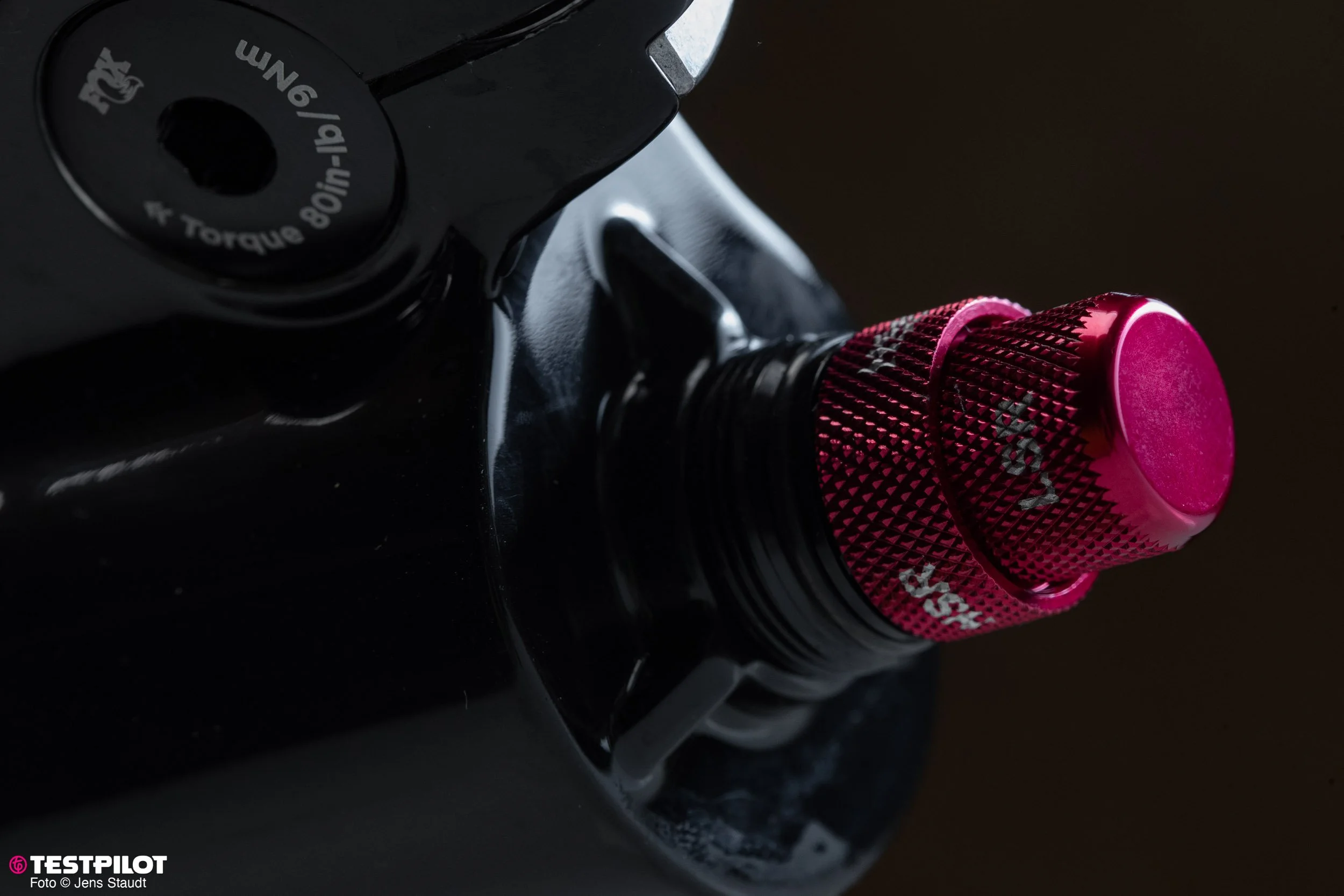
but on the inside there are plenty of updates.
Behind the update is a clearly defined philosophy: FOX has a stronger focus on a suspension fork that is controlled via the damping rather than the spring. The new GRIP X2 unit is therefore responsible for providing support and control—instead of dealing with uncontrolled friction elsewhere in the chassis. If the damper can move more freely and react faster, it can manage inputs more consistently without needing a firmer characteristic to keep the fork up in its travel. Simply put, FOX wants to provide support while avoiding harshness.
New FLOAT Glidecore Air Spring
For model year 2027, the 38 is equipped with FOX's FLOAT NA3 Glidecore air spring, which is already found in the 36 and Podium. This replaces the previous NA2 air spring, which was introduced with the 2018 FLOAT EVOL unit. Thanks to the Glidecore system, the air shaft in the 38 is now also floatingly mounted, allowing for vertical and lateral compliance of the air piston.
The air spring for the 2027 model year receives FOX’s Glidecore technology, already found in the 36 and the Podium. This means the air shaft in the 38 is now also floatingly mounted, allowing for vertical and lateral compliance of the air piston. Large-area so-called butadiene O-rings compensate for this movement while simultaneously reducing the breakaway force of the air spring. According to FOX, the lateral freedom helps reduce friction when the fork flexes under load.
The slight vertical separation of the air piston can help the fork change direction faster and start moving earlier. According to FOX, the result is a smoother suspension feel. As part of the optimization, the old 38 air unit was upgraded to the NA2 air spring, known from the 40. At the lower end of the air shaft, like on the 40, there is now an MCU bumper that cushions harsh bottom-outs.
Note for the nerds who like to optimize and like to know about backward compatibility: The 36 forks starting with model year 2021 onwards can be upgraded with the new NA3 air shaft—since that iteration, the bypass channels have already been located on the inside of the casting. Because the bypass position on the 38 now changes with the 2027 series, it is unfortunately not backwards compatible on this fork.
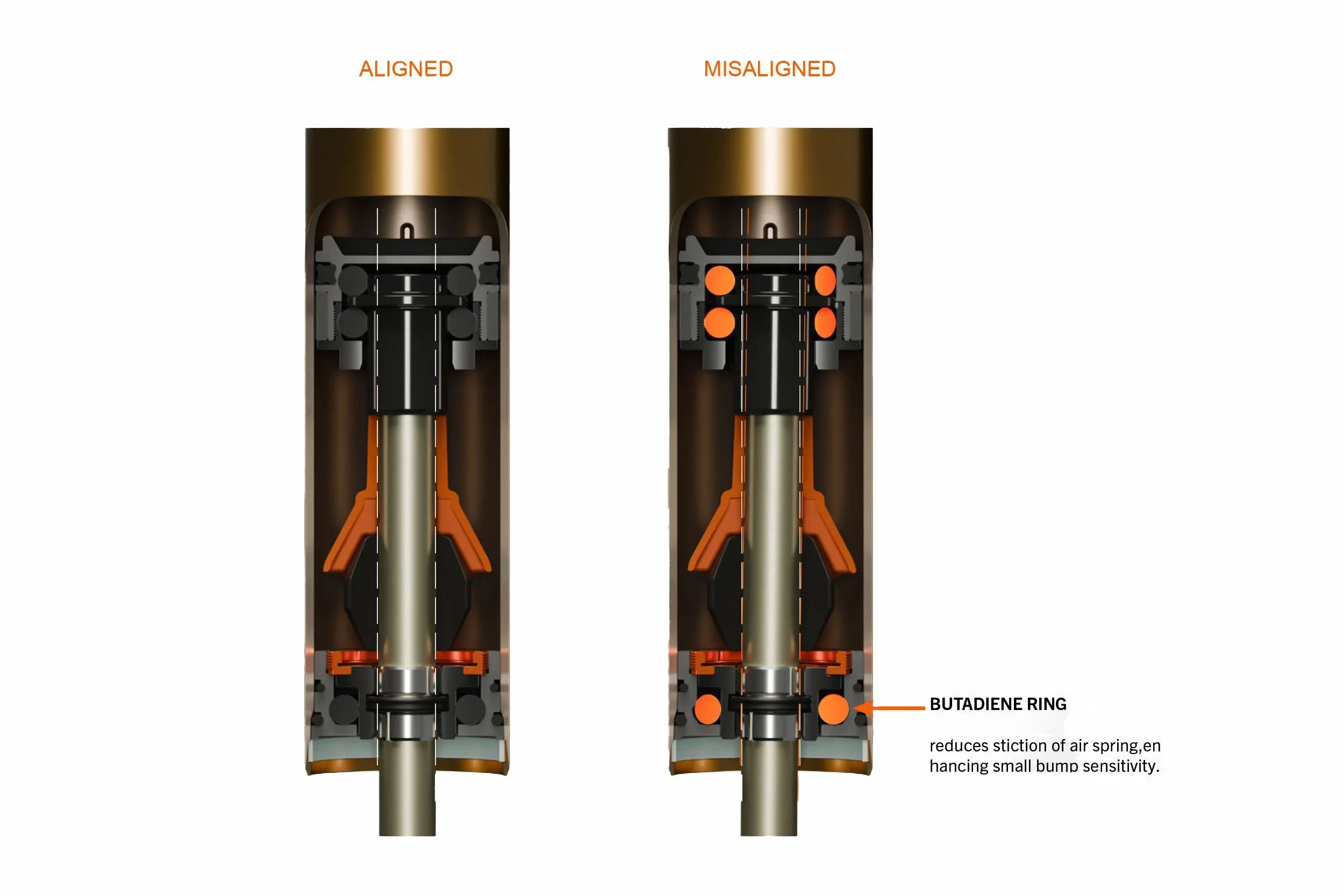
The Butadiene-O-Rings enable for more movement of the air piston and therefore less friction.
The new 38 does not get the top cap in the style of the 36 or Podium that can be removed with a cassette tool. If you look closely, it also sits up a bit higher. This is necessary to provide the positive air chamber a tad more volume. FOX needs this extra space because with a normal top cap, the progression and usable travel would likely be reduced. The negative air chamber also receives a slightly larger volume.
FOX is now offering an additional 5 cc volume spacer for the 38, as well as the classic 10 cc volume spacer. This allows for easier fine-tuning of the progression without using a hacksaw. We haven't been able to test the 5 cc spacer yet, but it will be available in the aftermarket.
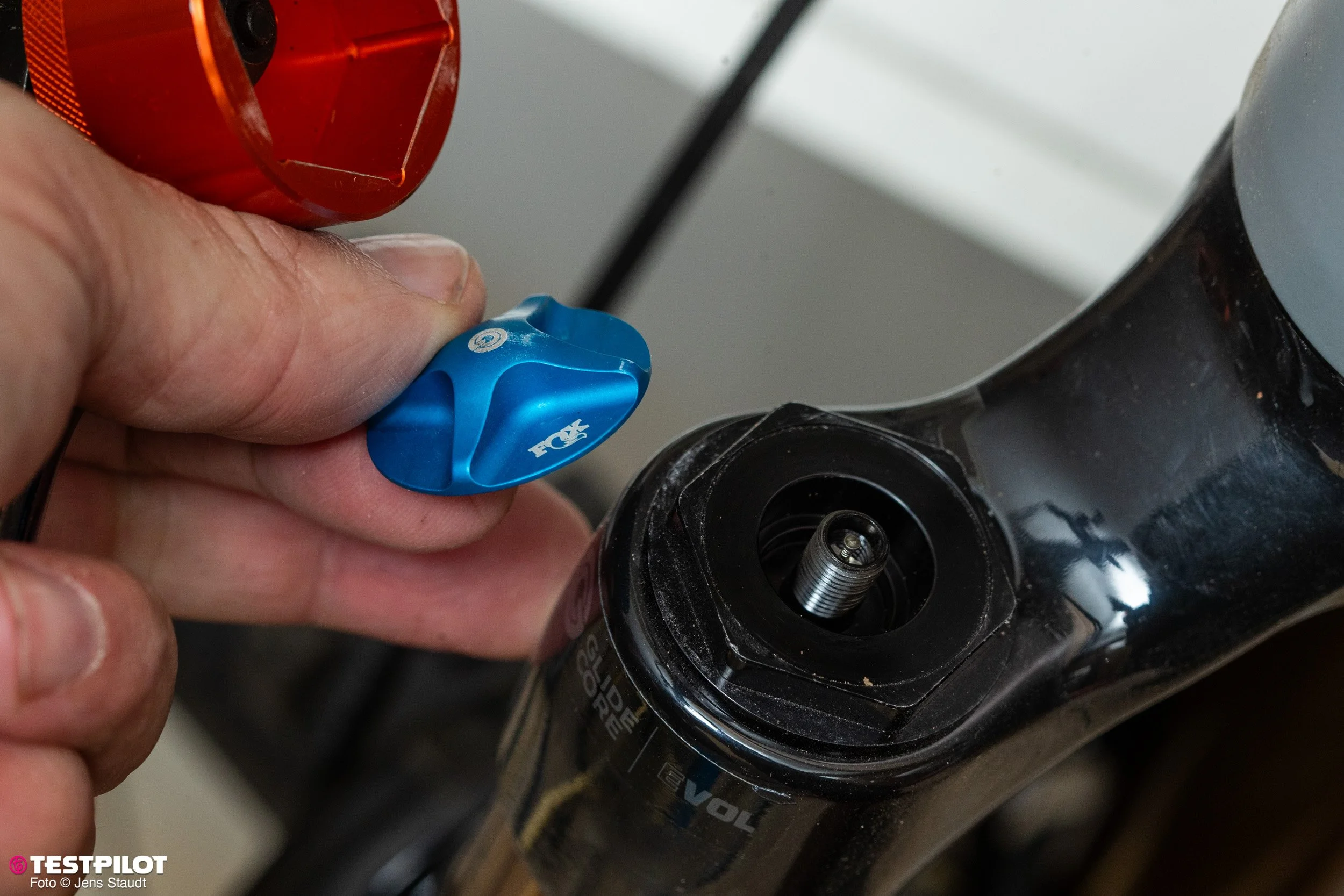
In contrast to the rest of the FOX portfolio the top cap of the 38 still relies on the 32 mm nut. The reason is the bigger air volume it allows.
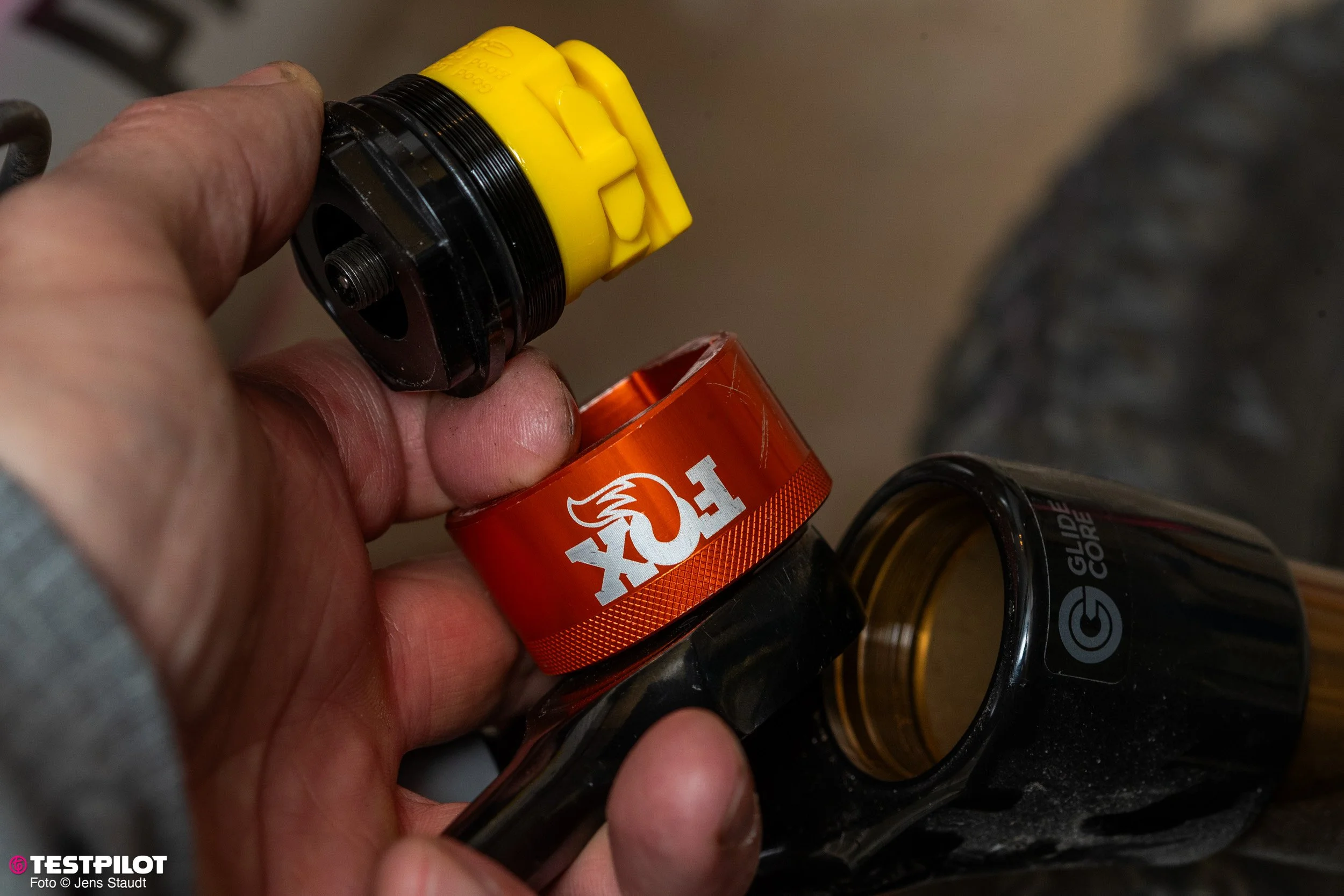
We recommend to use the original 32 m nut with the flat surface to avoid scratching the anodizing. The process to click in volumespacer is still the same.
New Chassis: Refined Details
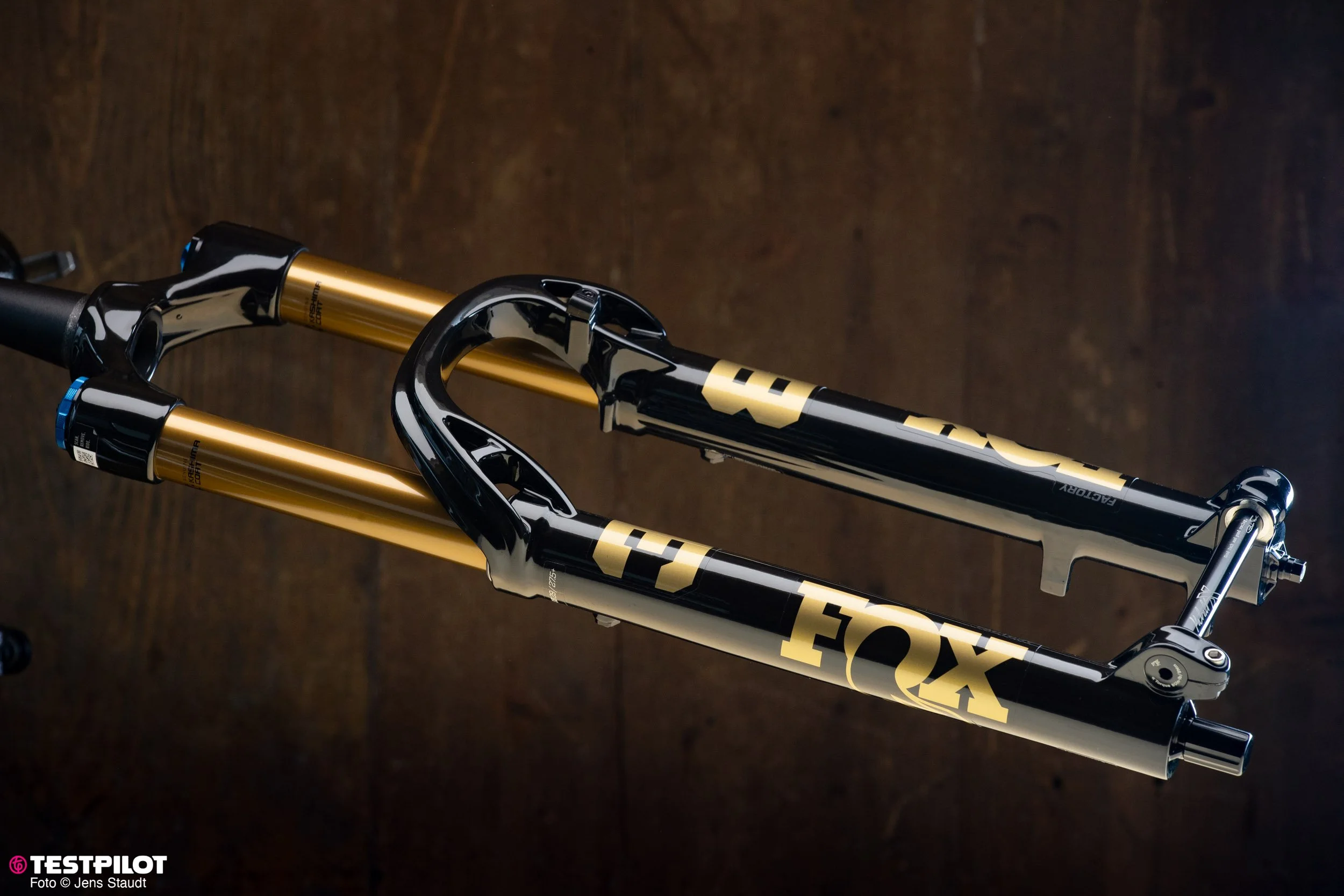
The chassis of the FOX 38 has been fundamentally redesigned. The characteristic cutouts in the casting arch are the distinguishing feature of the latest right-side-up generation.
Following positive feedback from the FOX Podium, the bushing overlap was increased by 20 mm (from 120 to 140 mm) to achieve a better, more sensitive response at high speeds. The bypass channels were moved from the back to the inside of the fork legs to keep them away from the most highly stressed area of the bushings—increased friction occurred here on previous models.
The bleeders have also been updated. With all these changes, the 38 is said to have become 8.8% stiffer in the longitudinal direction and 6.8% less stiff in torsion.
Additionally, the FOX 38 shares the same fender with the 36 and 36SL via the GD3 mounting system.
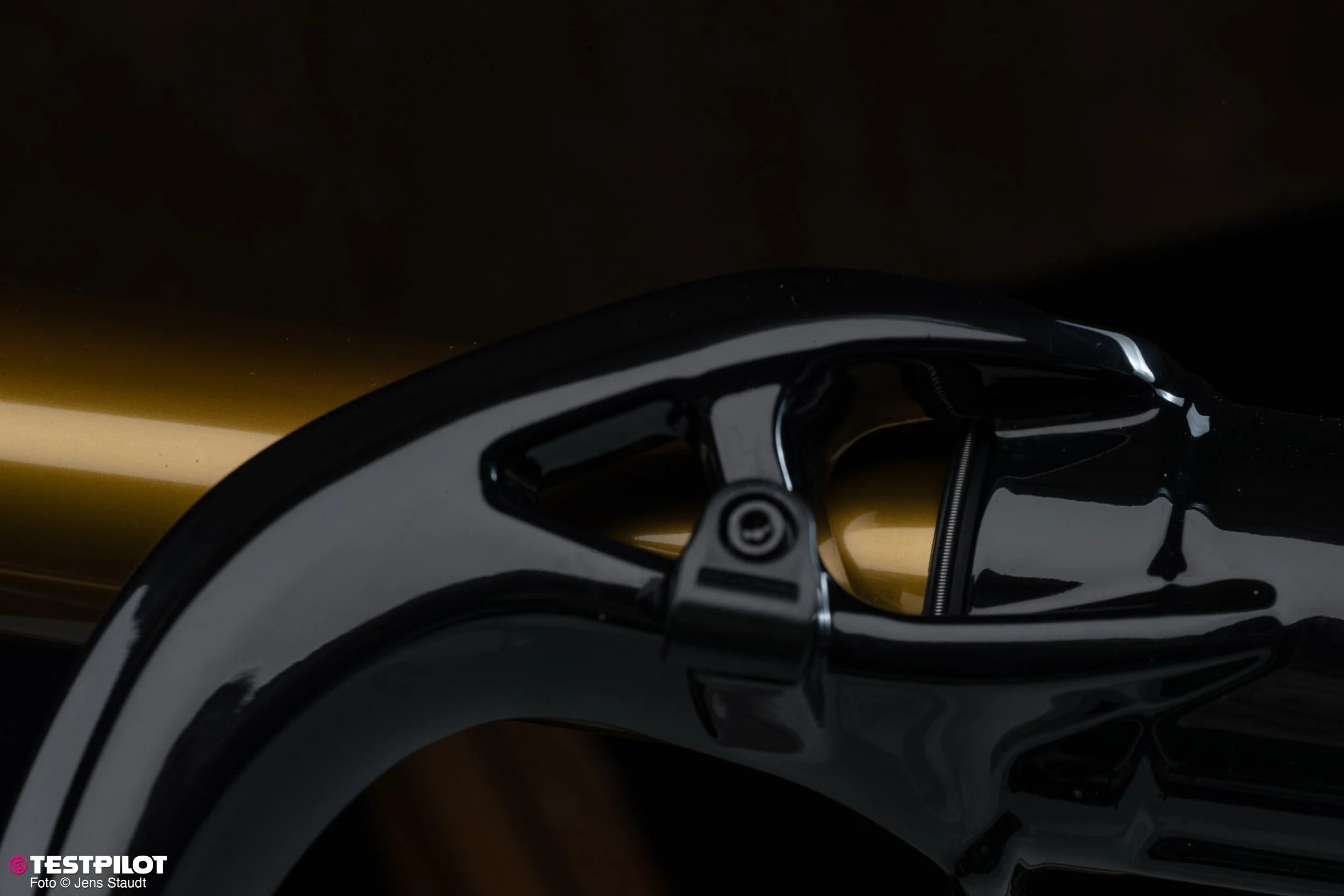
All FOS RighSideUps feature the see through bridge on the casting.
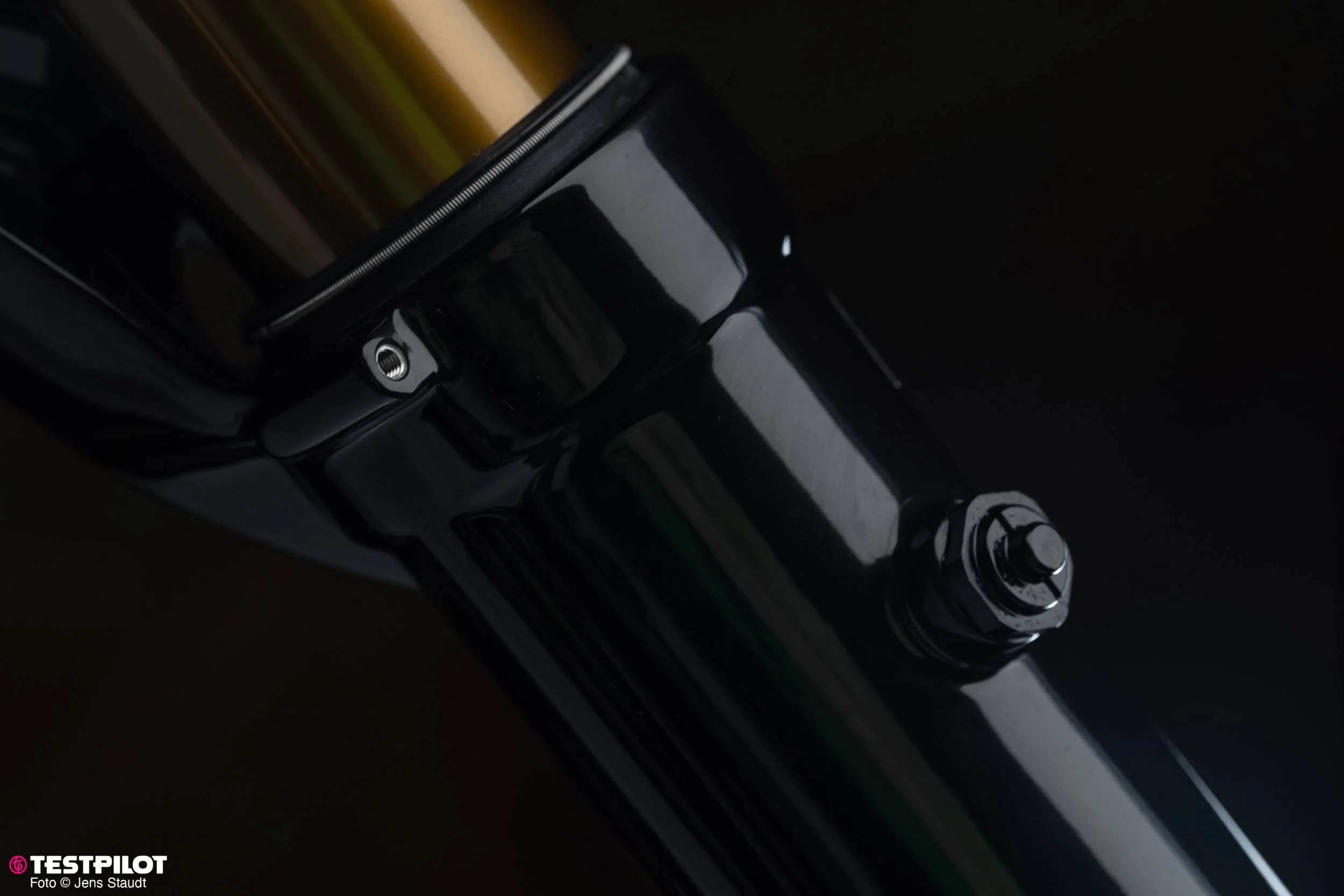
Bypass channels moved to the inside. The release valves got an update.

The Philosophy Behind the New FOX 38 GRIP X2 2027
The development of the new FOX 38 follows a clear roadmap: Since the development of the GRIP X2 cartridge (model year 25), FOX has been consistently working towards smoothness.
All the changes—the new casting that allows more torsion but generates more stiffness in the other direction, the inward-mounted bypass channels, the Glidecore system, and the revised GRIP X2 cartridge with the cut-off shims—work towards the goal of making the fork significantly more sensitive and generating as little internal friction as possible in all areas (hydraulics, air side, chassis), without sacrificing the support FOX is known for.
Setup the FOX 38 GRIP X2 2027
Depending on rider weight, FOX provides detailed recommendations in the form of a sticker on all their forks. Depending on pressure, starting points for LSR and HSR facilitate the setup process. This is particularly worth mentioning as a USP, as many users still struggle with separate rebound settings. Anyone who leaves the widely adjustable compression completely open will be amazed by a very plush fork. That was often not the case in the past.
We would rather recommend starting with the middle position for LSC and HSC and then, after a few rides, experimenting in both directions. The number of volume spacers can sometimes vary depending on the OEM. This should be checked before the first ride if necessary.
The plastic volume spacers with the click mechanism are known from the previous model. To change the amount, let air out; the raised air cap is best opened with the original FOX socket. This also keeps the anodizing nicely black.
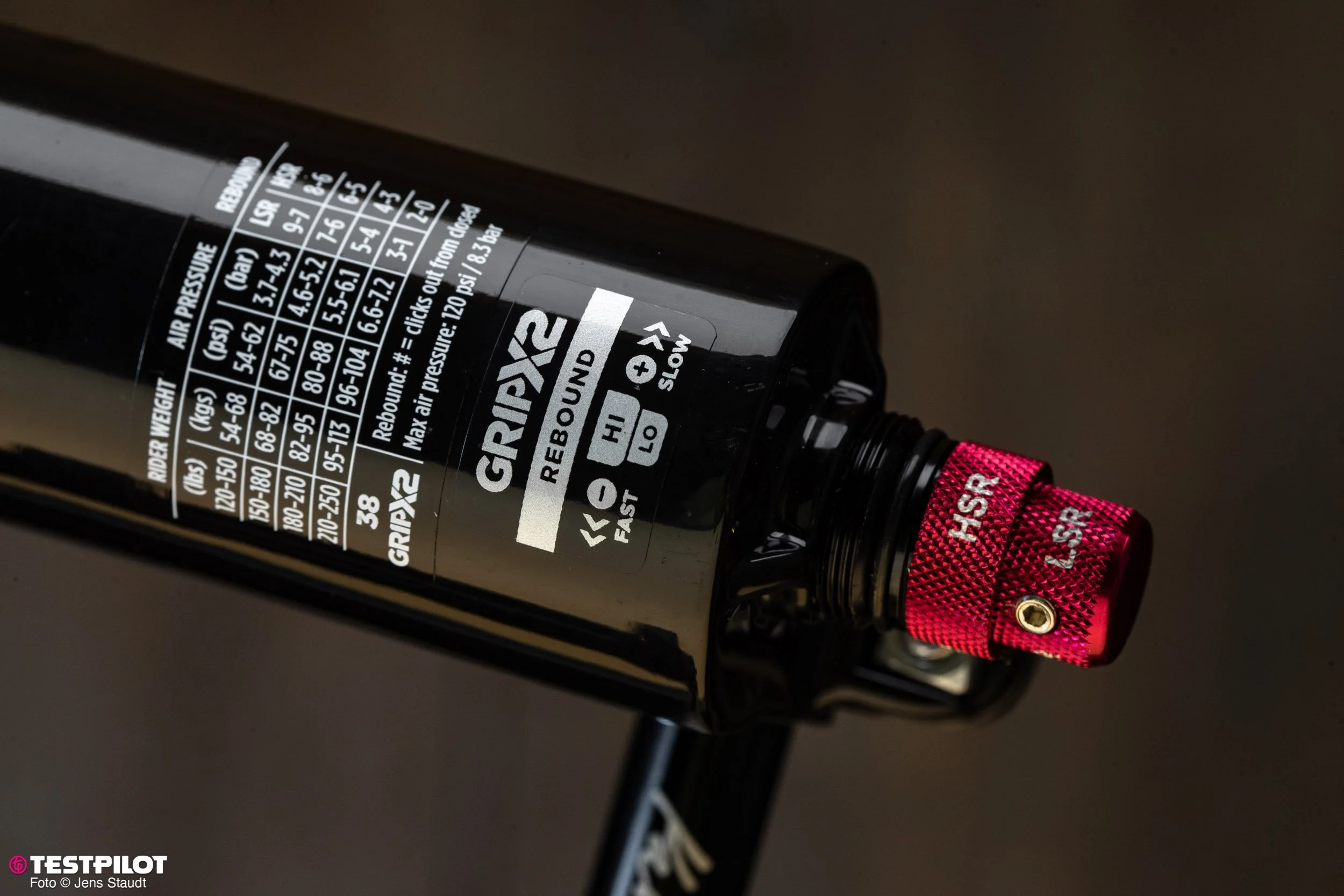
FOX provides detailed recommendations for your starting point in regard to settings.
On the trail
We had the opportunity to compare the 38 with the 36 on the trail and draw conclusions from our Podium test. Particularly interesting: there is the "aha" moment regarding the basic character of all FOX forks. Although FOX individually adjusts the damping according to the area of use and the fork's construction, you can feel that all the numbers, as well as the Podium, provide you a similar feel on the trail and how they deal with bumps and compressions.
Compared to its predecessor, the new 2027 38 reacts much more willingly on the trail and sets out to obediently follow every tiny bump. This can be attributed to the overall reduced friction in all components. But the damping is also not as strong in the open setting. Does that sound negative for a mountain bike suspension fork? Absolutely not, because the 38 can also do things differently. Depending on whether you started with the compression completely open or with a middle position, it quickly becomes clear that the position of the two dials significantly determines the ride characteristics.
Plush, absorbing everything, or damped for a more aggressive riding style that may demand more feedback and control—both are possible. This spectrum allows FOX to appeal to an additional user group that, in the past, might have been left stranded at the open end of the compression settings, missing more comfort.

How effectively the new damper cartridge works becomes apparent in back-to-back comparison rides on the same trail. Every click makes a noticeable and visible difference. Visible? If you ride the same lines with more compression, the O-ring on the stanchion, which indicates the amount of travel used, sits lower with each click of increased damping. Here, the familiar sporty character of FOX comes into play. You can precisely decide how much travel you want to use and how much you would like to keep in reserve for overshot landings and sudden, unexpected impacts on the chassis.
However, at some point the question arises whether you need that, because in the event of an impact or, nerdy as it sounds, a high shaft speed, the damping reacts if you've dialed in enough of it.
If you embrace FOX's new philosophy, you can benefit from a fork that very actively follows the terrain and uses its travel generously here. Bottom-outs are still rare, so you can focus on line choice even in the roughest terrain with a fairly calm handlebar.

The compression settings work well to influence the amount of travel used on every trail. Every click makes a difference. Same pressure, but more damping and you will pilot a fork which uses less travel.
Anyone who likes to experiment will be rewarded by the 38. We explored air pressure above and below the recommendation, and, besides the compression, we took a deep dive into the rebound circuits. It might feel awkward at first in the parking lot, but with a stronger and (moderately) slower rebound, you can still master almost any trail. What's impressive here is how confidently the fork plows through the terrain without getting stuck in its travel.
In the direct comparison with its smaller sister, the 36, the crucial question arises. Do you need the stiffness of the 38, or does the 36 still feel a bit more comfortable? (Direct comparison of 36 vs. 38 mm platform—not with FOX, but the basic principle remains the same.) Compared to the previous version of the 38, the new 38 offers more comfort at the handlebar and feels more balanced when serious hits come in a rock garden.
In similar situations, the current 36 also proves surprisingly capable of holding its line and not leaving you wanting "more" fork. In summary, there had been a lot of fine-tuning between the 36 and 38, which clearly shows where FOX places the Podium. All three of the mentioned forks have a dedicated range and an overlap at the boundaries to the next, lighter or heavier category.
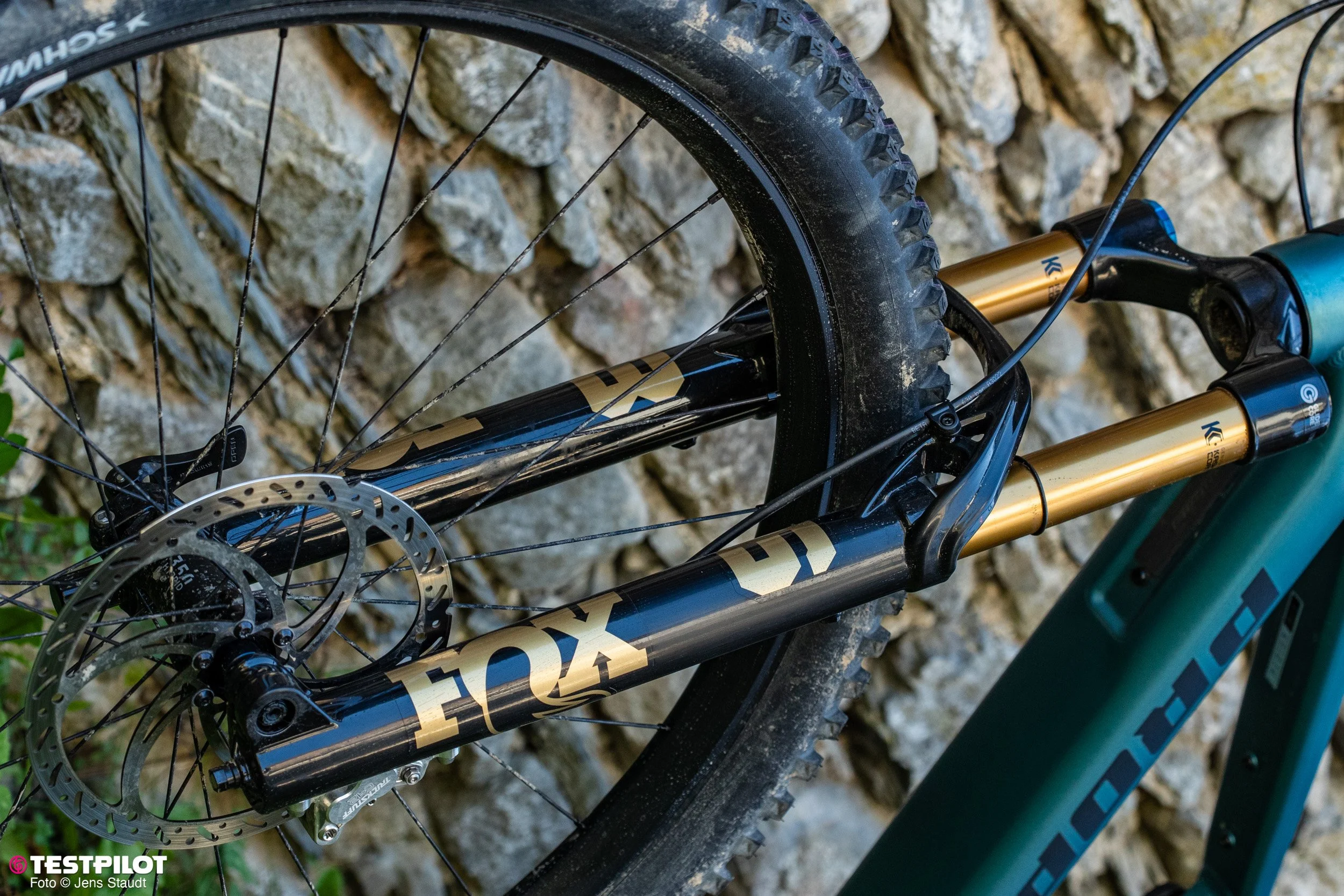
What is on eh menu? 36 mm or …
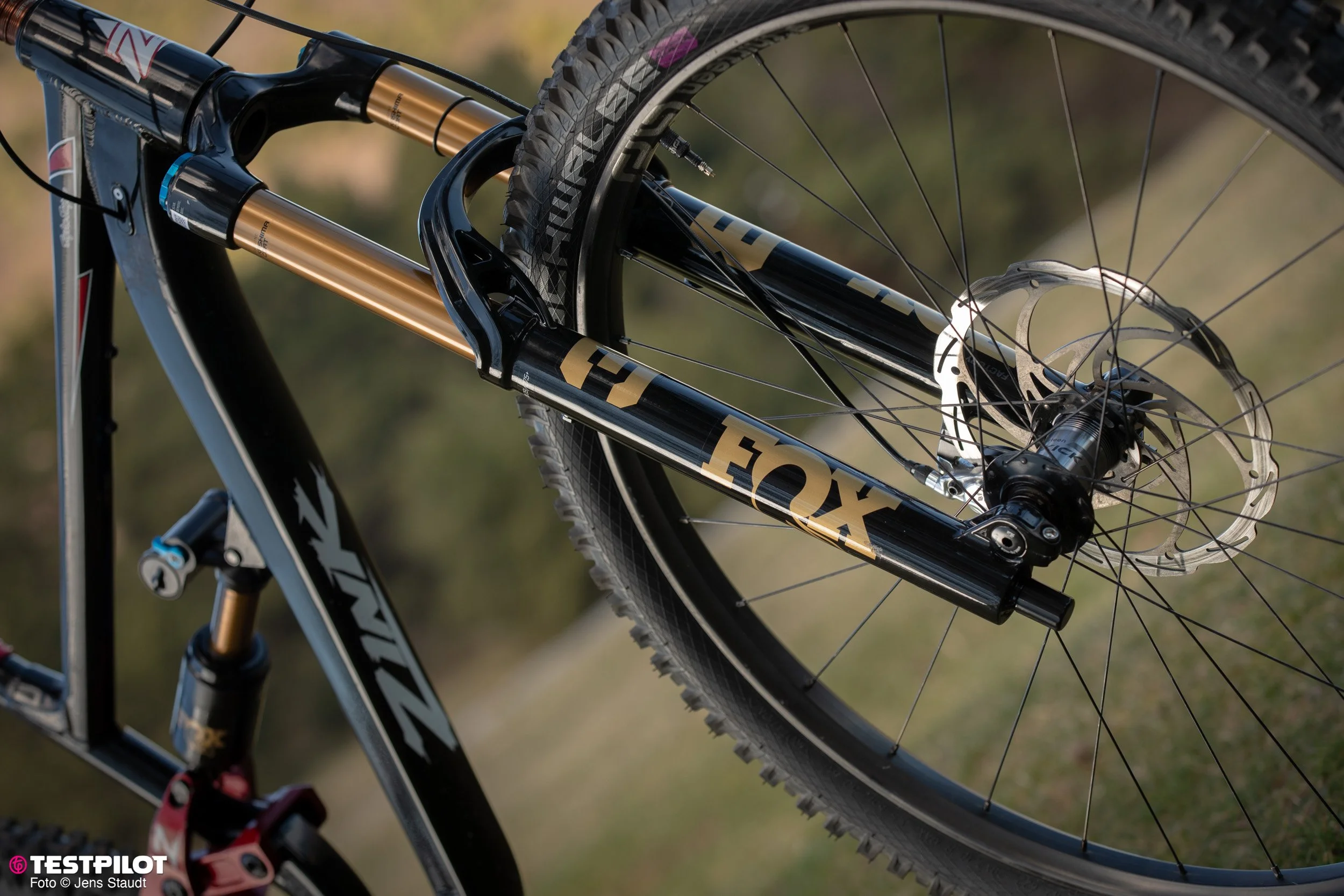
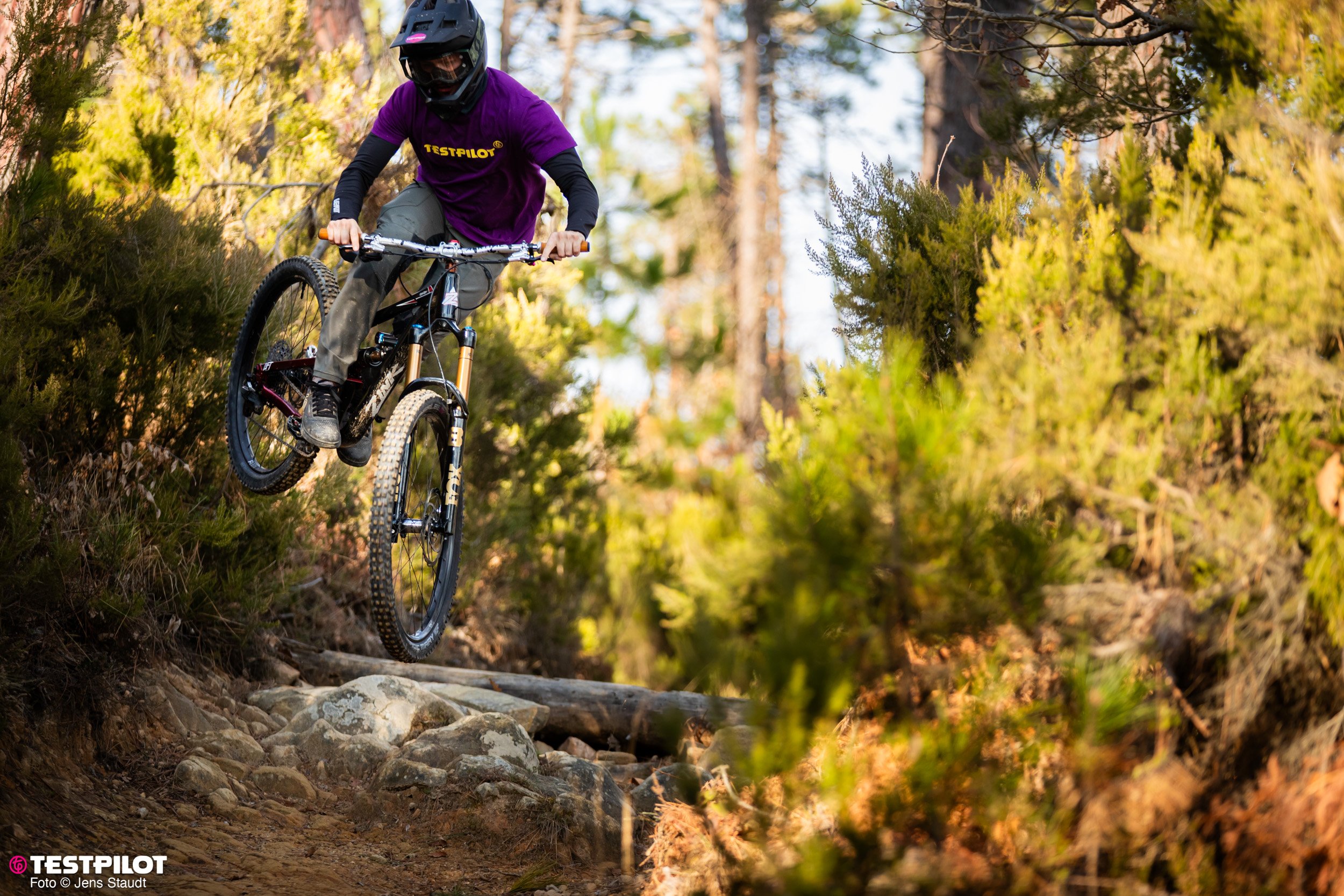
38 mm stanchions? There is an overlap in intended use and you can decide which forks character suits you best.
Conclusion
Our first testing showed that all the optimizations pay off. The FOX 38 GRIP X2 2027 engages its travel much more willingly and can thus expand its range of use to more comfort-oriented users without racers missing settings with plenty of support.
While riders who are more aggressive on the trail often used to run air pressure slightly above FOX's recommendation, you can and should now also experiment slightly below these values. The ride height can be maintained via the effective damping. This covers a larger and more usable adjustment range. Suitable for a broader spectrum of needs on the trail from users.
Together with the damping, the new architecture of the air spring can help increase the active travel range of the fork. Larger and smaller impacts are absorbed confidently without suddenly being pulled into the travel.
To provide you a short summary: the racing DNA of the FOX 38 remains. With this update, however, they manage to make the product attractive as well for riders who prefer a more relaxed pace on the trails.
| What is worth mentioning? | Things to consider. |
|---|---|
|
|
You want more tests?

Author – Jens Staudt

Height: 191 cm
Weight: 103 kg
Riding style: With his racing background, the lines are planned, even if there is anything bigger in his way. If possible, sections will be jumped over. You should use the entire width of a trail. Others would say - uncompromising.
Motivation: A product should function carefree and for as long as possible. If you have to screw less, you can ride more. He likes to tinker and see how the bike can be optimized.