

Avinox M2S motor: Beyond the Zoom-Zoom – Why More E-MTB Power Isn’t the Whole Story
Reading time: 7 minutes
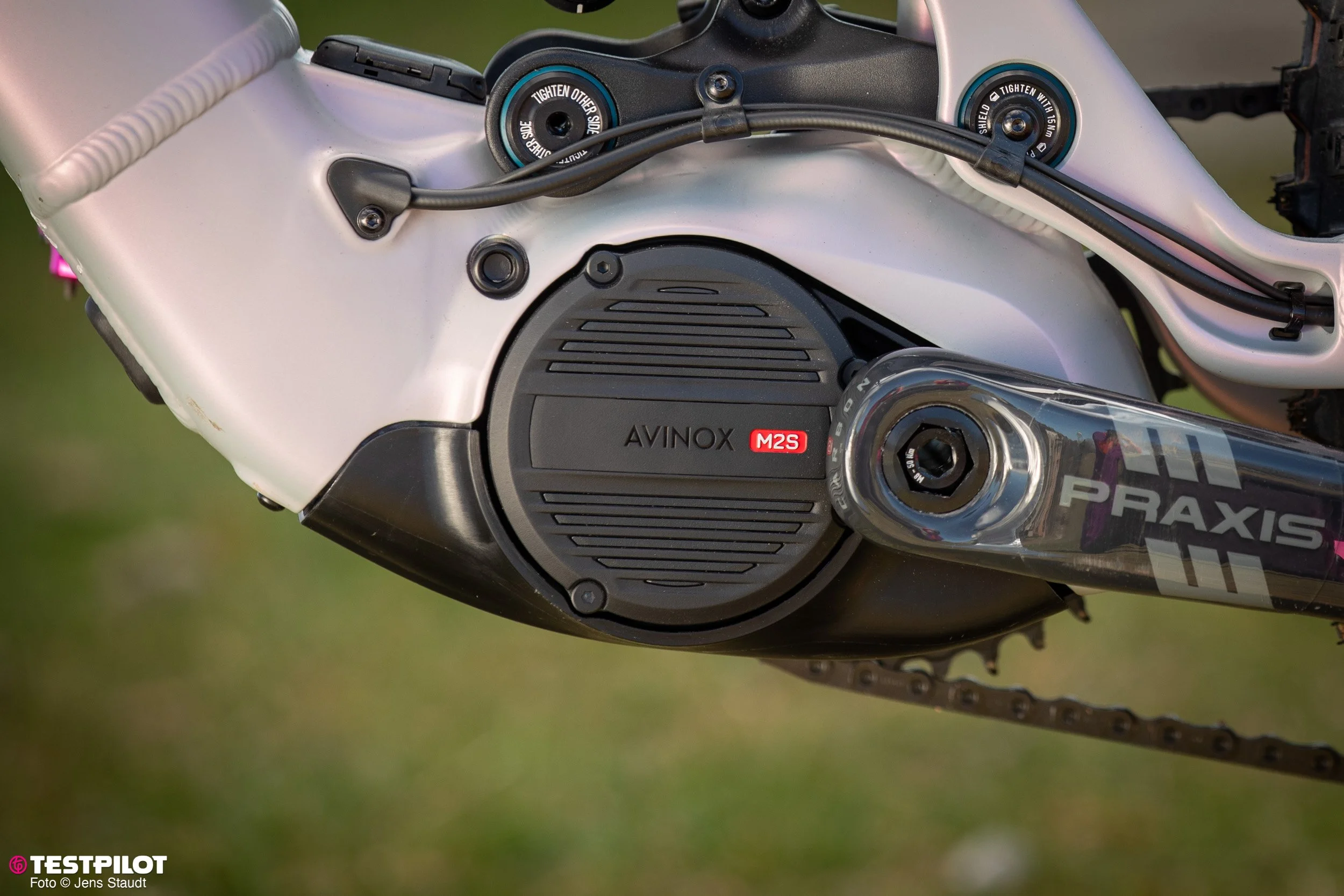
The e-MTB motor war has entered a new phase. With the arrival of the DJI M1 (Avinox) system, the industry’s obsession with peak power and Newton meters has reached a fever pitch. Today Avinox launched the M2S version. 1,300 watts peak and 130 Nm. Will this outnumber the competition like Bosch, Mahle, Brose, …?
The last couple of weeks we had been busy. After countless back-to-back tests, climbing challenges, and rider feedback loops, a more differentiated picture emerges. More power is not always better.
Different philosophies suit different terrains, riding styles, and expectations.
But there is a place for the new high-power Avinox M2S and its tiny brother, M2.
Find a complete overview of all motors that currently matter, and follow us into a practical explanation about what the Avinox system will enable you to do on the trail and what is at stake.
Key facts – Avinox M2 & M2S
- 1. Interface: Identical mounting points compared to M1
- 2. M2S: 130 Nm, 1.300 W, 2.6 kg
- 3. M2: 110 Nm, 1.100 W, 2.7 kg
- 4. Batteries: 600 Wh (Removable/Fixed) / 700 Wh (Fixed only) / 800 Wh (Removable/Fixed)
- 5. Display frame integrated: Color, BLE, Apple Find my, Type-C charger,
- 6. Display controller integrated: GNSS, BLE, Apple Find My
- 7. Charger: 168 W, 508 W
- 9. Accessoires: Front light high/low settings 1.200/500 lm, StVZO ready
The e-MTB industry has a habit of selling solutions via spec sheets. It builds on the heritage of the mountain bike world. From early on (think 90s), in bike shops it was often about groupset names: XT, XTR, later about RockShox or FOX, and we continue today. The latest easy-consumer-convincing-name-dropping is the motor.
DJI has shaken the market with their M1 approach. Fast forward to today. The now named AVINOX brand lifts the curtain and shows the M2S. There is also a less (but still) powerful version called the M2, which is closer to Bosch’s CX and CX-R as well as Mahle’s M40 and the latest Specialized Turbo Levo update.
Avinox continues on what they had been successful with. Disrupting via staggering peak power figures that make (not only) parking lot test rides feel like a revelation. Yet, as any experienced rider knows, a parking lot is not a trail.
The central question facing consumers is not “Which motor has the highest number?” but rather, “How does this motor deliver its power, and where?”
We teamed up with Alex Bike Tester and 8 of our CoPilots to learn more about what is possible with different systems and who they are a match for. In the video you will find the first climbing challenges and an overview as well as explanations on what different motors do while multiplying your input. The full conversation between Alex and Jens you can listen to via the podcast either here on the site or on Spotify and Apple Podcasts.
The Physics of Deception: Newton Meters vs. Reality
Let’s address the headline figures immediately and do a quick eighth-grade physics class. For the biggest target group (and we are part of that), the time in school is far back. So let’s freshen up this knowledge with a simple example.
A motor rated at 100 Newton meters (Nm) will not automatically outperform an 85 Nm motor on the trail. The reason lies in basic physics that is often lost in marketing hype.
Motor torque is transferred to the rear wheel via a shiftable gear ratio. A higher-torque motor can feel identical to a lower-torque motor simply by running one gear heavier. The rear wheel torque is amplified or reduced based on the ratio between your chainring and cassette. If you want to look how the formulas behind this stuff look like, read this article.
As one engineer noted in our testing, a 100 Nm motor could feel exactly like an 85 Nm motor depending on gearing. Conversely, a lower-torque system with a well-tuned torque sensor can provide more usable, controllable traction on technical climbs than a brute-force unit that simply overwhelms the rear tire. Remember Pirelli’s marketing claim, “Power is nothing without control!”? Well, it fits also for motors.
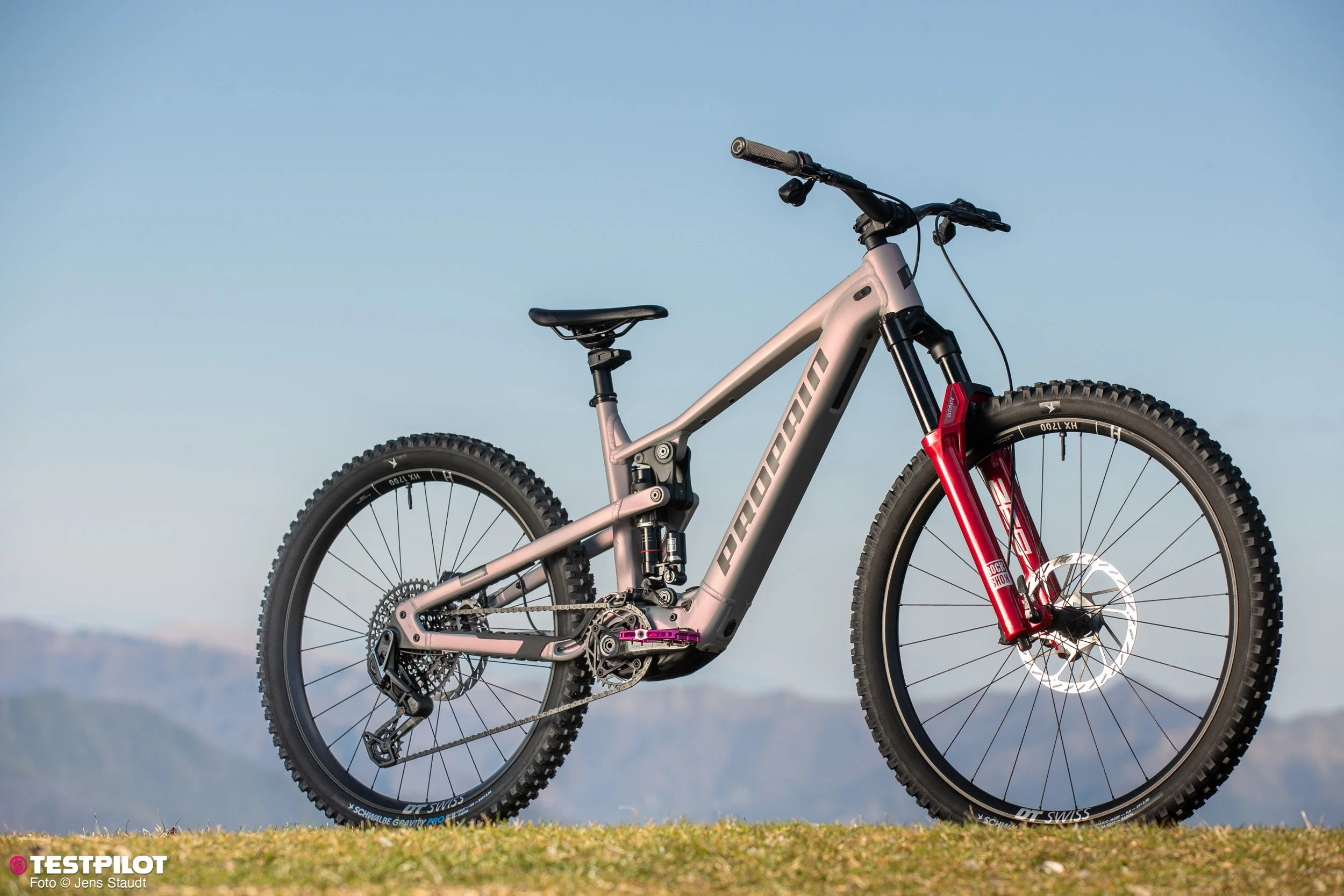
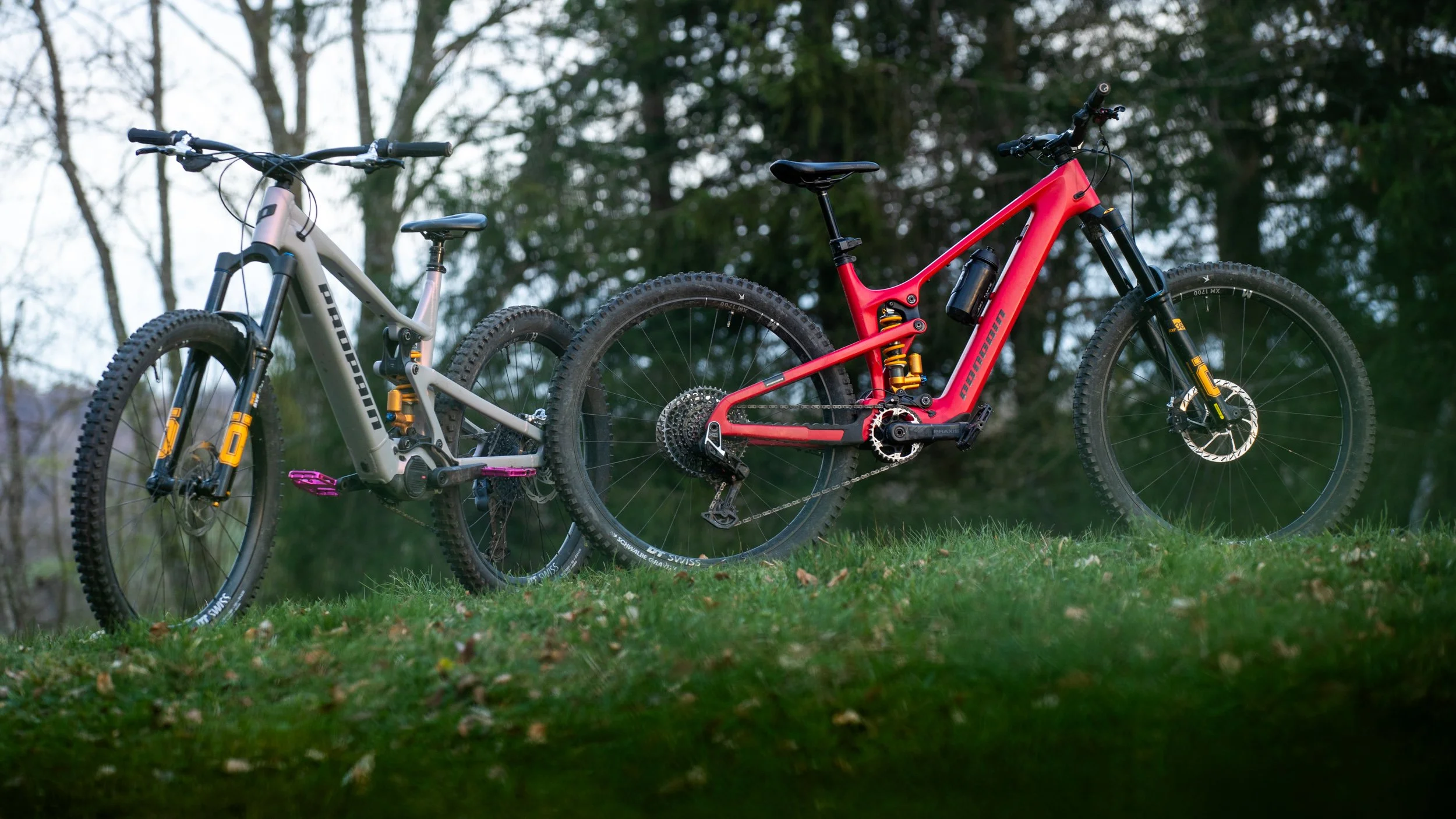
Plenty of brands jumped the trend. Propain had an interesting approach. They put the M2S in an alloy bike. More of that soon.
The Delivery Dichotomy: Cadence vs. Torque
Beyond raw numbers, the fundamental difference between motor systems lies in how they interpret your input. The engineers added plenty more sensors to let the motor know what is actually going on, and the software helps deliver power in a more controllable and usable way. But there are also safety features. Think of Bosch’s ABS. Avinox now has a feature in which a sensor can detect a 45-degree angle of your bike to shut off the motor. If you still loop out at that point? We didn't end up in such a situation during testing.
Speaking of power and interaction with your input alone, you may diverge into two distinct philosophies, of which cyclists should pay attention to, because it may be that one is better suited to your needs:
Torque-Based Systems (e.g., Bosch): These motors measure how hard you are pushing on the pedals. The harder you push, the more support you get. This creates a natural, linear feedback loop. On highly technical, low-speed climbs—think switchbacks over rock gardens – torque-based systems allow the rider to feather the power, balance traction, and conquer sections that require finesse and interaction with the ghost in the machine. You want to feel connected to the motor and its output.
Cadence-Based Systems (e.g., Avinox): Their motors primarily measure how fast you are turning the pedals. They match the rider’s pedal input closely. The update on the M2 system is a big step forward. It feels more natural, “MTB-pedal-like” and less like a “Throttle-at-your-feet”. You need to make more crank movement to activate the motor.
The Avinox system relies heavily on its high power and a (rather) high-cadence response. Means you get the power the moment you turn the pedals to a certain degree, before you get the acceleration. On a straight, steep fire road, it is absolutely unbeatable – raw, relentless acceleration and speed. However, on technical terrain where you might stall or need to restart on a steep pitch, the lack of immediate torque-on-demand becomes apparent. Once you stop pedaling, the system struggles to recover. A Bosch system will enable you here with a faster engagement and a “diesel power” style. Less spin. More feel.
In a direct comparison with other (rather torque-based) systems, you had to adapt your riding style to the Avinox.
“You need to commit. If you come to a halt where you could start again with a Bosch, you can’t continue with the Avinox.” – Jens, Testpilot
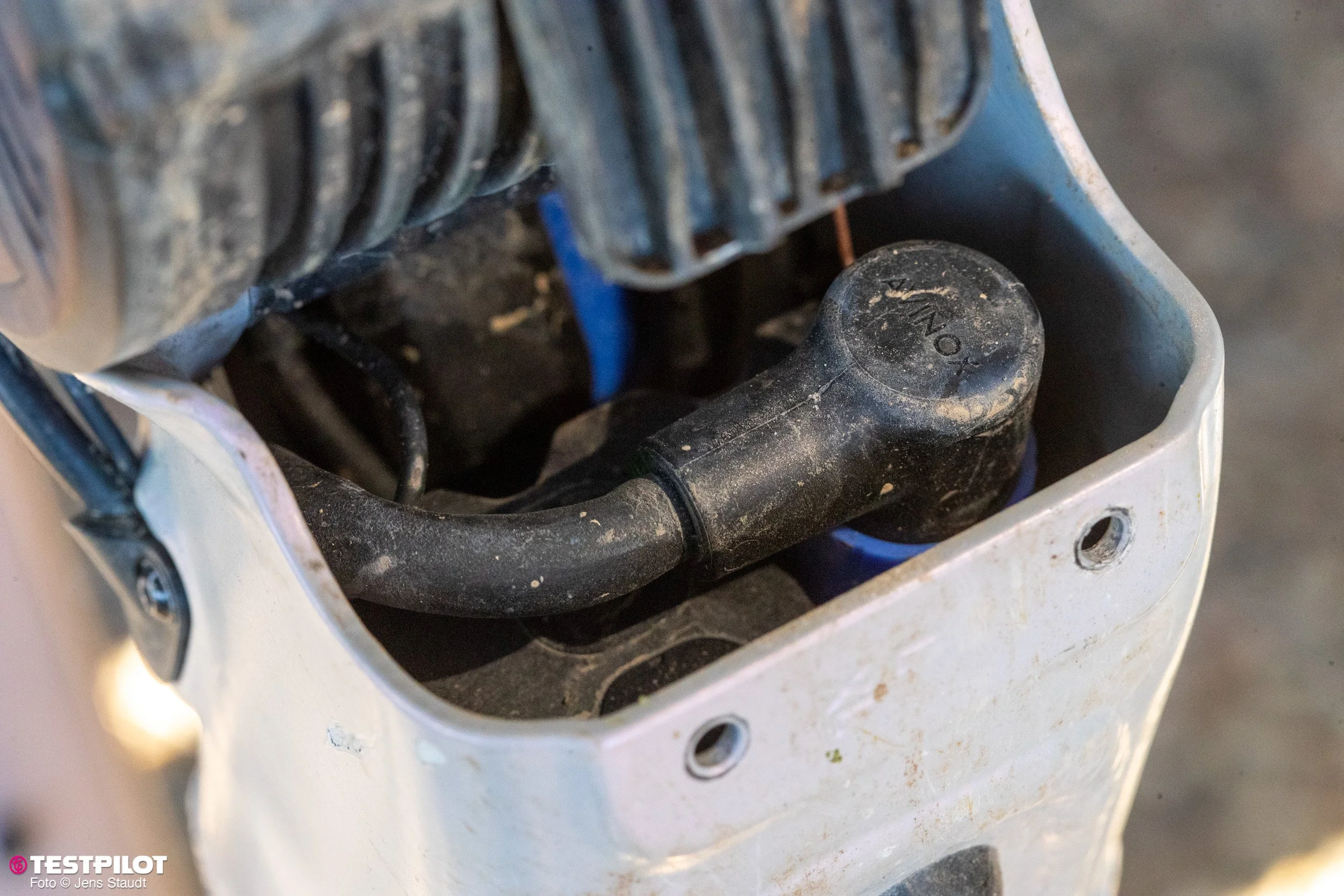
The slim battery shows off with a clean wiring.
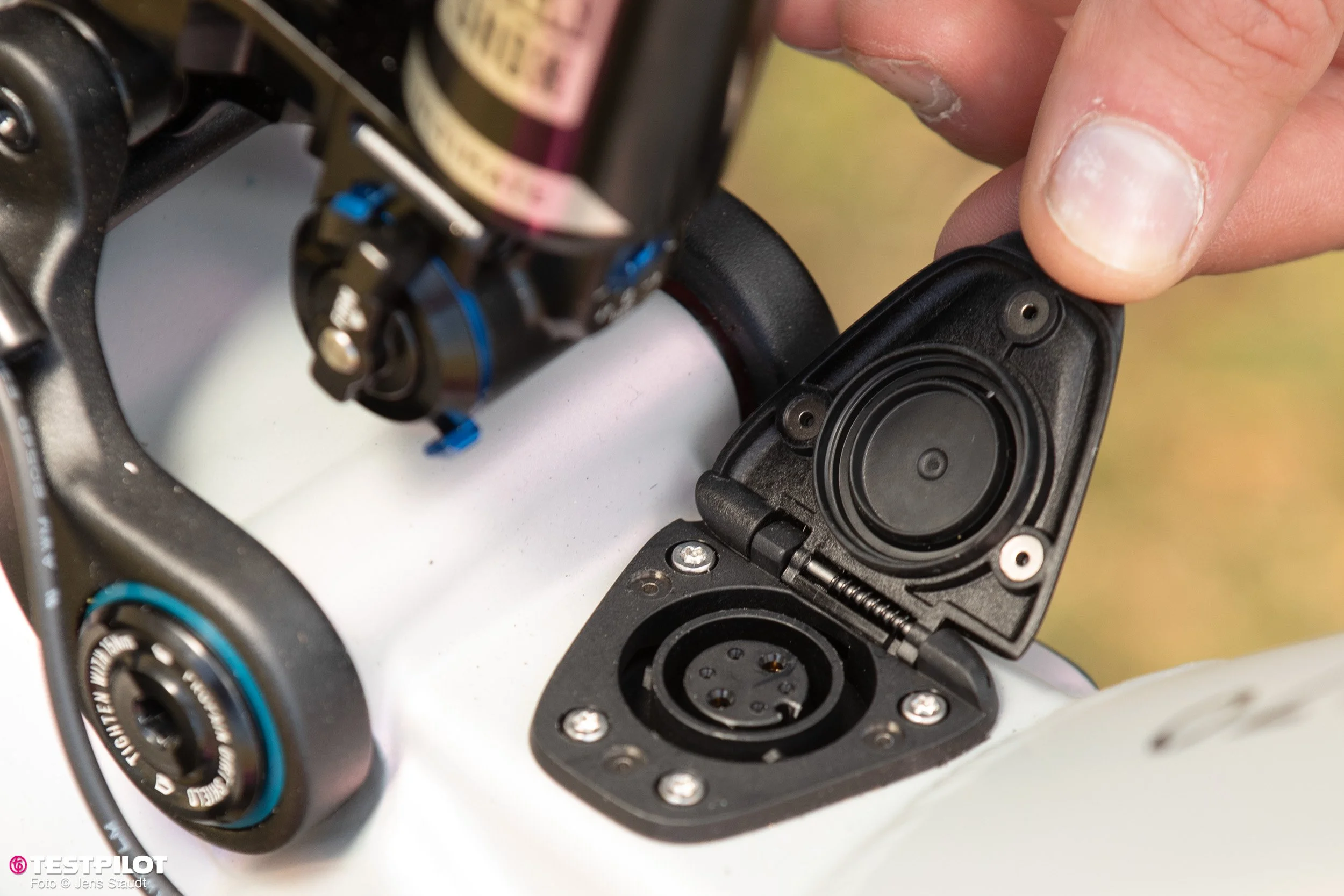
In a little bit more than 2 hours you can push in a full charge.
The Law of Diminishing Returns: Weight, Heat, and Wear
The pursuit of peak power should not ignore the systemic costs. Physics is unforgiving: higher wattage draws more current, generates more heat, and increases resistance in the cells. More pull on the chain increases wear on the drivetrain. This creates a runaway calculation where you need extra power simply to support the inefficiencies caused by the power itself.
Yes. You can tone it down and not use Turbo all the time. But hell yeah, it is fun! You blast up the hills with absolutely no effort. As long as it is not getting too technical.
Burning through the battery fast is fun, just like taking a proper car to a racetrack; it also will affect some things. Here are the objective and significant trade-offs:
Battery Drain: A 1300W peak motor drains batteries exponentially. In real-world testing, even an 800Wh battery was rarely flattened (Bosch did a study on that), meaning riders carry excess weight 90% of the time for a capability they seldom use.
Drivetrain Wear: High torque destroys components. Chains, cassettes, and chainrings wear out significantly faster. Roughly calculating cost-per-kilometer on a fast-charged, high-power system could see €5 of battery wear per ride alone.
Chassis Flex: A high-torque motor twists the frame. To combat this, manufacturers must stiffen the frame, adding weight. This degrades the power-to-weight ratio, creating a vicious cycle where you add power to move added mass.
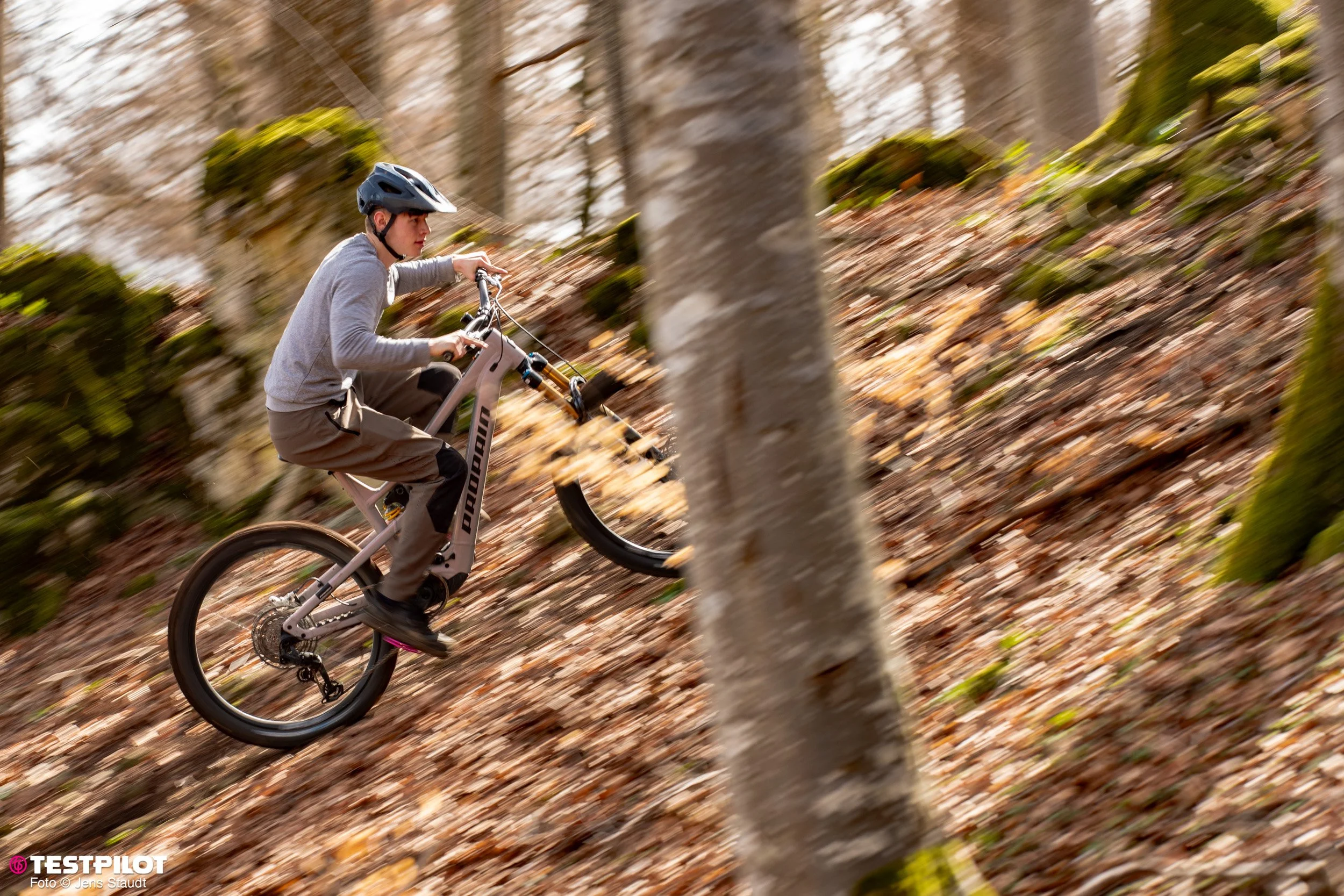
Lighter riders pretty much fly up the hill. You need to pay attention. Things come at you fast!
The Sustainability Question: A 10-Year Lifespan?
There is an uncomfortable question looming over the high-power e-MTB segment: longevity.
A 10-year-old analog mountain bike is largely serviceable. New tires, a chain, perhaps a groupset, and it rides like new. An e-MTB from 2026 is a different proposition. Battery technology is evolving rapidly. Will the specific shape of today’s 800Wh battery be available in five years? Will the proprietary motor mounts remain compatible?
After a decade, most current eMTB will likely be “unrideable” due to unavailable batteries or obsolete electronics. This forces a value proposition: Are you buying a bike for the next three years of high-octane “zoom-zoom” or for a decade of trail riding?
Comparing the Avinox M2S to the rest
There is a new player in the ring, but it is not the “Best” Motor
The arrival of high-power systems like the Avinox has been beneficial for the industry. It has forced every manufacturer to rethink their power delivery philosophy. However, it has not created a universal champion.
Our recommendation:
Choose a Bosch-style system if your home trails are technical, slow-speed, climbing-intensive, and require finesse over obstacles.
Choose an Avinox-style system if you prioritize raw speed on fire roads, shuttling, or descending, and you view climbing as a necessary transit rather than a technical challenge.
Choose a TQ or Mahle system if you value a natural, lightweight bike feel that rides like an analog MTB, with just enough support to keep the fun rolling.
The industry media has a responsibility to stop shouting superlatives and start explaining trade-offs. Do not buy a motor off a spec sheet. Attend a demo day. Ride your local trails. And ask yourself not “How much power does it have?” but rather, “How does this power feel where I ride?”
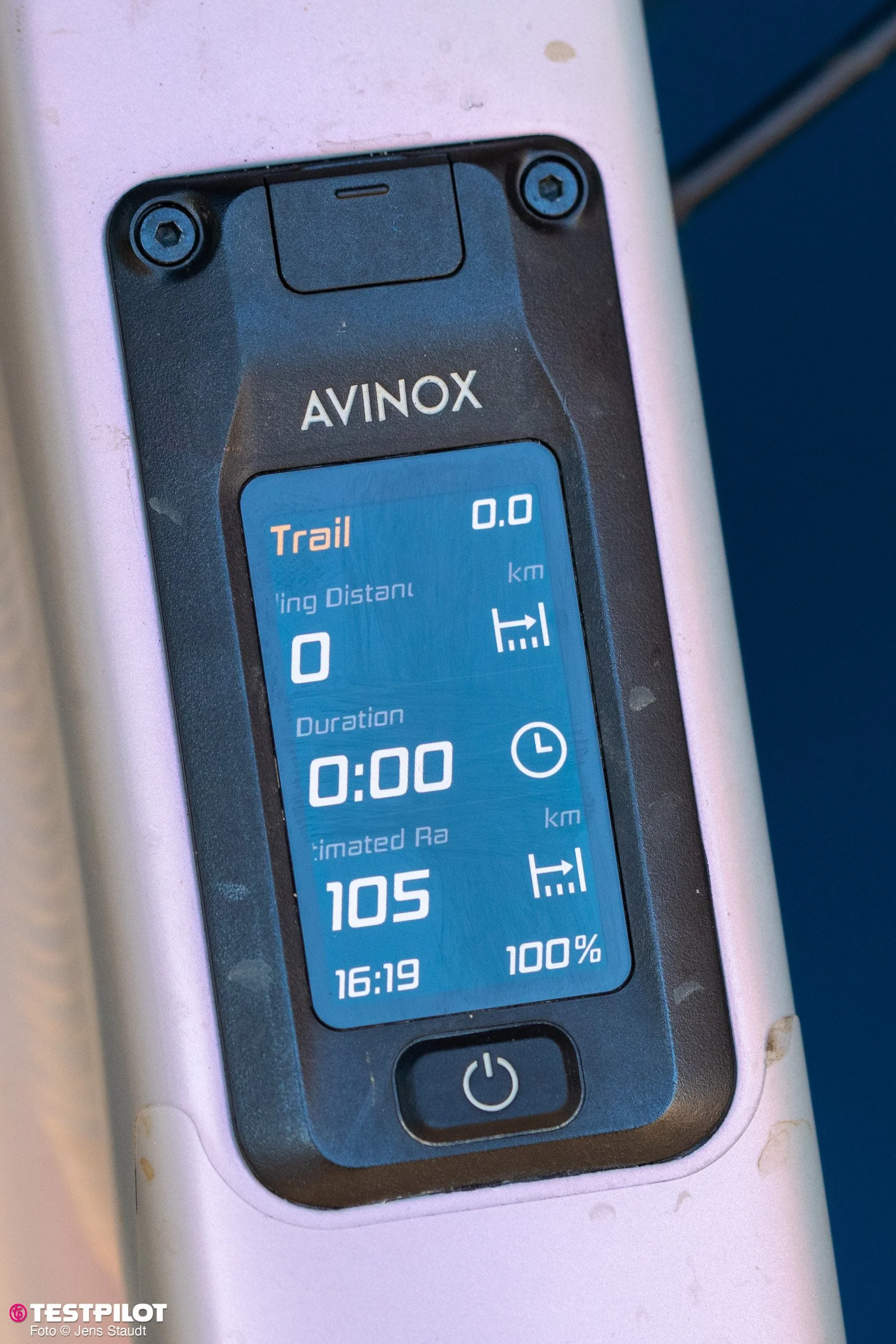
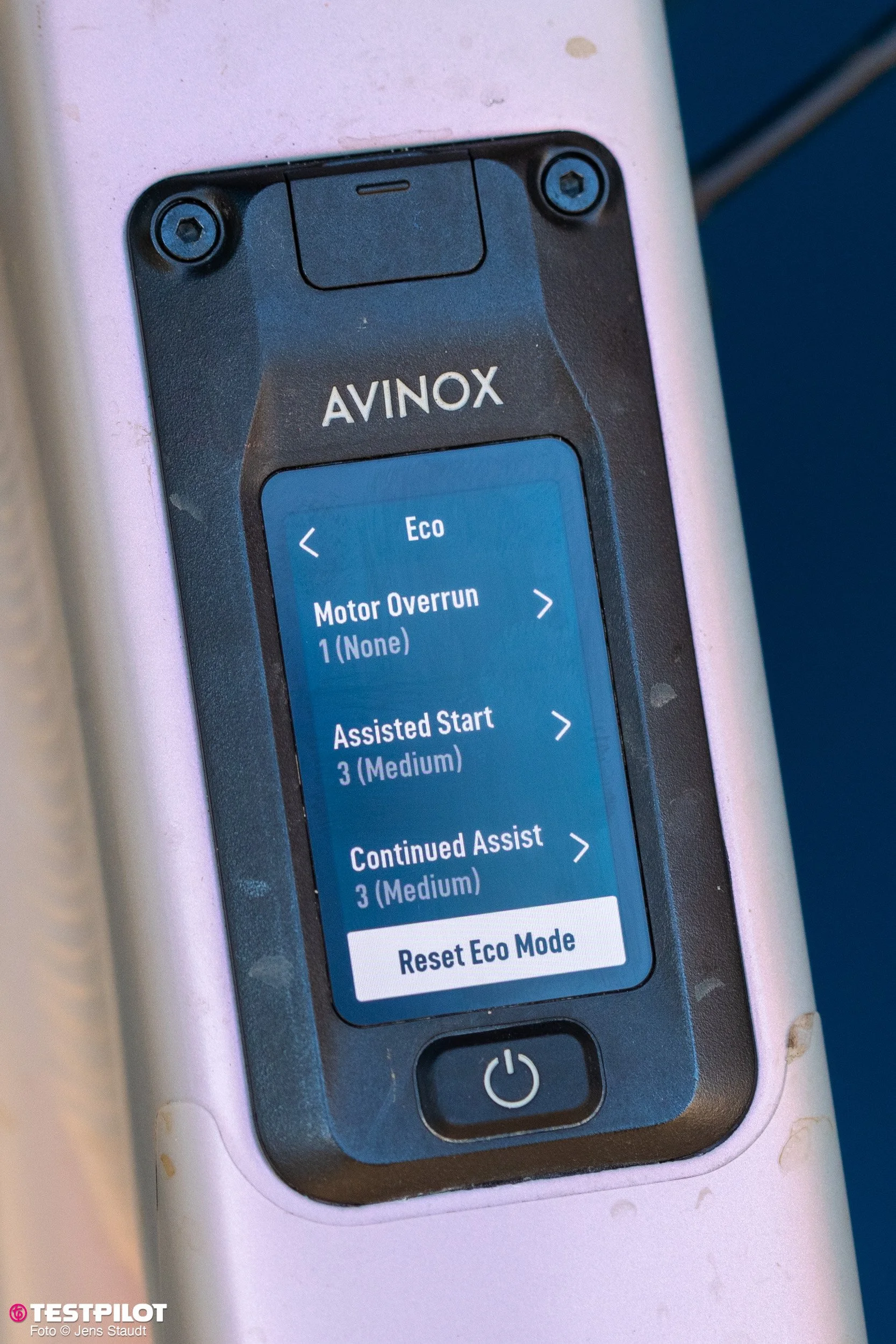
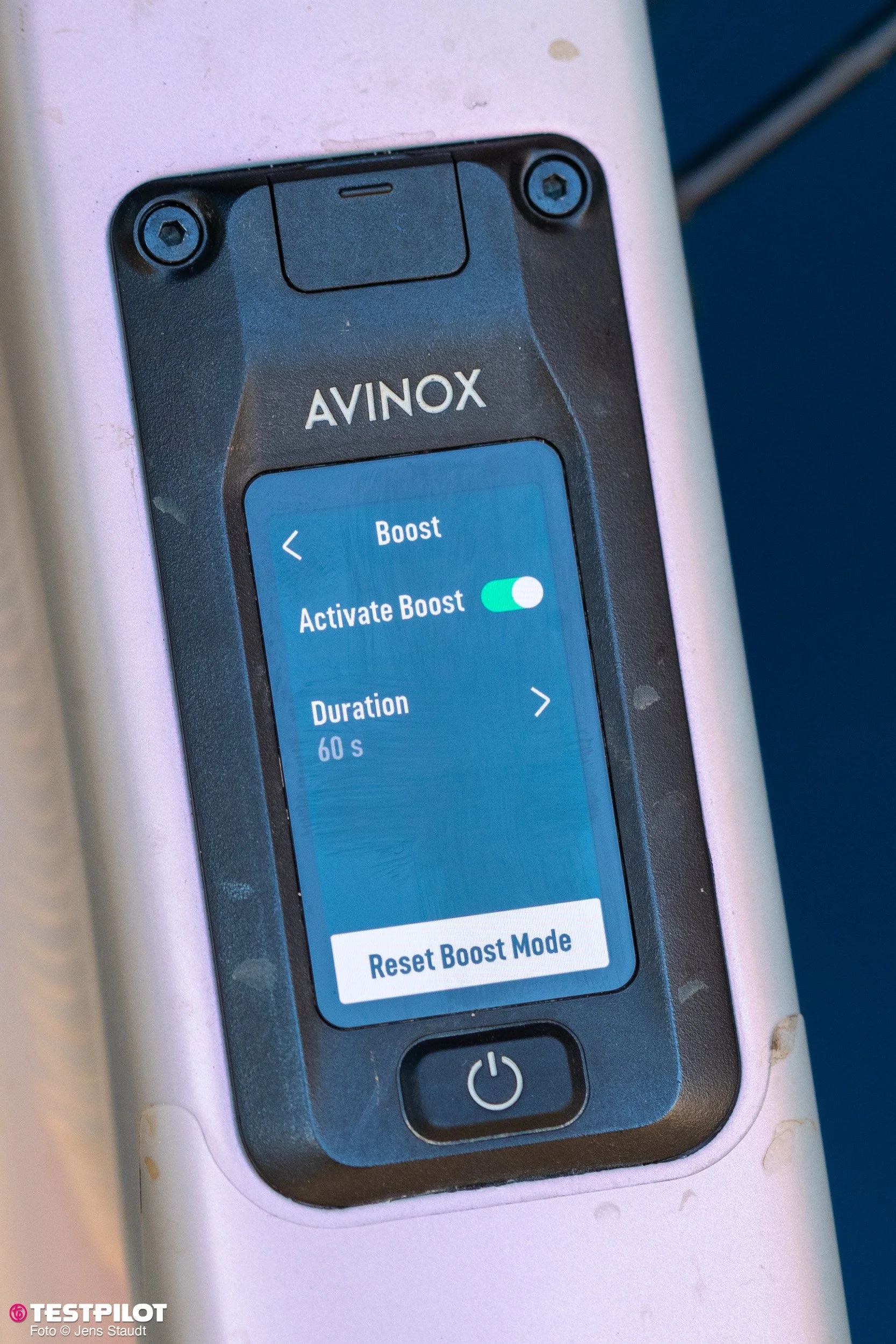
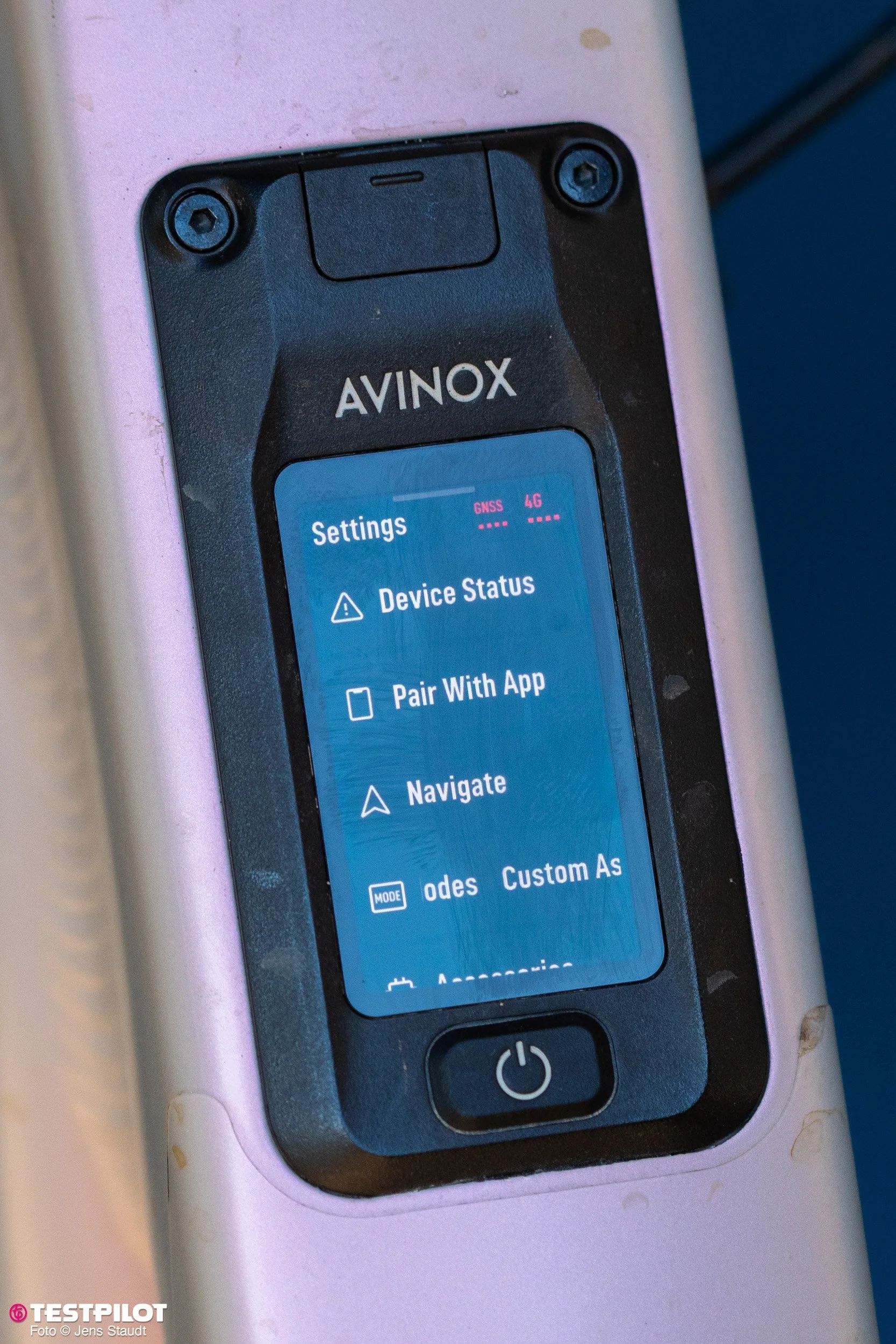
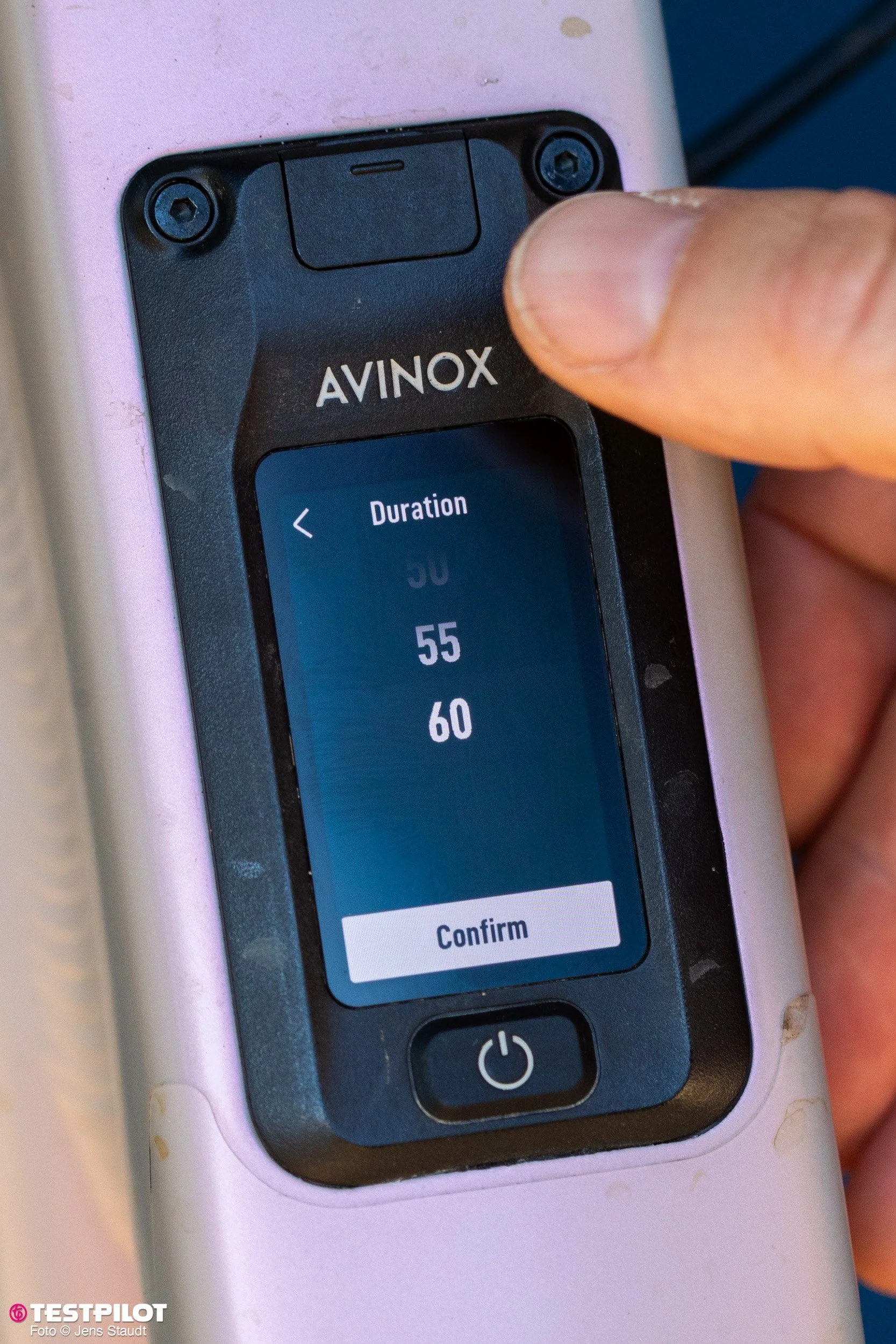
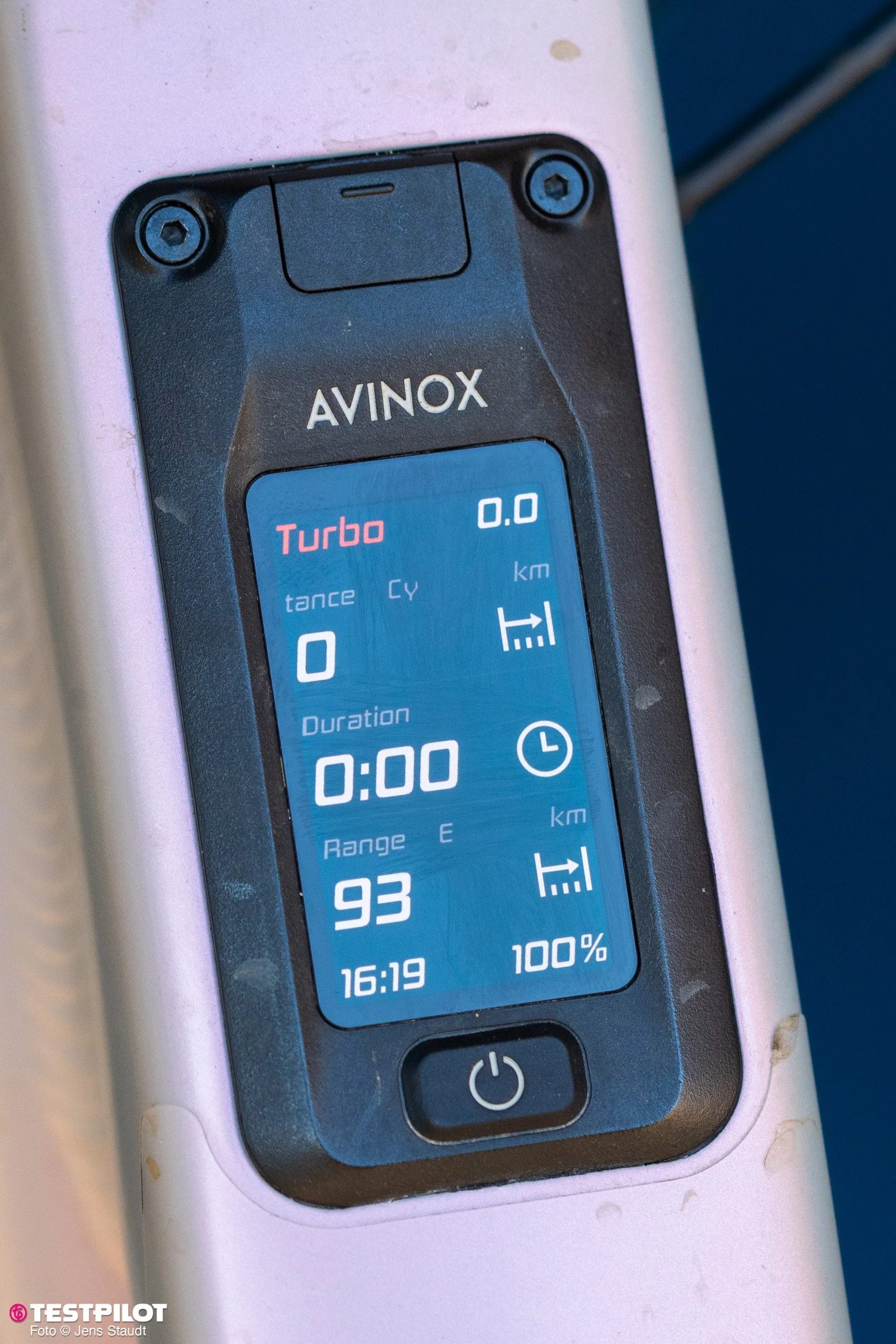
The display reacts just like a smartphone. There are many options to customize your experience. Every mode can be tailored to your needs. While riding, you can pull many facts (don’t get distracted). Also, you can use navigation, search your bike (it has a SIM card & Apple Find My). And – yes you can also start and stop the recording on your DJI action cam after pairing it.
Tech Spec Table: Current Relevant e-MTB Motors (2024-2026)
Note: All figures are manufacturer claims unless otherwise noted. Peak power figures are often transient and measured at different points in the drivetrain.
| Manufacturer / Model | Avinox M1 | Avinox M2 | Avinox M2S | Bosch CX | Bosch CX-R | Mahle M40 | Maxon Air S | TQ HPR60 |
|---|---|---|---|---|---|---|---|---|
| Max. Torque | 105 Nm (120 Nm Boost) | 110 Nm (125 Nm Boost) | 130 Nm (150 Nm Boost) | 100 Nm | 100 Nm | 105 Nm | 90 Nm | 60 Nm |
| Max. Power | 1000 W Peak | 1100 W Peak | 1300 W Peak (1500 W Boost) | 750 W Peak | 750 W Peak | 850 W Peak | 620 W Peak | 350 W Peak |
| Nominal Power (Continuous) | 250 W | 250 W | 250 W | 250 W | 250 W | 250 W | 250 W | 250 W |
| Support Factor | 800 % | 800 % | 800 % | 400 % | 400 % | 400 % | 400 % | 200 % |
| Voltage | 36V | 36V | 36V | 36V | 36V | 48V | 36V | 36V |
| Motor Weight | 2.52 kg | 2.7 kg | 2.6 kg | 2.8 kg | 2.7 kg | 2.5 kg | 2.0 kg | 1.92 kg |
| Battery Capacities | 800 Wh (integrated) 600 Wh (integrated) |
800 Wh (integrated) 700 Wh (integrated) 600 Wh (integrated) 800 Wh (removable) 600 Wh (removable) |
800 Wh (integrated) 700 Wh (integrated) 600 Wh (integrated) 800 Wh (removable) 600 Wh (removable) |
750 Wh (removable) 625 Wh (removable) 500 Wh (removable) |
750 Wh (removable) 625 Wh (removable) 500 Wh (removable) |
800 Wh (integrated) 534 Wh (integrated) |
600 Wh (integrated) 400 Wh (integrated) |
580 Wh (removable) 360 Wh (removable) |
| Battery Weight | 3.74 kg 2.87 kg |
3.74 kg 3.15 kg 2.87 kg 3.9 kg |
3.74 kg 3.15 kg 2.87 kg 3.9 kg |
3.9 kg 3.3 kg 2.9 kg |
3.9 kg 3.3 kg 2.9 kg |
3.7 kg 2.5 kg |
3.0 kg 2.2 kg |
2.68 kg 1.83 kg |
| Power Density | 397 W/kg | 407 W/kg | 500 W/kg | 278 W/kg | 278 W/kg | 340 W/kg | 310 W/kg | 182 W/kg |
| Energy Density | 214 Wh/kg 209 Wh/kg |
214 Wh/kg 222 Wh/kg 209 Wh/kg 205 Wh/kg |
214 Wh/kg 222 Wh/kg 209 Wh/kg 205 Wh/kg |
192 Wh/kg 189 Wh/kg 172 Wh/kg |
192 Wh/kg 189 Wh/kg 172 Wh/kg |
216 Wh/kg 214 Wh/kg |
200 Wh/kg 182 Wh/kg |
216 Wh/kg 197 Wh/kg |
| Range Extender | No | No | No | 250 Wh (1.6 kg) | 250 Wh (1.6 kg) | No | 170 Wh (1.6 kg) | No |
| Chargers | 4A Standard 12A Fast |
4A Standard 12A Fast |
4A Standard 12A Fast |
2A Compact 4A Standard 6A Fast |
2A Compact 4A Standard 6A Fast |
4A | 2A Standard / 6A Fast | 4A |
| Charging Power | 168 W 508 W |
168 W 508 W |
168 W 508 W |
72 W 144 W 216 W |
72 W 144 W 216 W |
235 W | ~400–500 W (calculated) | 235 W |
| Support Modes | Eco, Trail, Turbo, Auto, Boost | Eco, Trail, Turbo, Auto, Boost | Eco, Trail, Turbo, Auto, Boost | Eco, Tour, eMTB, Turbo | Tour+, eMTB, eMTB+, Race | Level 1, 2, 3 + SmartAssist | Cruise, Sport, Blast | Eco, Mid, High |
| Display | 2" touchscreen (top tube) | 2" touchscreen (top tube) 1.4" handlebar display |
2" touchscreen (top tube) 1.4" handlebar display |
1.6–2.8" displays (no touch) | 1.6–2.8" displays (no touch) | 1.9" display (no touch) | LED indicator only | 2" display (top tube) |
| Controller | Wireless controller | Wireless controller | Wireless controller | Top tube and/or handlebar | Top tube and/or handlebar | Handlebar remote | Handlebar remote | Handlebar remote |
| App | Avinox Ride App | Avinox Ride App | Avinox Ride App | eBike Flow App | eBike Flow App | My SmartBike App | maxon Connect App | TQ E-Bike App |
Conclusion on the Avinox M2S motor
Avinox continues to differentiate itself from the pack. The M2 and especially the M2S push the boundaries of what can (and should) be done. Blasting up a dirt road to do even more laps on your favorite trail will be as easy as it gets. Technical climbs? Its characteristics of power delivery will require adaptation in how you approach these sections. Brute force is now definitely an option. Ensure you bring the needed awareness to be in control when it gets too rowdy.
You can tone it down to have a calmer ride. But serious uphill sections that can't be solved via power alone—in this segment you need a more nuanced power delivery. If you like the feel of having your throttle at the pedals, Avinox is for you. Riding it will leave you taken aback and with a question: Is this still a mountain bike?

You want more reviews?

AutHor – JENS STAUDT

Height: 191 cm
Weight: 103 kg
Riding style: With his racing background, the lines are planned, even if there is anything bigger in his way. If possible, sections will be jumped over. You should use the entire width of a trail. Others would say - uncompromising.
Motivation: A product should function carefree and for as long as possible. If you have to screw less, you can ride more. He likes to tinker and see how the bike can be optimized.