

First ride: Unchained Bicycles – Mid-High Pivot Enduro, Pinion Gearbox and Gates drive
Lesezeit: 13 Minuten
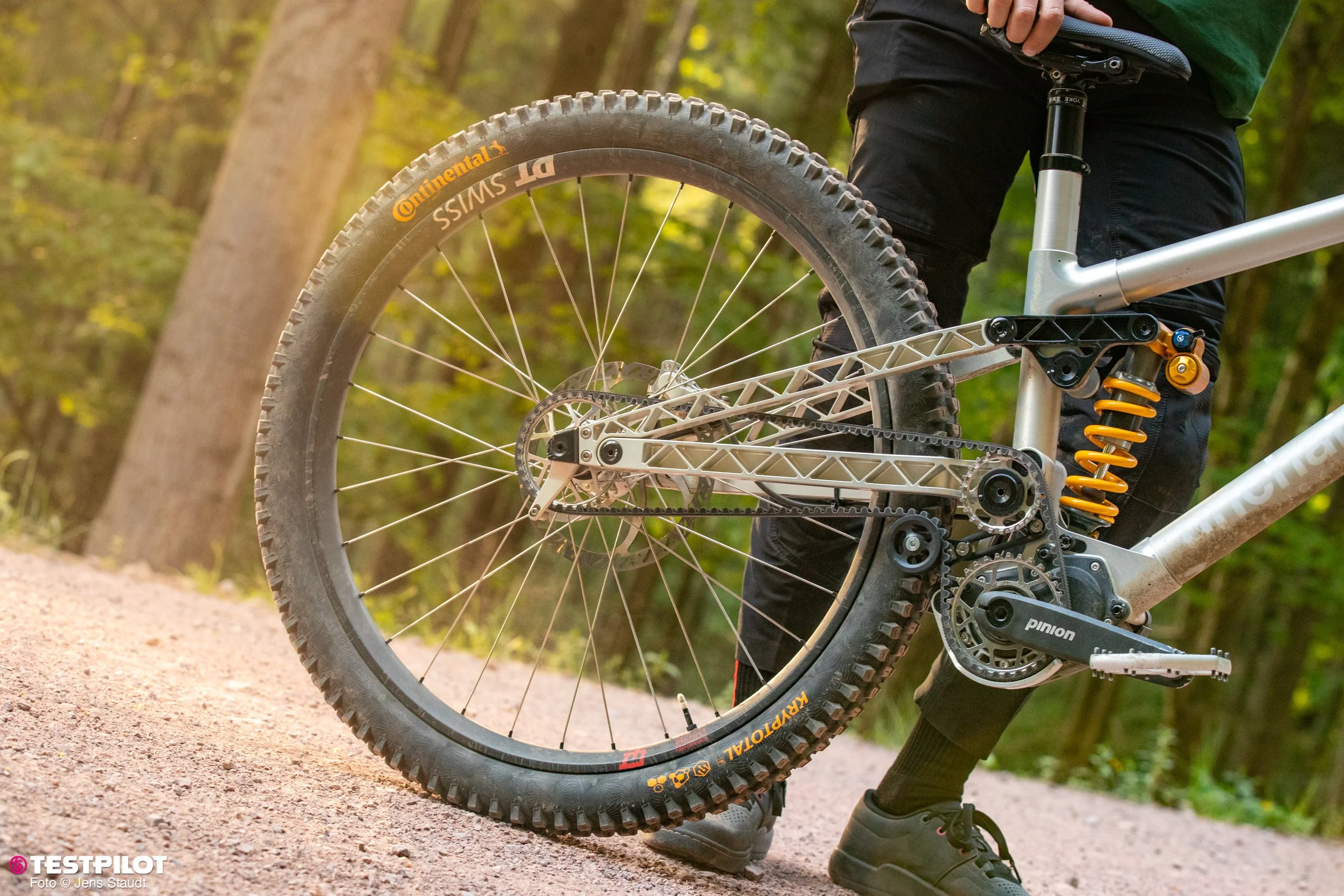
From the Ruhr Area to Lake Geneva: Unchained Bicycles now puts their prototypes on the trails. A no-holding-back-flat-out enduro bike. No chain, a self-developed mid-high-pivot kinematic, and a Pinion C1.12 Smart Shift Gearbox to move you. An all-in decision towards stability and suspension performance. The alloy tubes are bonded and have threads for extended peace of mind. We did a first ride on the Freiburg trails. Time to get into the weeds of the Swiss beast.
You can get more background information about the bike in the first article here.
Unchained Bicycles Story
Behind Unchained Bicycles are Axel Lehmkuhl and Laurent Alby. Two colleagues—but not in the bike industry. What connects them is their passion for bikes. And so it happened that one or the other work coffee chat revolved around THE perfect mountain bike. One day Laurent asks: "Would you be interested in building our own bike?" The journey began.
Axel used his know-how and his contacts in the metal industry. He took care of the material: tubes and milled lugs. Laurent developed the kinematics and made the integration of the Pinion gearbox possible.
In just 14 months, the two had put a rideable and truly good-looking prototype on its wheels.
If you want more background information on the two and the project, you can read our first introductory article.
At the Bikefestival Freiburg, we met up with Axel and were able to capture the very first exclusive quick ride impression of the current prototype. And it promises a lot.
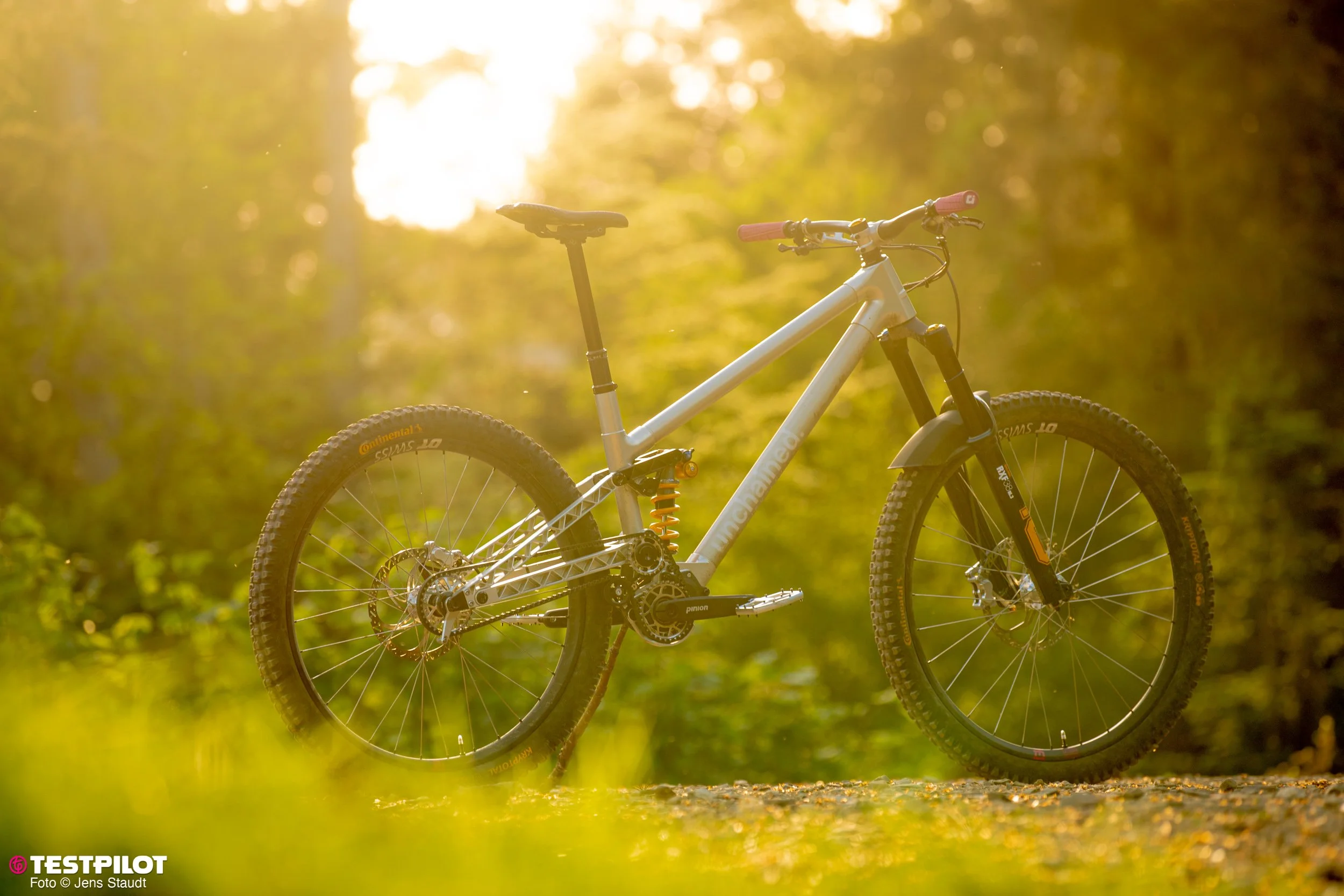
Yep, this is “just” a prototype, but already a bliss to look at.
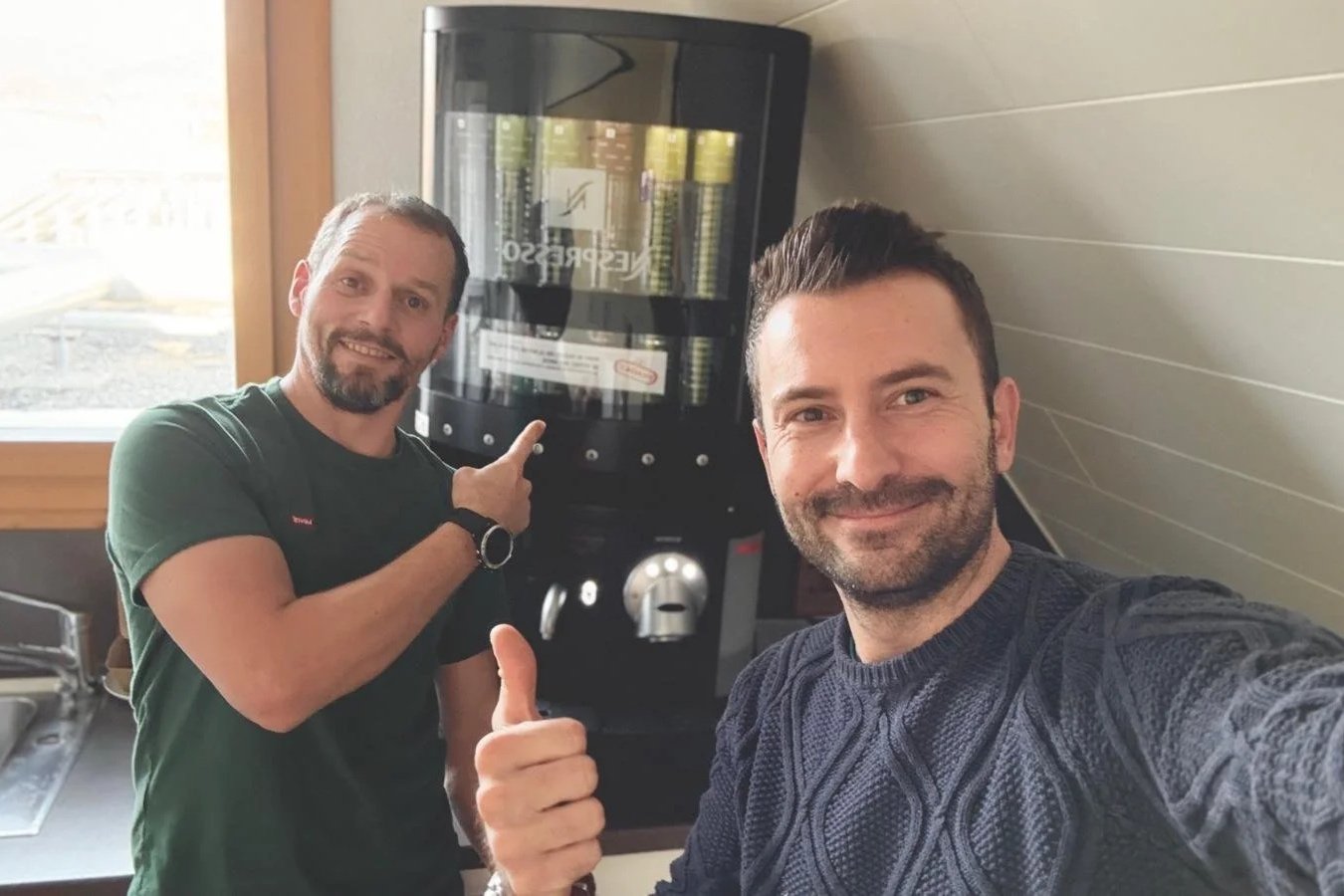
Axel Lehmkuhl and Laurent Alby, in front of the legendary coffee maschine, which started it all.
Facts about the Unchained Bike
| Suspension travel (front/rear) |
170 mm / 175 mm 175 mm with coil shock, 170 mm with air shock Progression adjustment via flip chip to 26% or 21% |
| Frame material | 7075-T6 aluminum – bonded and bolted tubes and lugs |
| Wheel size | 29/27.5 inches – optional 29/29 with different dropouts and a longer belt |
| Gearbox | Pinion C1.12 Smart Shift |
| Hub width | 148 x 12 mm |
| Shock size | 205 x 65 mm (Trunnion Mount) |
| Shock | Coil or air (progression adjustable via flip chip) |
| Bearings | Enduro Bearings |
| Sizes | Currently only L. More sizes to follow. |
| Warranty | Lifetime for first owner + crash replacement |
| Weight (complete bike) | 18 kg in size L, race-ready with enduro casing, rear insert, and pedals |
| Price | Not available yet |
| Availability | Pre-orders from summer 2026, shipping late fall |
Unchained Bicycles – A close look on the frame
Axel and Laurent live on Lake Geneva. Both love the playgrounds in their alpine terrain. Anyone who knows Axel and his infamous "Axel Tours" knows that this type of mountain biking has little in common with a normal singletrail. This is bike mountaineering with countless vertical meters—and those are destroyed at a face-melting speed, no matter how rough the terrain gets. You know the videos of Vinny T? Yep, that area is also in their testing grounds. But if you want to blast down the gnarliness, you also have to get yourself up—and that usually takes time. What's the worst-case scenario? Exactly: a product failing after a gruesome climb, on the trail.
Axel reported about a tour where he struggled his way uphill, only to tear off his derailleur on the first few meters of the descent. What followed was a four-hour hike down. You can imagine his enthusiasm. Exactly, this downer—and the anger about it—is embedded in the Unchained. A bike that can never have its derailleur torn off. A bike that doesn't leave you stranded with a broken derailleur and a lighter wallet. A bike for the Axel Tour that will not let you down, when you are really remote.
Pinion Smart.Shift & Gates Belt Drive
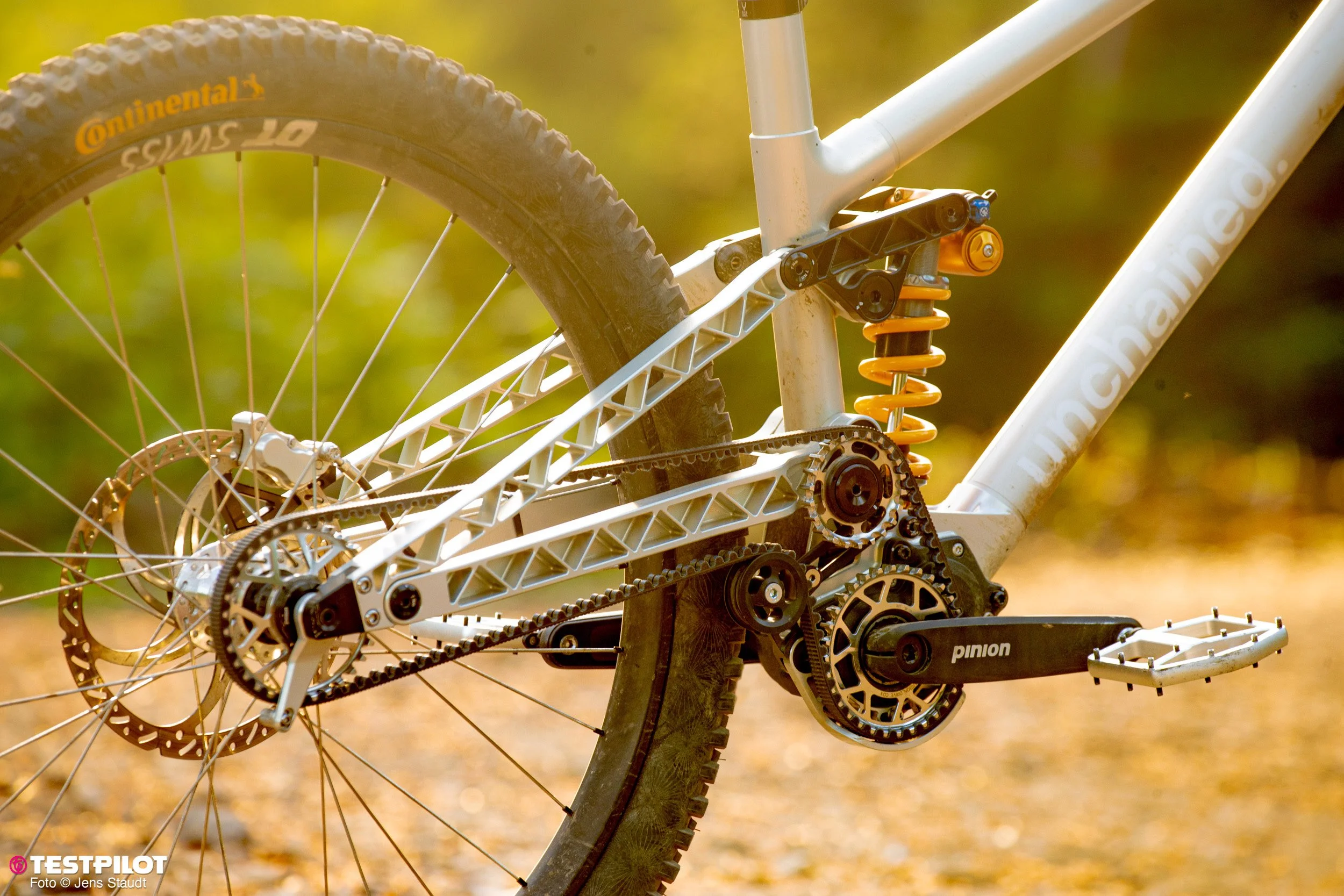
With Pinion's Smart.Shift gearbox, the derailleur problem would be solved. Additionally, the rear end looks much cleaner without a hanging derailleur and also offers a major performance advantage: the unsprung mass becomes smaller, which has a significantly positive effect on the suspension performance.
A cassette plus derailleur weighs around 750 to 850 grams—and that hangs on the rear wheel. This mass works against the shock and must be controlled by it. Due to the lower unsprung mass at the rear wheel, the rear end will respond more easily because the impact coming from the ground has to set less mass in motion.
Just like with the now-established 12-speed derailleur, Pinion's Smart.Shift box also provides what is common with cassettes and their spread of gears. The lowest gear is as light as with a conventional 1x12 drivetrain with about a 10–60 tooth ratio—that results in a range of 600%. They are experimenting with the shifting point – ultimately, it sits just before the dead center.
Axel and Laurent paid close attention to the chainline, ensuring it harmonized exactly with the Gates belt. A curious Gates field service representative visited the Unchained guys and checked the chainline with a laser measuring device. Result: perfectly solved, everything aligns wonderfully. Swiss precision also applies around Lake Geneva.
Since the gearbox is controlled via an electronic shifter, a battery sits in the down tube. Occasionally, this needs to be charged. The charging port is located behind the shock.
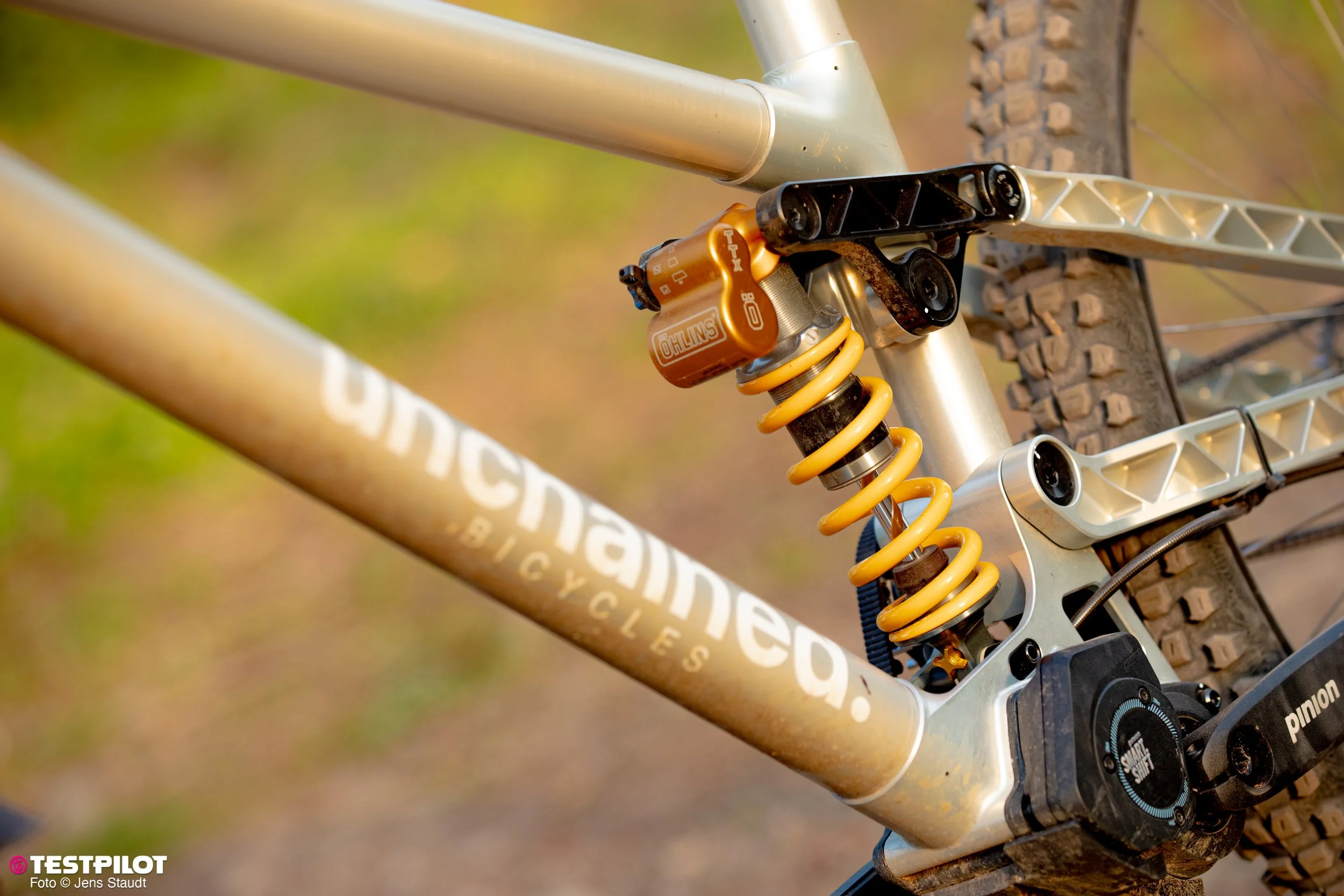
The Gates belt is kept under tension by an in-house constructed belt tensioner. This sits on the chainstay and moves with the stay as it compresses. This provides consistent belt tension—according to Axel, only about a 3% variance.
Low Maintenance
Not working on your bike all the time is another appealing thing that should really appeal to every biker. The installed Gates belt is not only lower maintenance since it doesn't need to be lubed like a chain, but it's also quieter while riding than a flapping chain. What else? Pinion's gearbox should only need an oil change after approximately 10,000 km—by which time a classic drivetrain would have unfortunately needed one or several replacements.
Aluminum Tubes and Lugs
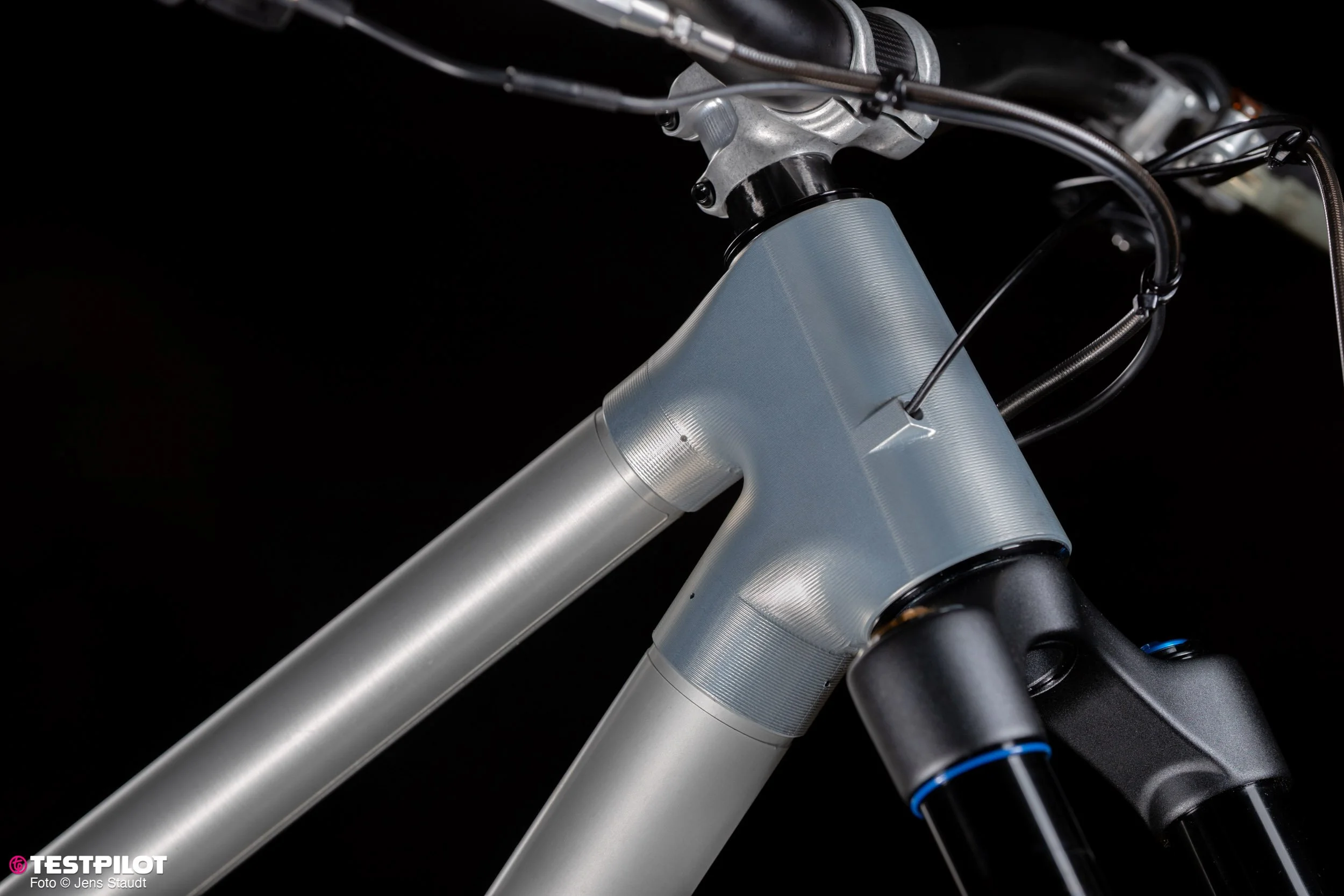
While the very first bike was still completely manufactured in Switzerland, the next ones will be "made in Europe". Milled parts come from Germany, tubes from France, and the final assembly takes place in Switzerland. At Unchained, the lugs and tubes are not just glued; the tubes are additionally screwed into the lugs.
A right-hand thread at the head tube and a left-hand thread at the interface for the gearbox make it possible to screw the tubes in precisely after applying the adhesive. The thread needs to be cut 1 mm deep, so according to Axel, the total wall thickness cannot be less than 1.8 mm. The prototype used 2 mm thick 7075‑T6 aluminum tubes. For the production bike, they will most likely go down to 1.8 mm.
The special construction of screwing and gluing offers double security. One layer comes from the anodized surfaces. Since aluminum quickly oxidizes invisibly in air and this can create weak points during bonding, this effect is prevented by anodizing. Additionally, it keeps the pores in the material open, allowing the adhesive to penetrate later. This creates a stronger bond. The threaded connection isn't strictly necessary but feeds your craving for a good feeling.
The adhesive used, from the aerospace and boat racing industries, cures within seven days at room temperature. Subsequent straightening of the frame is not required.
Mid-High Pivot Rear end
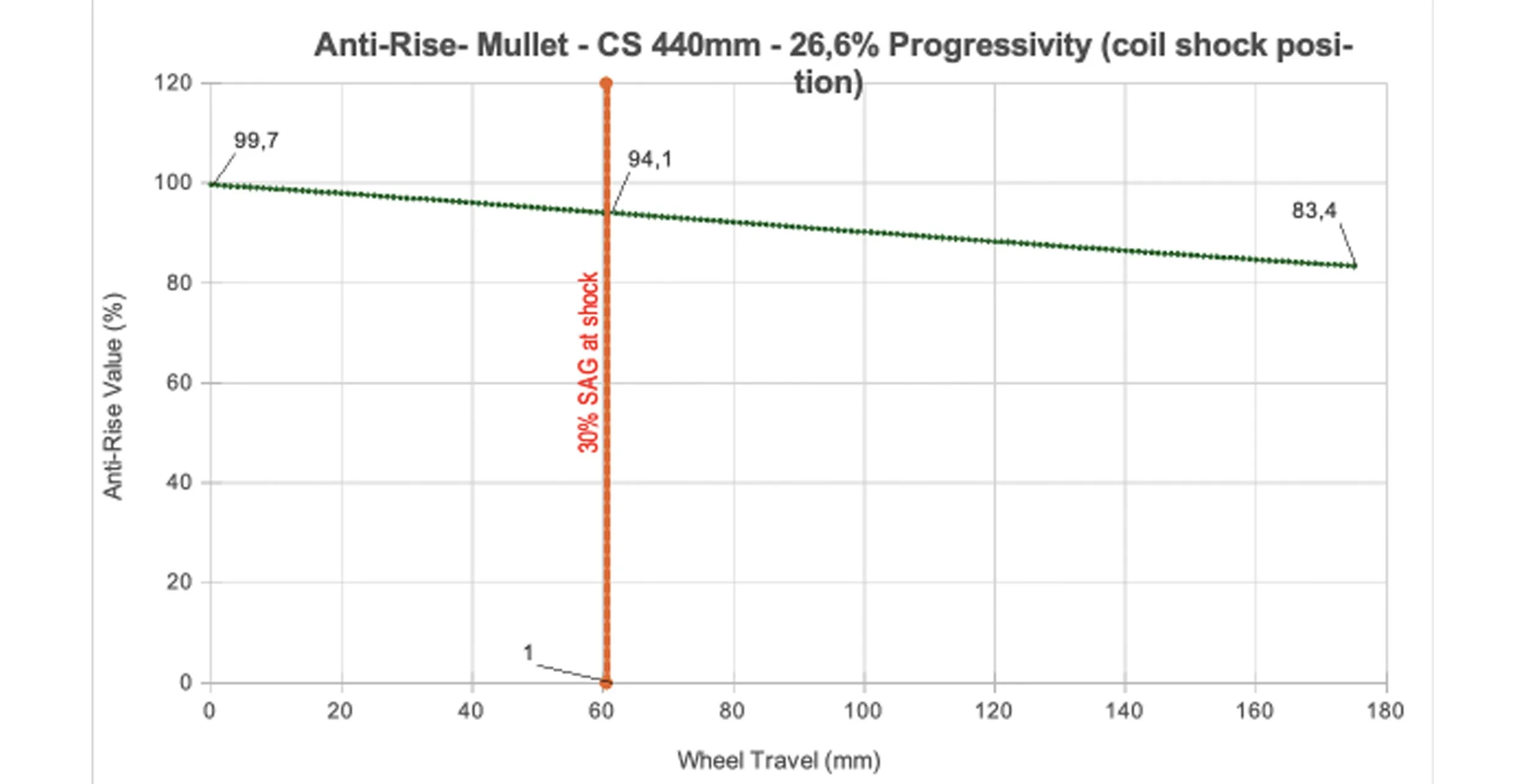
With the first prototype, Unchained relies on a mid-high-pivot rear end in a four-bar linkage design. Where a "true" high pivot brings certain variables that have disadvantages in practice (strongly lengthening chainstays under compression), they have taken the best of both worlds with the lower pivot placement. Improved bump absorption and the bike's center of mass are also optimized once again.
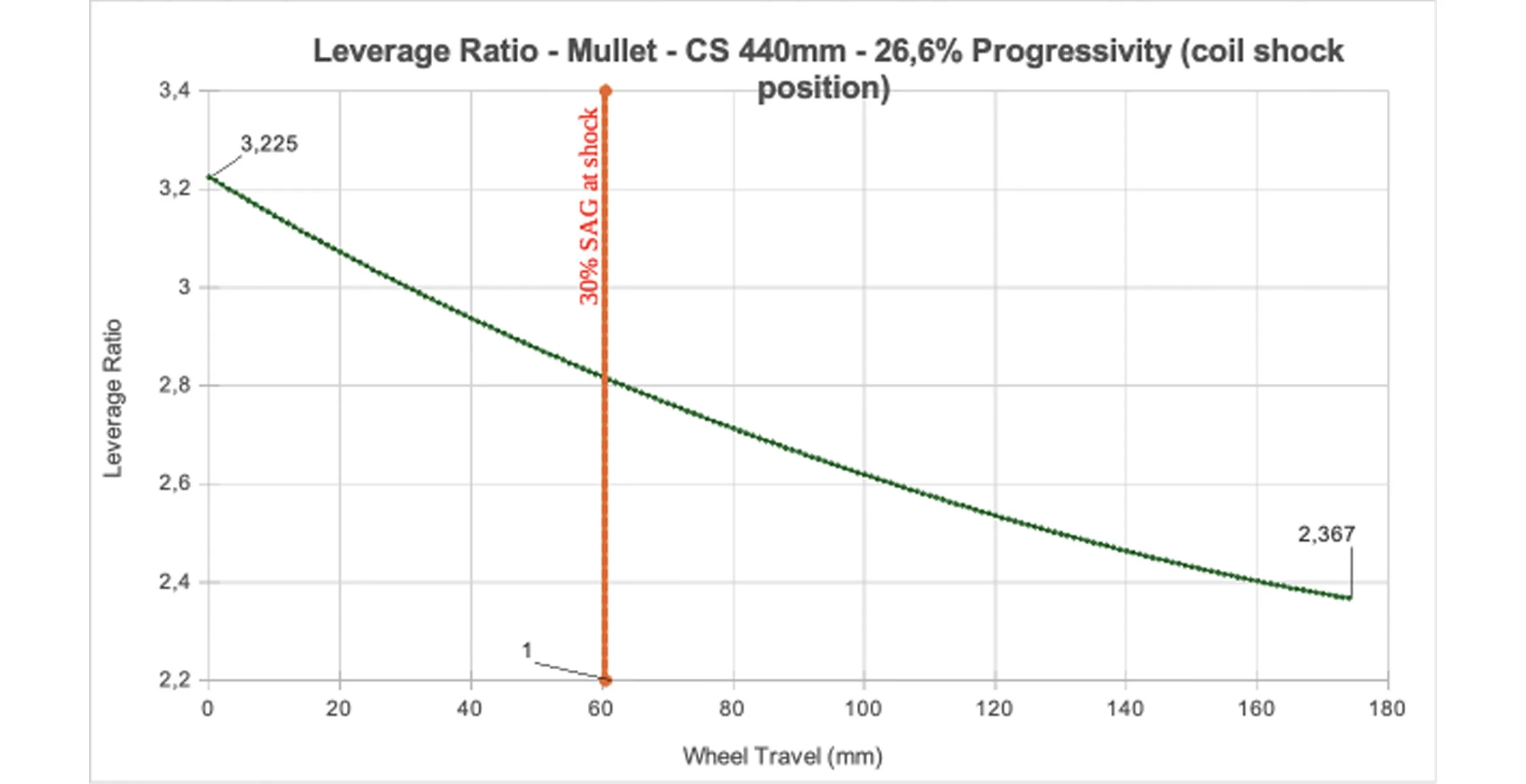
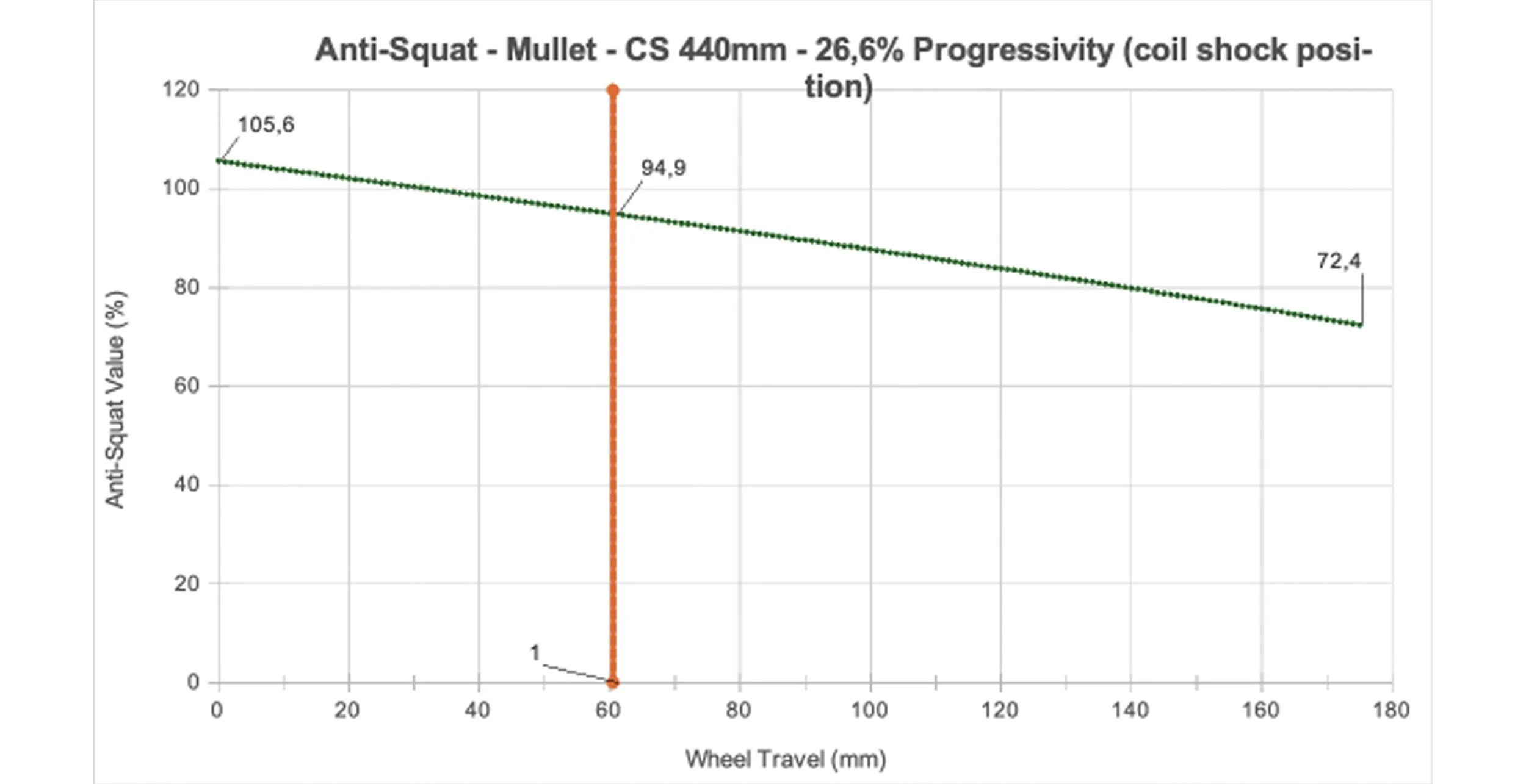
The spring curve and anti-squat were developed so that the rear end responds sensitively but also doesn't cost too much energy when pedaling.
Flex/Stiffness
Between the chainstays, a 5 mm thick plate made of 7075‑T6 aluminum is bolted in. This plate option will remain available on subsequent models. Depending on rider weight and riding style, this allows the handling characteristics of the Unchained bike to be customized. A thicker plate for more stiffness, or a thinner plate—or one of the same thickness with milled-out sections—for more flex in the rear end. During the first prototype testing phase, the two were satisfied with the 5 mm plate.
There is no connection between the seatstays, as they would collide with the rear tire during compression.
On the shock link of the current prototype, there is also a bolted 5 mm aluminum plate (7075 T6). On the next bike, however, the boltable option will be eliminated, and the link will become a fully milled part to reduce the load on the bearings.
Rear wheel Options
With two different dropouts, it is possible to install either a 27.5″ rear wheel or a 29″ rear wheel. In the 27.5″ version, the chainstays are 440 mm long—with up to 175 mm of travel. Meanwhile, with 460 mm chainstays, you can mount a 29″ wheel and increase the travel to 182 mm.
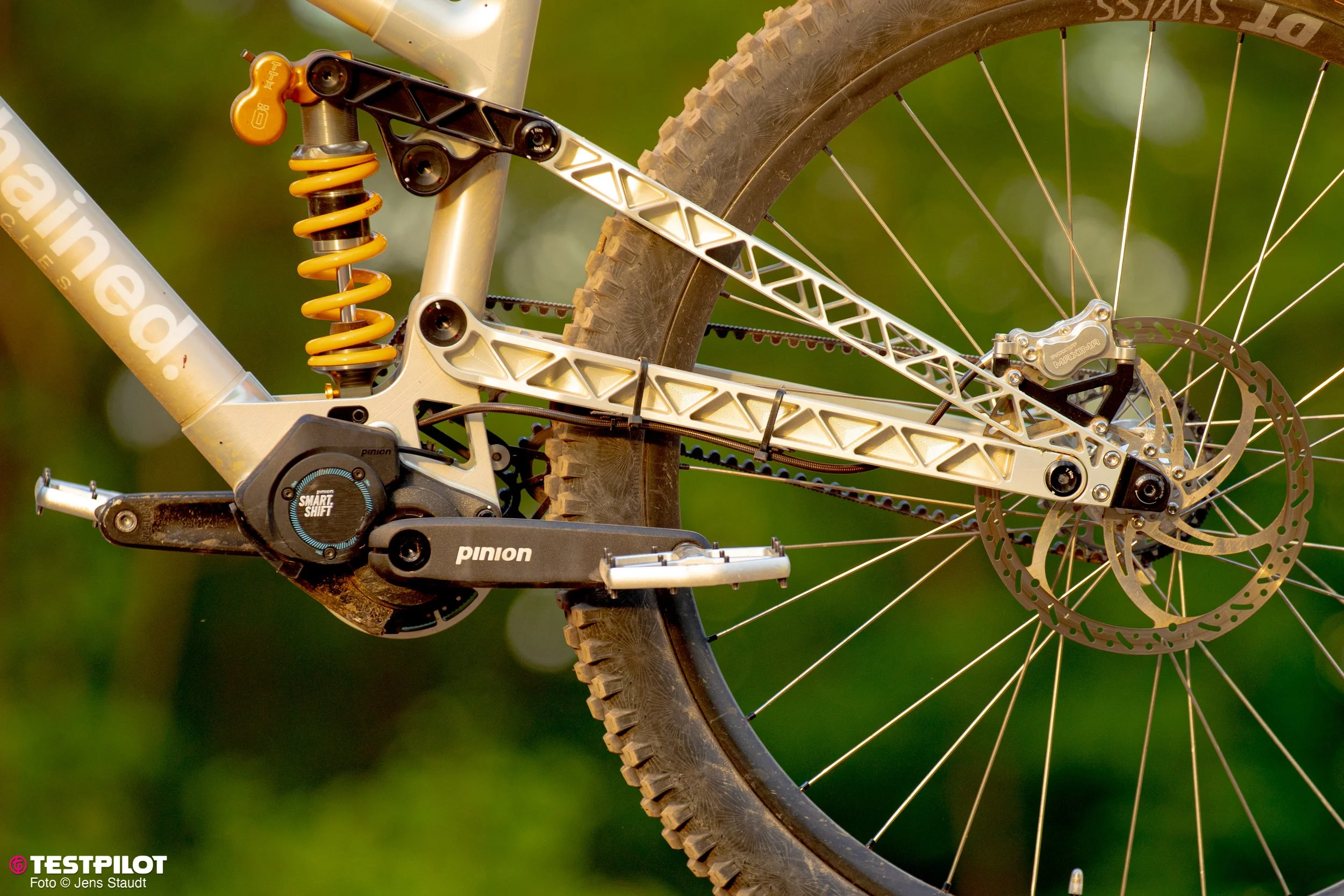
The dropouts are bolted on and can be swapped. Here with 440 mm length and 27.5 inch rear wheel.
Adjustable Progression
On the lower shock mount, a flip chip can be used to change the progression of the rear end to adapt the characteristic curve to a coil shock or an air shock. In the coil setting, you get 26% progression with 175 mm of travel and 21% progression for the air shock with 170 mm of travel—measured with the 440 mm chainstay and mullet wheel setup.
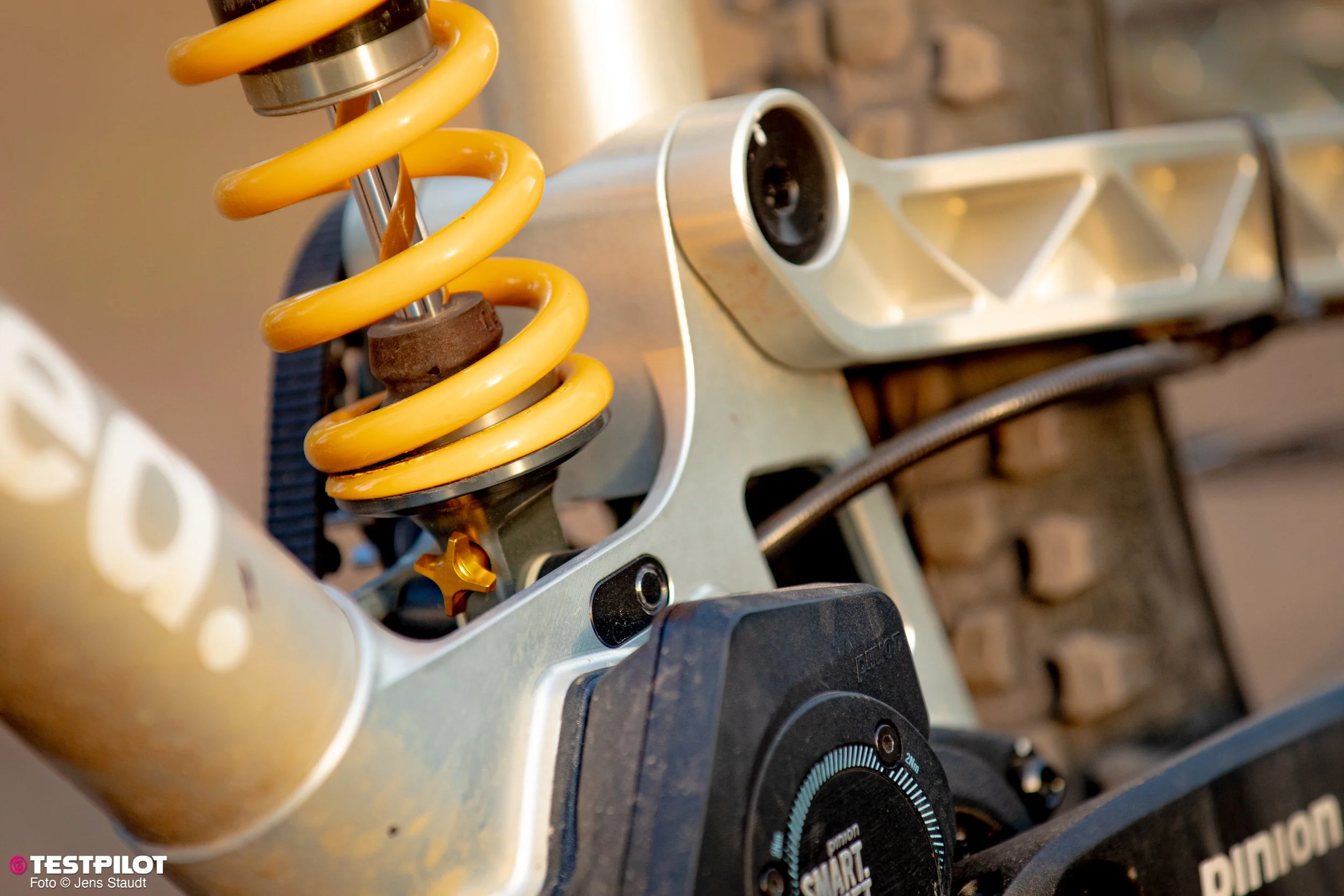
The flip chip on the lower shock mount offers 26% or 21% progression. Here it is in the coil setting with 26% and 175 mm of travel.
Weight of a Gearbox vs. a derailleur
What does a gearbox mean in terms of weight? In a pure numbers showdown, the derailleur still beats the gearbox—at the moment. Although some components like the large cassette and the derailleur are eliminated, the gearbox currently still tips the scales a bit more. However, the central weight positioning generally benefits the rider in terms of downhill performance.
Here is an example calculation:
| Component | SRAM X0 AXS + Bosch CX-R | Pinion C1.12 Smart.Shift |
|---|---|---|
| Derailleur | 466 g | – |
| Cassette | 345 g (10–52) | – |
| Chain / Belt | 256 g (12-speed chain) | 100 g (Gates CDX belt) |
| Shifter | 50 g (AXS Pod) | 70 g (TE-1 E-Trigger) |
| Crankset | 685 g | 486 g (Pinion Forge) |
| Chainring 32T | incl. crankset | 65 g |
| Smart.Shift gearbox | – | 2,100 g (C1.12 reference value) |
| Smart.Shift box | – | 169 g |
| Smart.Shift battery | – | 129 g |
| Total weight | 1,802 g | 3,119 g |
| Difference (Pinion vs. SRAM) | + 1,317 g → Pinion is heavier |
Geometry
Currently there is only one frame size. The geometry of the first prototype has proven itself for Axel and Laurent and will therefore remain unchanged for the next bikes. Here is the overview:
| Reach | 475 mm |
| Stack | 630 mm |
| Wheelbase | 1270 mm (27.5") |
| Head angle | 63.5° |
| Seat angle | 77.5° |
| Chainstay | 440 mm (27.5" rear wheel) – 460 mm (29" rear wheel) |
| Bottom bracket height | 345 mm (depends on wheel size and axle height) |
| Head tube | 120 mm |
| Top tube | 618 mm |
| Chainstay growth | max. 18 mm with 27.5" |
| Progression | 21% for air and 26% for coil |
| Travel |
27.5": 175 mm coil, 170 mm air 29": 182 mm with 460 mm chainstays |
Spec
| Component | Brand | Model |
|---|---|---|
| Frame | Unchained Bicycles | 1.0 |
| Wheels | DT | EXC 1200 3DEC |
| Brakes | Trickstuff | Maxima |
| Brake rotors | Trickstuff | 223/203 mm |
| Fork | Öhlins | RFX 38 M3 AIR |
| Shock | Öhlins | TTX2Air m.2 205x65 TM |
| Gearbox | Pinion | C1.12i Smartshift |
| Crankset | Pinion | Forge 165 mm |
| Belt | Gates | CDX 11M-125T-12CTS BLACK |
| Belt tensioner | Unchained | in-house design |
| Handlebar | BikeYoke | Barmate Carbon 50 mm rise |
| Stem | BikeYoke | Barkeeper RFF 35mm |
Prototype Prozess
How and where had the bike been tested so far?
Finale, Valis, Spain—up to 2,000-meter peaks, from rough terrain to flowy, muddy, and dry conditions.
Axel and Laurent have been busy during the prototype phase. Even though nothing major was changed on the bike during the first test phase, the next Unchained will be optimized in a few areas. Axel gave us transparent insights:
The rear end will be converted from a four-bar linkage to a split pivot. The suspension curves will remain almost the same. Therefore, they assume that the handling will remain identical.
The belt tensioner on the front sprocket will eventually be held under tension by a spring instead of a rubber band. During the testing phase, the rubber band broke—we experienced the same issue during the Kavenz VHP16 G2 test.
The lower belt guide on the rear sprocket will move about 1 cm forward so that it sits where the belt meets the sprocket. Currently, there is a small pin there—this will be replaced by a slightly larger, ball-bearing mounted roller.
A mounting point for a water bottle will be added on the down tube.
A tool mount attachment will be added to the underside of the top tube.
The milled-out recesses on the seatstays will be filled.
At the end of May, three new bikes, all in the previous size L, are expected to arrive. Two will be built with the new split pivot and one with the four-bar linkage design. One complete bike will then go to the EFBe test.
From summer onward, pre-orders should be possible. Delivery is planned for the end of autumn.
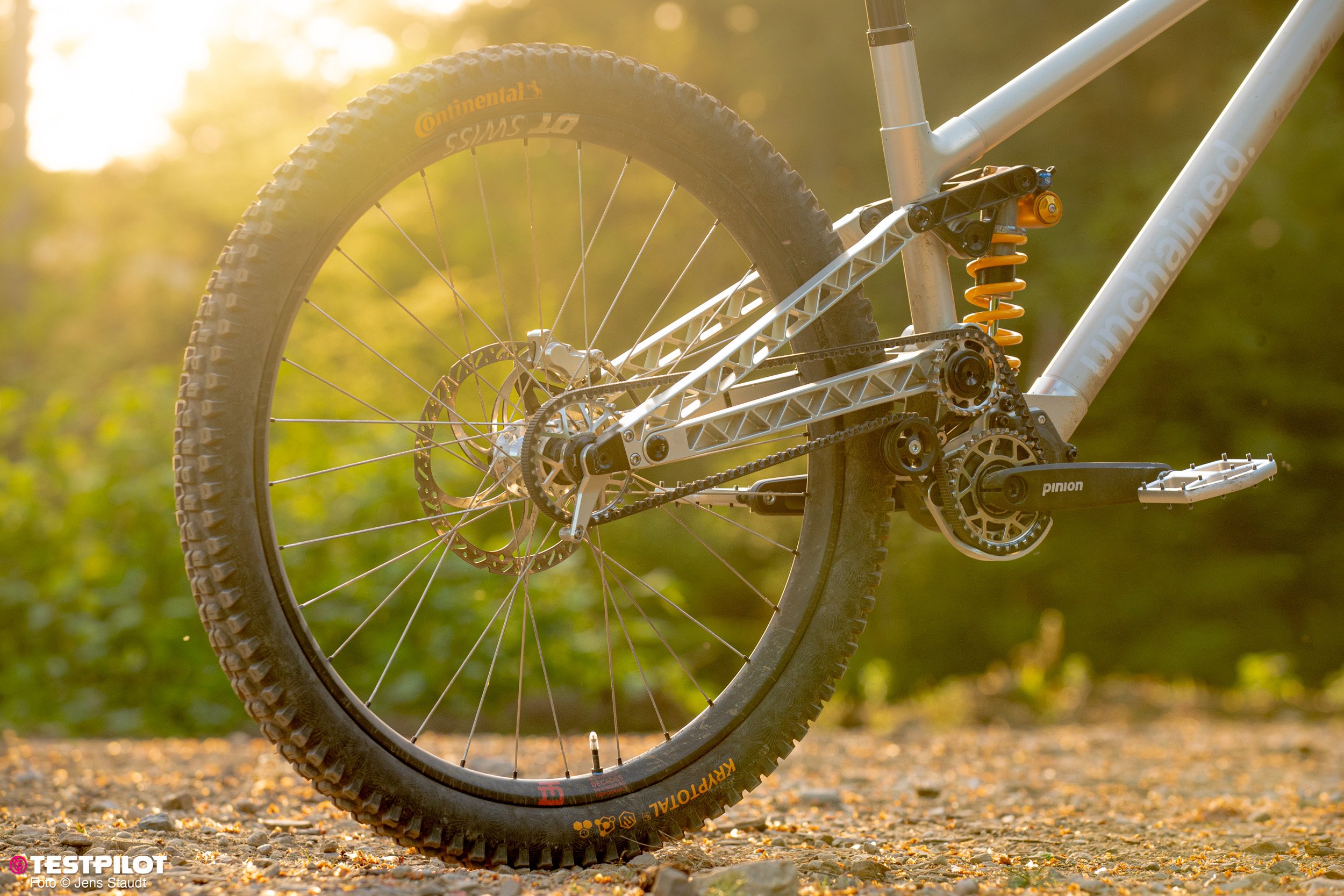
The belt guide on the rear sprocket will be redesigned. On the front belt tensioner, the black rubber band that holds the tensioner will be eliminated. Currently there is still no bottle cage mount; that is also changing. The milled-out recesses on the seatstay will be filled.
On the Trail
First ride impression from the Bike Festival Freiburg
We must not forget: we are riding a prototype. Not a production bike. But this prototype not only already looks incredibly close to production and damn good, it also feels superb. But let's start from the beginning…
At the Bike Festival Freiburg, we meet Axel in the parking lot. The Unchained bike next to him. Wow. Is that a prototype? The tube-and-lug combination is a widely spread method these days, but still, the frame looks quite unique and high-quality. The milled-out rear end is an eye-catcher and stands out from the crowd.
Without a derailleur, a bike simply looks tidy. However, you notice the weight of the gearbox the first time you lift it—the scales show 18 kg. So what is the handling like on technical trails, and even more so, the performance uphill? Time to find out.
Quick setup. During the first compression of the suspension, I look towards Axel, confused. What rider weight is the installed spring intended for? 85 kg. I weigh 75 kg. Still, it feels like I'm falling into a deep, soft cloud. Will it stay that way on the trail? First, I have to get uphill.
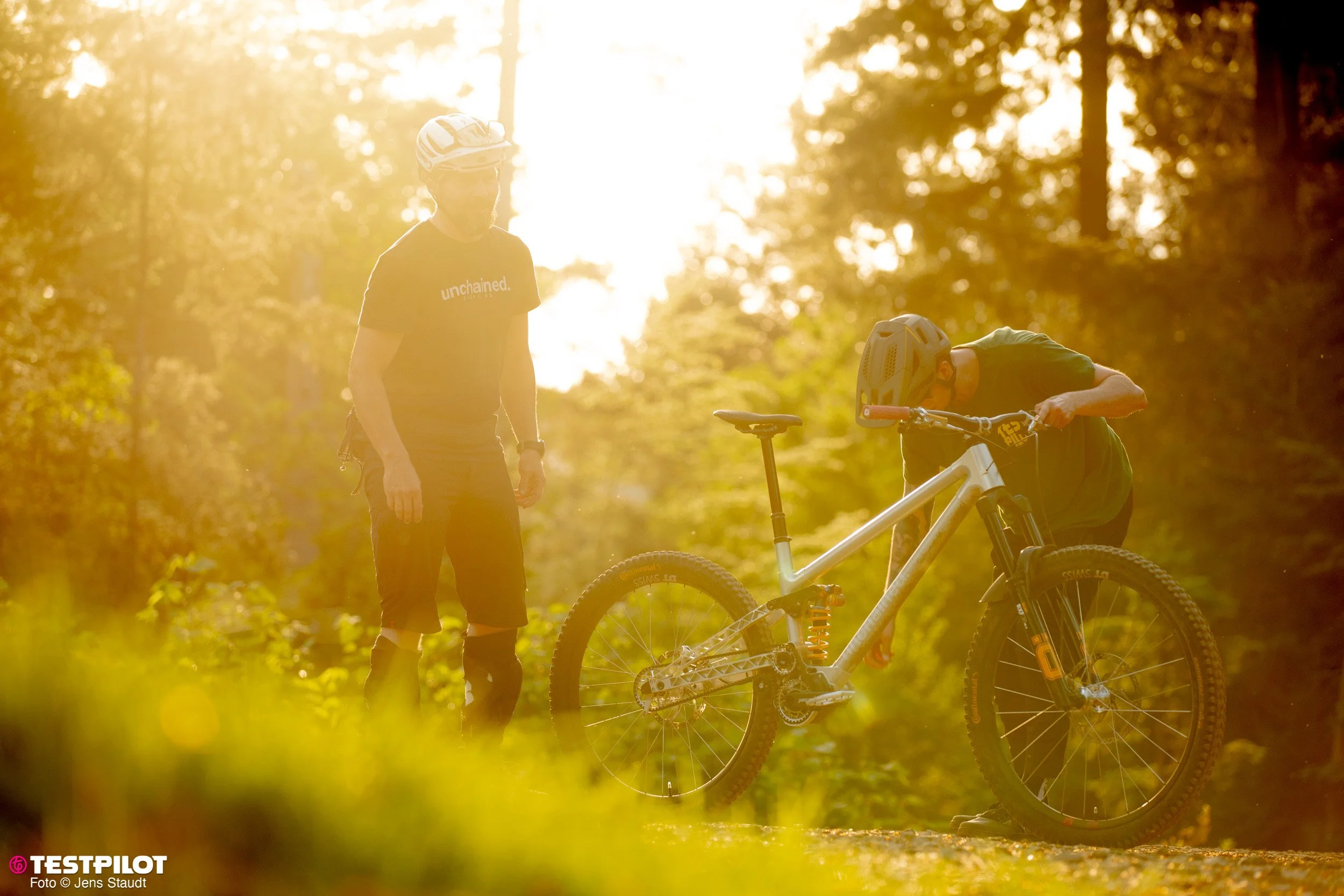
Axel, Yannick and the Unchained.
Uphill
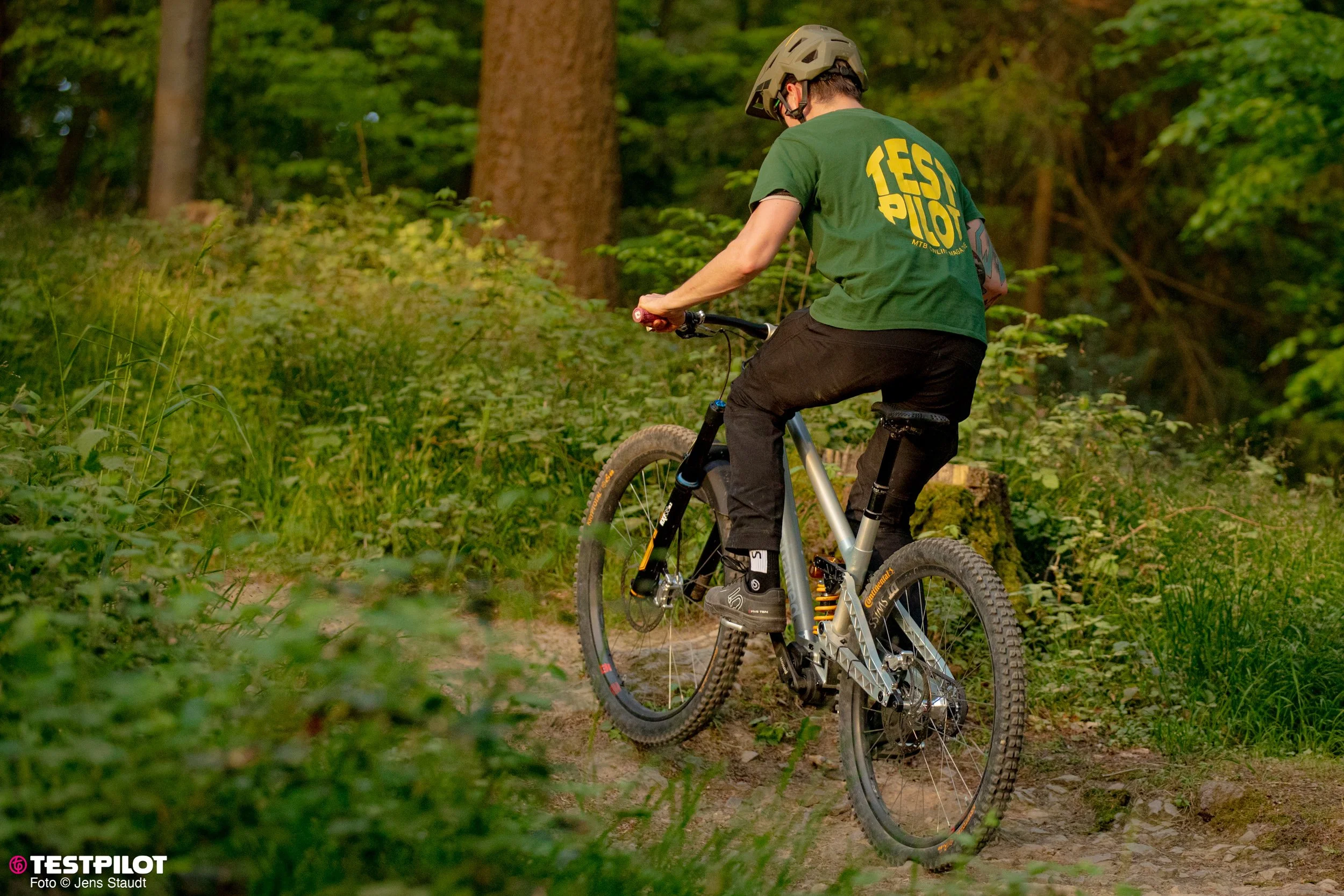
Gravel road toward the Borderline Trail. A short switch to a bike with a derailleur to compare back-to-back. Okay, let’s stay realistic: you can feel the gearbox. However, in the Unchained, it runs a bit smoother than in the Kavenz. Pinion states that it should be fully broken in after 1,000 km of riding. According to Axel, his bike and gearbox have around 500 km on them—we didn’t reach that in the Kavenz test.
You can’t deny that the gearbox costs a few extra watts on the climb. Either you’re fitter than the rest of the group, or you simply ride a bit slower. Still, it’s a comfortable climb. Upright riding position. Hardly any suspension, bobbing. Something I wouldn’t have expected after the first parking lot test. Do you notice the lower efficiency? Under hard pedaling, it feels slightly muted. Delusion? Maybe. But as soon as you’re pedaling consistently and the belt is under tension, you don’t notice it anymore.
As with all previous Pinion gearbox bikes, you first have to get used to the shifting behavior again. Push the shifter. Whirr. Click. The gear is engaged. It feels different from normal derailleurs. There’s no chain climbing or dropping. When shifting from gear four to five or eight to nine, you hear a longer shifting noise—inside the gearbox, it switches between different shift stages. If you stomp on the pedals at full power exactly at that moment (which is possible with the gearbox), it still takes a bit longer until the gear fully engages.
One advantage of the Smart.Shift system: you can shift while coasting without having to pedal. Especially on technical climbs, that’s a huge help.
Downhill
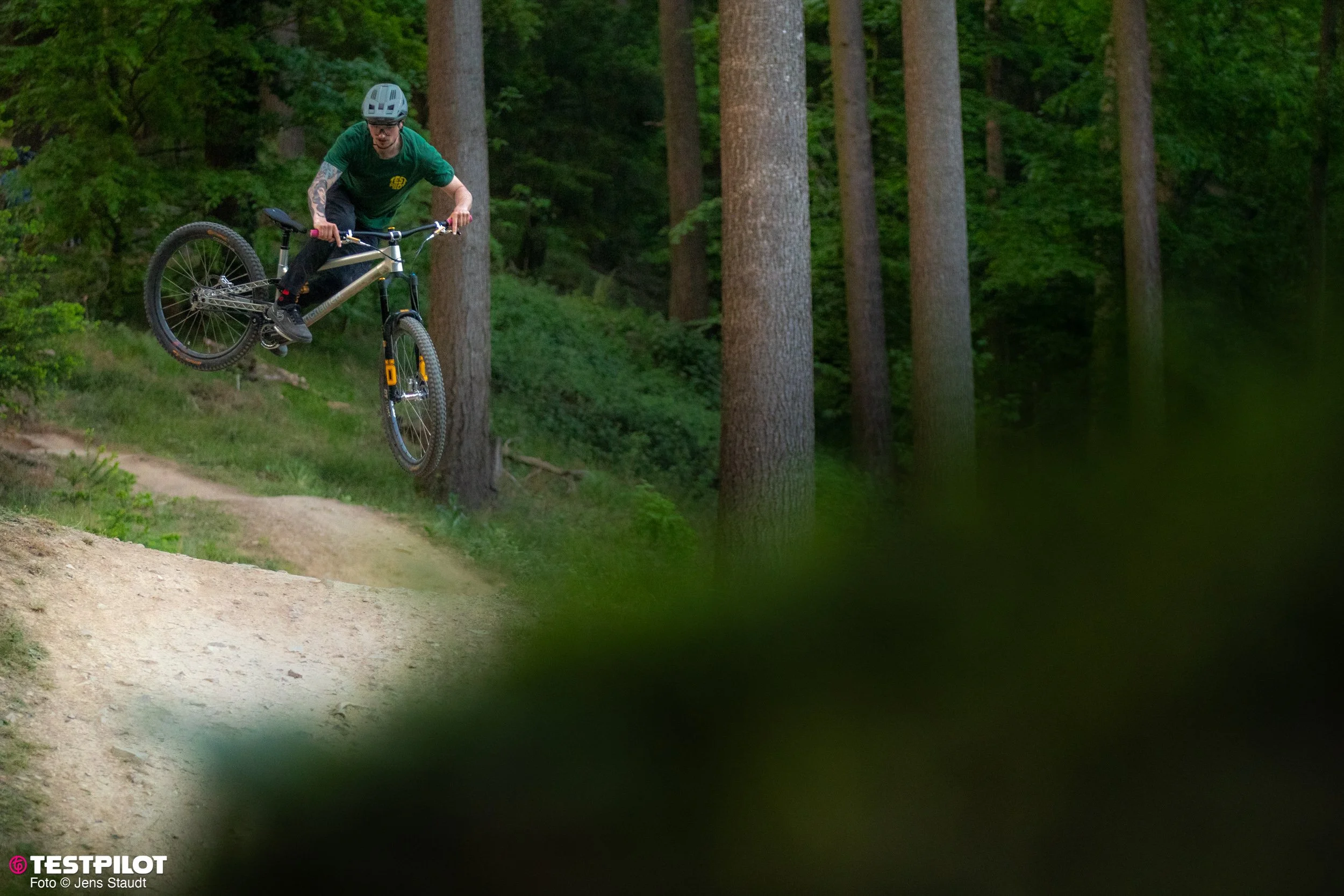
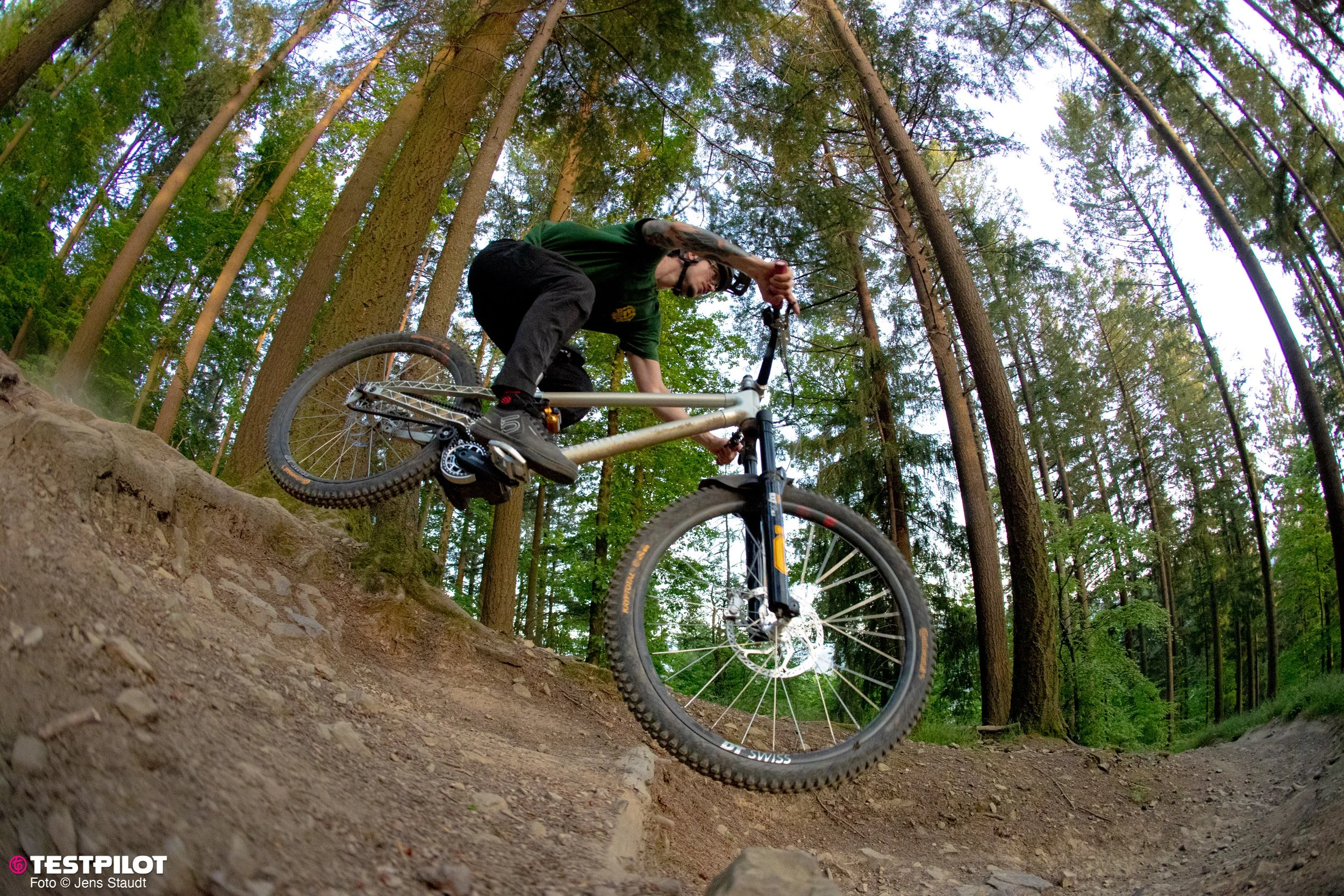
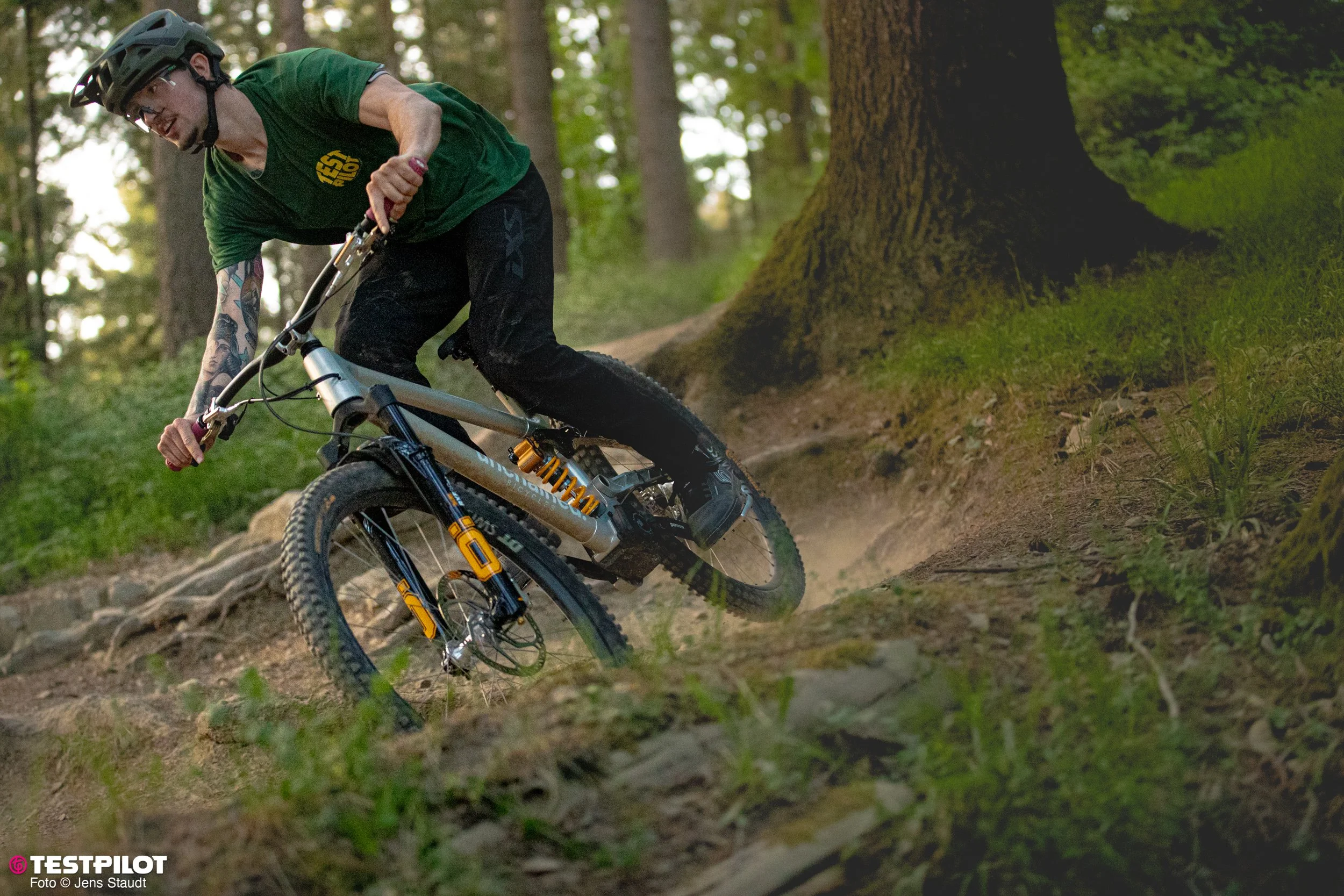
At the top. While standing still, I shift into a harder gear—simply because I can. Into the trail. Am I? Is this already the trail? Even bumpy, the first few meters feel like singletrack. I see the rocks, but I don’t feel them. The rear suspension’s sensitivity is insane. The Unchained just absorbs everything. Quiet and eager. I’m standing relaxed on the bike. Trophy-truck feeling—no matter how rough it gets.
What's confusing is, at the same time, you can effortlessly pop over obstacles. Eighteen kilos? It seems like the Unchained makes a mockery of physics. You can run the rebound faster than you normally would. Thanks to the gearbox’s central, low weight, the bike stays composed yet still sticks to the trail.
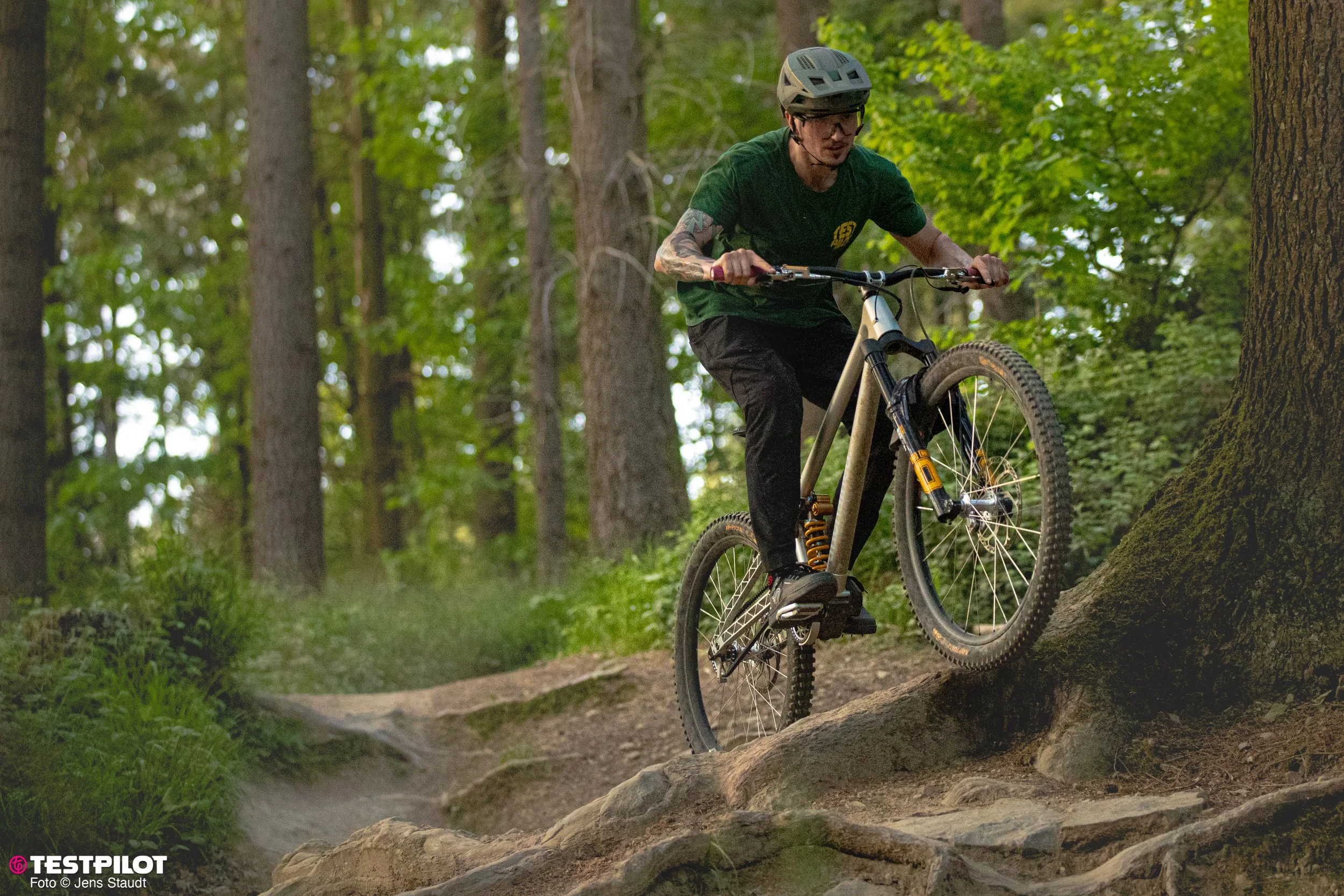
In direction changes and off small lips, it shows its agile side. With the reduced unsprung mass, the rear suspension responds extremely sensitively and works actively through the travel. You get an almost bottomless feel. Oh, a highline. The Unchained follows with precision. Maximum traction. In root-covered off-camber sections, the bike shines. Holding the line.
While the rear end excels here, it has to pay for it in other places. If you are looking for the highest precision in big berms and high-speed direction changes, you have to adapt. If you push hard into these sections, you can feel the flex. A thicker plate between the chainstays could counteract this. Since the seatstays will be filled in the next batch, that could also contribute to a more direct translation of input.
And hard impacts? If you think the Unchained just plows straight through its travel, you’re wrong. The progression sits well: it ramps up slightly toward the end of the travel and cushions hard landings smoothly but with control.
Conclusion
The first Unchained prototype already is on a level like many production bikes. From its looks and also the ride feel, it is something special. That’s all the more impressive considering it’s Axel and Laurent’s very first bike.
The rear suspension’s sensitivity and eagerness to absorb impacts will make any enduro rider’s heart beat faster—especially those who like to charge head-on into the roughest terrain. The chatter feels like it is switched off. Even though the bike seems glued to the ground in rough parts, it is still willing to get airborne. The rider gets from it what he wants. On the trail you sometimes have the feeling it magically lost some weight.
On the climbs, though, you should take things a bit easier—you can feel the gearbox. But crushing Strava times, that’s what XC bikes are for, right? On the trail, the gearbox redeems itself with the ability to shift without pedaling. Thanks to the constantly tensioned Gates belt, the Unchained glides over the trail in silence. If you’re looking for maximum downhill fun paired with a unique, refined aesthetic, you should definitely keep an eye on Unchained once it reaches market readiness.
You’ll find Unchained updates on their Instagram, and they’re also working full speed on their website.
If you want to stay up to date, you should subscribe to their channel and sign up for their newsletter.
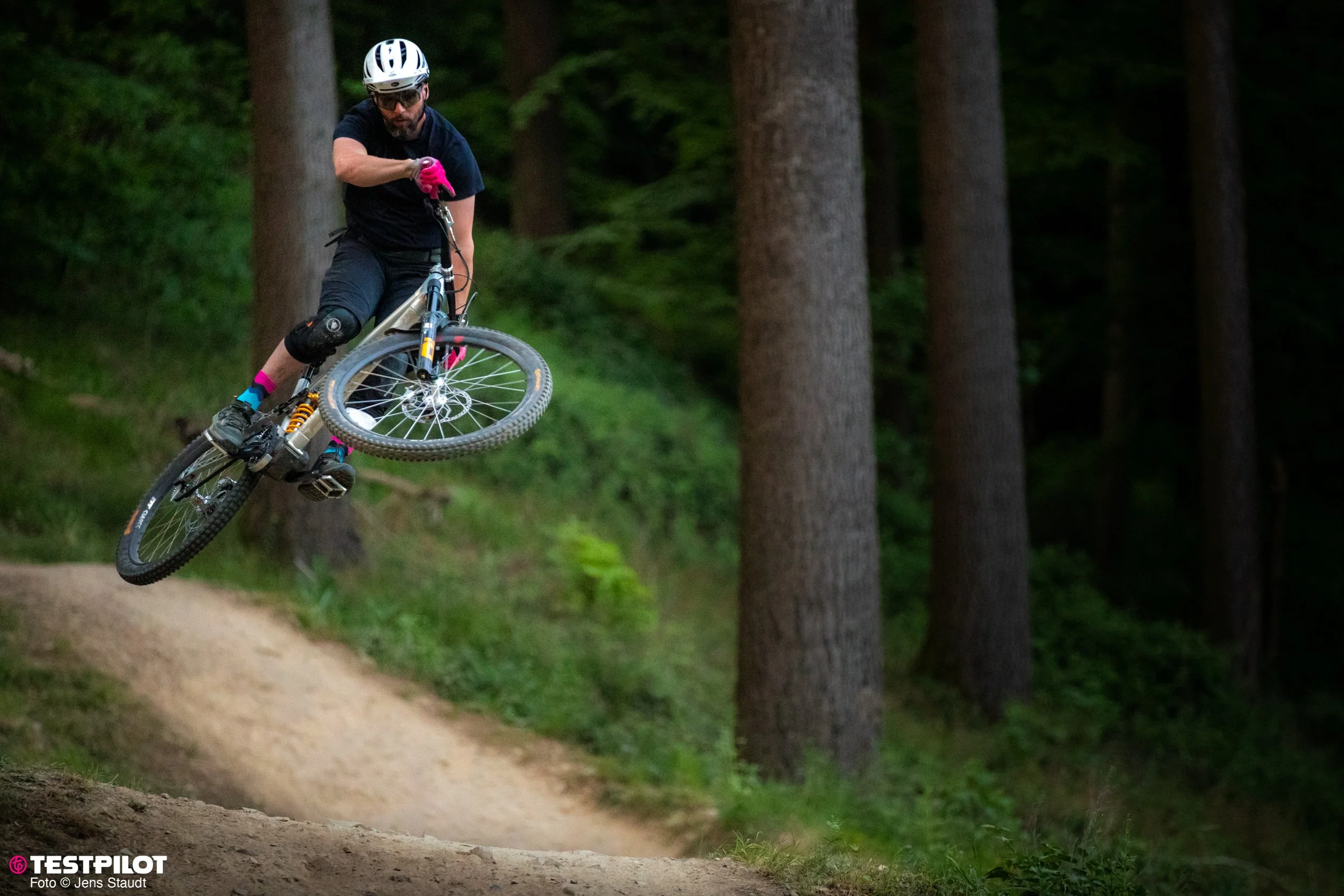
Axle still got it and moves the Unchained to its intended use.
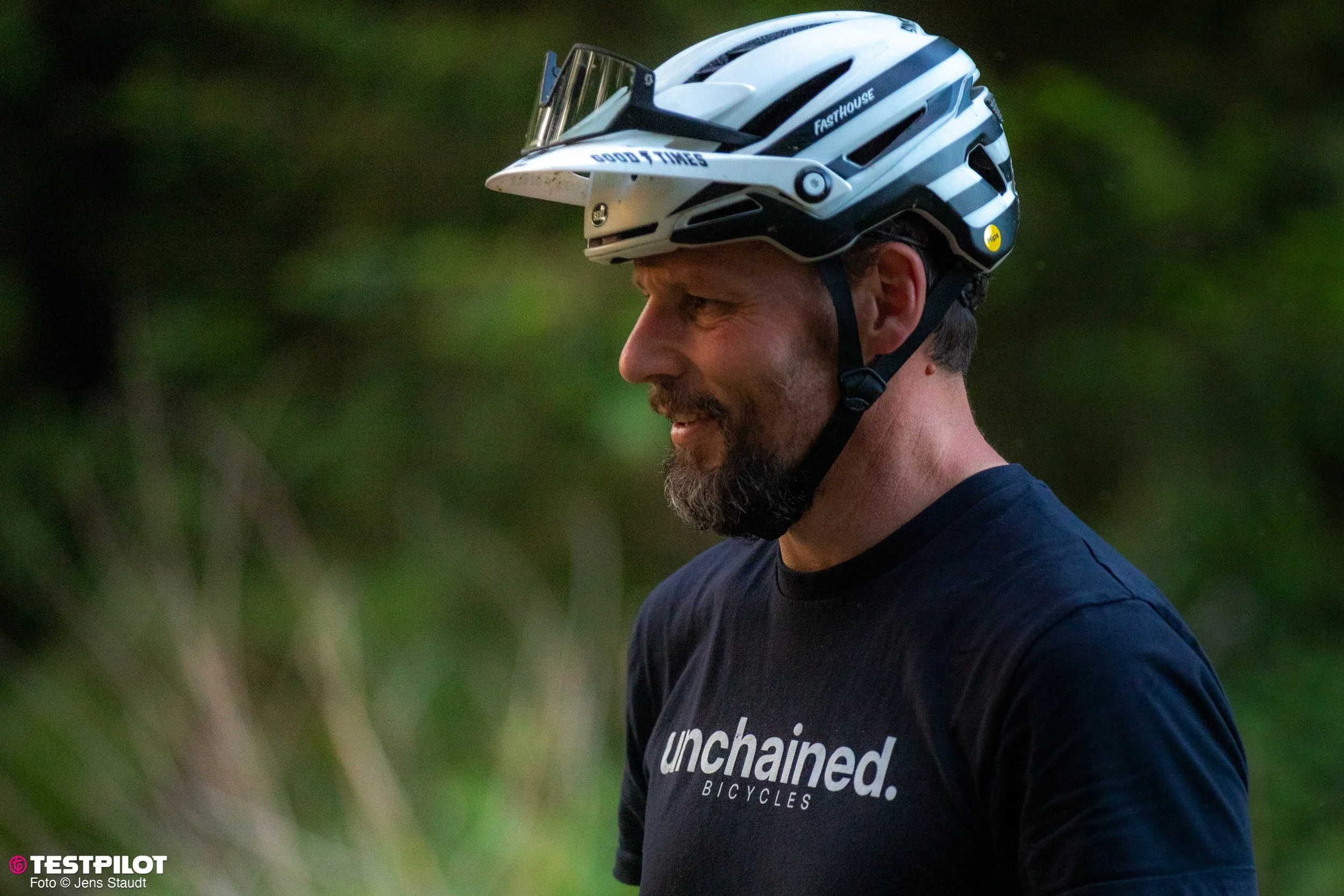
Axel from Unchained Bicycles.

Ihr wollt mehr Tests?
Autor – YANNICK NOLL

Größe: 178 cm
Gewicht: 75 kg
Fahrstil: Als ehemaliger Racer darf es gerne schnell und flüssig sein. Größere Sprünge und steile Rampen dürfen aber auch nicht fehlen. Das Bike ist etwas straffer und schneller abgestimmt, dass es entsprechend schnell auf Input vom Fahrer reagiert.
Motivation: Es soll Spaß machen. Ein Bike sollte nicht langweilig, alles platt bügeln. Der Charakter darf etwas lebendiger sein. Bei der Abstimmung, wie auch beim Fahrstil. Das Produkt sollte haltbar sein und auch auf längeren Biketrips sorgenfrei funktionieren.