

Review: RMU Nighttrain, The Freeride Punk Sled
Reading time: 9–11 minutes
If ski freeride punks get professional and build their own skis and technical apparel, you might be up for a surprise. They need to play in the summer too, right? So the RMU crew decided to hop on bikes and, well, build their very own toy. Born from late-night garage sessions, mountain culture, and an unwavering refusal to compromise, the Nighttrain isn't a diluted trail bike attempting to look tough. It is a full-throttle, muscle-powered freeride tool engineered to take some punishment. During Crankworx Whistler, I had the chance to take the Nighttrain out to play. Classic Whistler bike park laps, technical rock gardens, high-speed jump lines, and a full day of raw loamers in Squamish. Getting into the weeds on testing: after one day, I swapped the Marzocchi Super Z against a Push Nine.One and the tires to the newest Maxxis DHX. This is my first impression.
RMU History & Background
Before we discuss the bike, we need to explain RMU. Rocky Mountain Underground is the new kid on the block for mountain bikes, but they are hardly strangers to gravity sports. You may know these guys from building freeride skis and weatherproof bags all while running mountain town hubs where you hang out after powder (and now dirt) runs with a cold one, live music, and good company.
Founders Mike Waesche, Luke Allen, Robby Burleson, and Chris Glynn built RMU on a simple premise: create the gear you actually want to use when conditions get wild. When it came to bikes, they didn't just want to stick their logo on an open-mold frame. And they don't have to do so. By lucky coincidence, they got introduced to suspension designer Dave Weagle, and well, together they brought their vision to life.
Why aluminum? Why 170 mm front and rear? And why no e-bike? The answer seems to be found in their ski heritage. RMU builds skis that survive high-speed impact, heavy landings, and daily abuse. Aluminum made a comeback as frame material, and yes, it can fail too, but when tomahawking your frame in a rock garden, would you rather have a sub-3 kg carbon frame or a heavy metal heart offering more wall thickness? Will some more weight on your frame ruin your ride? No.
Carbon, if done right, can provide a specific ride tune by doing specific layouts, variants in high/low modulus fiber, and A LOT of testing. Mountain bikes made of aluminum, even if I sound esoteric here, can do this too and still feel different. Ride dynamics are a (deep) rabbit hole, and if you like to go into it, you might listen to episodes 1 and 2 with the Dave Weagle podcast..
170 mm of travel sits right in this particular sweet spot, enough suspension depth to swallow Whistler Bike Park bomb craters, yet not too excessive to pedal up Squamish fire roads and connectors. And an e-bike? Not here yet. RMU kept it 100% muscle-driven, creating a pure, unfiltered gravity machine built to be ridden hard above all else.
RMU Nighttrain and ORION Mid Pivot Suspension
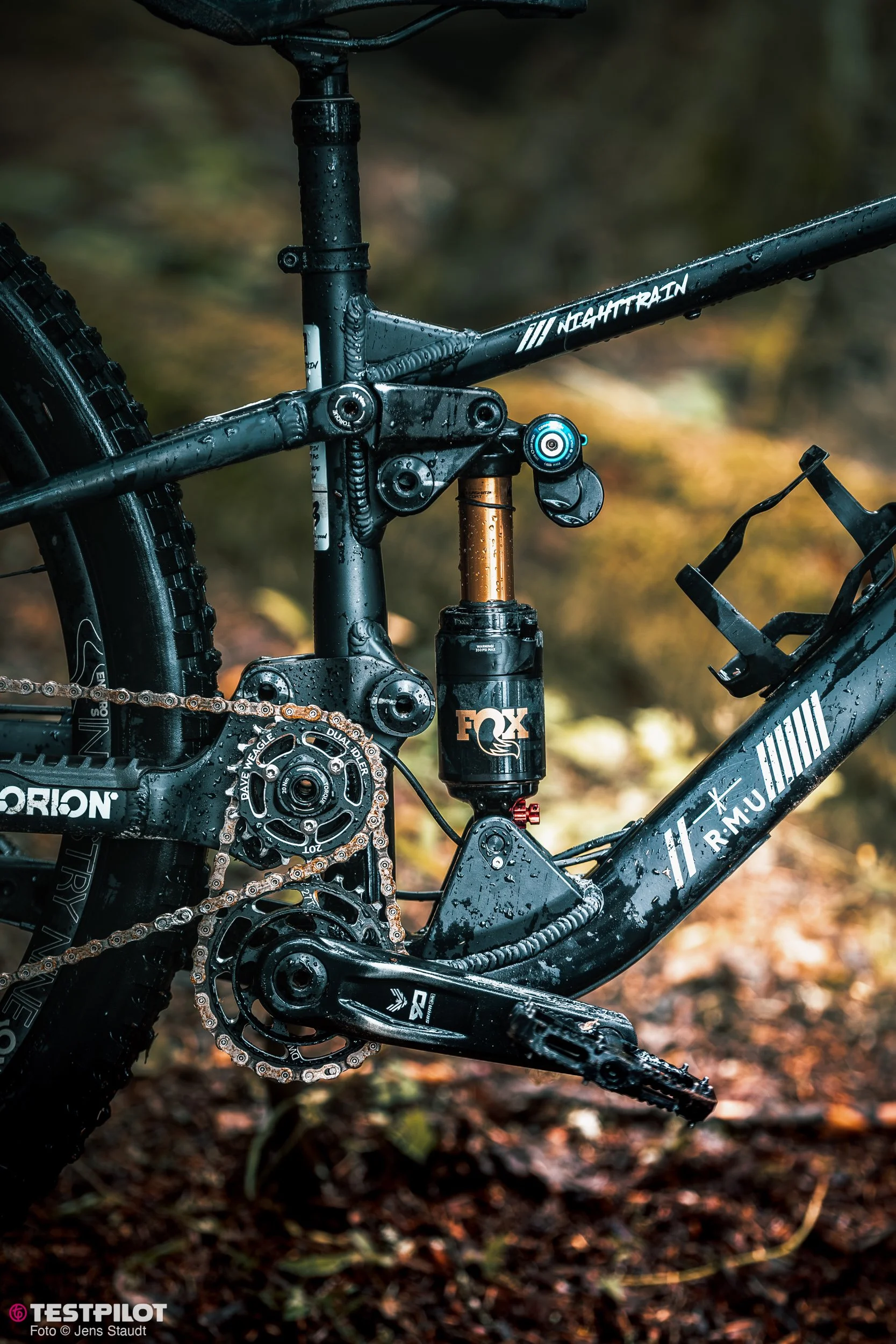
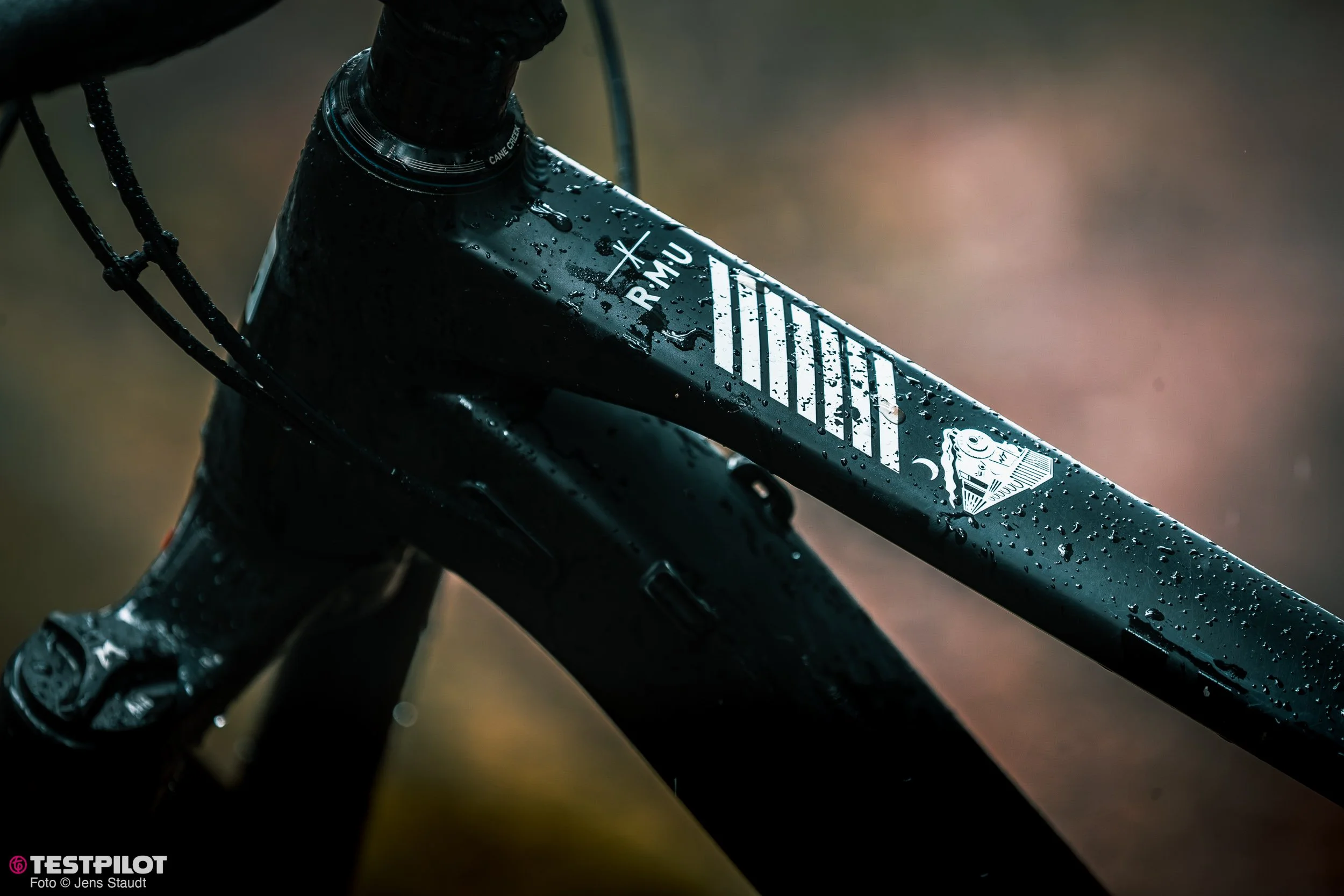
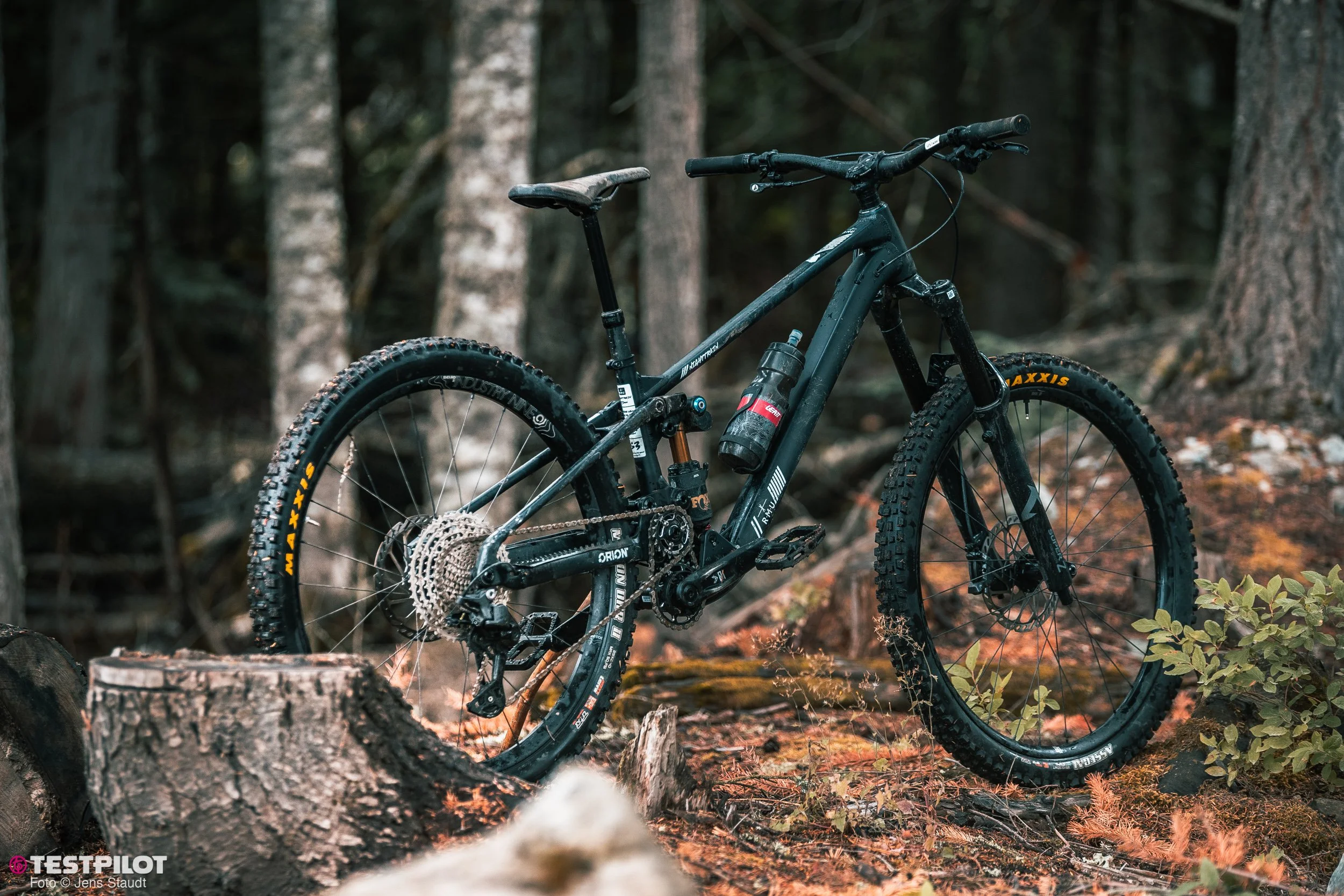
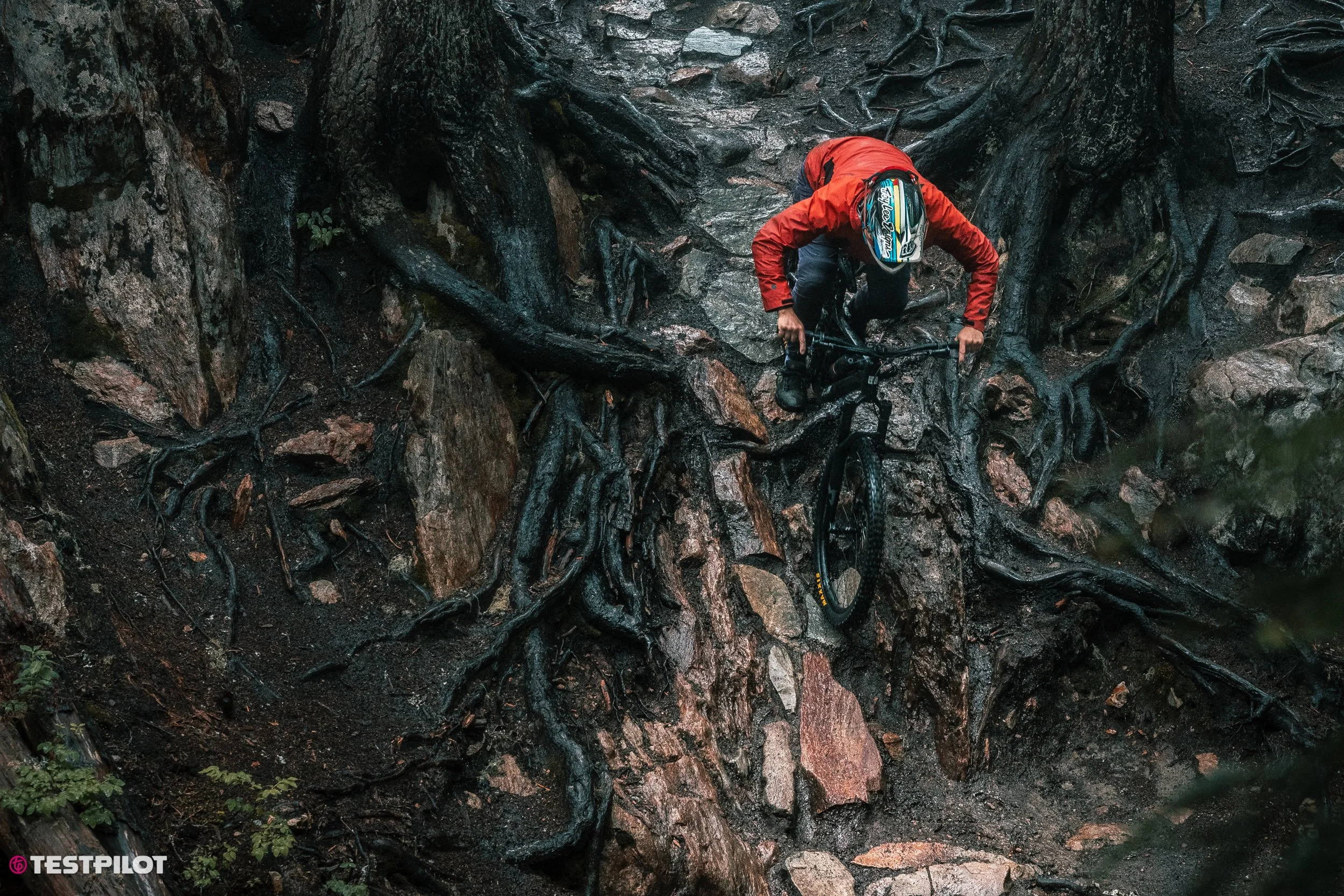
The wet conditions claimed tribute. The demo bike had already some miles on it.
Looking out there at the current market offerings, there is a clear comeback of the 170 mm category. No motor, bike park, and freeride sleds, burly, capable, and unapologetic. The Nighttrain aims directly at all of this and, as often claimed by many brands, wants to bridge the gap between plowness, square-edge traction, and popping over jump trails. All while not wearing you out when earning your turns by turning the pedals on your own.
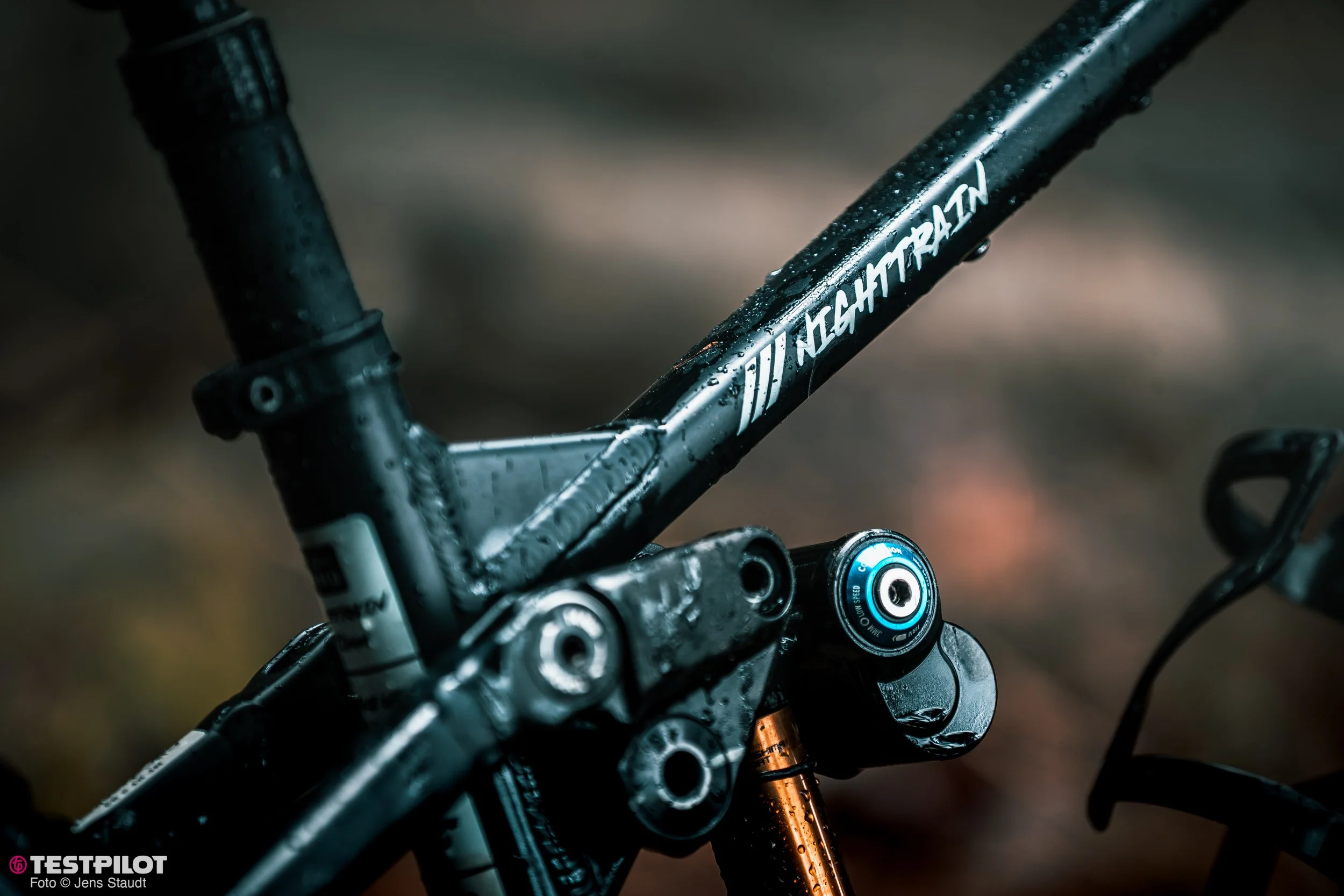
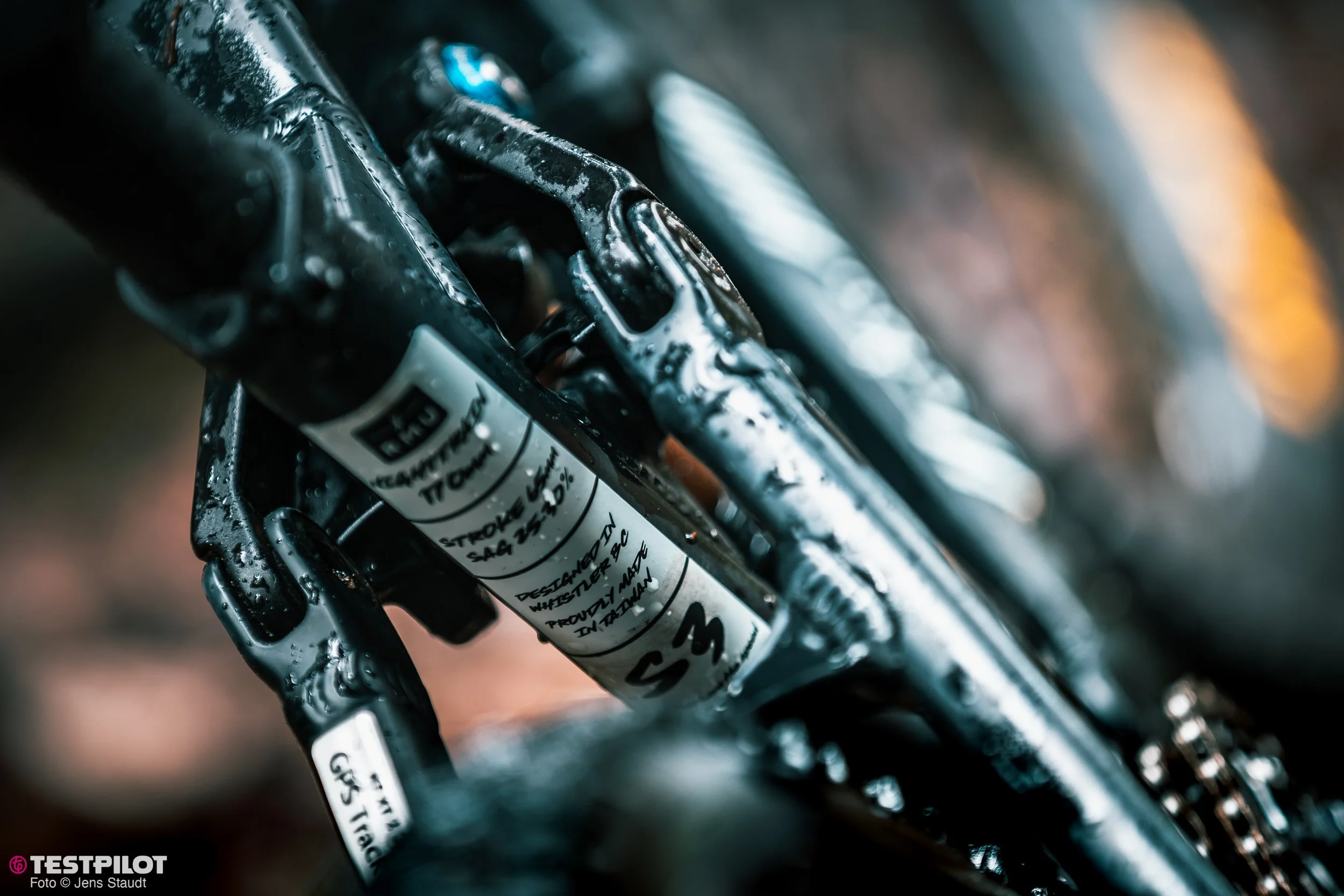
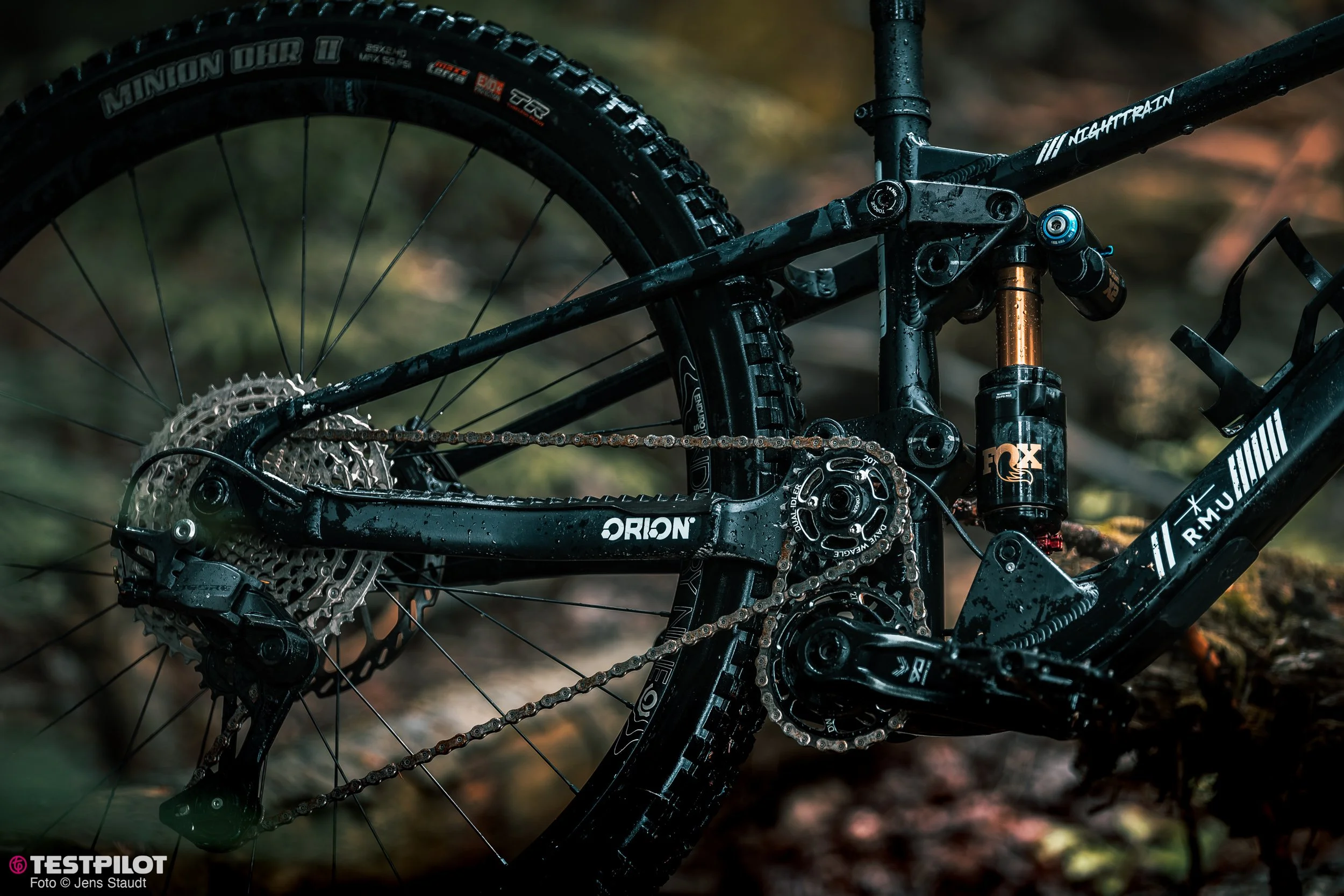
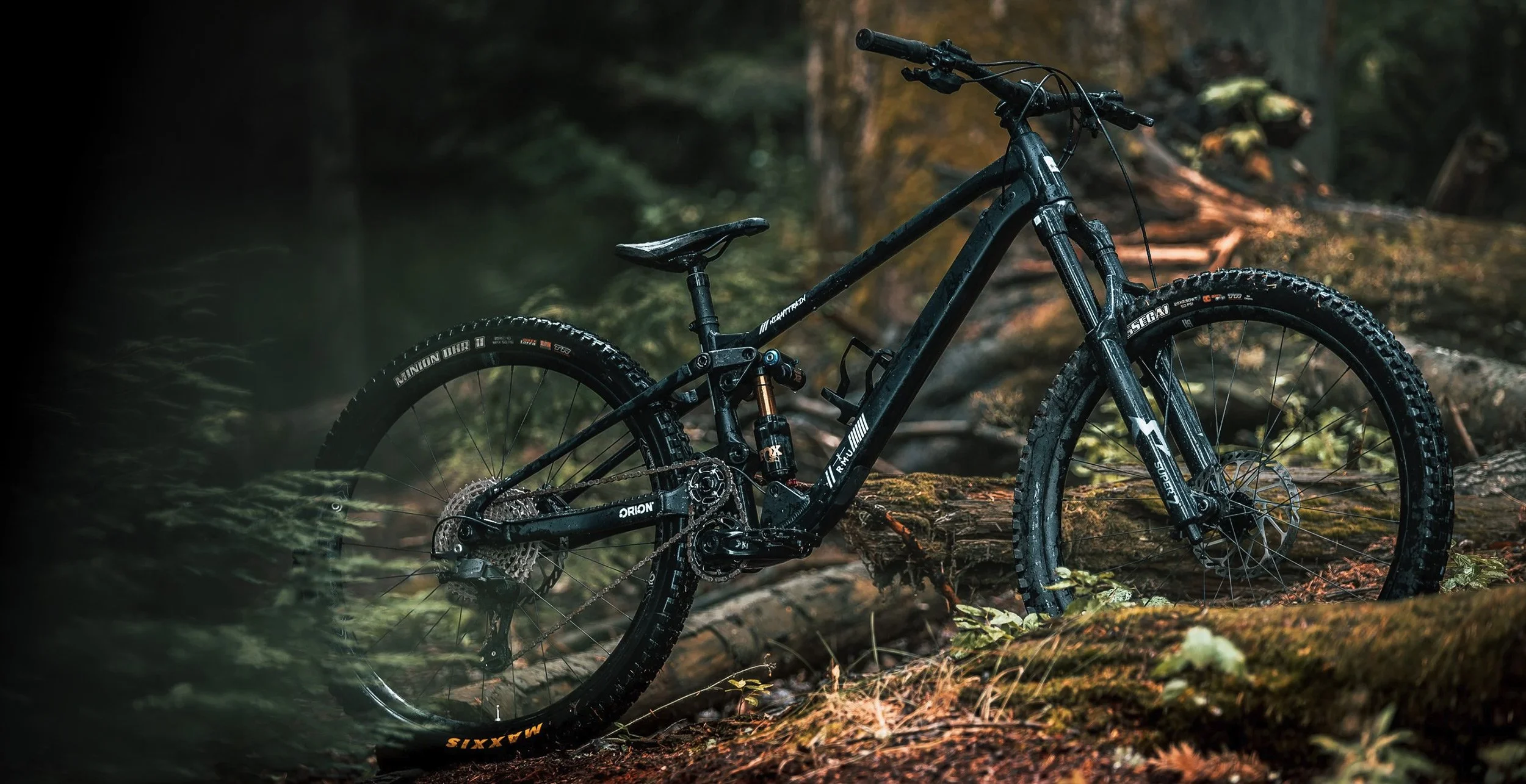
As stated, the alloy frame is not aiming at weight in Excel-sheet-bike-building competitions. It sits just under 4 kg without a shock (medium frame). An ORION decal is sitting proudly on the rear end. Looking from the non-drive side, you might scratch your head at first because so much is going on with the linkage. You will find similarities in the pivot concepts on a Pivot Phoenix DH bike (which utilizes Weagle’s DW6 layout) or Atherton's A-series bikes (yep—Dave is also involved there). However, ORION is a distinct mid-pivot dual-link execution tailored specifically for long-travel all-mountain and freeride use.
Unlike the full downhill DW6 setup on the Pivot Phoenix, which uses a six-bar layout tailored for more rearward axle paths and dedicated downhill tracks, the ORION (paired with a flex stay) layout on the Nighttrain utilizes the so-called mid-pivot placement. This delivers a moderately rearward axle path early in the stroke to erase harsh square-edge bumps without requiring a draggy/loud idler pulley. As the bike compresses deeper into its 170 mm travel, the system claims to maintain a neutral anti-squat characteristic, and (spoiler) even with no system like the Sidekick or DF my feet weren’t having a jackhammer time. The result is a rear end that stays remarkably composed under hard braking in chatter while offering a firm mid-stroke platform to push against when pumping berms or popping off jump lips.
By the nature of the design of routing your chain upwards, you could just go with an idler. Drag, noise, and a non-ideal enlacement of the chain around the front chainring have to be dealt with as a result. The solution: stacking a second idler behind the first one. This not only gives you peace of mind on keeping your chain up and running smoothly, but there is also a gearing ratio embedded. As a result, the front ring on your cranks gets smaller without sacrificing the go-fast gears and also gives you more ground clearance.
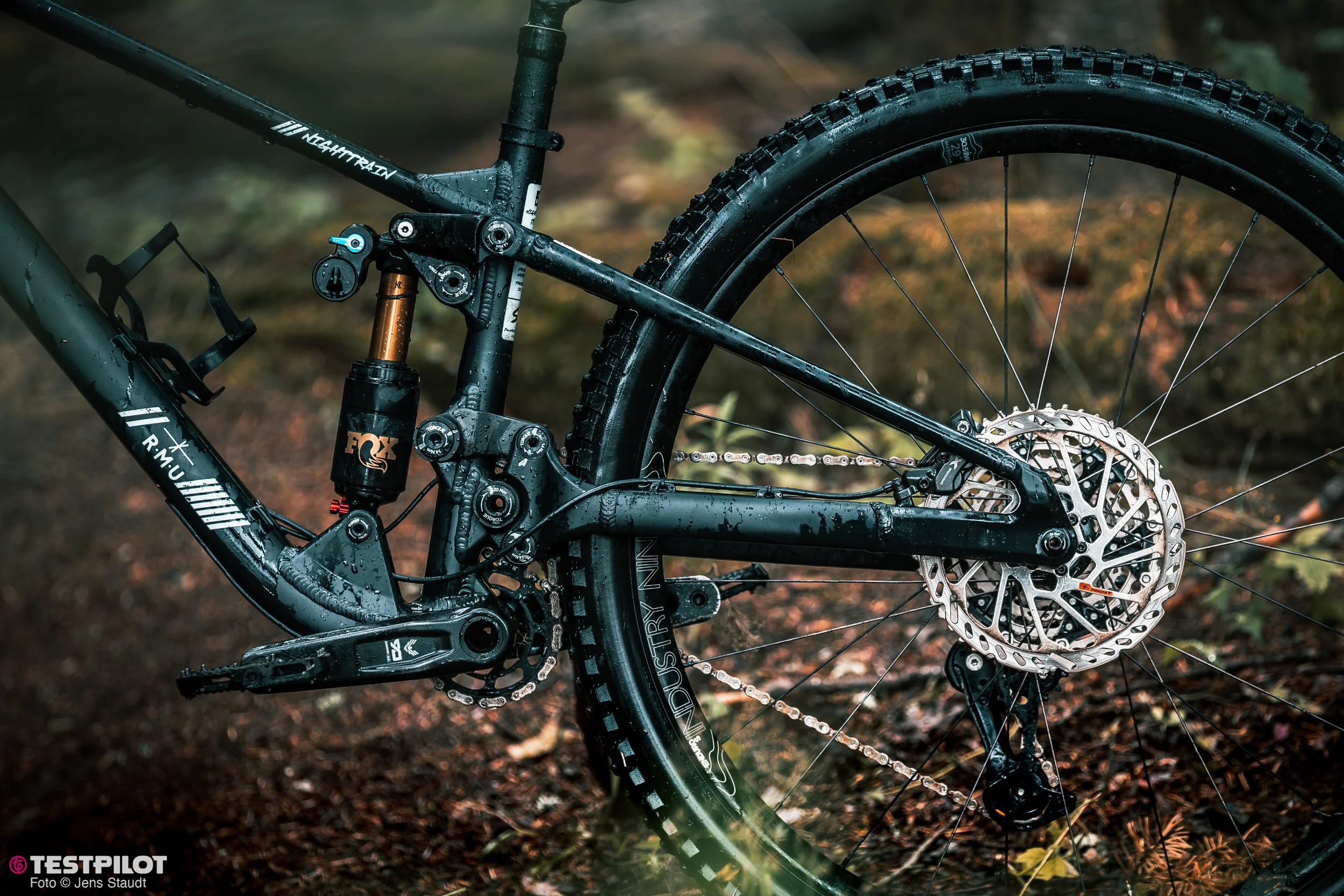
Upper stays are made to flex by design. Kinematics will lengthen the chainstays in a calculated way through travel.
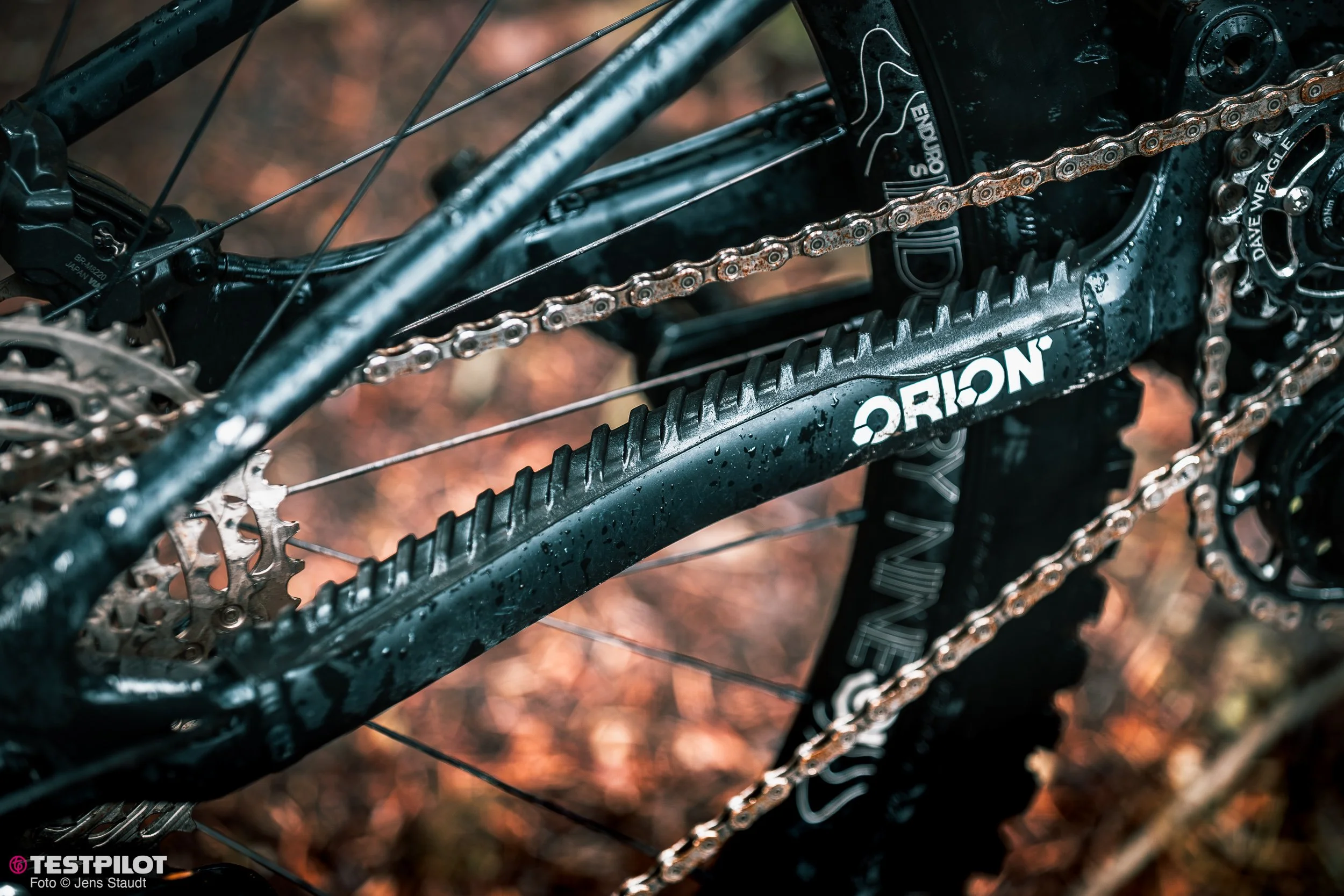
The ORION suspension design originally stems from a patented motocross linkage conceptualized by Dave Weagle to handle big impacts, isolate braking forces, and absorb square-edge hits without relying on an idler pulley. Sounds like a holy grail? The problem was the system had its challenges to be adapted for bicycles due to the spatial constraints of multi-ring front derailleurs. Once 1x single-chainring drivetrains became the universal mountain bike standard, Weagle was able to port the motorcycle patent over to bicycles, where it made its official debut in 2018 on the Esker Elkat, an aggressive 150mm 27.5-inch all-mountain bike. By utilizing short links revolving around a concentric bottom bracket pivot, the design aims to deliver higher lateral stiffness, active performance under heavy rear braking, and square-edge compliance, providing the blueprint that RMU now leverages and refines for the 170mm Nighttrain.
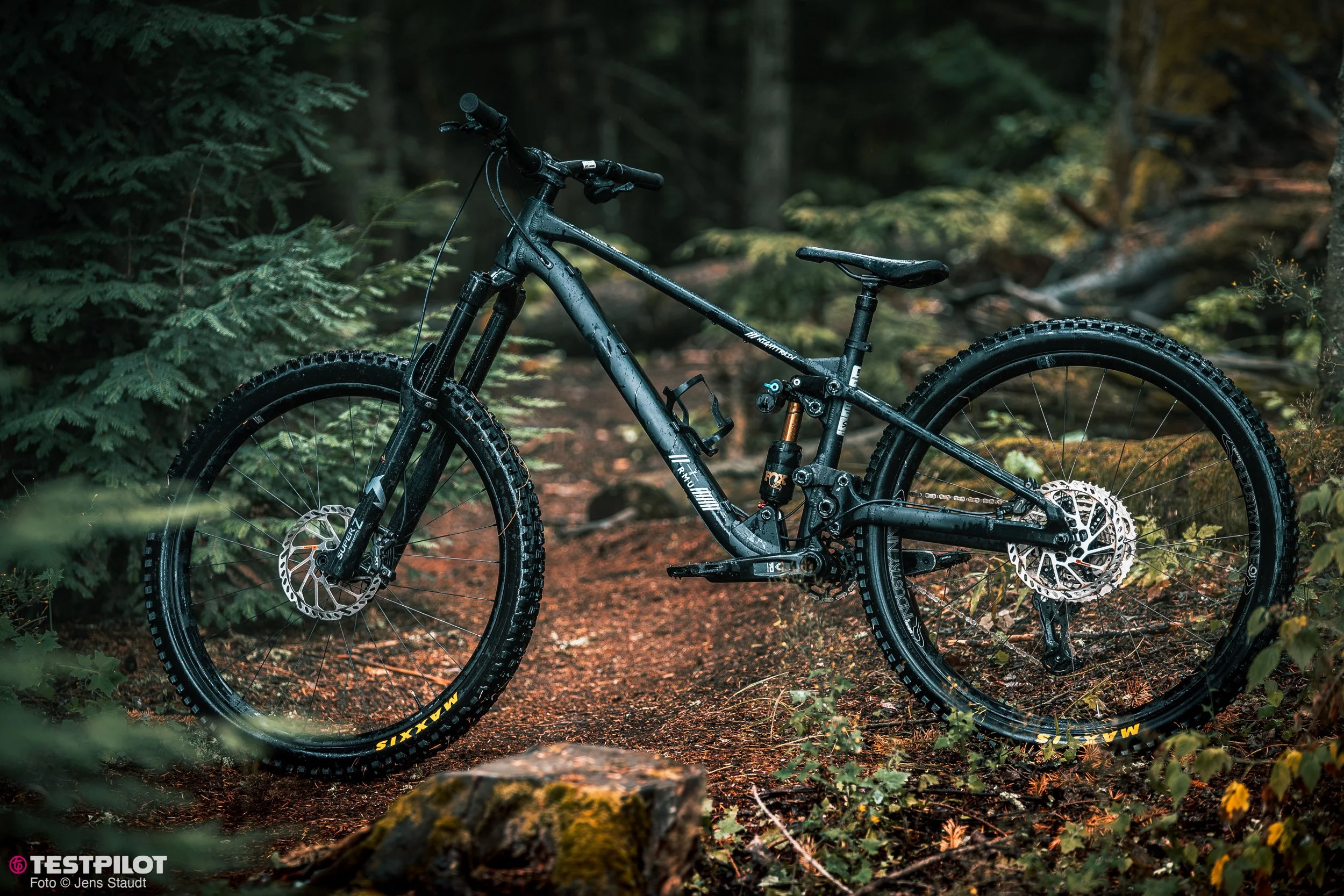
Technical Details
Intended Use: Freeride / Bikepark / Enduro
Front Travel: 170 mm (you might put a full-on DH double crown in there too, because: Why not?)
Rear Travel: 170 mm
Frame Material: Hydroformed 6061-T6 Aluminum
Suspension Platform: ORION Mid-Pivot Linkage
Wheel Size: Full 29" (Can be a mullet if you insist on it.)
Rear Hub Spacing: 12 × 157 mm Boost
Bottom Bracket: 73 mm BSA Threaded
Head Tube: ZS44 / ZS56
Seatpost Diameter: 31.6 mm
Shock Dimensions: 230 × 65 mm
Idler chain length: 38 chain links. Compatible with 10, 11 and 12 speed chains.
Crank spindle: 136 mm with regular boost spacing
Frame Weight: 4.63 kg / 10.2 lbs (Size S2 w/shock)
Price: Framekit from $2,499 USD / Complete builds starting from ~$4,800 USD
Availability: Direct via RMU Mountain Culture and select dealer networks.
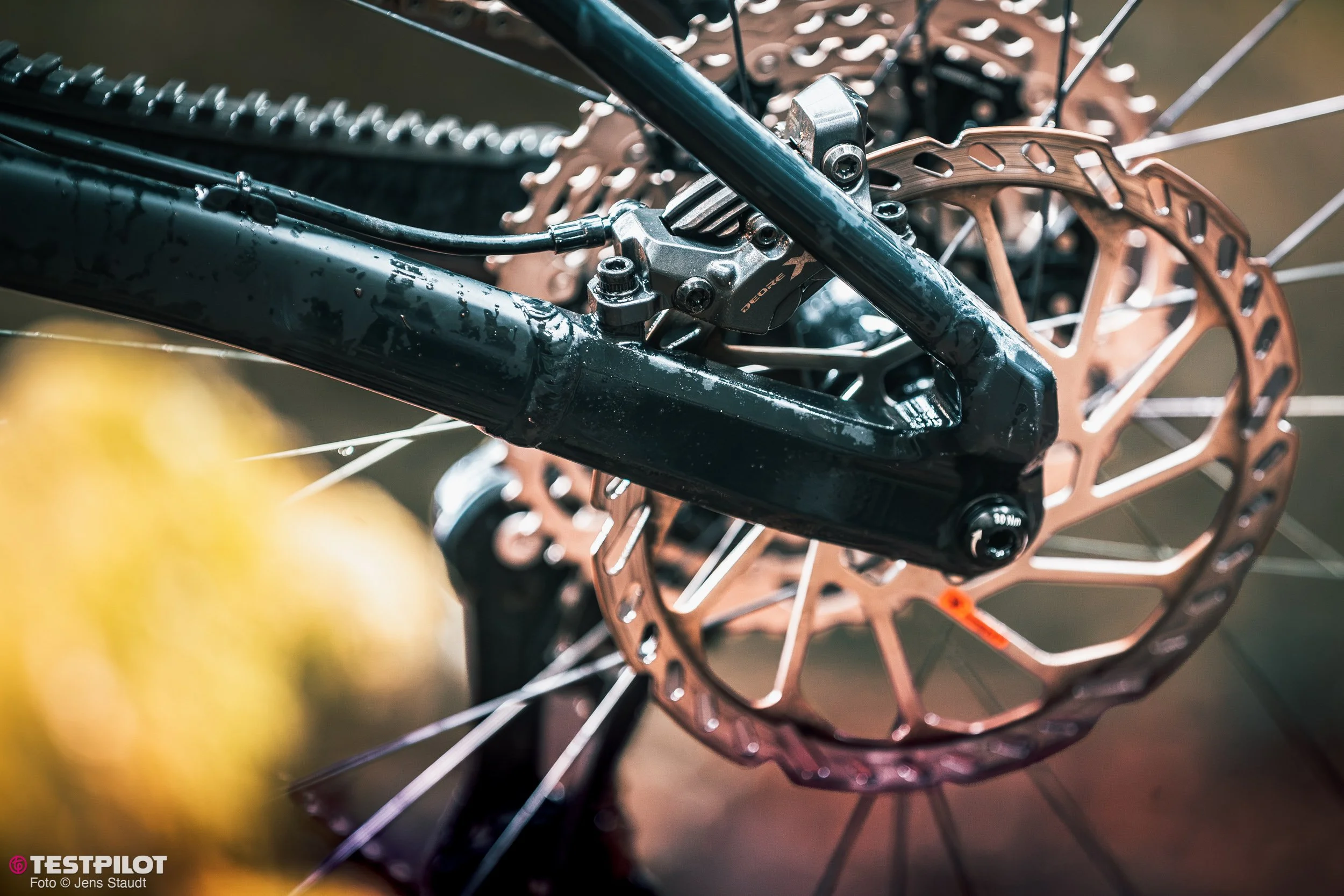
Those guys who swap their frame after a season and aim to keep all their parts the same know the struggle of fitting everything. 157mm rear hub spacing still gets some blood pressure up in the comment sections after all these years. Dave said it is necessary to deal with the dual idler design to get the chainline right. Well, spreading this dimension out a bit fits the intended use, because you may build a stiffer rear triangle, and a bike of this category is a match for this kind of capability.
Beyond the Super Boost width, the frame is packed with real-world mechanic-friendly details. The Nighttrain runs a standard 205×65 mm Trunnion rear shock to churn out its 170 mm of progressive travel, paired with a classic 73 mm threaded BSA bottom bracket that eliminates the pressfit way, which lost acceptance and popularity.
The front triangle uses a ZS44/ZS56 headset standard, and the short seat tube take 31.6 mm droppers while allowing deep insertion for a lot of free movement over the bike. A nice touch is the frame tabs for external cable routing. You still can go fully internal if you prefer that clean, hidden aesthetic.
RMU Nighttrain build options
| Spec | Shimano Deore | Shimano XT Di2 | Shimano Saint DH | Nighttrain Frameset w/ Shock |
|---|---|---|---|---|
| Price | $4,999 USD | $6,999 USD | $6,499 USD | $2,499 USD |
| Frame | NIGHTTRAIN Alloy 170mm | NIGHTTRAIN Alloy 170mm | NIGHTTRAIN Alloy 170mm | NIGHTTRAIN Alloy 170mm |
| Wheel Size | 29" | 29" | 29" | 29" |
| Rear Shock | Fox Float X2 Performance – 230 x 65mm 2 Pos Lever | HSC | LSC | LSR |
Fox FACTORY Float X2 – 230 x 65mm 2 Pos Lever | HSC | LSC | HSR | LSR |
Fox FACTORY Float X2 – 230 x 65mm 2 Pos Lever | HSC | LSC | HSR | LSR |
Fox FACTORY Float X2 – 230 x 65mm 2 Pos Lever | HSC | LSC | HSR | LSR |
| Fork | Marzocchi Super Z – 170mm – 29" 15 x 110 Boost |
Fox FACTORY 38 FLOAT Grip X2 – 170mm HSC | LSC | HSR | LSR |
Fox FACTORY 40 Grip X2 – 190mm HSC | LSC | HSR | LSR |
— |
| Headsets | Cane Creek 40 40.ZS44/28.6/H8|ZS56/40 |
Cane Creek 40 40.ZS44/28.6/H8|ZS56/40 |
Cane Creek 40 40.ZS44/28.6/H8|ZS56/40 w/ 52/30 Crown Race |
— |
| Stem | RaceFace Aeffect R (40mm) | OneUp Stem (42mm) | Chester Direct Mount Stem 50mm | — |
| Handlebar | RaceFace Chester 35R (780x35mm) |
OneUp Alloy Bar (800x35mm) |
RaceFace Turbine 40 (780x40mm) |
— |
| Grips | RaceFace Chester 31mm | RaceFace Chester 31mm | RaceFace Chester 31mm | — |
| Saddle | SDG Bel Air 3 | SDG Bel Air 3 | SDG Apollo | — |
| Seatpost | SDG Tellis v2 – 31.6 SM (170mm) · MD (200mm) LG (230mm) · XL (230mm) |
One Up V3 – 31.6 SM (150mm) · MD (180mm) LG (210mm) · XL (240mm) |
SDG Micro Alloy I-beam 31.6 | — |
| Brakes | Shimano Deore 4 Piston | Shimano XT 4 Piston | Shimano Saint 4 Piston | — |
| Rotors | Shimano RT66 (203mm) | Shimano RT86 (203mm) | Shimano RT86 (203mm) | — |
| Shifter | Shimano Deore M6100 iSpec EV | Shimano XT Di2 SW-M8250 | Shimano Saint SL-M820 | — |
| Derailleur | Shimano Deore M6100 SGS | Shimano XT Di2 RD-M8250 SGS | Shimano Saint RD-M820-SS | — |
| Cassette | Shimano Deore M6100 | Shimano XT CS-M8200-12 | Shimano XT Cassette CS-M771-10 | — |
| Chain | Shimano Deore M6100 | Shimano XT CN-M8100 | Shimano Chain CN-HG54 | — |
| Crank | RaceFace Turbine 136mm Spindle (165mm length) |
RaceFace Turbine 136mm Spindle (165mm length) |
RaceFace Turbine 136mm Spindle (165mm length) |
— |
| Bottom Bracket | RaceFace 73mm BSA Threaded Cinch 30mm | RaceFace 73mm BSA Threaded Cinch 30mm | RaceFace 73mm BSA Threaded Cinch 30mm | — |
| Chainring | RMU 27t Chainring RaceFace Cinch |
RMU 27t Chainring RaceFace Cinch |
RMU 27t Chainring RaceFace Cinch |
RMU 27t Chainring (RaceFace Cinch or SRAM 8 bolt) |
| Rims | RaceFace Turbine eMTB (30mm) | RaceFace Turbine eMTB (30mm) | RaceFace Atlas | — |
| Hubs | RaceFace Vault 28H (15 x 110mm Front) 32H (12 x 157SB Rear) |
RaceFace Vault 28H (15 x 110mm Front) 32H (12 x 157SB Rear) |
RaceFace Vault 32H (20 x 110mm Front) 32H (12 x 157SB Rear) |
— |
| Tire / Front | Maxxis Assegai EXO+ / TR (2.5) | Maxxis Assegai EXO+ / TR (2.5) | Maxxis Assegai DH / Maxx Grip (2.5) | — |
| Tire / Rear | Maxxis Minion DHRII EXO+ / TR (2.4) | Maxxis Minion DHRII EXO+ / TR (2.4) | Maxxis Minion DHRII DH / Maxx Grip (2.4) | — |
| Included | Tubeless Valves & Sealant RMU Pint Bag |
Tubeless Valves & Sealant RMU Pint Bag |
Tubeless Valves & Sealant RMU Pint Bag |
RMU Pint Bag |
| Weight | 37 lbs / 16.783 kg (Size S2) | 36 lbs / 16.32 kg (Size S2) | 40 lbs / 18.14 kg (Size S2) | 10.2 lbs / 4.63 kg (Size S2 w/ Shock) |
Important Build Notes
- Rear Hub Spacing: 12 x 157 SB
- Crankset Spacing: 136mm Boost Spacing
- BB: 73mm BSA Threaded
- Compatible Cranksets: SRAM 8-BOLT, and Raceface CINCH
- Seat clamp: 34.9mm
- Seatpost Compatibility: 31.6mm
- ***Super Deluxe is not compatible***
Geometry
The S-sizing seems to catch on. Choose your bike on the reach and your intended use. Shorter for more playfulness or longer for plowing. Seat tubes are short enough trough all sizes to avoid inteference with the saddle for short legged people and the Nighttrain features very low standover on all sizes.
With a 63-degree head tube angle, the RMU debut lands squarely in the bullseye of modern 170 platform geometry. It shares virtually the same steering angle as the big brands out there. That 63-degree front end provides stability on steep Whistler rock faces without feeling sluggish when flicking through tight jump transitions. Chainstays grow not only through the sizes but also while going into travel. We'll take a deep dive into that later.
The steep 78-degree effective seat tube angle keeps pedaling posture comfortable on steep Squamish climbs, avoiding the slack-seated feel of legacy freeride rigs. Even though the frame is a dedicated full 29-wheel machine, those who love more party in the back could consider going 27 without messing too hard with the resulting geometry. Overall the geo numbers come together as modern and not too crazy, promising a blend for a broad spectrum of riding styles.
Looking at a geometry chart only tells half the story, especially on a bike like the RMU Nighttrain. On paper, the unweighted (static) chainstay length of ~434 mm on the size S3 looks kinda short for a 170 mm freeride rig. However, dynamic trail behavior is governed by axle path. It means how that chainstay length changes as the suspension compresses.
Static vs. Sag vs. Deep Travel: What Happens on the Trail with your chainstay length?
To understand how the Nighttrain handles, it helps to break down the rear center growth across three distinct phases of travel:
Static (Unweighted Bike): Standing on the showroom floor at full extension, the S3 registers a compact static horizontal chainstay length of roughly 434 mm. This scenario is also the baseline for the heated online discussions about bike geometry. (Get your troll keyboard ready.) On the trail you will experience this short number the moment you lift the bike off the ground, unweighting it, jumping it.
At Sag (Weighted Bike): When you step on the bike and sink into your sag point (depends on your preference, but mostly it sits at 30% of your travel), the rear axle moves backwards. The aligned rear center grows on the tested S3 frame by 21 mm, extending the effective chainstay length to roughly 455 mm. This growth stabilizes the chassis, giving you a planted, centered stance without requiring you to muscle the front end down to maintain traction. Your COG (center of gravity) will move virtually forward against the contact patches (your tires on the ground) because those move backward.
Deep in the Travel: As the rear wheel swallows big hits, drops, or square-edge G-outs, the path continues its moderate rearward arc before rounding off. Across the entire 170 mm of travel, the physical axle-to-BB distance grows, providing deep-stroke stability when charging rowdy terrain without the extreme, runaway length changes of a high-pivot idler bike.
Horizontal CSL vs. Aligned CSL: What is the Difference?
When reading geometry sheets or discussing kinematics with suspension designers like Dave Weagle, you will hear two different ways to measure chainstay length:
Horizontal Chainstay Length (CSL): This is the straight horizontal distance measured strictly along the ground plane (X-axis) from the center of the bottom bracket to the rear axle. This is the standard number printed on most geo charts.
Aligned Chainstay Length (or Aligned Rear Center): This is the actual diagonal line-of-sight distance measured directly from the center of the bottom bracket spindle to the rear axle.
Because a swingarm rotates upward in an (sometimes sophisticated) arc, its aligned length accounts for the actual physical distance between the cranks and the rear hub. As the suspension compresses, the aligned measurement reveals how much the chassis is physically stretching between your feet and the rear contact patch.
Why This Kinematic Balance Matters
A classic dilemma in bike design comes down to trade-offs you always have to make. Everything is always a compromise:
Short static/dynamic: Easy to manual and hop off edges, but unstable at speed, causing the front wheel to push or wash out in high-G turns.
Long static: Stable at high speed, but sluggish on tight trails. On slow-speed drops or technical steps, a super-long rear end can hang up on the lip, making the bike feel like it is "dragging its tail" unless you carry World Cup-level entry speed.
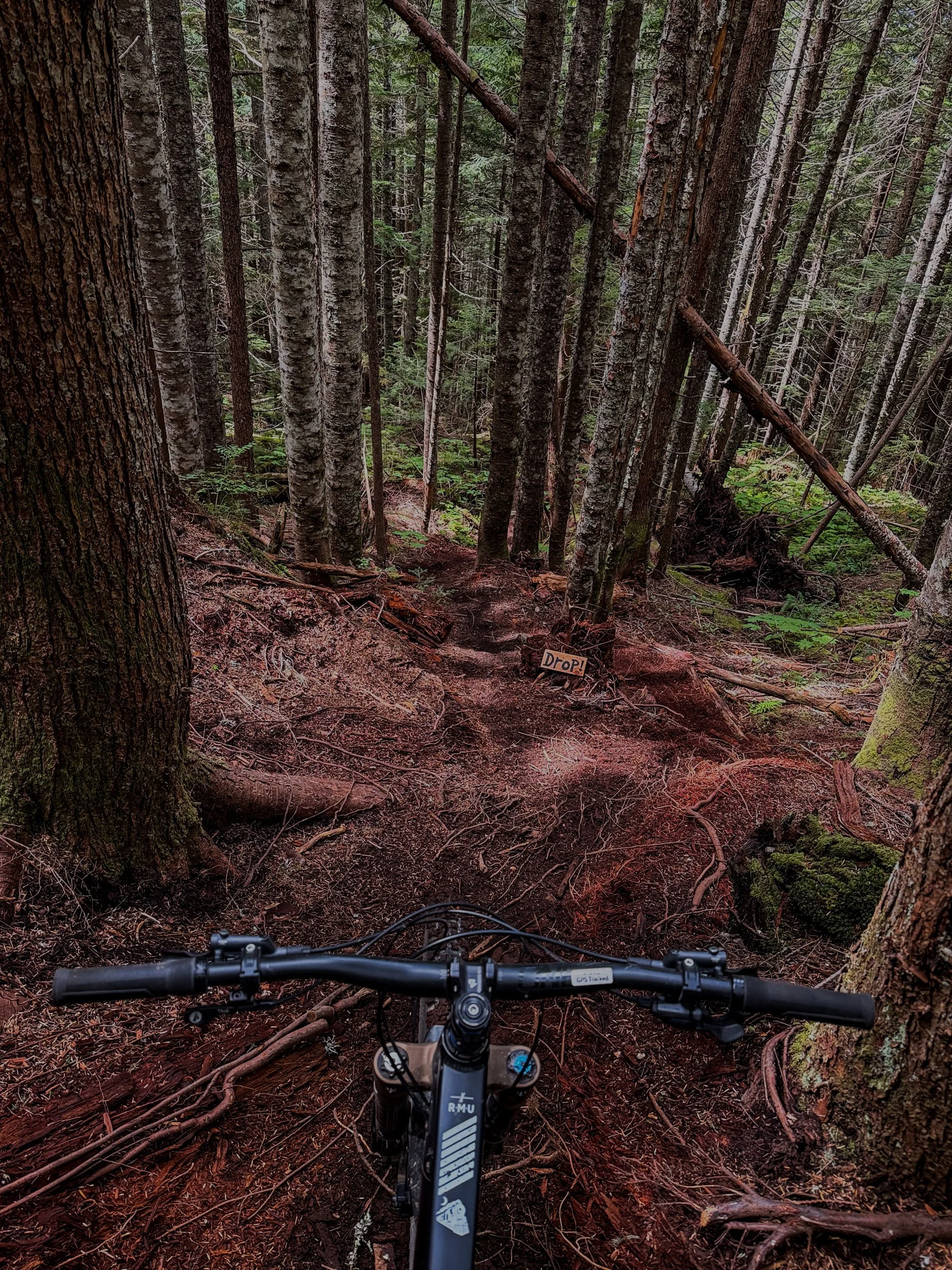
How the ORION linkage is laid out, Dave Weagle aimed to find a sweet spot for RMU, matching the riding behavior they are looking for. The Nighttrain wants to gives you the playful, maneuverable pop of a shorter rear end when unweighted but instantly stretches to a more stable ~455 mm platform the moment you sit into your sag.
The goal was to hold its line in high-speed berms without washing, yet let you flick the rear wheel over low-speed Squamish drops without feeling stuck to the edge.
| Spec | S1 (SM) | S2 (M) | S3 (L) | S4 (XL) |
|---|---|---|---|---|
| Reach | 440 | 465 | 485 | 510 |
| Stack | 623.32 | 632.23 | 643.37 | 654.5 |
| Effective Top Tube Length | 557 | 586 | 614 | 632 |
| Seat Tube Length | 374 | 387 | 387 | 425 |
| Effective Seat Tube Angle | 77.5 | 77.5 | 77.5 | 77.5 |
| Saddle Height for eff. Seat Tube Angle | 600 | 660 | 720 | 780 |
| Headtube Length | 100 | 110 | 122.5 | 135 |
| Headtube Angle | 63 | 63 | 63 | 63 |
| Chainstay Length | 426.73 | 429.98 | 434.24 | 437.84 |
| Wheelbase | 1219.19 | 1251.98 | 1281.91 | 1316.19 |
| Bottom Bracket Drop | 26.5 | 26.5 | 26.5 | 26.5 |
| Estimated Bottom Bracket Height | 348.5 | 348.5 | 348.5 | 348.5 |
| Mechanical Trail | 127.15 | 127.15 | 127.15 | 127.15 |
All measurements in degrees (°) and millimeters (mm) • RMU Nighttrain
On the Trail
There are bikes that take some time to get used to, where you have to fiddle with the suspension setup for days and slowly adapt to their behavior on complex terrain. The Nighttrain was different. Set sag, adjust bar height, and rebound clicks, and you are good to go. Step in. Enjoy the ride. We finished boarding and will exit the station soon.
In my case, this meant multiple days in Whistler Bike Park as well as one day in Squamish with some pedaling involved.
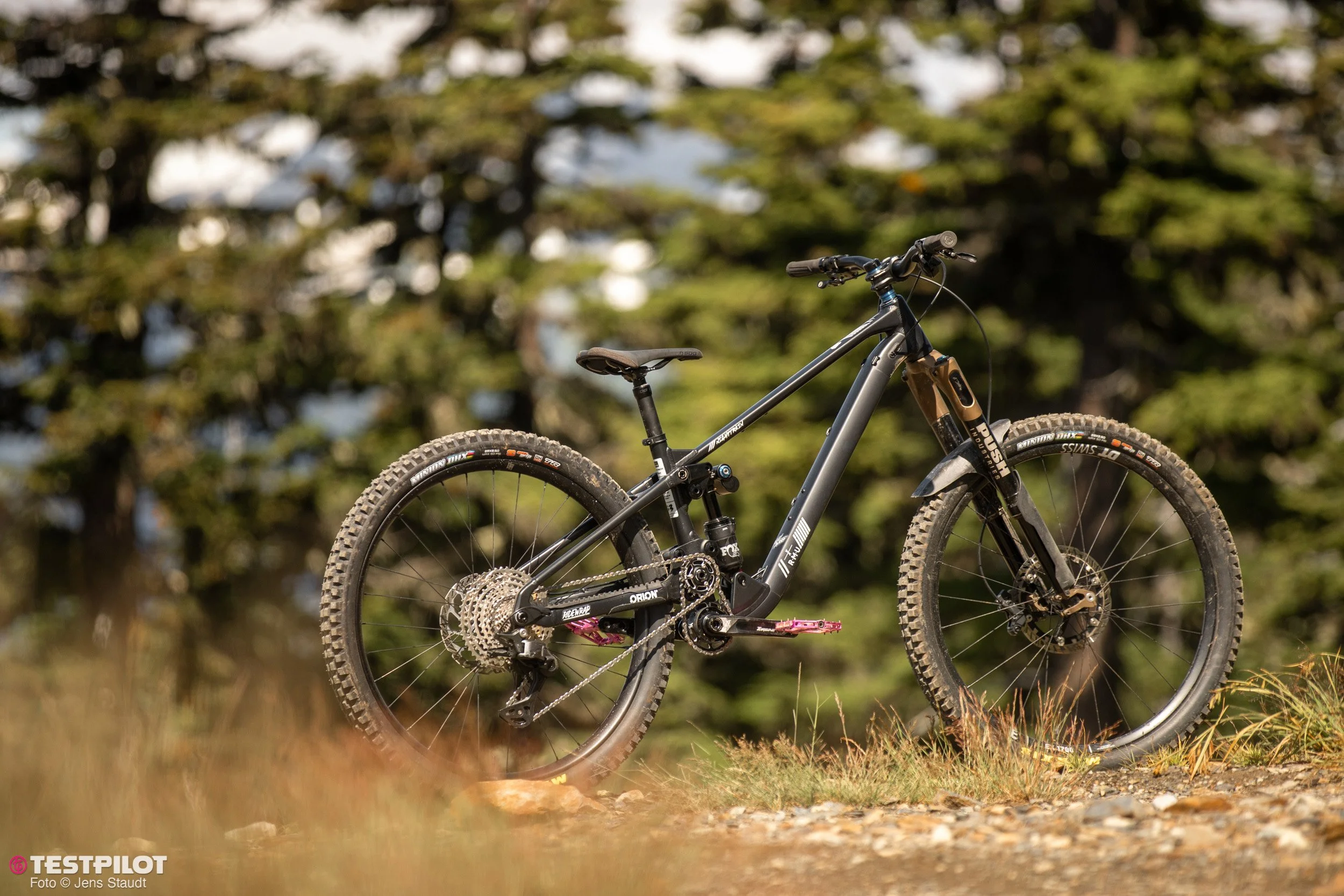
Notes on size and spec: The biggest frame size S4, was sold out and not available for test rides, so I took the S3 out for a spin. At my height, these reach numbers (485 mm) are usually what I prefer on heavier e-bikes to retain playfulness. On regular mountain bikes, I typically reach for a longer reach, but I made the S3 work by raising the cockpit stack slightly. I’d recommend this choice as well for riders who aim for the maximum in agility and a preference for jump trails. During testing, I swapped the Super Z against a Push Nine.One and the tires from Assegai/DHR to DHX. The shock from a Fox Float X2 and a lower spec Float X2 with less adjustability.
Maybe RMU had a Guns N’ Roses song in mind when naming this frame. If they did or didn't, it fits the character of this bike perfectly:
“Loaded like a freight train
Flyin' like an aeroplane
Speedin' like a space brain
One more time tonight.” – Guns N' Roses
We all are guilty—and I am no exception—for judging a bike by its geo numbers. Coming from a daily driver with 462 mm of chainstays, I admit, I had my concerns on the Nighttrain with just under 438 mm (on the ridden S3) I found in the geometry table. And it proved to me again that you should not judge a book by its cover. As described in detail in the geo segment of this review, the ORION system lengthens the chainstays towards the point of sag and through the travel.
What does this mean for me on the trail? It will help you in multiple situations. For instance, while going through a turn and putting load into the bike, you will compress the front and the rear end at the same time. Your center of mass will move forward because the contact points of the front (rearward-moving fork) and rear tire (mostly rearward) change in conjunction. By this design of the Nighttrain you (your mass) will put more load through the handlebar/fork/wheel to the front tire. Therefore, increasing grip. And while you go through rock gardens and root sections, the rear wheel can absorb bumps better because the direction of the impact is closer to the regular path of the kinematics of the bike.
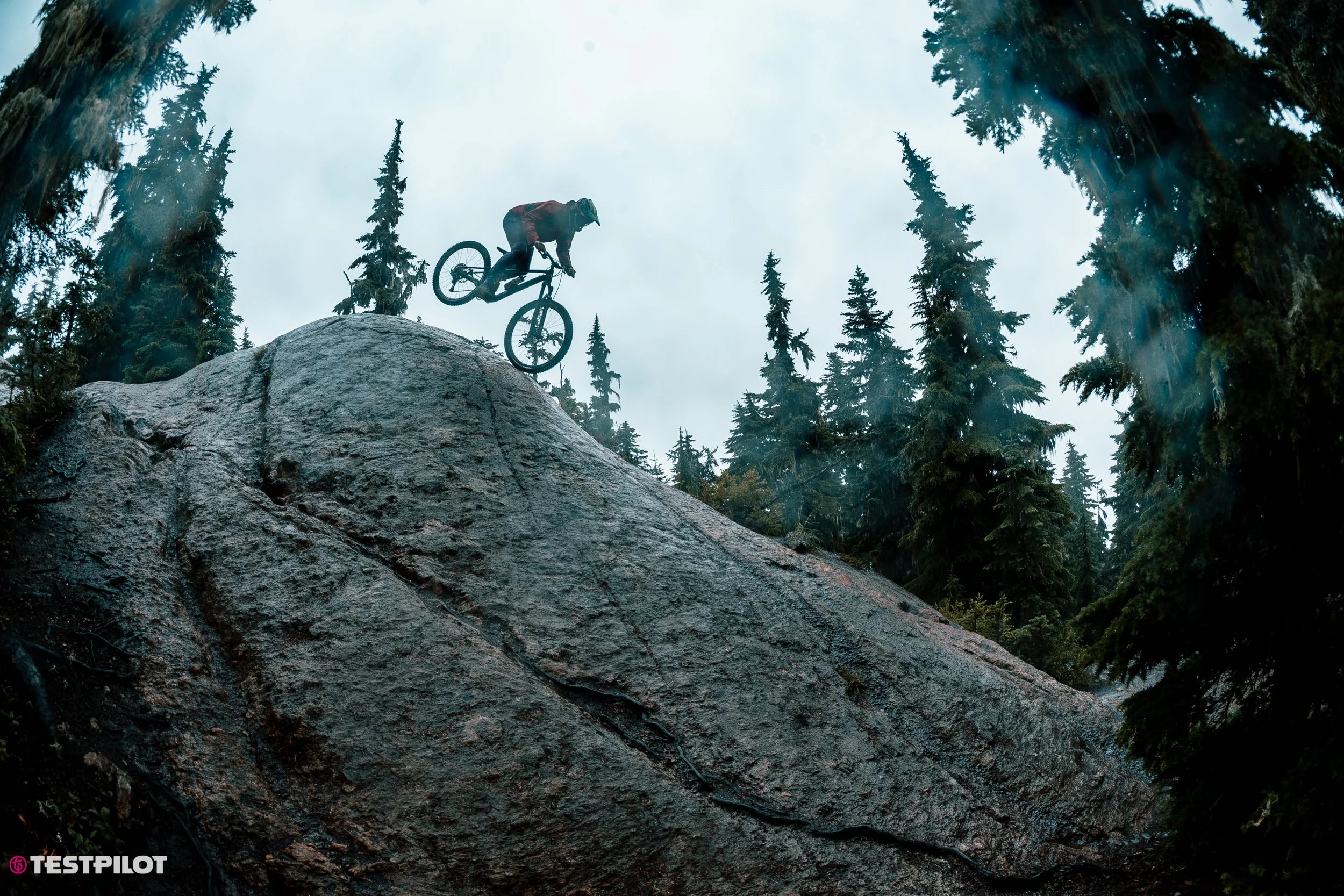
The rise of high-pivot bikes takes this sometimes to the extremes with some pros and cons. (You may look forward to the upcoming Telepathy review!) What RMU/Weagle did is balance this out. Lowering the pivot point to a mid-height and teaming it up with a sophisticated linkage, which moves the rear triangle rather slightly backward.
Charging into blown-out braking bumps (bigger than your local pump track) sections on A-Line or technical roots and rock features on Too Mushroom, Patrol Rocks and Fatcrobat, the frame stiffness made me never feel like I was on not enough bike. It provides a direct response to your input, and the bike will go where you want it to go. Make sure you get an adequate breakfast and do your push-ups to be able to do this on long park days.
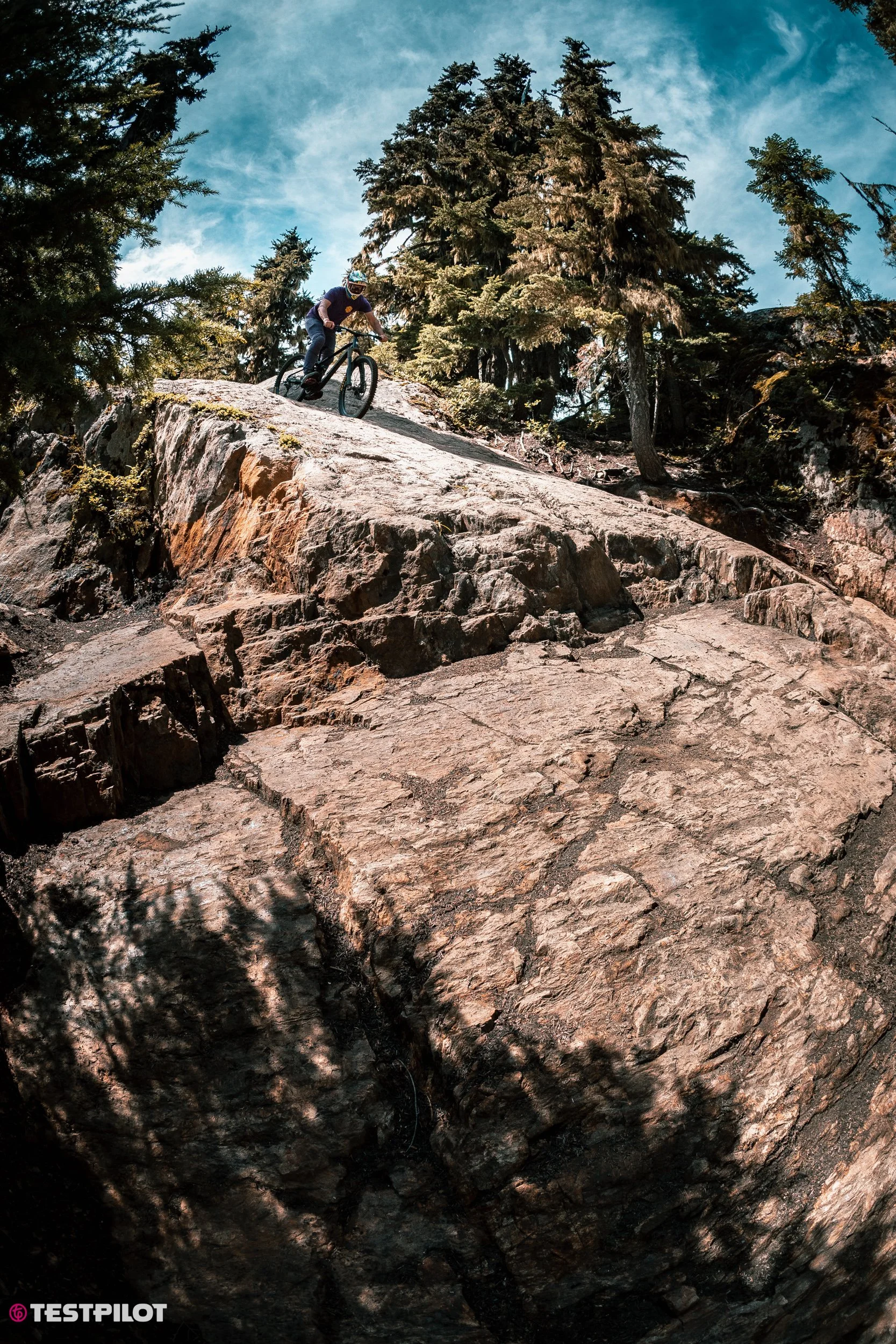
The bikes and my limits I found only on the blown-out Upper Whistler Downhill after the Canadian Open race went down the day before, making the track look like bombs went off in the lines. The chassis holds its line without flex-induced deflection, giving you massive confidence to stay off the brakes, but this track was just brutal in this condition. (More push-ups are needed from my side in the future.)
A bike being able to take high-speed hits all day and lengthening the chainstay will feel odd on slower technical trails? Riding the Nighttrain through the Squamish steeps provided an answer. Not necessarily. When approaching that high step or unexpected drop, you hop the bike, and by unweighting the chassis, your rear shortens again. This ensures you do not get front-heavy with your rear wheel being unwilling to leave the drop/step at slower speeds.
Overall, the ORION suspension platform stays active in all situations, and as mentioned earlier, it also won’t give you as much pedal kickback as some other systems out there. Usually I run a DEG or a Sidekick on all of my bikes, but here I did not really miss it that much. More testing might be needed.
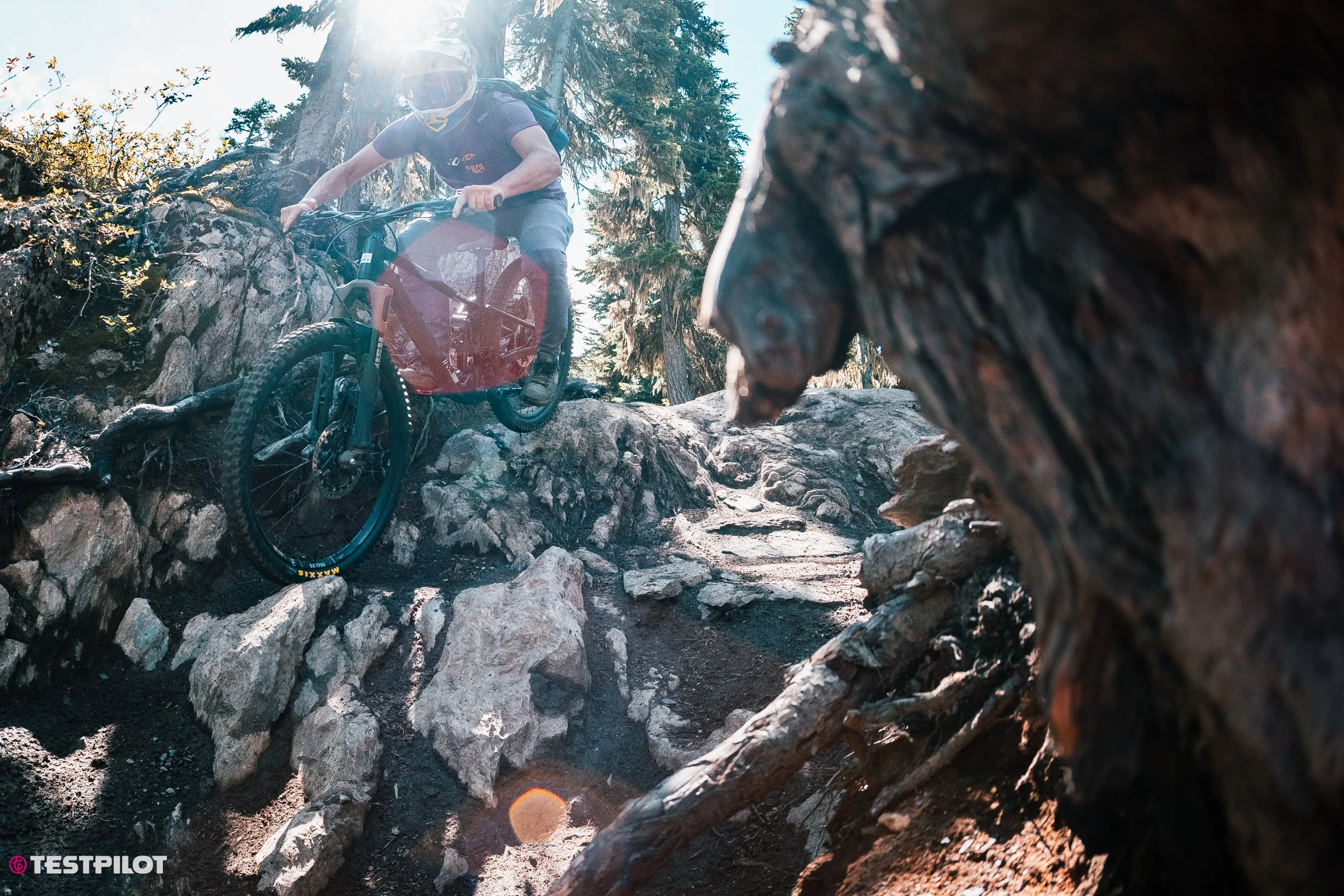
Brings me to the point of the balance of the suspension between front and rear. You absolutely WANT a good fork to match the performance of the rear end. Supple, easy-to-get-into travel and a solid ramp-up. This was very noticeable after swapping the Super Z against the Push Nine.One that was a better match, even with the X2 version with a missing HSR setting.
Talking about jumps: after hammering the bike on the hardest tracks that were available and the praise it got in the review to this point, you may guess it would be a sluggish, stuck-to-the-ground monster truck. I don’t know what exactly Dave Weagle did on the kinematics (and good luck trying to get him to give you his dirty secrets), but hitting the highspeed jumptrails Whistler is famous for, I was up for a surprise. A well-overshot first jump.
Working the bike from above and going through transitions/takeoffs, this thing provides you something to push against. Making it easy to retain agility and be creative in your line choice in technical stuff or the jumps. The (for my height of 191 cm) rather short S3 reach made the bike even more flickable. If this is your cup of tea, you might also want to think about downsizing. The platform itself still is pretty stable even with a shorter wheelbase than you might usually ride.
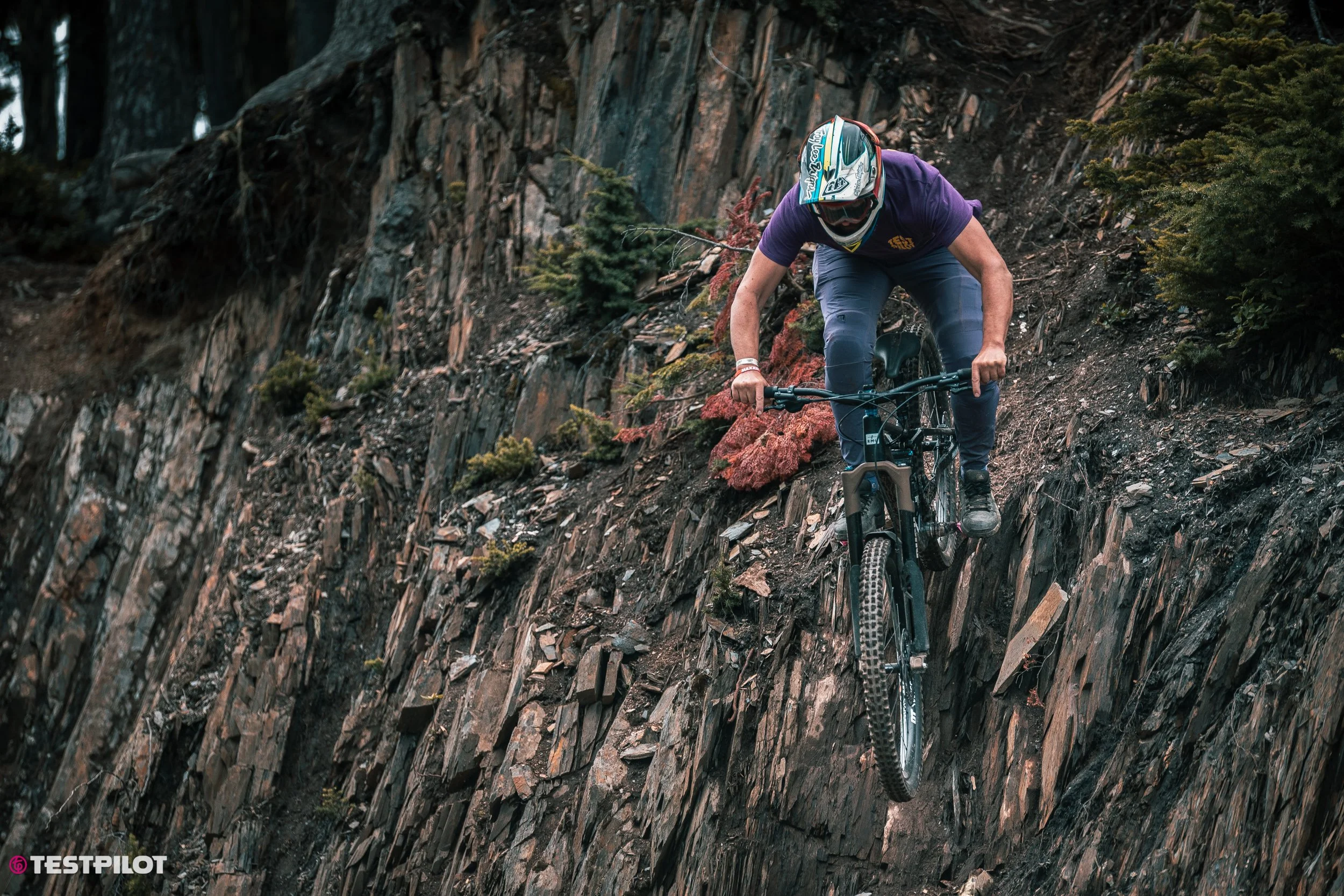
Key learnings from riding the Nighttrain
Feels way more agile than you would expect from a 170 travel bike. Especially with such plowability.
You need a good fork to match the quality of the frame kinematics.
The frame is on the stiffer side. Takes hard riding easily but can be fatiguing on long riding days.
The chainring up front is small. You will get away most of the time, not hitting it on rocks and steps. An ISCG mount still would be nice for some extra peace of mind.
You won’t notice any drag on the dual idler. It pedals just like a normal bike.
HALLELUJA: No headset routing and the option to either go internal or external on your cables.
To the long-est chainstay gang: Be sure to test ride before you mistake the geometry table.
Well-executed balance to make this bike work on pedal and bikepark missions.
Heavy riders (closer to 100 kg/220 lbs) might want to have a shock with the ability to slow down HSR and LSR independently. Higher pressures could push a shock with only an LSR to the limit and could give the heavy team too much pop on jumps with big compressions on the takeoff.The RMU Nighttrain feels like an EVIL had a wild affair with an Atherton. Why? Because the ride-feel sits right in between the two kinematic systems.
Verdict of the first review of the RMU Nighttrain
What a debut! The ORION blends predictability with agility and liveliness. It will make you wonder how in the world a bike this planted can carry so much pop on jump lines. The spectrum is remarkably broad, and despite the frame's burly aluminum construction, you won’t suffer when earning your turns by pedaling up Squamish transfer roads. There is just about nothing this bike is afraid of, and the overall frame stiffness will encourage you to get rowdy in rock gardens and rail through high-speed berms. If you are accustomed to softer, more flexy frames, you might want to pair it with a more compliant wheelset or just leave your fingers off those levers on your handlebar, grow a pair, and haul a$$.
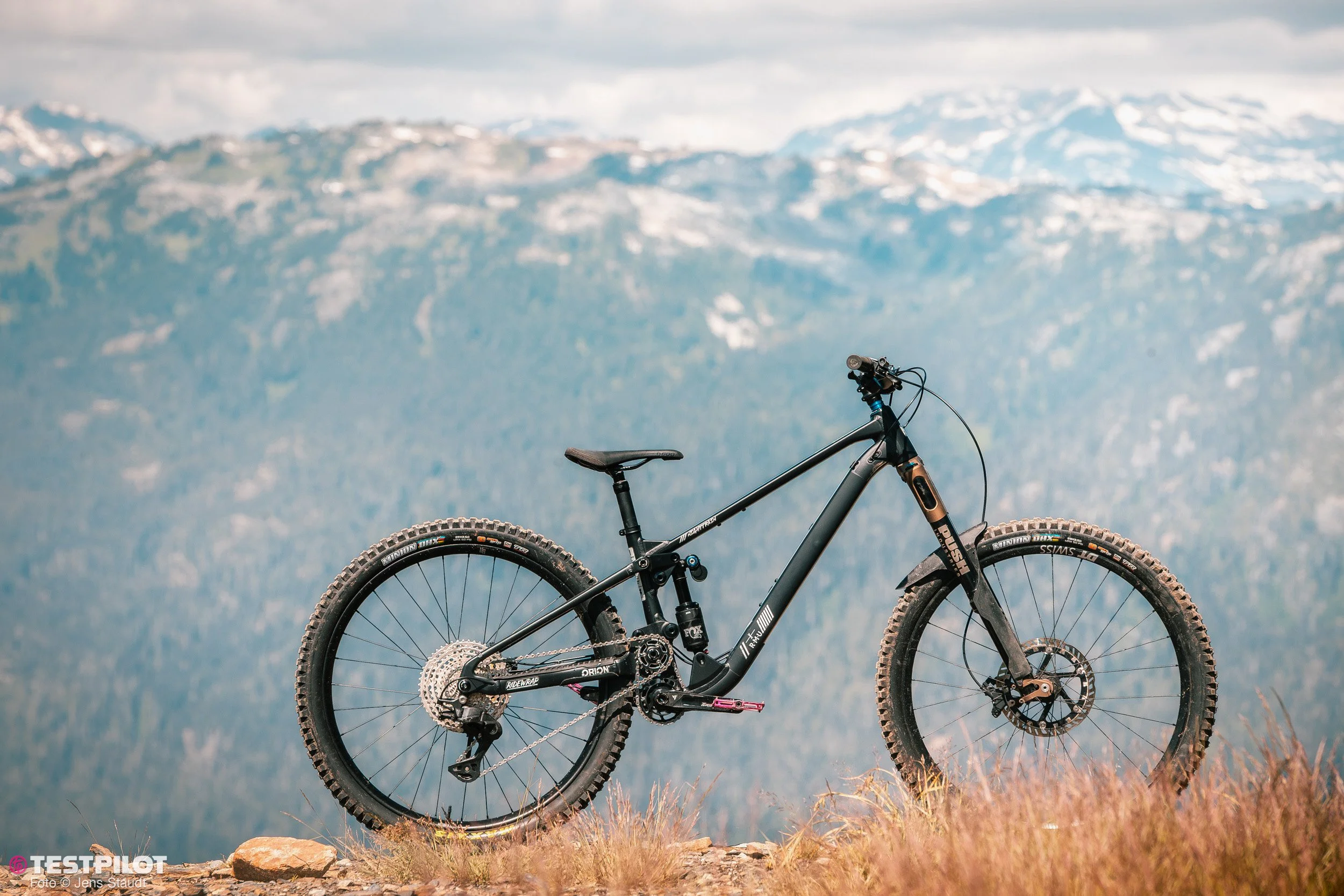
Dialed kinematics to balance plow and pop. 170 mm front/rear. The Nighttrain is up for the party.
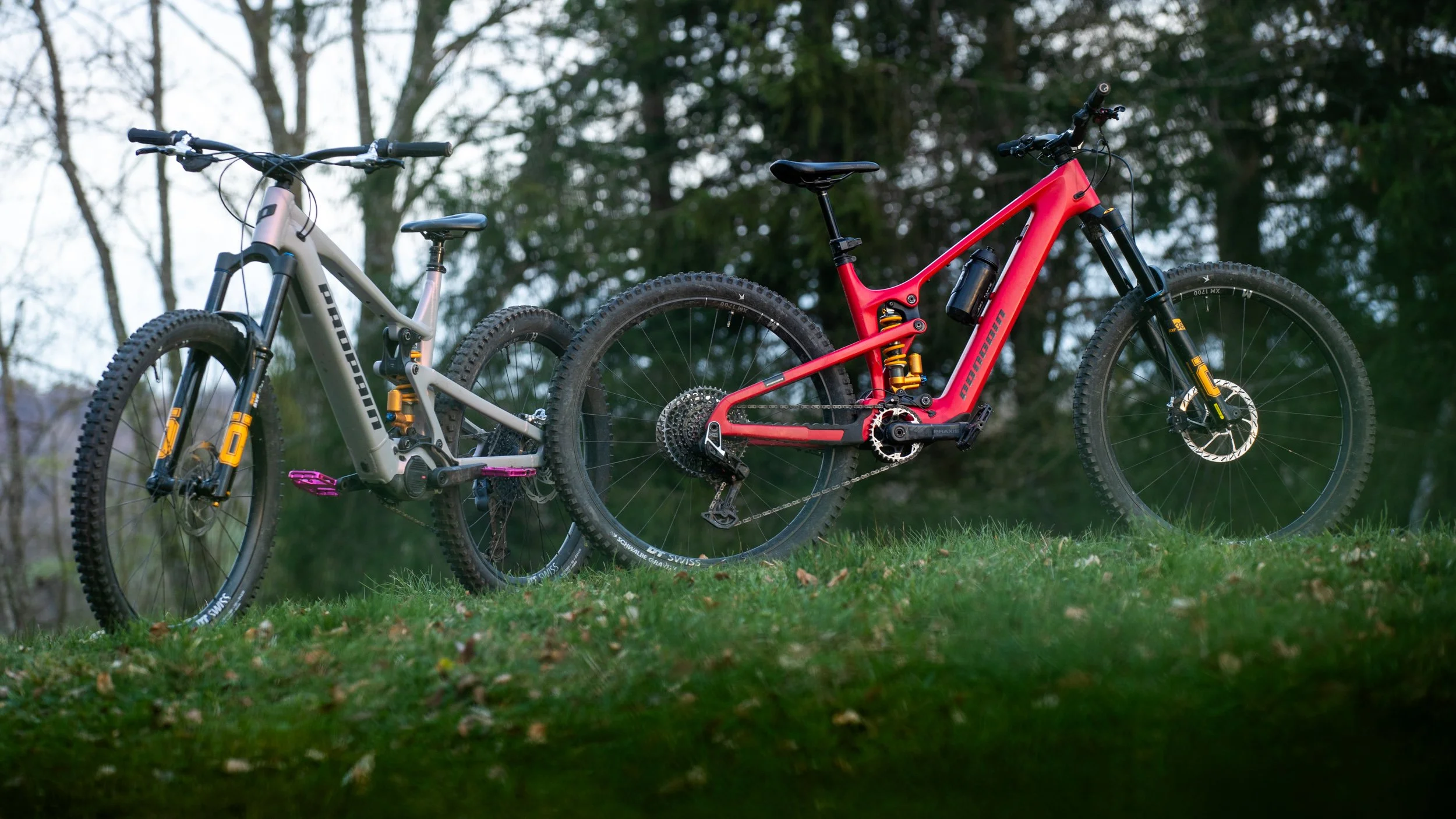
You want more Reviews?

Author – Jens Staudt

Height: 191 cm
Weight: 101 kg
Riding style: With his racing background, the lines are planned, even if there is anything bigger in his way. If possible, sections will be jumped over. You should use the entire width of a trail. Some would say—uncompromising.
Motivation: A product should function carefree and for as long as possible. If you have to spend less time in the workshop, you can ride more. He likes to tinker and see how the bike can be optimized.