Podcast: Mike Kazimer on the Evolution of Bike Testing, Modern Geometry, and Keeping Tech Simple
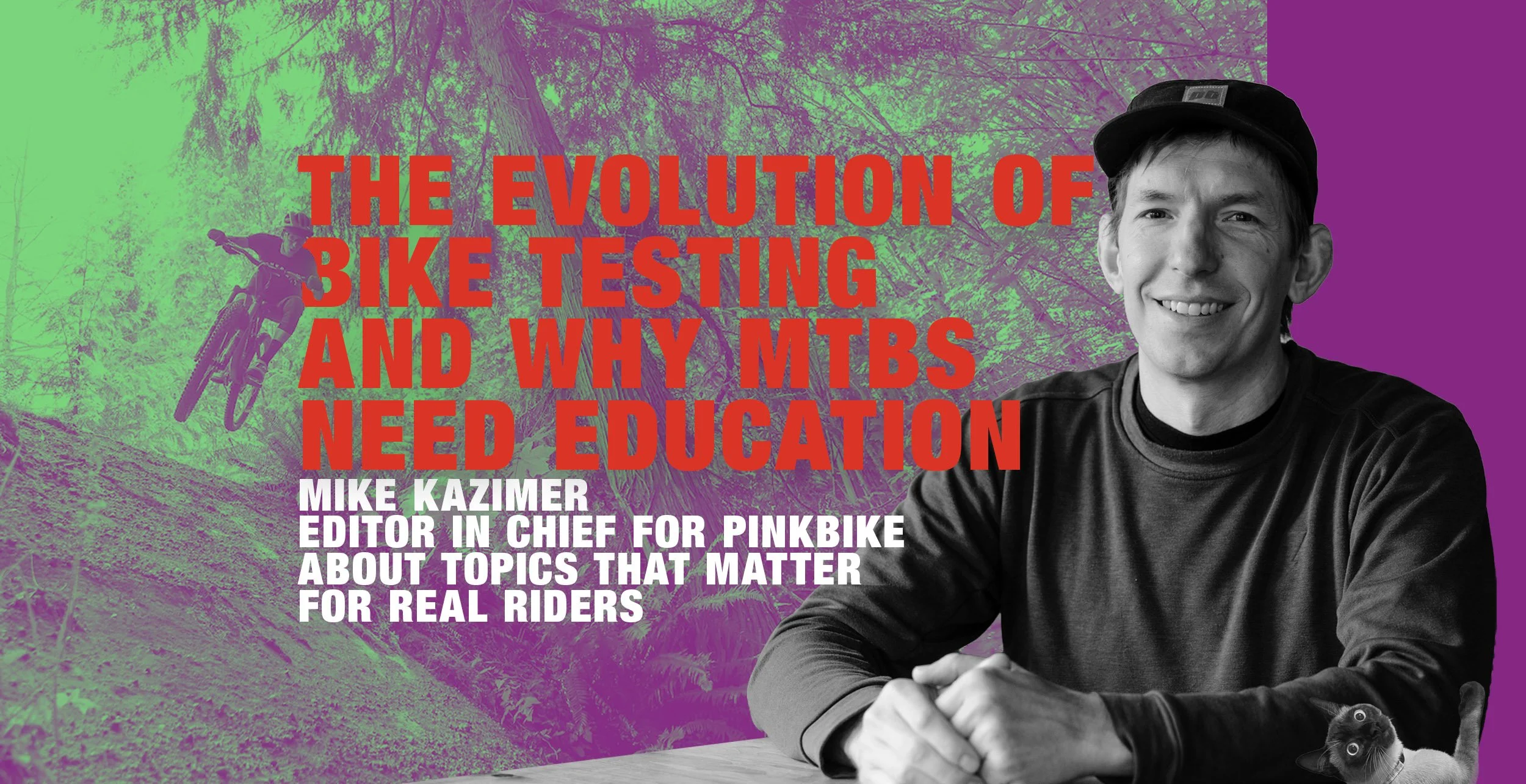
If you are a mountain biker and have the slightest interest in magazines, you know this name: Mike Kazimer. He is the editor-in-chief at Pinkbike and one of the people who pushed the quality of online media and reviews and brought you the most relevant bike industry news. We sat down during Crankworx Whistler and had a chat. About his background: how media evolved, how even the cheapest bikes got better than ever, innovation, which might be questionable or overly complicated; and why the local bike shop and community still matter.
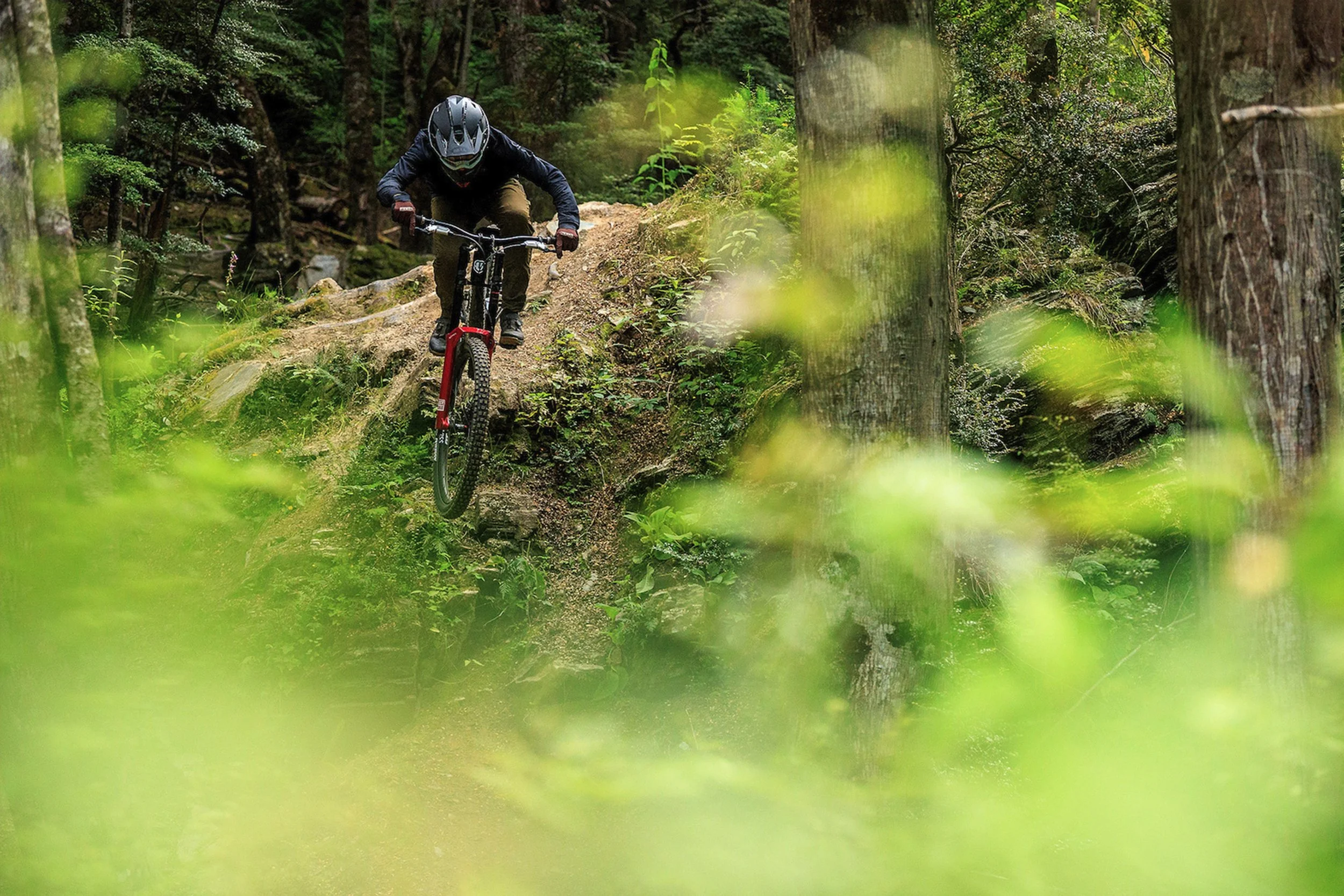
Action shot by Sven Martin
In the world of mountain bike journalism, few voices carry as much authority as Mike Kazimer. With over 14 years as an editor and reviewer at Pinkbike, plus another decade working as a shop mechanic, Kazimer serves as a bridge between the classic era of print magazines and today’s fast-paced digital media landscape.
His path into the industry was built on grease, dirt, and winter snow rather than traditional journalism. Raised on the East Coast in Connecticut, Kazimer fell in love with mountain biking at age 12 and was working in local bike shops by 15. Driven by the pull of mountain singletrack, he headed to Western Colorado University. Earnest about both riding and skiing, he took every winter off to ski and spent his summers wrenching in shops. That hands-on mechanical background, along with an English degree that famously took him ten years to finish, but ultimately laid the groundwork for his analytical approach to evaluating bikes.
Listen to the full conversation with Mike Kazimer on the TESTPILOT.bike Podcast to learn about what kind of product impresses a veteran bike editor and how he images a bright future for the mtb culture.
If you use Spotify or Apple Podcast, you may also subscribe to our channels there. Easier to put the episodes on your speaker while driving to the riding spot.
Using another podcast app? Select your streaming app here.
The podcast has time marks to make it easier for you to relisten or jump directly to the part you are most interested in.
Podcast Chapters
00:00:00 – Introduction & Mike Kazimer's Backstory
00:02:37 – The Evolution of Bike Media & Trade Show Coverage
00:04:54 – From Press Camps to Pinkbike Field Tests
00:10:37 – Modern Bike Geometry & Market Trends
00:15:17 – Group Testing & Rider Weight/Skill Dynamics
00:24:32 – Educating Riders, Budget Bikes & E-Bikes
00:29:49 – The Shift Toward Electronic Over-Complication
00:37:06 – 32-Inch Wheels & Industry Standards
00:41:26 – Mechanic Frustrations & Routing Nightmares
00:45:32 – The Case for Simple, Durable Workhorse Alloy Bikes
00:50:19 – Bespoke Brands, Community & Final Thoughts
The Media Evolution: From Trade Show Sprinting to Field Tests
A central topic of Kazimer’s conversation with Jens Staudt is the dramatic shift in how bikes are covered, tested, and reviewed. Reflecting on the early days of digital media, Kazimer and Staudt recall the high-pressure race to cover product launches. Editors like James Huang were infamous for uploading trade show articles within minutes, setting an impossibly fast pace to capture clicks and reach. However, that hyper-fast turnaround often meant journalists spent grueling nights in hotel rooms typing away while jet-lagged, leaving little time to form meaningful impressions of the equipment.
A decade ago, the hay days of bike media, brand launches revolved almost entirely around lavish press camps in exotic locations. Brands would wine and dine journalists on foreign trails or in their back yard home trails, attempting to present their new products in the best possible light. While these events were exciting, they often forced journalists to publish initial impressions as full reviews after only a couple of days on unfamiliar terrain.
When travel restrictions during the COVID-19 pandemic forced brands to ship bikes directly to journalists' doorsteps, it accelerated a change Kazimer and Pinkbike had long been pushing for: true long-term testing on home turf. Instead of relying solely on isolated, single-tester reviews, Kazimer helped pioneer Pinkbike’s structured Field Tests. Inspired by older initiatives like Bike Magazine’s "Bible of Bike Tests," Pinkbike began gathering diverse crews of editors to ride 8 to 15 bikes back-to-back on identical test loops.
By standardizing setups and controlling variables like tires and tire pressures, the team could isolate true frame flex and geometry nuances. Crucially, group testing brings multiple perspectives into the fold. A frame that feels stiff and inspiring under a 220-pound (100 kg) rider might feel harsh to a 165-pound (75 kg) rider. By pairing high-speed video telemetry with unfiltered podcast debriefs and testers of all sizes, from former World Cup downhill champions like Matt Beer to lighter, shorter editors like Jesse May Morgan, the testing process became vastly more objective and transparent.
Geometry Has Settled, but New Tech Keeps Pushing
Reflecting on the hardware evolution over the last decade, Kazimer notes that bike geometry has finally reached a mature plateau. Between 2014 and 2019, geometry went through a radical revolution toward longer, slacker, and lower designs. Today, those numbers have largely settled into a sweet spot. A modern 130mm to 150mm trail bike can now comfortably handle the gnarliest tracks at Whistler without suffering catastrophic frame failures or relentless flat tires.
Alongside geometry stabilization, one of the most positive shifts has been the rise of capable value bikes. The performance gap between a $10,000 flagship super-bike and an entry-to-mid-tier aluminum model has shrunk dramatically. Reliable geometry and trickle-down suspension tech mean riders can buy a moderately priced bike, or even surprisingly capable sub-$1,000 budget hardtails, and confidently tackle real trails right out of the box.
However, this push for modern performance has also introduced new industry complexities. From electronic shifting and live suspension telemetry to through-headset cable routing and frame-integrated batteries, bike design is increasingly driven by software engineers as much as frame builders. While Kazimer appreciates cutting-edge technology, he frequently acts as a practical voice of reason. Pulling out a smartphone app just to adjust suspension damping on a trail ride can feel unnecessarily tedious for the average rider. Over-complicated designs also create nightmare scenarios for mechanics, such as needing to drop an e-bike motor or remove a brake caliper just to change brake pads or route a hose.
The two also touched on the impending wave of 32-inch wheels. While larger wheels could offer roll-over advantages in XC or gravel applications, Kazimer remains skeptical of the headaches they bring to an already struggling industry by requiring new fork chassis, hub spacing, bike racks, and gear bags.
Instead, Kazimer advocates for simple workhorse aluminum bikes that are durable, easy to service, and designed to perform reliably without needing a battery charge or a firmware update.
Education, Community, and the Bottom Line for Riders
Beyond product engineering, Kazimer and Staudt discussed the human side of mountain biking. As bikes become more expensive and technical, entering the sport can be intimidating. Beginners dropping big money on long-travel e-bikes often lack basic trail etiquette or mechanical understanding. Both editors emphasized the growing need for mountain bike instruction, comparison features on budget bikes, and educational content like Ben Cathro's How to Bike series to help ease new riders into the scene.
At the end of the day, Kazimer’s message to mountain bikers cuts through the noise of marketing jargon, wheel-size debates, and endless spec sheets. While it is fun to dork out over telemetry and component specs, the ultimate goal of the sport hasn't changed.
Riders should focus on buying a bike that suits 90% of the terrain they actually ride, support local bike shops that offer clear guidance, and consider smaller, rider-focused brands like RAW or Chromag that prioritize serviceability. Tech will keep evolving, but the best ride is still the one where you forget about tire pressures and shock settings, turn off the internet, and simply enjoy traveling through the woods on two wheels.